

In the cosmology recorded by medieval Icelandic sources, creation did not begin with light. Before Odin and his brothers lifted a sky from the skull of a slain giant, there stood only a yawning void named Ginnungagap, and at its northern edge lay a realm of ice, fog, and cold rivers that predated every god who would eventually rule over it.
This realm, described in the ‘Prose Edda’ as older than the gods themselves and separate from the abode of the dead governed by the goddess Hel, was Niflheim, mist made into a place.1
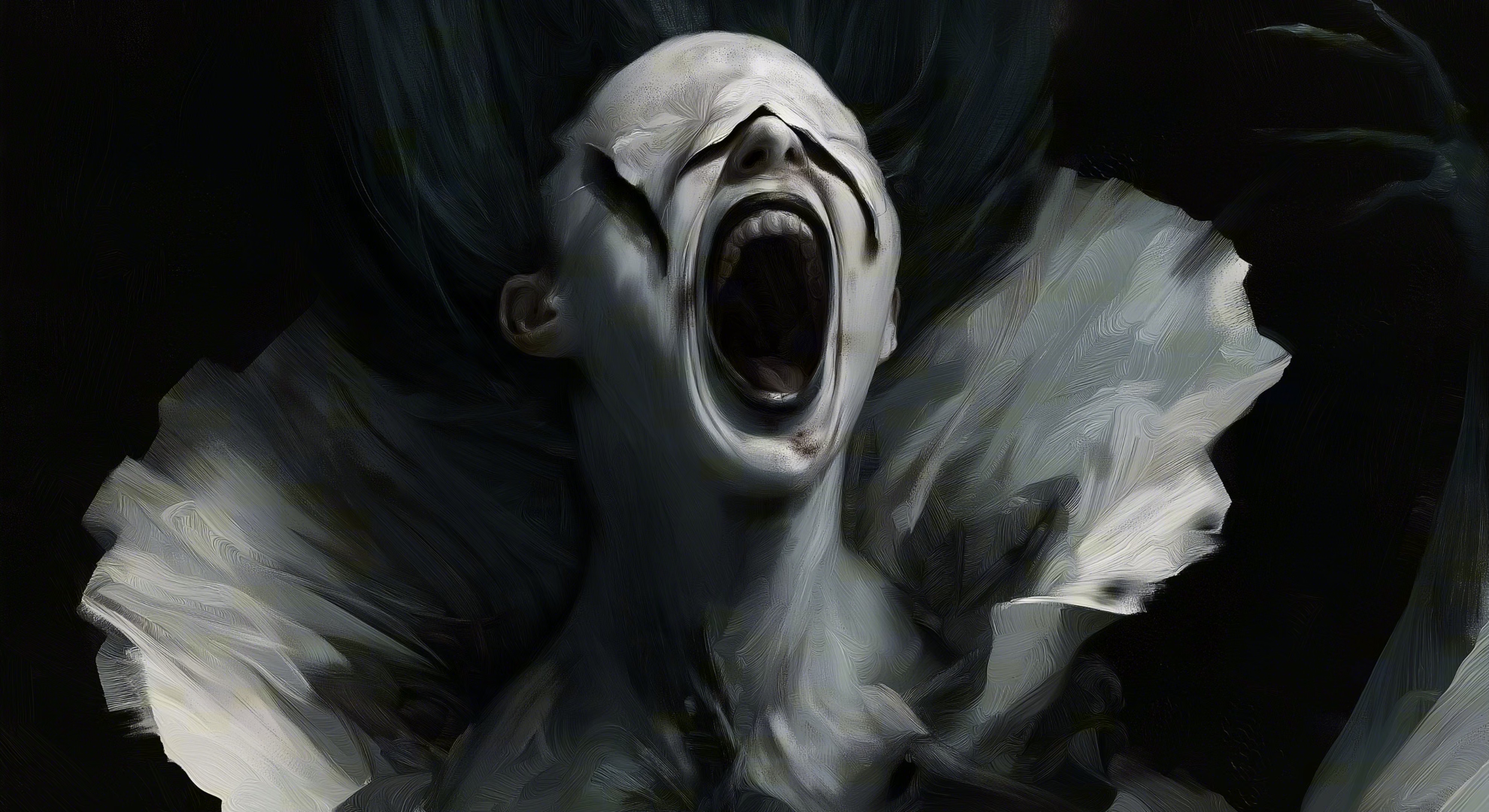
Fejd set their fifth full-length album inside that same primordial cold. ‘Nifelheim,’ out on August 21st, 2026, through Black Lodge Records in collaboration with Sound Pollution, takes its title directly from the realm, adopting a spelling of its own even as the mythological concept it draws on carries the standard scholarly transliteration Niflheim.
Eight tracks make up the record, opening and closing with the title piece and ‘Svarta Tjärn,’ and moving through ‘Nidhögg,’ ‘Edsvuren,’ ‘Älvagrimmar,’ ‘Sköldborg,’ ‘Einar Blå,’ and ‘Strilja’ along the way.
The choice of Niflheim over more commonly dramatized Norse settings is a genre departure worth naming. Folk and Viking metal acts have long gravitated toward Valhalla, Ragnarök, and the pitched battles of the Aesir and the giants, scenes with clear protagonists and clear violence. Niflheim offers neither. It is cosmology at its most abstract, an unpeopled condition that exists before conflict is even possible.
A Serpent at the Root of the World
That abstraction sharpens once the second track is considered. ‘Nidhögg’ takes its name from a serpent, or dragon, described in both the ‘Poetic Edda’ and the ‘Prose Edda’ as gnawing eternally at a root of Yggdrasil, the world tree that connects the nine realms of Norse cosmology, Niflheim among them.
Nidhögg belongs to a category distinct from the gods it coexists with, not a deity to be worshipped or a hero to be honored, but a persistent, corrosive force embedded in the structure of the world itself, feeding on the dead and locked in an old enmity with an eagle perched at the tree’s crown.2
Distinguishing this figure from history is worth doing plainly. Nidhögg is not a documented event or a historical actor; it belongs to a body of legend transmitted through skaldic verse and later systematized by the thirteenth-century Icelandic writer Snorri Sturluson.
Its significance within ‘Nifelheim’ lies not in any claim to fact but in what the figure represents inside that legend, decay working continuously beneath a structure that otherwise looks fixed and permanent, a root under constant attack even as the tree above it keeps growing.
Placed alongside a title track named for the realm of mist that predates the gods, ‘Nidhögg’ extends the record’s opening argument: the album’s two named points of reference are not scenes of climactic battle but forces that were present before, and will persist after, the more commonly dramatized conflicts of Norse myth.
That is a considered position for a folk metal record to take, and it separates ‘Nifelheim’ from the genre’s more populated, event-driven mythological set pieces.
From a Duo in Lilla Edet
None of this comes from a new act testing out Norse material for the first time. Fejd formed in 2001 in Lilla Edet, a small municipality in Sweden’s Västra Götaland region, out of the fusion of two distinct scenes.
Patrik and Niklas Rimmerfors had been performing as a medieval-inflected folk duo under the name Rimmerfors, working through instruments such as the bouzouki and the moraharpa, a Swedish keyed fiddle whose ancestry stretches back centuries in Nordic folk practice.3
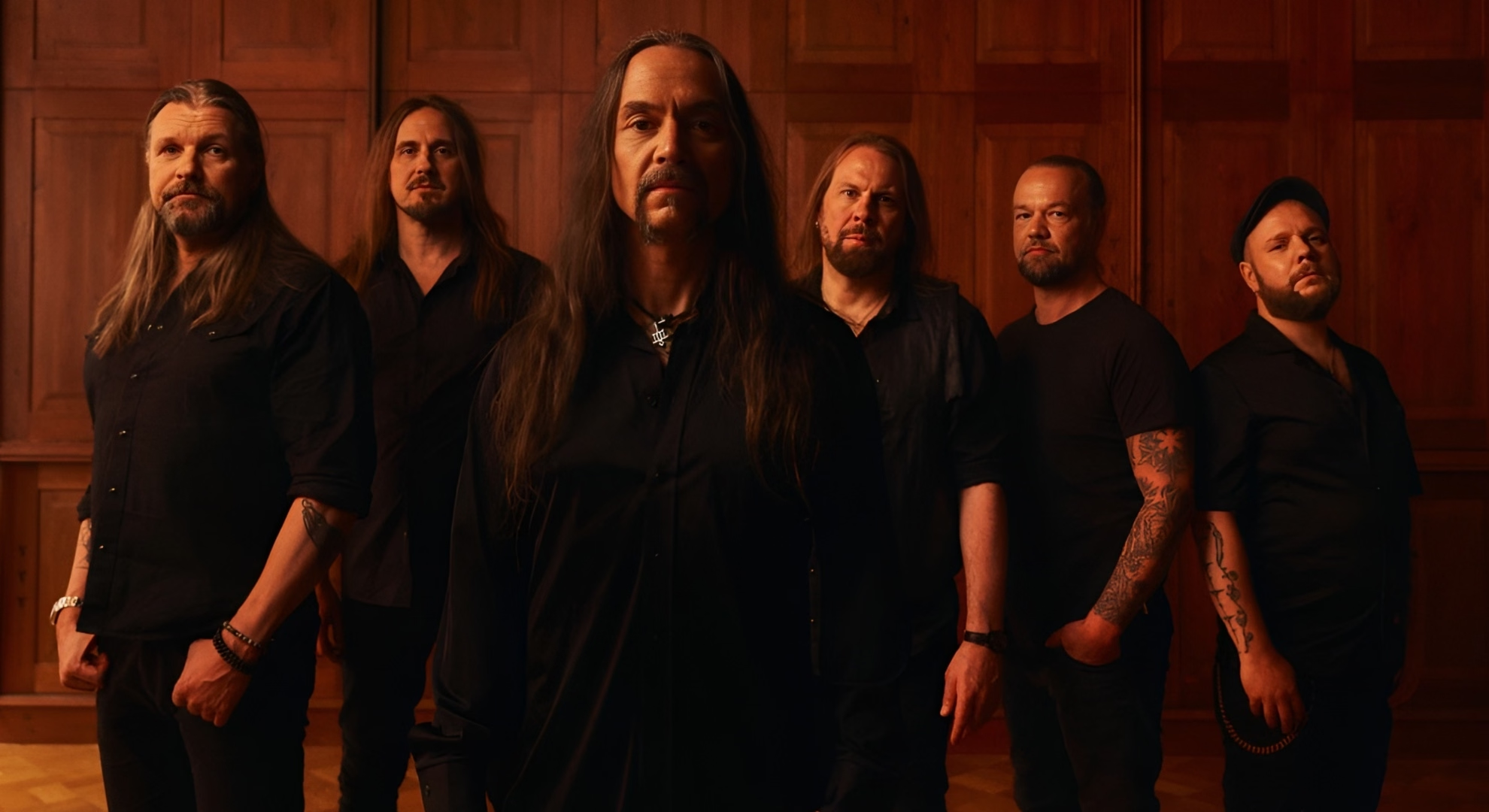
They joined with Lennart Specht, Thomas Antonsson, and Esko Salow, three musicians who had played together in the metal bands Pathos and Nostradameus, to found Fejd, a name that translates from Swedish as feud.
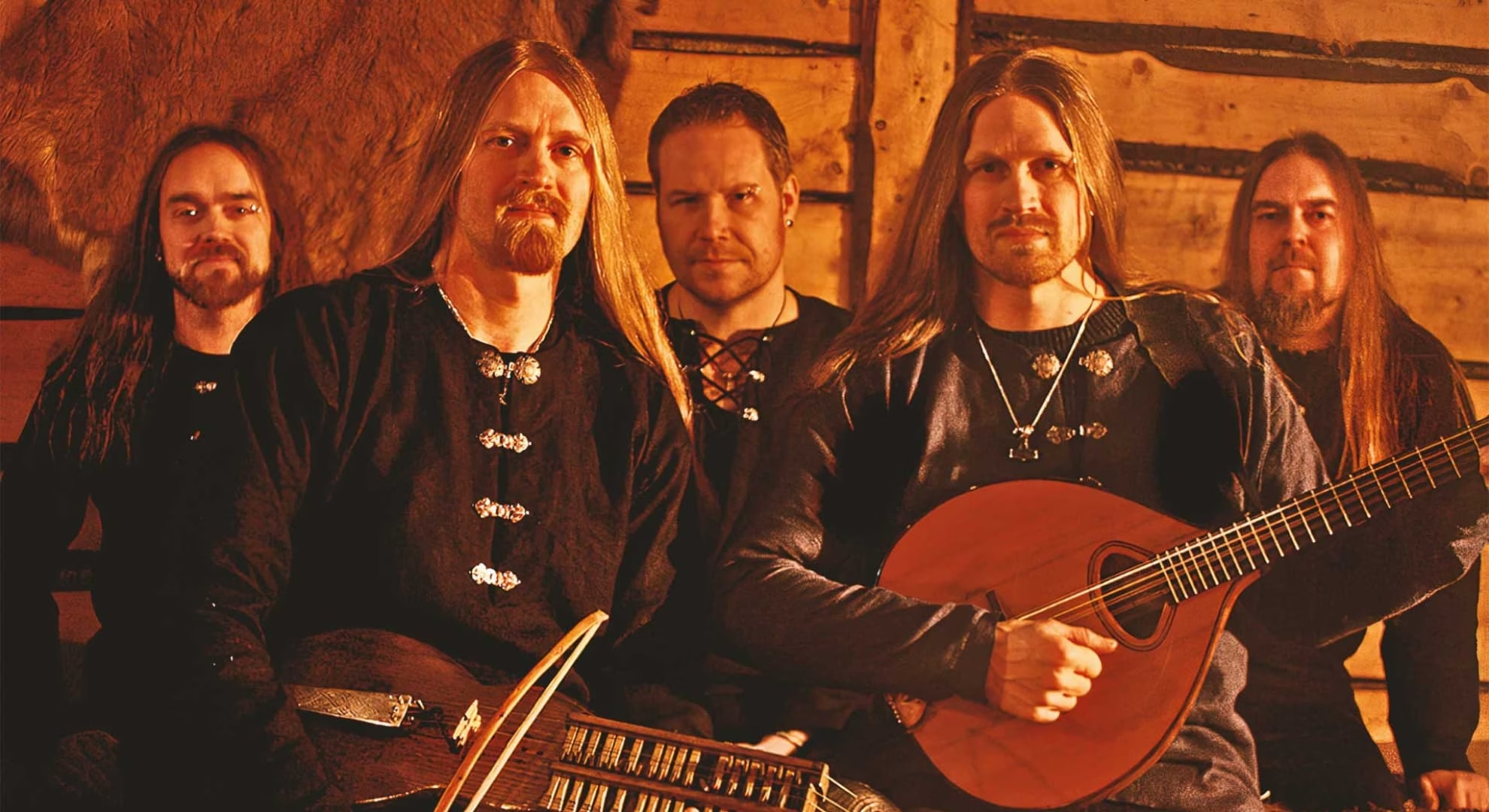
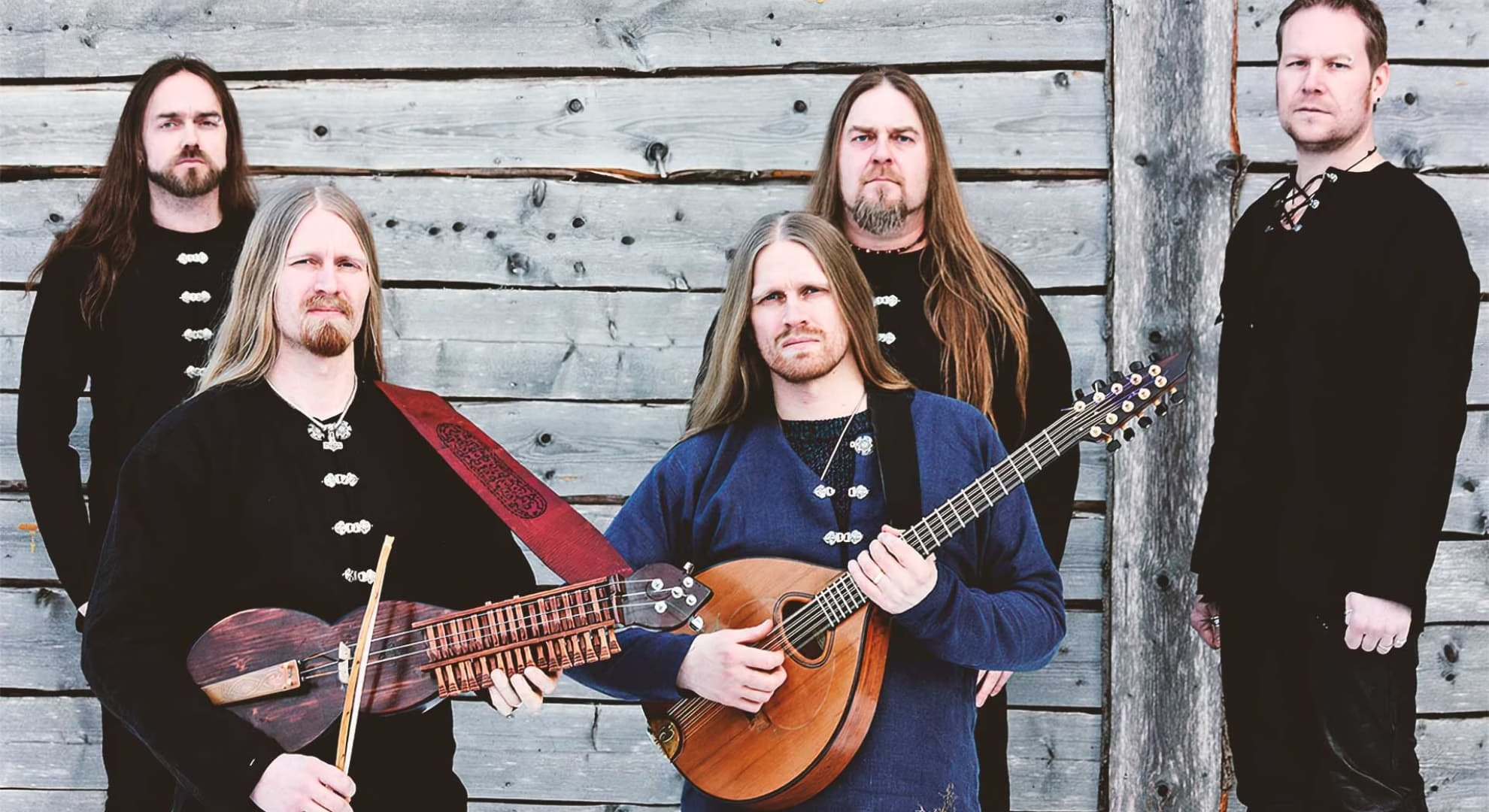
The band spent its first years without a metal record to its name at all. Two self-produced demos, ‘I en tid som var’ in 2002 and ‘Huldran’ in 2004, preceded the EP ‘Eld’ in 2006, and it was not until 2009 that Fejd released its debut full-length, ‘Storm,’ through Napalm Records, the same year the band made its first appearance at Wacken Open Air, one of Europe’s largest metal festivals.
‘Eifur’ followed in 2010 and ‘Nagelfar’ in 2013, both extending the same formula: clean, full-throated vocals from both Rimmerfors brothers, folk melody carried on hurdy-gurdy, jew’s harp, and säckpipa, and only the faintest suggestion of metal instrumentation underneath it.
The Turn Toward Electric Weight
That balance shifted with the band’s fourth full-length. ‘Trolldom,’ released through Black Lodge Records on May 27th, 2016, introduced an electric guitar to Fejd’s sound for the first time, played by Per-Owe Solvelius, a musician whose prior credits included the metal acts Trident and Igneous Human.
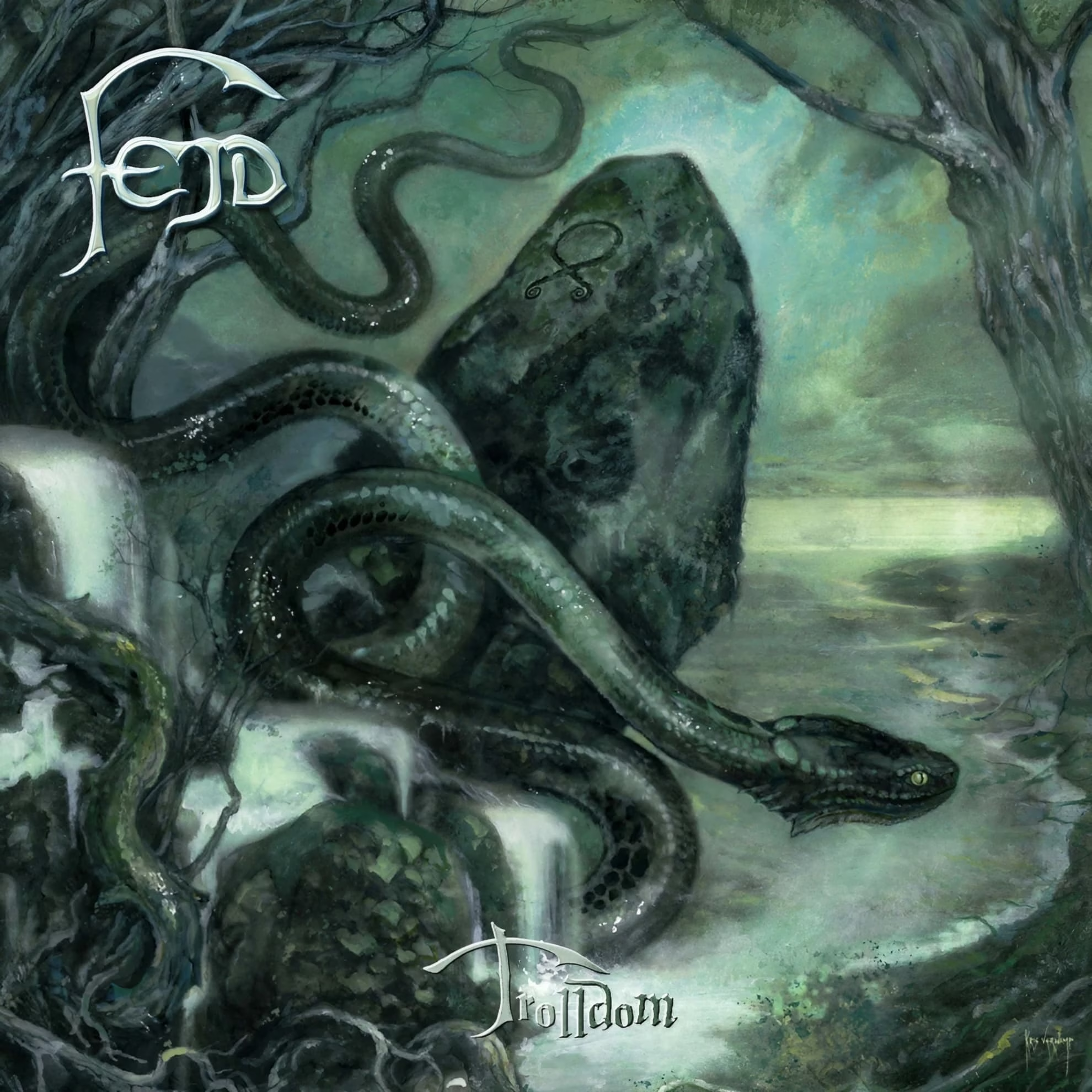
The eight tracks on ‘Trolldom,’ among them ‘Härjaren,’ the title piece, and ‘Ingjald Illråde,’ carried the folk instrumentation that had defined the band’s first three records, but layered guitar distortion underneath it in a way Fejd had never previously attempted.
The shift mattered because of what it revealed about the band’s earlier work. Fejd’s founding members had metal backgrounds through Pathos and Nostradameus even when their first three albums carried almost none of that instrumentation directly; ‘Trolldom’ was the moment that history surfaced in the music itself, and it positioned the band, for the first time, inside the folk metal genre proper rather than adjacent to it, and it is the record against which ‘Nifelheim’ now has to be measured.
The Title Track as Evidence
What can be assessed directly is the title track itself, released in mid-July of 2026 as a lyric video ahead of the full album. ‘Nifelheim’ opens with the same vocal interplay between the Rimmerfors brothers that has carried the band since ‘Storm,’ set against folk instrumentation audible enough to confirm that the five-piece credited lineup, guitar or no guitar, has not abandoned the sound that defined the band’s identity.
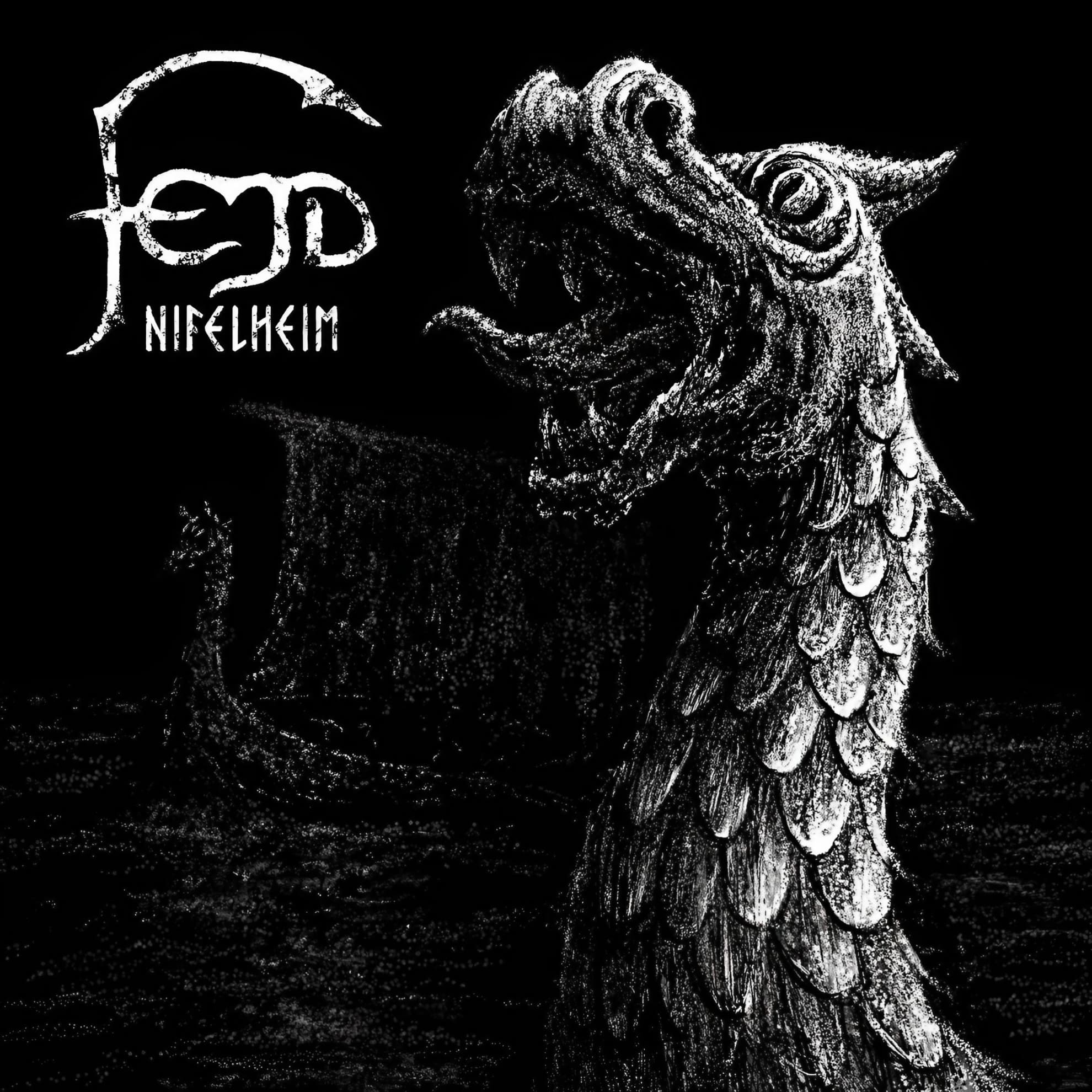
The track’s lyrics, written in Swedish in keeping with the band’s practice since its founding, draw explicitly on the mist-world imagery discussed above rather than treating the title as decorative branding.
Taken on its own, the single positions the forthcoming record toward continuity rather than reinvention, an album that keeps the folk-forward vocal writing at its center while carrying forward the weight ‘Trolldom’ introduced, without yet revealing how consistently that balance holds across the full eight-track sequence.
Festivals as the Real Audience
Fejd’s audience is not an abstraction. Across two and a half decades, the band has assembled a documented festival history that includes Wacken Open Air, Hellfest, Sweden Rock Festival, Summer Breeze, Cernunnos Pagan Fest, Ragnarök Festival, Karmøygeddon, and an appearance at the Montreux Jazz Festival, a booking calendar that places Fejd inside both the dedicated folk and pagan metal circuit of continental Europe and, at least once, on a stage set for an entirely different tradition.
That range says something the genre label alone does not: Fejd’s particular fusion of Nordic folk instrumentation and metal songwriting has found footing with listeners who come from more than one direction.
The extreme and folk metal underground that receives records like ‘Nifelheim’ has its own well-documented relationship to myth-based material, distinct from mainstream popular music’s treatment of the same source texts. Collector culture around vinyl and limited pressings, tape-trading networks that predate streaming, and festival circuits organized specifically around pagan and folk themes have functioned for decades as durable infrastructure independent of any single act’s commercial visibility.4
A record centered on Niflheim rather than a more commonly dramatized Norse setting is, in that context, less a risk than a deliberate appeal to listeners already prepared to sit with cosmology rather than narrative spectacle, an audience for whom Fejd’s chosen point of entry, an unpeopled realm of mist and ice, may carry more weight than another retelling of the road to Ragnarök.
Cold Enough to Travel Far
Fejd’s arc across five full-length albums has moved in one direction: from a folk duo joined to three metal musicians, through three records that kept metal at arm’s length, to a fourth that let the guitar in, to a fifth that returns, on the evidence of its opening single, to something closer to the band’s founding instrumentation while carrying forward the weight ‘Trolldom’ introduced.
‘Nifelheim’ does not resolve that tension so much as sit inside it, choosing for its central image a realm defined by cold that predates every later conflict the genre usually dramatizes.
Whether the finished record holds that balance across all eight tracks remains to be heard in full. What is already documented is an audience, assembled across two and a half decades of festival stages spanning several countries, that has shown itself willing to meet Fejd exactly there, in the cold, before the story most other bands in the genre choose to tell has even begun.
Does the return to a five-piece, guitar-absent configuration on ‘Nifelheim’ read as a correction, a temporary configuration, or simply a different way of holding the same balance the band has carried since 2001?
References
- Rudolf Simek, ‘Dictionary of Northern Mythology,’ trans. Angela Hall (Cambridge: D. S. Brewer, 1993), 232–233. ↩︎
- John Lindow, ‘Norse Mythology: A Guide to Gods, Heroes, Rituals, and Beliefs’ (Oxford: Oxford University Press, 2001), 246–248. ↩︎
- Jan Ling, ‘A History of European Folk Music,’ trans. Linda Schenck and Robert Schenck (Rochester: University of Rochester Press, 1997), 88–92. ↩︎
- Deena Weinstein, ‘Heavy Metal: The Music and Its Culture,’ rev. ed. (Boston: Da Capo Press, 2000), 116–121. ↩︎

Leave a Reply