

Viking metal was born from a paradox: bands assembling identity out of borrowed history, singing of gods most of their listeners never prayed to. Four decades on, that paradox has multiplied rather than resolved, spreading across black metal, folk metal, and doom alike, with each generation choosing which fragments of the old cosmology to keep and which to leave behind.
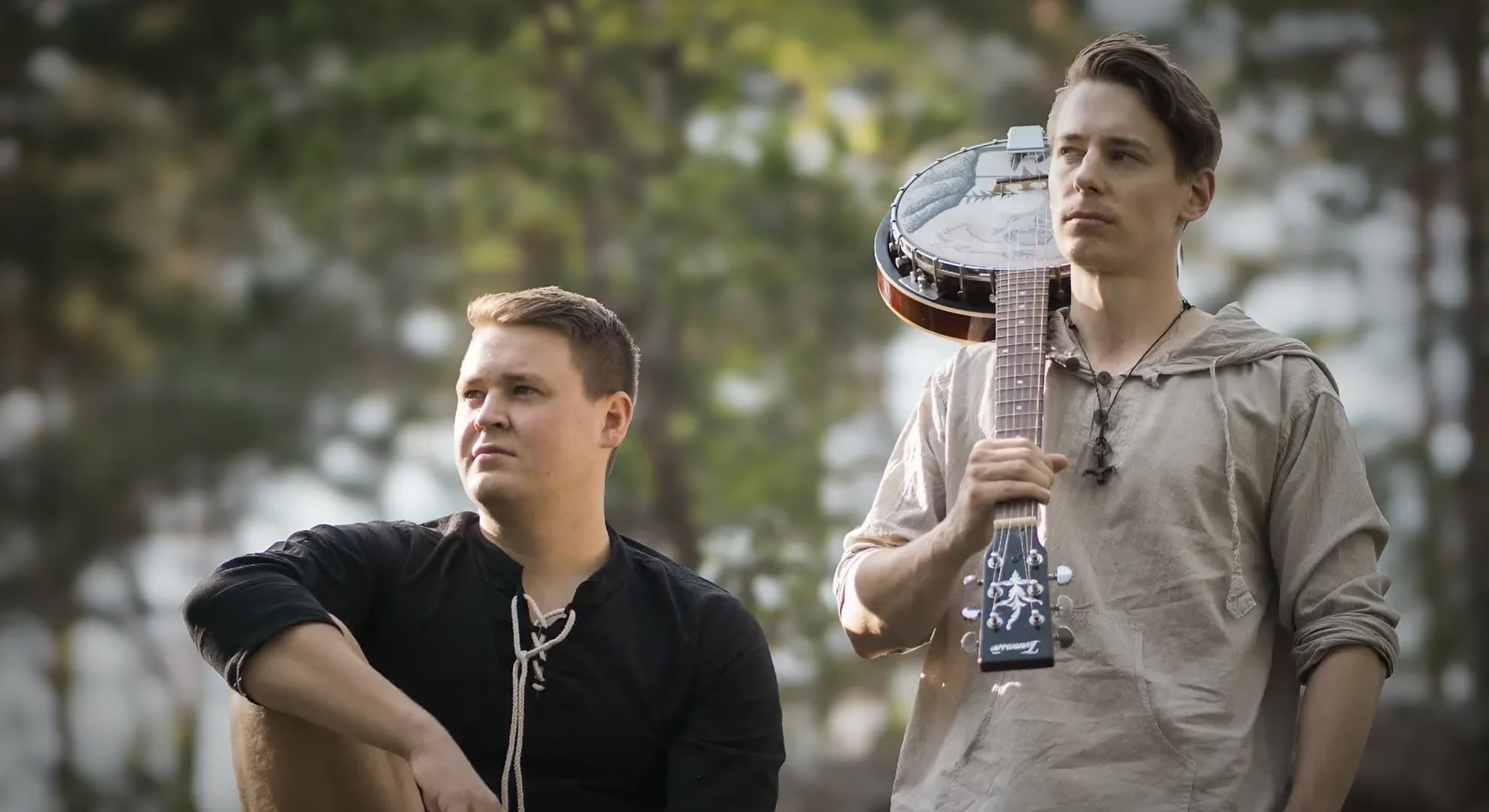
Jotungrav, the project formed around Finnish singer-songwriter Matias Stenman, keeps almost none of the armor and nearly all of the weight.
On August 20th, 2026, Stenman’s project releases its debut full-length, ‘Elegi,’ four songs and 41 minutes assembled across more than a decade of writing, discarding, and starting again. The album’s title, Swedish for elegy, states plainly what kind of record this is before a single chord sounds: not a battle hymn, but a mourning song drawn from Norse cosmology and filtered through what its maker describes as a modern philosophical lens. Inverse Records issues the album.
Ten Years to a Debut
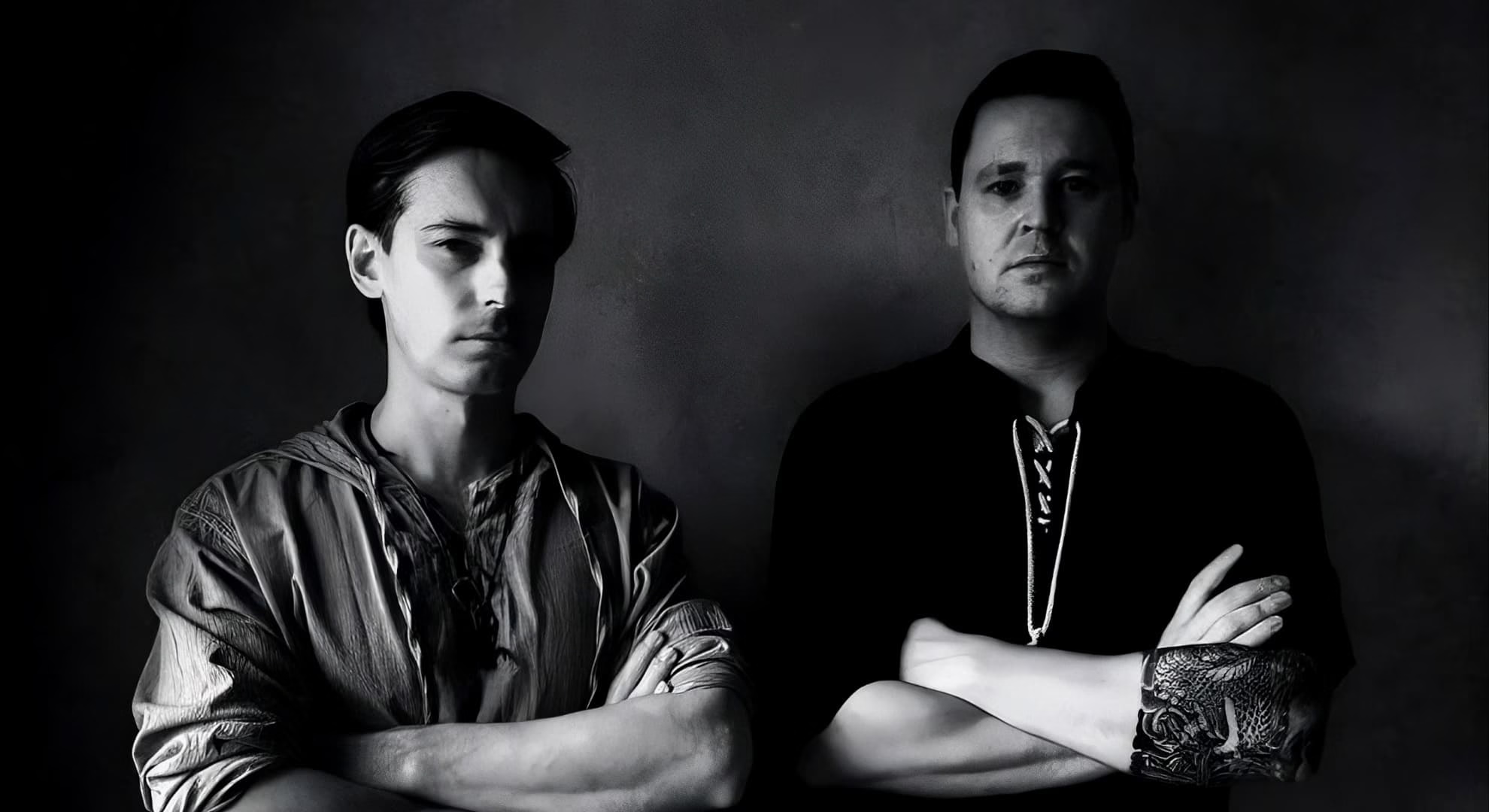
Stenman began writing under the Jotungrav name in 2015, though nearly everything composed in those early sessions was eventually discarded. The project did not properly take shape until the summer of 2022, when the single ‘Drängen’ was finished with the participation of two musicians drawn from the black metal band Sargassus: drummer Matias Rokio, who supplied percussive arrangements, and Teemu Leskinen, who handled mixing and mastering.
A second single, ‘Ulven,’ followed as the trio worked toward a debut record, and across both songs the project’s sound gradually shed the black metal urgency of its earliest material in favor of something more spacious and folk-rooted.
That shift places Jotungrav inside a documented lineage of choices rather than a fixed style. Viking and pagan metal, coined and popularized by Scandinavian bands working through Old Norse material in the late 1980s and 1990s, has functioned less as a stable genre than as a recurring set of decisions about which parts of pre-Christian mythology to adapt into song, and scholarship on the movement has traced how differently individual bands answer that question, ranging from literal saga narrative to symbolic and philosophical reworking.1
Jotungrav, on the evidence of ‘Elegi,’ sits closer to the second category. The album’s four songs run between seven and nearly 14 minutes each, structured less as narrative retellings than as extended meditations, with mythological reference operating as a framework for argument about mortality and continuance rather than as costume.
Leskinen’s involvement extends past the mixing board on the new record: he contributes the guitar solo on ‘Segern,’ the album’s 11-minute third track. His prior production credits could not be confirmed via web search at the time of publication, and no dedicated recording studio is credited on the album’s official release materials.
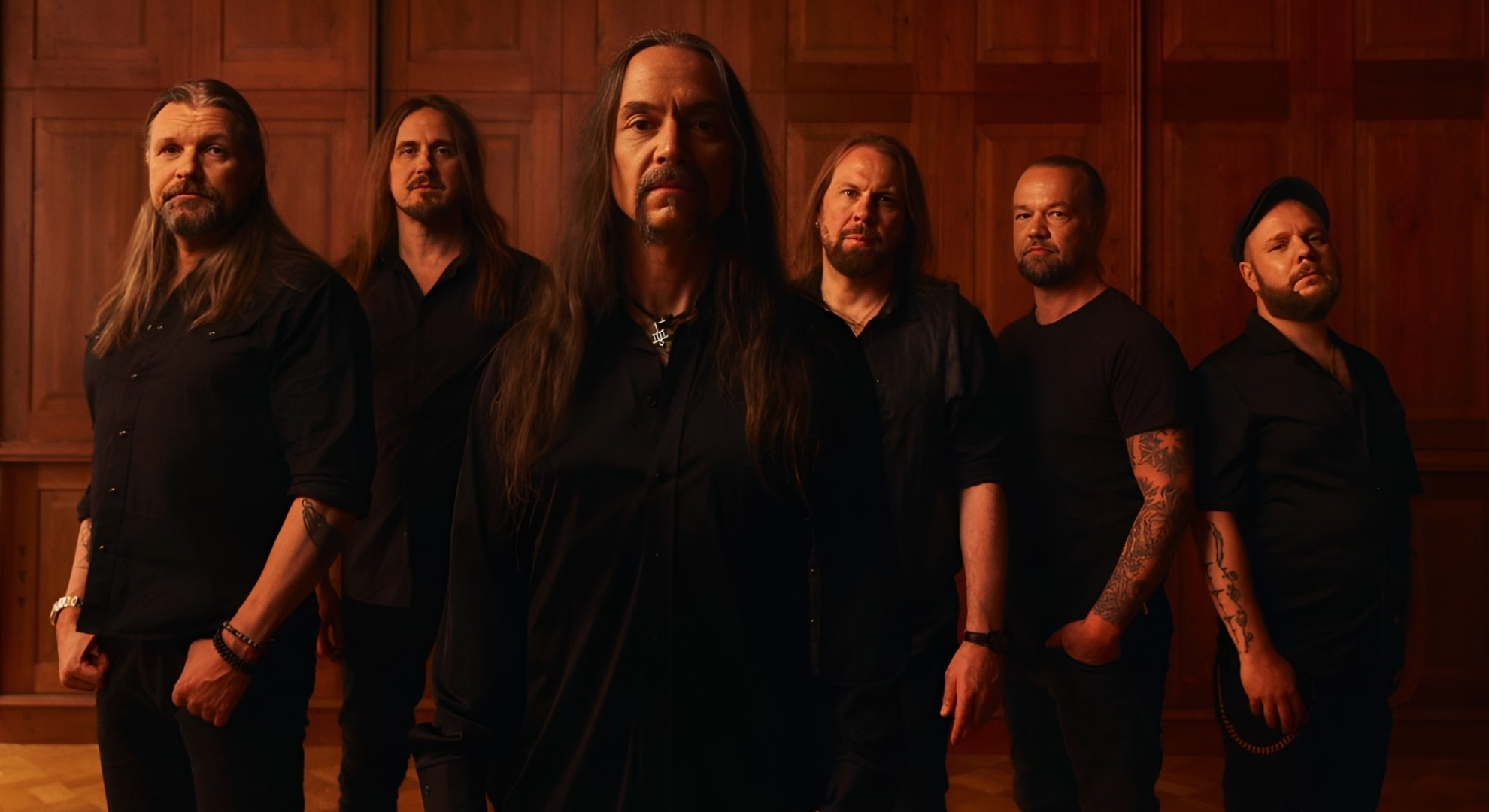
The lineup otherwise remains compact by design. Stenman is credited with vocals, guitars, bass, melodica, banjo, munniharppu (jaw harp), orchestrations, and all lyrics and composition, an unusually wide instrumental range for a project that began as a solitary undertaking and has stayed close to that origin even after gaining two regular collaborators.
Return of the Reborn
‘Återfödd,’ Swedish for reborn, was released as the album’s sole advance single on July 22nd, 2026, and stands as the one track from ‘Elegi’ that can be assessed directly rather than inferred. Stenman described it as a deliberate departure from Jotungrav’s usual register, drawn from Finnish folk rhythms and waltz-time signatures that are uncommon in metal songwriting, with the black metal instinct present on the project’s earliest material largely stripped away in favor of a brighter, more melodic vocabulary.
Heard on its own terms, the single moves between passages that reach for uplift and others that slow into something closer to solemnity, an oscillation that mirrors its lyrical premise directly.
That premise is not abstract. Stenman explained that the song addresses loss from both sides of it at once, and noted that it stands as a reminder that “the cruelty of the universe cannot break one that is filled with purpose.”
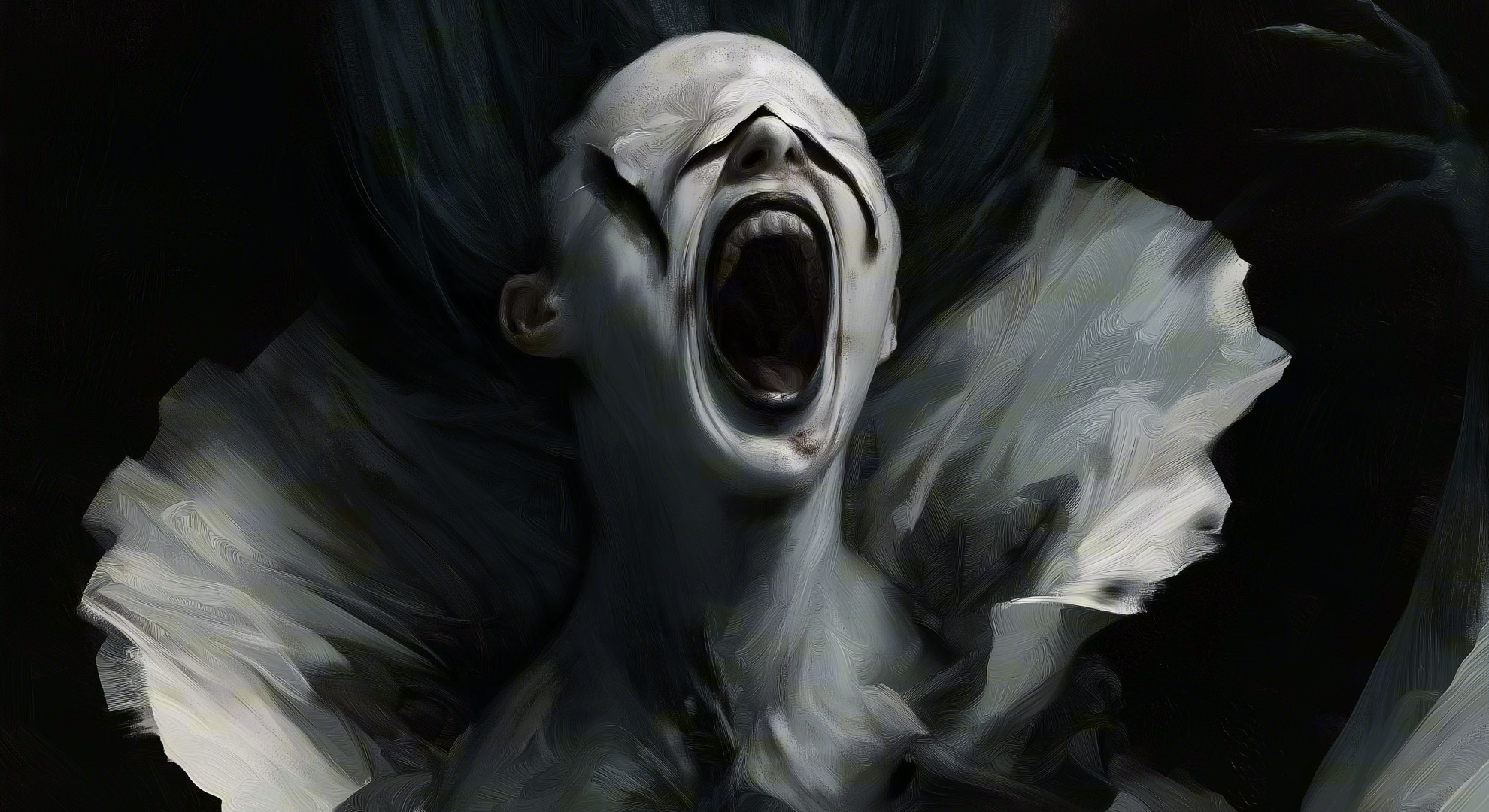
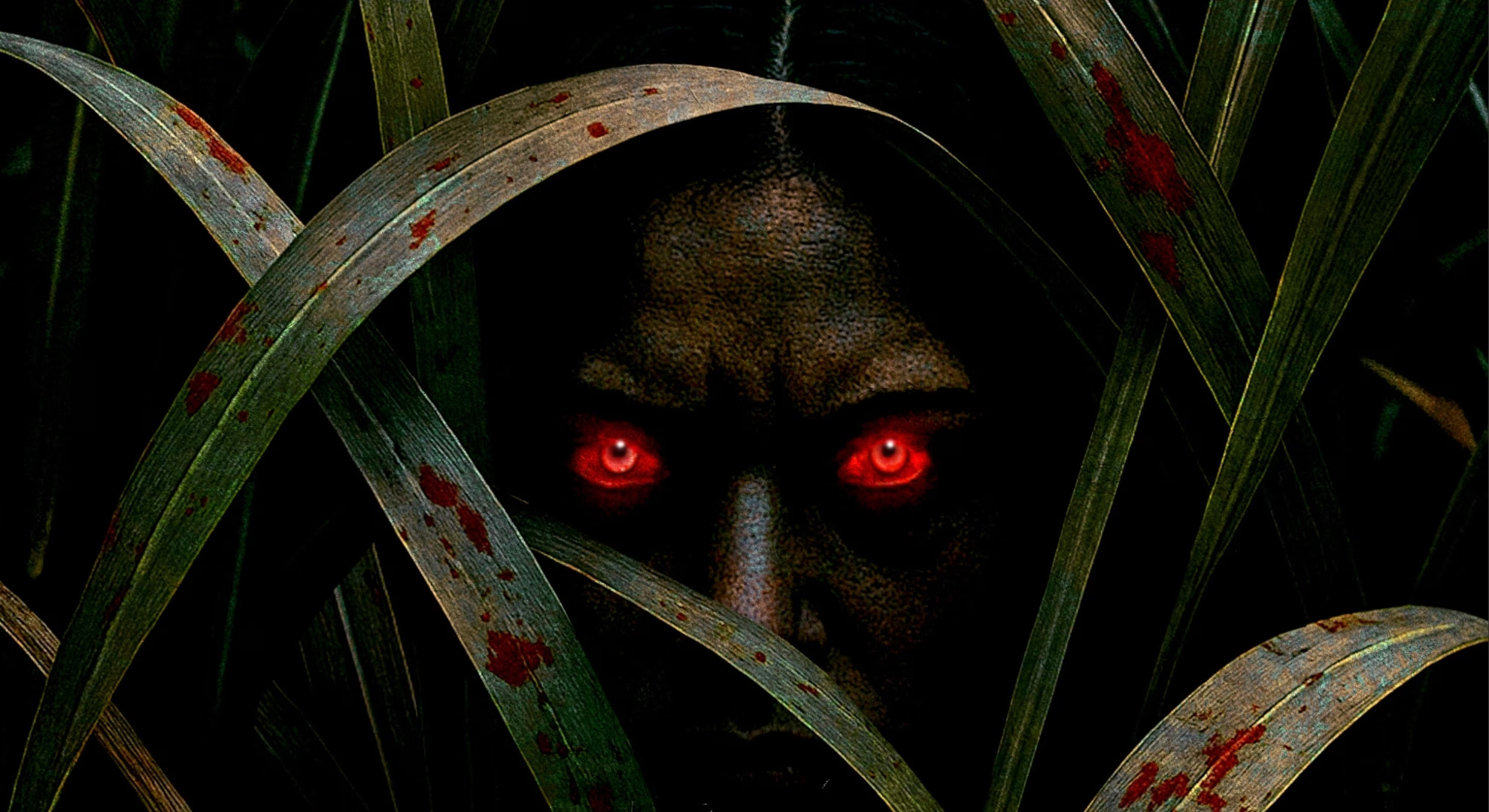
The cover art commissioned for the single, separate from the album’s own artwork, was designed to represent the other half of that same event, the party left behind rather than the party transformed by dying. Positioned as the album’s second track, ‘Återfödd’ functions as a hinge, the record’s most outwardly energetic material sitting at the emotional center of a work that opens and closes in considerably heavier territory.
Four Songs, One Long Elegy
The title carries genuine literary weight beyond its Swedish translation. Elegy, in the Western tradition running from Spenser through Yeats, has rarely functioned as simple lament; its recurring structure moves from grief toward some form of consolation or continuance, treating loss as the occasion for a larger argument about what persists rather than an endpoint in itself.2
Jotungrav’s version of that structure runs the length of the tracklist. ‘Vansinnesvisdom,’ roughly translatable as wisdom found in madness, opens the record at nearly eight minutes. ‘Återfödd’ occupies the emotional center. ‘Segern,’ meaning the victory, extends across 11 minutes.
The album closes with its own title track, credited at nearly 14 minutes, the longest piece on the record, as though the elegy needed the largest possible space in which to resolve.
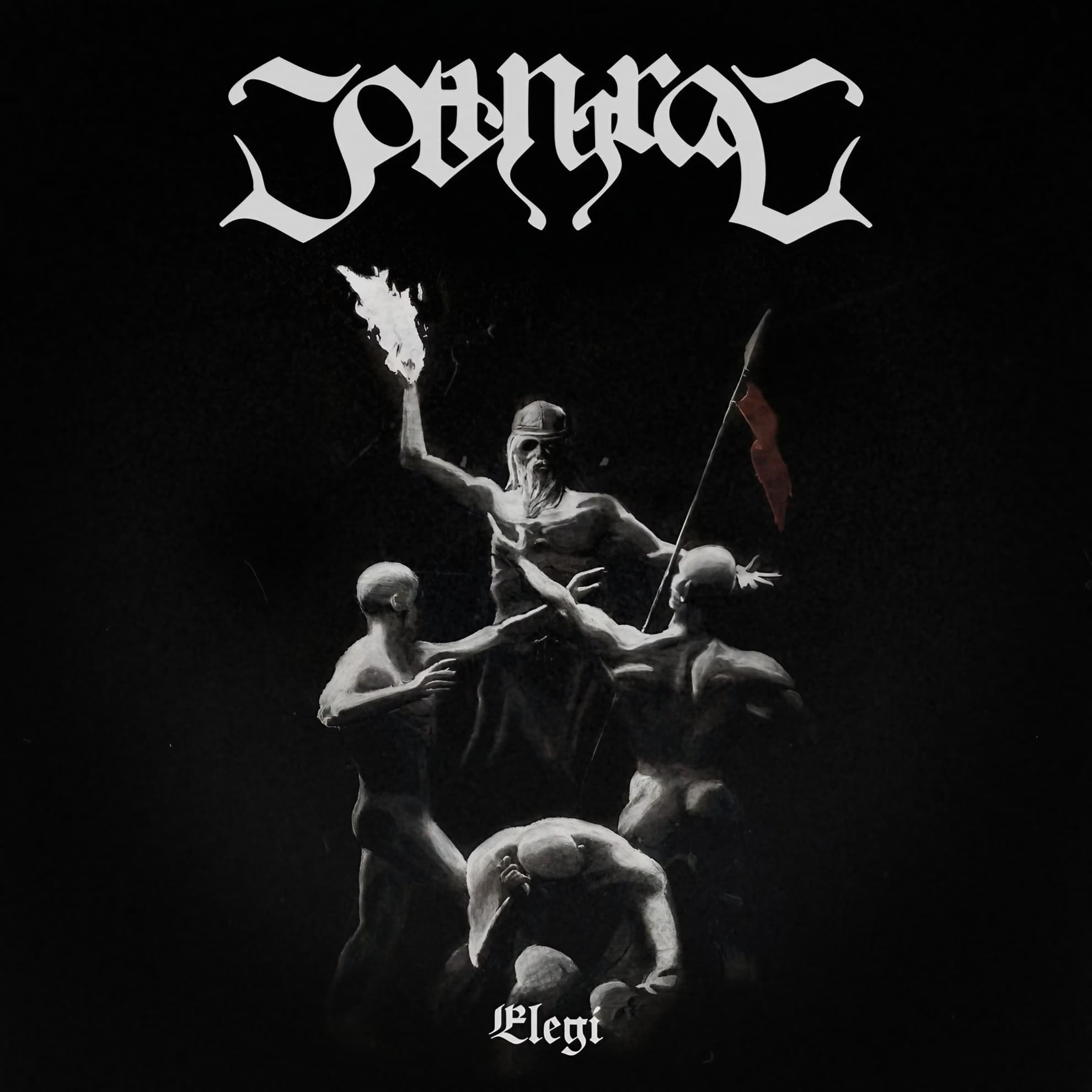
Physical format details had not been confirmed at the time of publication. The digital edition is available for pre-order directly through the band’s Bandcamp page, offered in 24-bit resolution alongside standard compressed formats, with the full album unlocked automatically for pre-order customers at the moment of release.
Given the absence of confirmed physical pressing information, the digital pre-order currently represents the only verifiable point of access to the complete record ahead of August 20th.
Mourning in the Poetic Edda
The mythological frame Stenman draws on has a specific textual source rather than a diffuse sense of the Norse past. The Old Norse poem Völuspá, preserved within the medieval Poetic Edda, narrates the sequence of Ragnarök: a war among gods and giants that ends with the world submerged in fire and water, followed by a second earth rising green from the sea, repopulated by a small number of surviving gods and two humans who sheltered through the destruction.3
Scholars of Norse religion have identified this rebirth passage as one of the tradition’s few explicitly cyclical elements, a departure from the otherwise linear fatalism running through the surrounding poetry, and its ambiguous tone, part hope and part unresolved threat, has kept it a subject of ongoing interpretation rather than settled doctrine.4
‘Elegi’ does not retell Völuspá directly, and none of its four song titles names a specific god or episode from the poem. What the album borrows is structural: an ending that produces a beginning, held with enough ambiguity that neither term fully cancels the other.
‘Återfödd,’ meaning reborn, sits at the emotional center of a record titled for mourning, and the tension between those two words echoes the tension already present in the source material more closely than a costume drama assembled from named characters would manage.
The album treats the mythology as an argument about the shape of survival, not as a chronicle of specific gods behaving heroically, and it is this philosophical use of the material, rather than any narrative retelling, that the band has repeatedly emphasized in its own description of the project.
A Circuit With Real Reach
The listeners most likely to meet ‘Elegi’ with genuine recognition are not a vague global mass but a specific, still-active listening culture: the international viking and pagan metal circuit that grew out of the same late-1980s and 1990s Scandinavian scene addressed above, a tradition whose reach across Northern and Central Europe, North America, and other pockets of the world has been documented in scholarship on the genre’s touring circuits and dedicated distribution networks, organized less around marketing reach than around listeners who already recognize the difference between one band’s philosophical posture toward this material and another’s.
Jotungrav’s own coordinates within that circuit are concrete rather than aspirational. The band’s official Bandcamp identification places it within Tampere’s active extreme metal community, the same scene that connects Rokio and Leskinen to Sargassus and that produced the black metal project Acolythus, whose lineup draws members from Jotungrav alongside Convulse and Sargassus.
That kind of overlapping membership, common across Finland’s smaller metal cities, gives ‘Elegi’ a real point of entry for listeners already embedded in that circuit rather than a symbolic one invented for the occasion.
The Weight ‘Elegi’ Leaves Behind
The paradox that opened this piece, metal bands drawing identity from mythology none of them were raised inside, does not resolve by the time ‘Elegi’ reaches its closing minutes. It simply relocates.
Stenman inherited a genre already shaped by that tension and has spent a decade narrowing it toward something more personal: four long songs that use Norse cosmology’s own rebirth logic to ask what mourning requires and what it produces afterward, and whether the philosophical reading holds across a full album rather than a single song is a question the record itself has not yet had the chance to answer in front of listeners, but the patience of its long-form structure and the specificity of its sourcing already separate it from the genre’s more costumed corners before a single review is written.
Does an inherited mythology need to be lived to be earned, or is Stenman’s decade of narrowing, discarding, and starting over its own form of earning the material?
References
- Imke von Helden, ‘Barbarians and Literature: Viking Metal and Its Links to Old Norse Mythology,’ in ‘The Metal Void: First Gatherings,’ ed. Niall W. R. Scott (Oxford: Inter-Disciplinary Press, 2010), 257–64. ↩︎
- Peter M. Sacks, ‘The English Elegy: Studies in the Genre from Spenser to Yeats’ (Baltimore: Johns Hopkins University Press, 1985), 1–37. ↩︎
- Carolyne Larrington, trans., ‘The Poetic Edda,’ rev. ed. (Oxford: Oxford University Press, 2014), 3–14. ↩︎
- John Lindow, ‘Norse Mythology: A Guide to Gods, Heroes, Rituals, and Beliefs’ (Oxford: Oxford University Press, 2001), 254–59. ↩︎
Leave a Reply