

For 87 years, a train left Waterloo each morning carrying two kinds of passenger: mourners bound for a single day of grief, and coffins bound for a permanent address 23 miles outside London. The London Necropolis Railway ran between 1854 and 1941, founded by a private company that hoped to solve, in one stroke, the problem of where an overcrowded capital would bury its dead.
Fares separated the living as strictly as plots separated the dead: first, second and third class tickets bought correspondingly different carriages and waiting rooms, while the cemetery itself kept its Anglican and Nonconformist dead on opposite sides of the tracks.
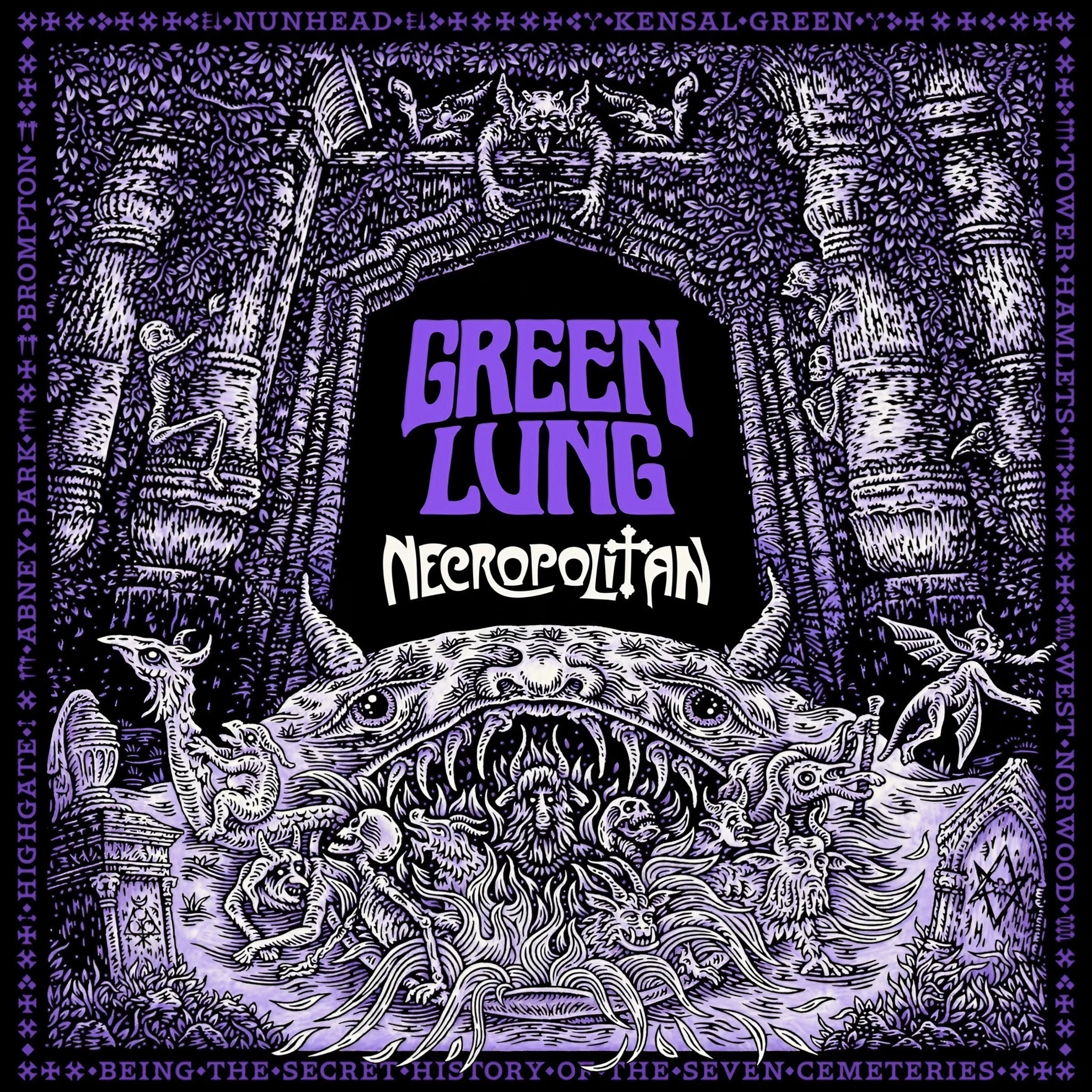
Green Lung revive this exact piece of London infrastructure on ‘Necropolitan Line,’ one of three songs the London band released ahead of their fourth studio album, ‘Necropolitan,’ due from Nuclear Blast Records on September 11th, 2026.
Vocalist Tom Templar has explained the subject as close to unavoidable for a band that has spent eight years working through England’s occult and folkloric ground: a real railway once laid to move the dead through a city too crowded to bury them at home. That the band reaches for documented history rather than imported gothic imagery is the pattern separating ‘Necropolitan’ from the wider field of doom acts trading in coffins and candlelight without doing the historical homework first.
Nuclear Blast is issuing ‘Necropolitan’ across several colored vinyl pressings, including a Midnight Sparkle/Starlight variant and a Purple/Black Corona edition, alongside compact disc and standard preorder. A separate cassette edition, limited to 100 copies and released through the band’s own imprint, Old Gods Records, is available exclusively through the band’s Bandcamp page; digital download remains available as a secondary option alongside the physical pressings.
The Railway That Carried the Dead
he Necropolis Railway did not appear from nothing. It answered a public health crisis that had been forming since the seventeenth century, when London’s parish churchyards, some centuries old, began receiving more bodies than their ground could hold. By the early nineteenth century, gravediggers routinely broke into older burials to make room for new ones, and the resulting overcrowding was blamed, correctly or not, for outbreaks of disease in the surrounding streets.1
An 1832 Act of Parliament that incorporated the General Cemetery Company opened the way for privately run cemeteries outside the city, and the decade that followed saw London ring itself with a set of privately run cemeteries well outside the densely populated city; the power for local authorities to close overcrowded churchyards outright came two decades later, through the Burial Act of 1852, following the Metropolitan Interment Act of 1850.
Kensal Green, consecrated in 1833, was the first of these grounds, followed within a decade by six more that a later generation of historians nicknamed the “Magnificent Seven.”
Brookwood, opened by the London Necropolis Company in 1854, took the logic of distance furthest: rather than simply moving burial to the edge of London, the company moved it 23 miles clear of the city altogether, betting that a dedicated railway line could make a cemetery of that size practical. At its peak, in 1866, close to 4,000 burials took place at Brookwood in a single year, carried down from Waterloo on trains that ran daily until falling demand and wartime bombing brought the service to an end in 1941.
The service never reached the scale its founders hoped for, carrying only a fraction of the 50,000 bodies a year they had projected, but the Brookwood line stayed in operation until 1941, when a bombing raid destroyed the London terminus, and it never resumed.2
What survives is largely administrative: a working cemetery, a converted station structure on Westminster Bridge Road, and the kind of institutional memory that a band raised on English folk horror can excavate and repurpose without inventing anything. ‘Necropolitan Line’ does not romanticize this history so much as report it, tracing the actual route and cargo of a railway founded for exactly the purpose its name announces.
A Cult Formed in London Pubs
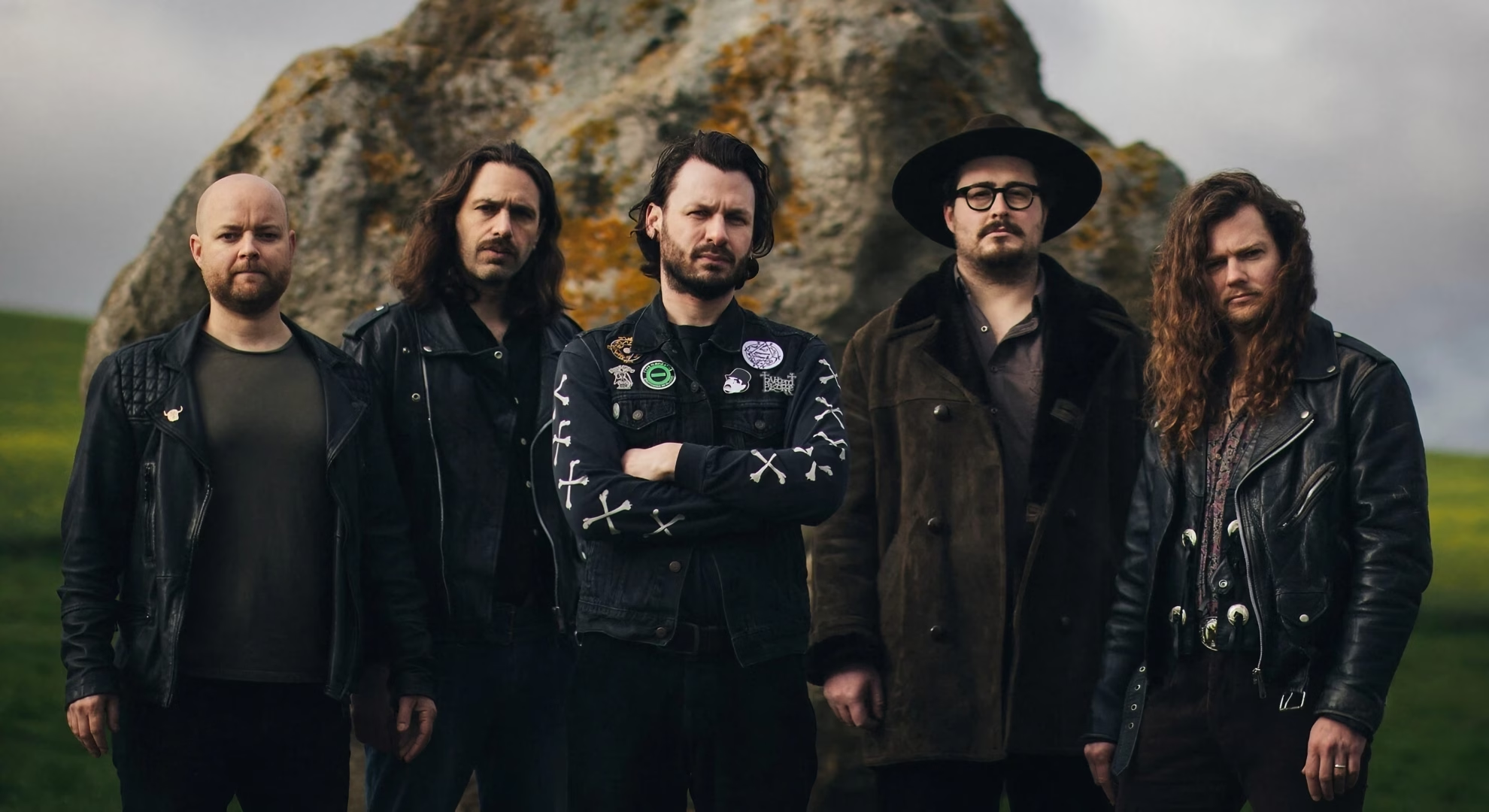
Green Lung formed in London in 2017 as a four-piece of Templar on vocals, Scott Black on guitar, Matt Wiseman on drums and Andrew Cave on bass, though the members grew up scattered across the English countryside rather than in the capital, a distinction Templar has pointed to as a source of the band’s pull toward rural folklore over urban horror.
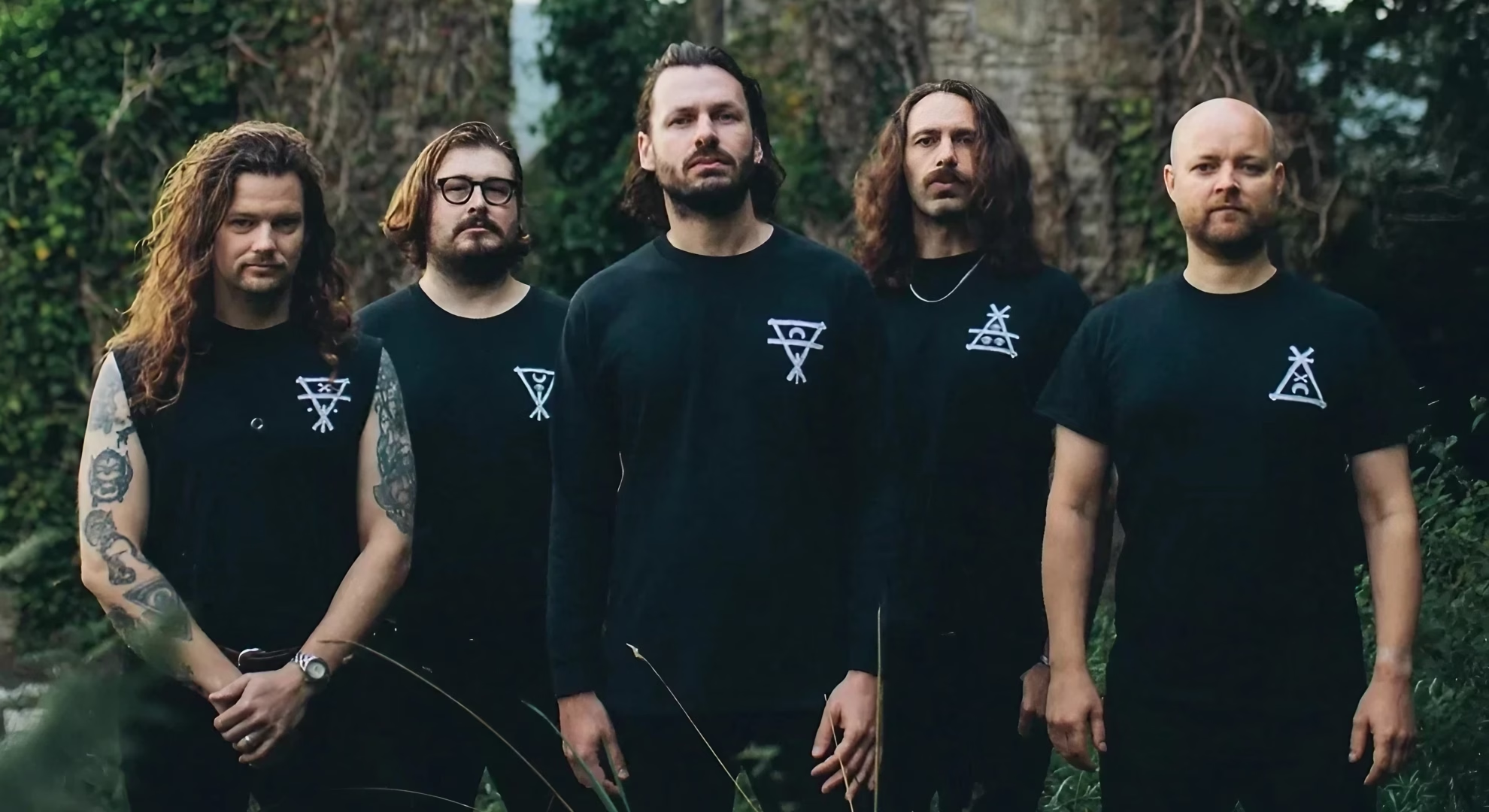
John Wright joined on organ and synthesizer during the recording of the band’s debut album in 2018, and Joseph Ghast replaced Cave on bass in 2020, giving Green Lung the five-piece lineup that has remained in place since.
‘Woodland Rites,’ released in March 2019, established the sound Green Lung have developed since: fuzzed guitar riffs, Hammond organ, and lyrics drawn from British witchcraft folklore and rural ritual rather than the continental horror imagery common across the wider doom scene.
‘Black Harvest’ followed in October 2021 through the Finnish label Svart Records, recorded at Giant Wafer Studios and inside a Welsh church, St Padarn’s in Llanbadarn Fynydd, with engineer Wayne Adams at the desk, as he had been since the band’s earliest sessions.
The record shaped the touring circuit that followed: dates alongside Clutch and festival slots running from Roadburn in the Netherlands to Bloodstock and Download at home.
The Land They Left Behind
‘This Heathen Land,’ released in November 2023, was Green Lung’s first record for Nuclear Blast and their most elaborate work to that point: nine tracks arranged around Hammond organ and Mellotron, opening on a spoken narration of English tors, moors and standing stones before moving into arrangements that leaned further into progressive structure than the two records before it.
Wayne Adams again recorded the band, at Blank Studios and his own Bear Bites Horse Studio, with Tom Dalgety brought in for mixing and additional production, his first credited work with Green Lung.
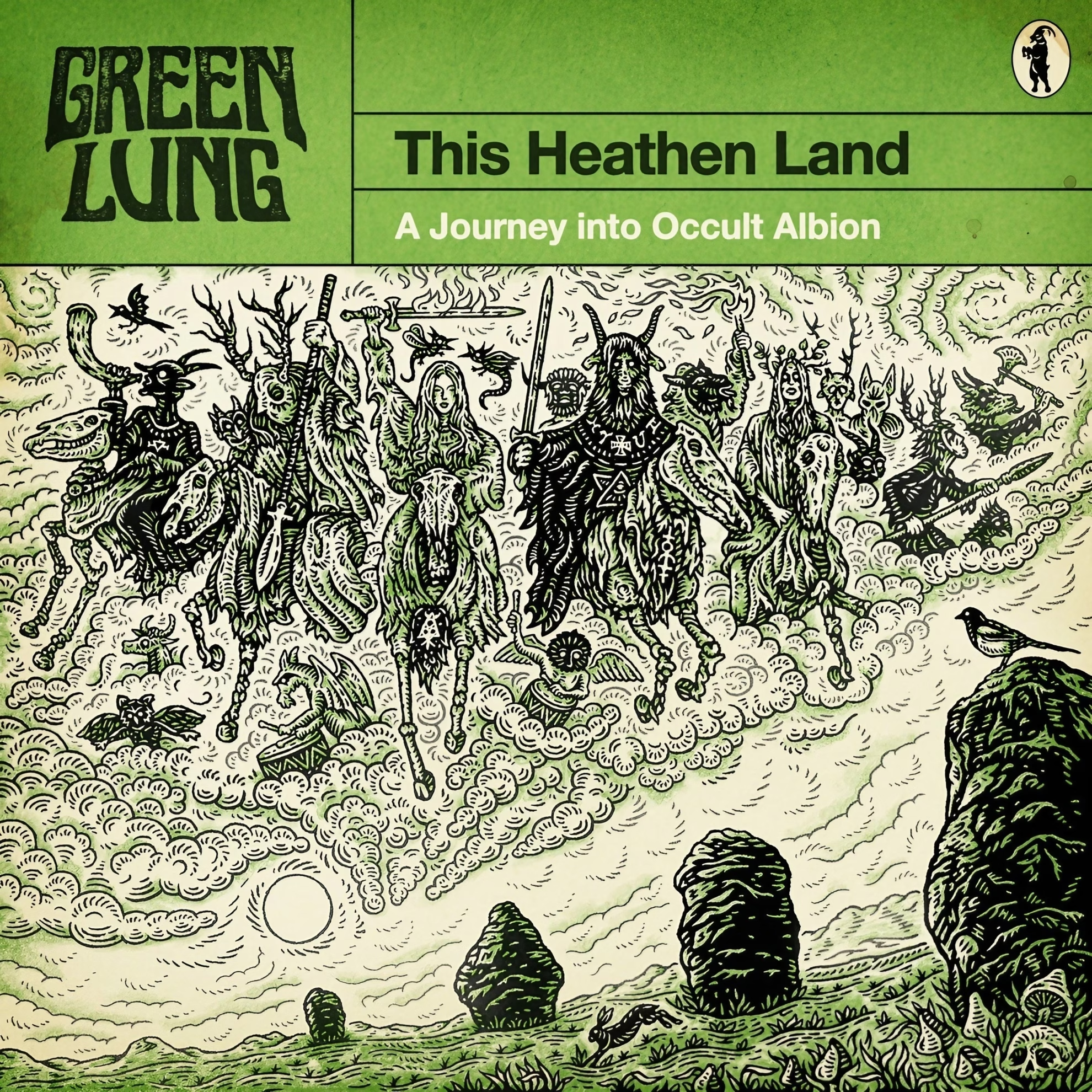
‘This Heathen Land’ reached number one on the UK’s Official Rock and Metal Album Chart on release, the commercial marker of a record that had, in the band’s account, set out to render an entire book of British folklore in musical form.
Dalgety Takes the Whole Desk
For ‘Necropolitan,’ Green Lung handed the entire process to Tom Dalgety, who recorded, mixed and produced the album outright rather than sharing engineering duties with Wayne Adams for the first time in the band’s history.
Dalgety’s documented credits include albums with Opeth and Ghost, two bands whose own catalogues move between progressive structure and theatrical heaviness, and his prior work mixing ‘This Heathen Land’ had already given him a working knowledge of Green Lung’s sound before this record began.
The sessions took place at Rockfield Studios in Monmouthshire, Wales, in January 2026, a studio with a documented history that includes Black Sabbath, Queen, Motorhead and Judas Priest among the acts that recorded there before Green Lung’s own sessions began.
The band has described the approach at Rockfield as a deliberate correction: after the layered arrangements of ‘This Heathen Land,’ ‘Necropolitan’ strips the material back toward the band’s live sound, recording much of the album together in the room rather than assembling it from overdubs, in pursuit of Hammond organ and Mellotron textures reaching the tape as directly as possible.
Engineer Tim Lewis worked alongside Dalgety on the sessions, with mastering handled once more by Robin Schmidt at 24-96 Mastering, the same mastering engineer who has worked on every Green Lung album since ‘Black Harvest.’
Three Songs From the Vault
Green Lung released three songs from ‘Necropolitan’ ahead of the album itself, each pairing a different piece of London’s occult history with a distinct approach to the band’s sound. ‘Black Magick Radio,’ the first, sets its verses inside the history of London proto-goth landmarks: Le Macabre, the Soho cafe once known for serving coffee over coffin-shaped tables, and the Process Church of the Final Judgement, a cult based in Mayfair before the Manson killings drew unwanted attention to groups of its kind.
Structured around the outlaw pirate radio stations of nineteen-sixties Britain, the track pulls its riffing toward Motorhead and Deep Purple rather than the pastoral prog leanings of ‘This Heathen Land,’ positioning the album toward a rawer, more direct register than its predecessor.
‘Necropolitan Line’ follows directly from the Waterloo-to-Brookwood history detailed above, and its arrangement matches the subject: a driving, subterranean rhythm section under a chorus shaped for repetition, the kind of structure suited to a song about a journey taken on rails.
‘Evil in this House,’ the record’s lead single, moves furthest from the historical material, arranged instead around a haunted house scenario scored with a Sabbath-weight riff and a synthesizer solo that plays like an electronic haunting. Where the first two singles argue for ‘Necropolitan’ as history rendered in riff form, ‘Evil in this House’ suggests the album keeps room for the more theatrical, purely fictional horror that has run through Green Lung’s catalogue since ‘Woodland Rites.’
Doom Rock Beyond Camden Town
Green Lung’s audience has never been confined to London, or to Britain. The band has toured internationally alongside Clutch, Opeth and Unto Others, and its festival appearances span Roadburn in the Netherlands, a gathering organized specifically around doom, drone and psychedelic heavy music, through to Bloodstock and Download in England and a 2026 headline slot at Desertfest London, the stoner, doom and psychedelic festival that has become one of the genre’s most established annual gatherings.
That circuit, rather than any single national scene, is where a record like ‘Necropolitan’ finds its actual listenership: a network of doom and occult rock festivals that treats British folk horror as one regional variation within a wider, internationally touring heavy music circuit rather than an isolated national style.
Heavy music’s relationship to death and mourning is not exclusive to Green Lung’s catalogue, but the band’s choice to draw that relationship from documented British institutions rather than genre convention places ‘Necropolitan’ inside a longer tradition of popular engagement with the mechanics of dying.
Victorian Britain’s own preoccupation with the rituals surrounding death, the mourning dress, the elaborate funeral, the physical distance placed between the living city and its dead, shaped a domestic culture in which death was planned for, dressed for and, in the case of Brookwood, given its own railway timetable.3 ‘Necropolitan’ does not need to argue that comparison directly; the album’s chosen subject matter makes it for them.
A City That Keeps Its Dead Close
London’s dead have never been as far from the living city as planners once hoped; Brookwood’s railway closed within living memory of people still alive today, and the terminus structure on Westminster Bridge Road stands occupied as ordinary office space a short walk from Waterloo station.
‘Necropolitan’ works from that same proximity, treating the machinery Victorian London assembled to manage its mortality not as a historical curiosity but as material still close enough to touch. The record’s occult rock trades in ritual and folklore because Green Lung have always worked that way, but its more particular achievement is finding, in an actual railway line and an actual act of Parliament, a subject with enough documented weight to carry an album’s worth of riffs without needing to invent anything.
What ‘Necropolitan’ argues, across three singles and a studio session arranged for directness, is that the occult history a band reaches for does not need to be borrowed from anywhere else. London supplied its own, and supplied it in enough documented detail that the songs can simply report what happened.
Green Lung’s audience beyond Britain has already shown, through years on the same festival circuits as bands from very different national traditions, that a record shaped from one city’s specific death-management history can still travel.
Does turning a real Victorian death-transport line into a doom record change your sense of that history, or does a song like ‘Necropolitan Line’ only work once you already know the story behind it?
If you are a band, artist, label, or promoter navigating the dark and independent scene, you need press materials that speak the language — not generic copy. Our Studio writes press releases, EPKs, bios, and website content for the underground and the vanguard alike. Plans start at $150, with turnaround as fast as 2 days.
References
- James Stevens Curl, ‘The Victorian Celebration of Death’ (Stroud: Sutton Publishing, 2000), 15–21. ↩︎
- John M. Clarke, ‘The Brookwood Necropolis Railway’ (Usk: Oakwood Press, 2006), 22–29. ↩︎
- Pat Jalland, ‘Death in the Victorian Family’ (Oxford: Oxford University Press, 1996), 195–201. ↩︎

Leave a Reply