

In April 2025, the forests of Northern Michigan vanished beneath a shell of ice. One of the most severe storms the region had recorded in a century collapsed the power grid across whole counties, left roughly 145,000 people without heat or light for weeks in temperatures far below freezing, and pushed the state into a formal emergency.
What the people who lived through it saw, once the wind fell still, was a strange order of ruin — trees bowed to the ground and sealed in glass, a wilderness at once radiant and dead.
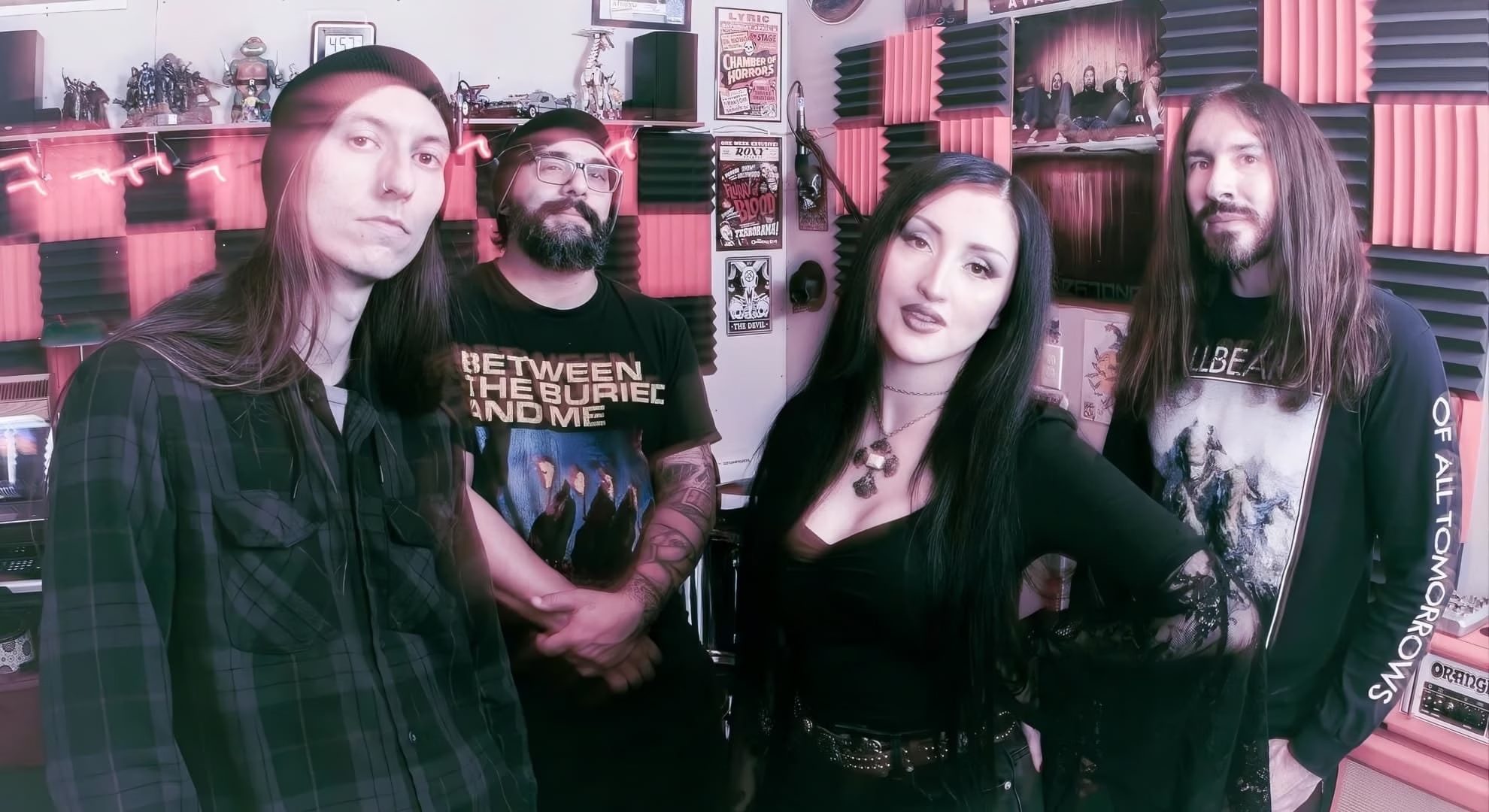
That doubled image, beauty and devastation locked inside the same frame, is the seed of a debut album and of the band that made it. The four musicians who watched their woods harden into a frozen grave took from the storm a name, a mood, and a governing idea about the way darkness and light hold each other in place.
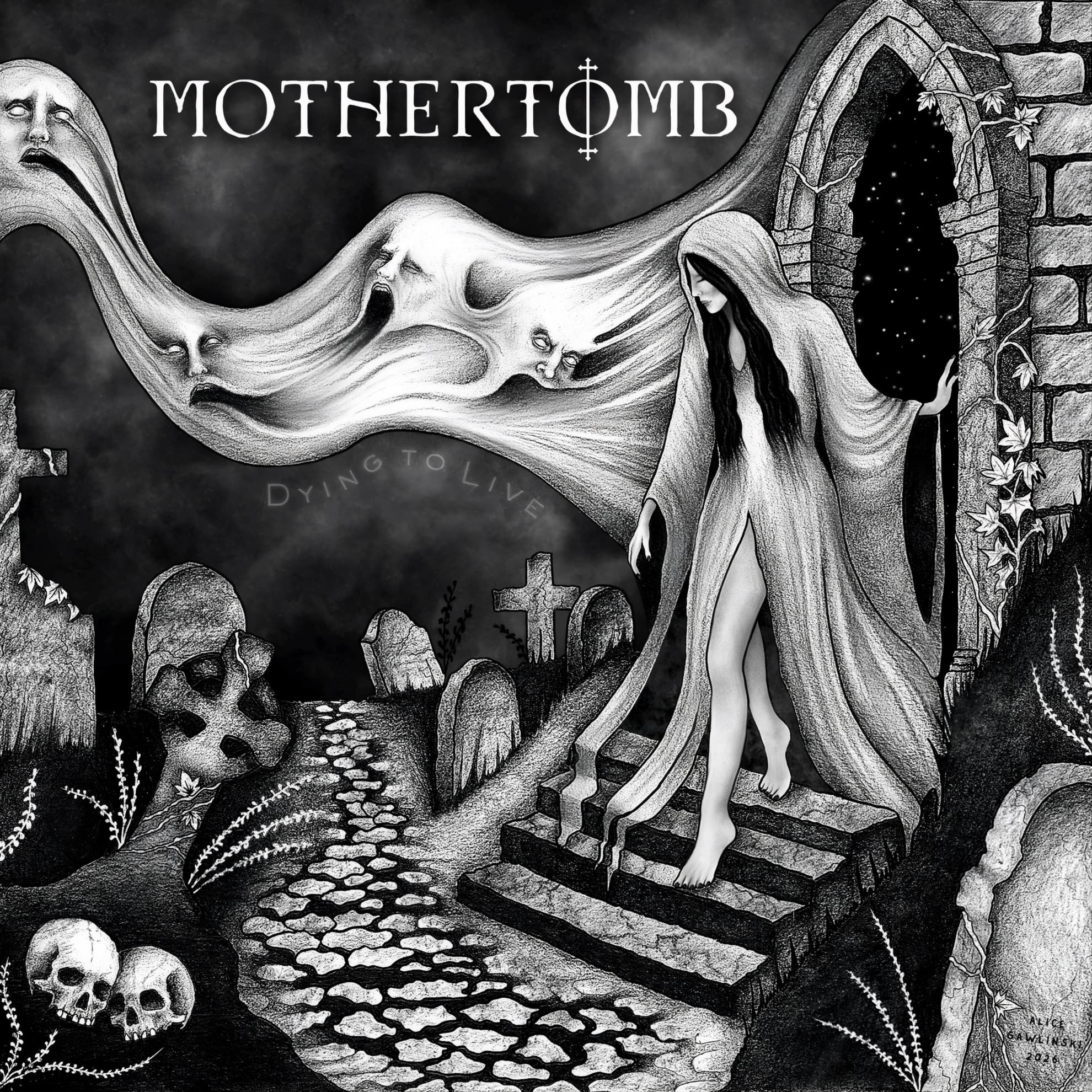
On July 14th, 2026, that idea arrives as ‘Dying to Live,’ the self-released first full-length by Mothertomb, a doom band from the rural woods around Petoskey. Five long tracks carry it, and it reaches toward an audience far beyond the Michigan winter that produced it.
A Band Named for a Frozen Grave
The group had been playing together for the better part of a year, by its own account, without a name that suited the sound. The storm settled the matter. The band described the frozen forests around them as at once beautiful and dead, mystical and horrifying, until the ice-bound wilderness seemed to them a place where “Mother Nature had created her own tomb.” The name followed from the thought.
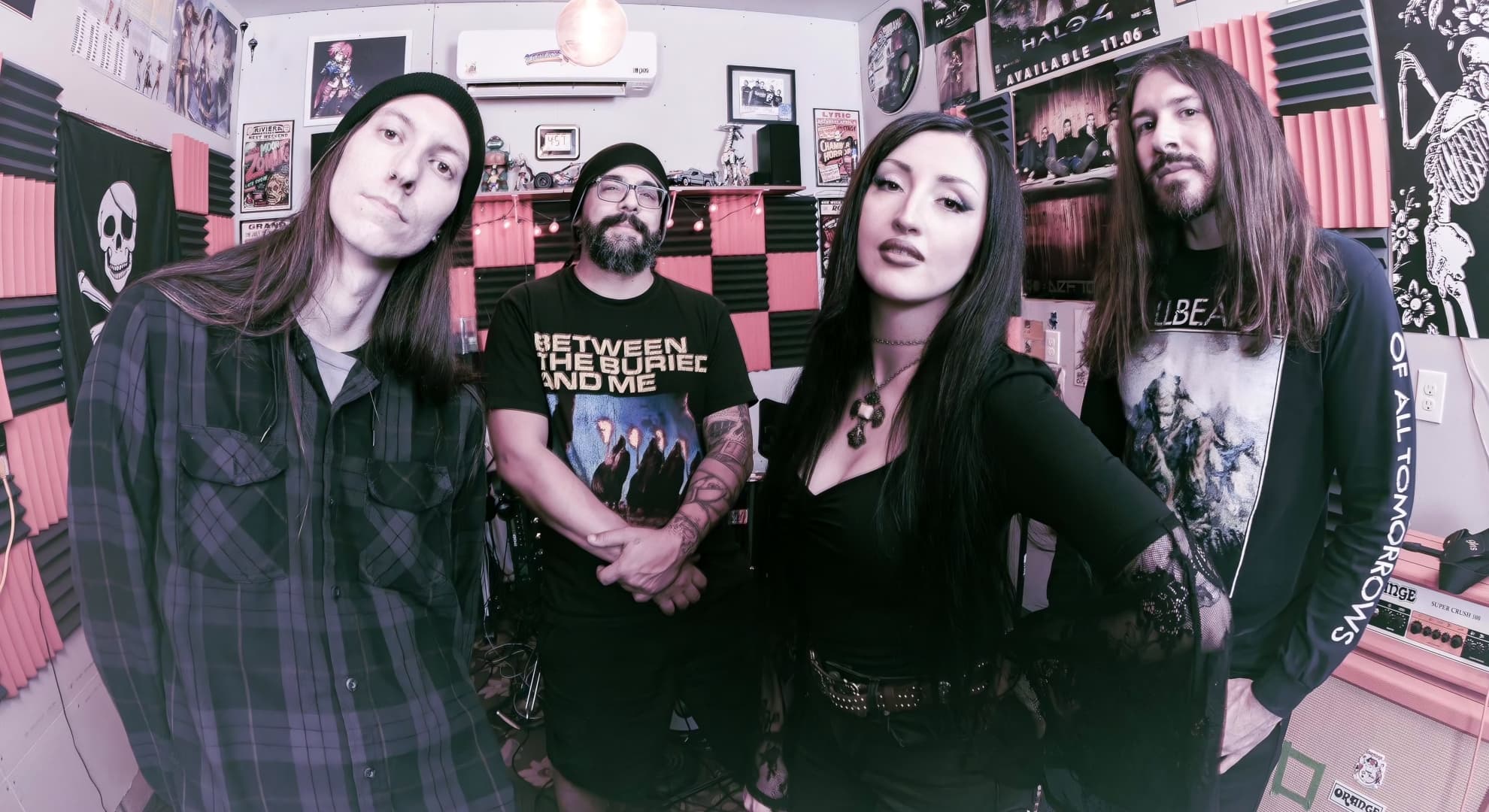
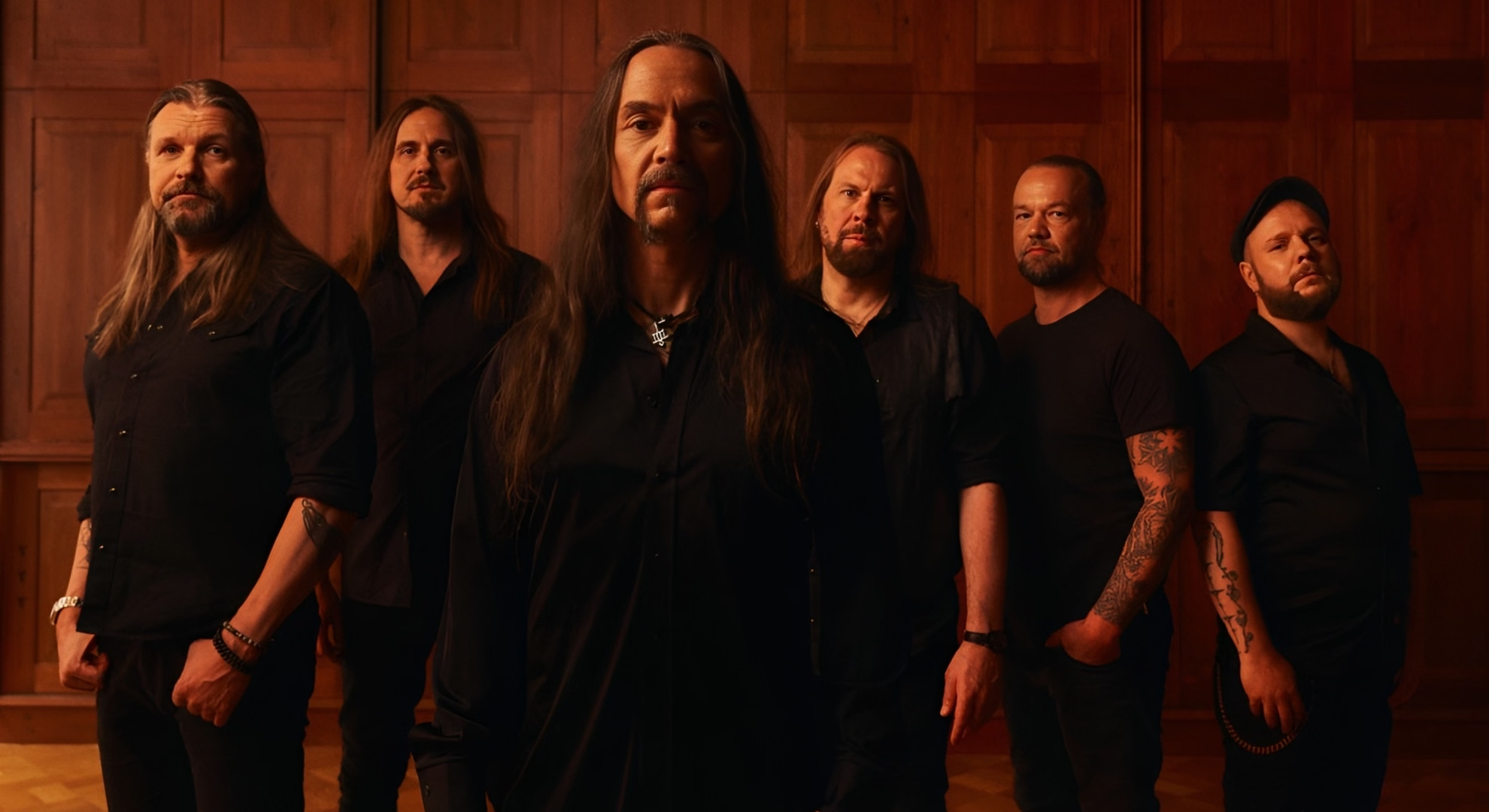
The lineup had come together in stages. Guitarist Chance Gawlinski and percussionist Mike Benitez began playing in 2023; the vocalist Alice Gawlinski joined soon after, and the bassist Alton Minor, who also serves as the group’s recording engineer, completed the four-piece by 2025. What had been an informal collaboration hardened, like the forests, into something with a fixed shape.
Northern Michigan is not incidental to that shape. The severe North has long served the imagination as a place onto which endurance, isolation, and a certain purifying bleakness are projected — a region understood less through its geography than through the feelings it is made to carry.1
Doom metal, a form built on cold, weight, and slowness, finds a natural home in that idea of the North, and Mothertomb draw their atmosphere directly from the dark lore of the territory that formed them.
A Welsh Voice Among the Riffs
The most distinctive thread in the band’s identity does not originate in Michigan at all. Alice Gawlinski, who writes the lyrics and created the album’s artwork as well as singing, is Welsh by birth, and her presence gives the record’s turn toward Welsh folklore a grounding that a borrowed motif could never supply. The second track, ‘Cythraul,’ takes the Welsh word for devil as its title.
That reach into Welsh myth places the album inside a long supernatural inheritance. The Welsh Gothic tradition is populated by devils, revenants, and the older spirits of a pre-Christian world, figures that survived in folk memory as embodiments of dread and moral warning.2
The allegory the band describes — inner demons, ancestral presences, unseen forces working on the human condition — belongs recognizably to that lineage rather than to the generic occultism that doom so often reaches for.
The governing theme, by the band’s account, is the contest between darkness and light: suffering, transformation, and a transcendence earned only by passing through the worst of it. The paradox in the title condenses the whole argument. To be dying to live is to treat ruin as the precondition of renewal, the same doubled image the ice storm pressed into the band at its origin.
The Weight the Singles Carry
Two tracks are already public and can be assessed on their own terms. ‘Beware,’ the debut single released in October 2025, introduced the band through a deliberate, ominous crawl, its dread built by patience rather than speed. Its cover borrowed Gustave Doré’s engraving from Canto 34 of Dante’s ‘Inferno,’ the image of Satan fixed at the frozen center of hell — an apt inheritance for a band conceived in ice.
‘Mountain Hag,’ the second and most recent single, released in January 2026, moves in a different direction. The band described it as a piece that pushes into new territory through shifting time signatures, tempo changes, and concept-driven writing, across a track that runs close to 10 minutes while holding to the group’s doom and stoner foundation. On the evidence of that single alone, ‘Dying to Live’ points toward accumulation and patience — a record that gathers weight rather than releasing it quickly.
The touchstones the band names — Black Sabbath, Candlemass, Pentagram, Windhand, Acid King — belong to a tradition that treats slowness and mass as method, not limitation. What that tradition pursues is close to what the eighteenth century called the sublime: the overwhelming scale, the vastness and terror, that produce the strongest feeling the mind can register.3
The monolithic riff, the mountain hag, the forest sealed in glass all trade in that same excess of scale, and it is the register in which the two singles most clearly operate.
The Room and the Hands That Shaped It
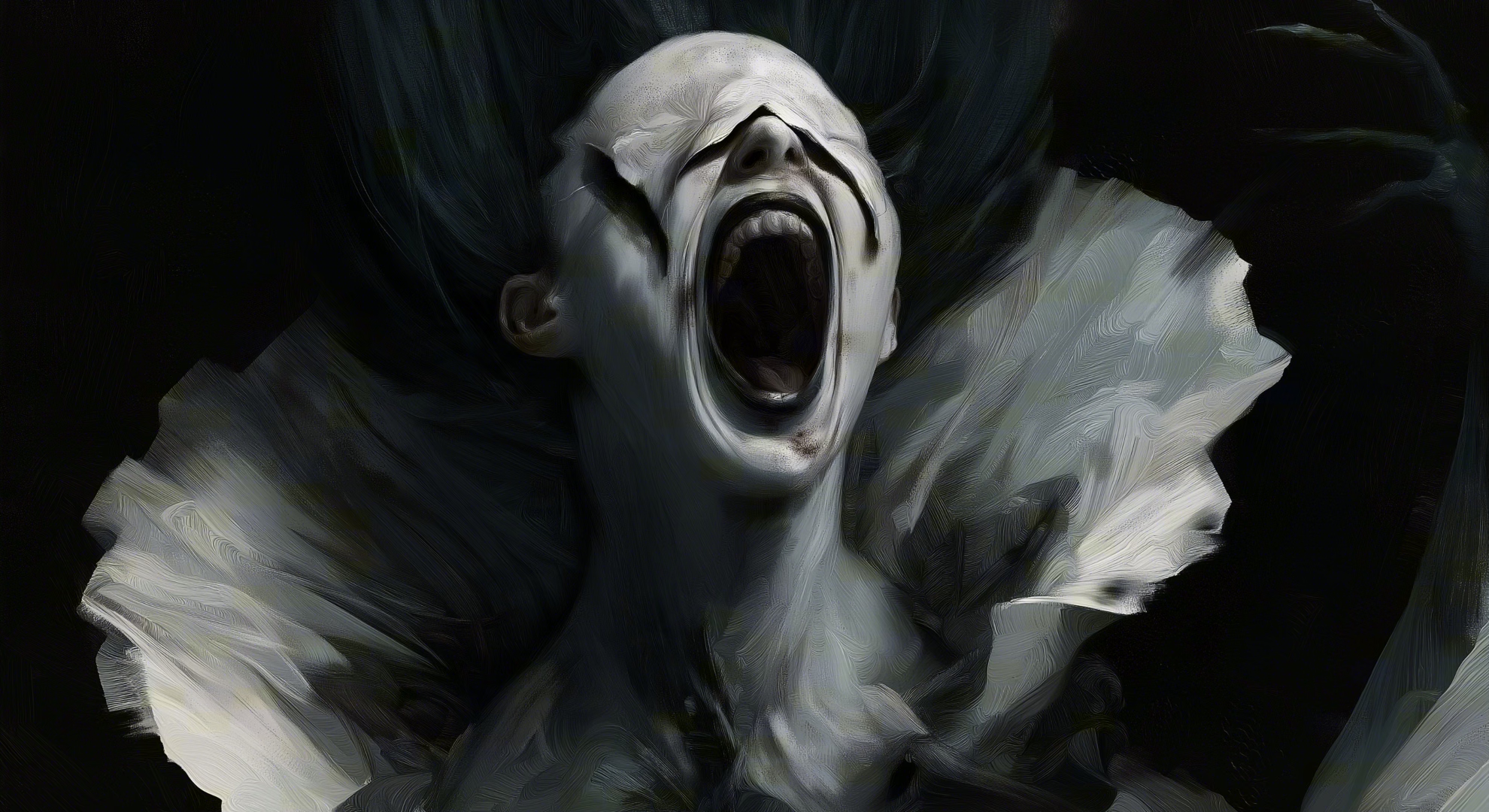
Everything about the record was kept inside the band. ‘Dying to Live’ was written, recorded, produced, and art-directed by Mothertomb themselves, tracked at Death Box Records in Charlevoix, Michigan. Alton Minor engineered, mixed, and mastered the album, with Mike Benitez assisting on the engineering, while Alice Gawlinski handled the cover and the visual direction. It is issued with no label behind it, on digital, compact disc, and cassette.
That self-sufficiency is a choice with its own history. The do-it-yourself method — a band acting as its own studio, label, and art department — has long carried a claim to autonomy within the underground, a refusal to route the work through any authority outside the group.4 For Mothertomb, the approach matches the material: a record about self-reliance in the face of collapse, made by self-reliance in fact.
The producer’s hand is therefore the band’s own, which complicates the usual reading of a record through its studio pedigree. Alton Minor’s engineering work outside Mothertomb could not be confirmed through available sources at the time of publication, so the production character can be inferred only from the public singles, which favor the clarity and forward placement of Alice Gawlinski’s voice over sheer density.
The Underground That Comes to Meet It
A self-released doom album of this kind does not arrive through wide promotional push. It reaches its listeners through direct channels — the two singles on the streaming services, the full record available through Bandcamp — and it depends on an audience willing to go looking. For much of the international underground, a physical doom record or a paid download represents a real cost against local wages, and that friction tends to select for committed listeners rather than casual ones.
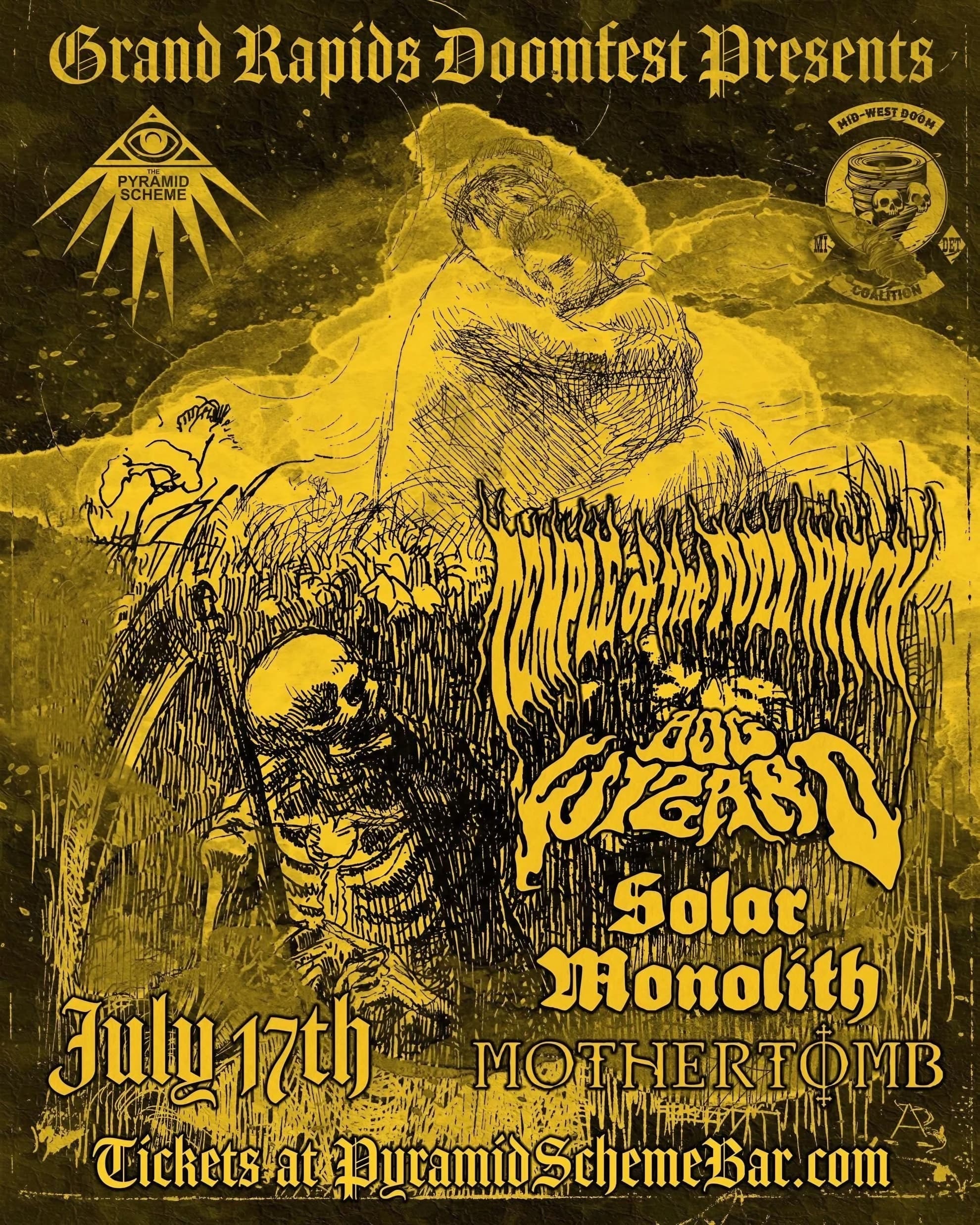
The band’s own scene is a smaller and more immediate matter. Three days after the album’s release, Mothertomb open a regional showcase at The Pyramid Scheme in Grand Rapids on July 17th, 2026, presented by Grand Rapids Doomfest with the Midwest Doom Coalition, alongside their fellow Michigan bands Temple of the Fuzz Witch, Bog Wizard, and Solar Monolith.
The show is a standalone regional bill, separate from the annual Grand Rapids Doomfest, whose third edition follows on October 10th, 2026, with a different lineup. That regional circuit — venues, festivals, a coalition of like-minded acts — is the ground the band grows from.
The distance between that local room and the wider underground the record can reach is the second half of its story. What travels beyond Michigan is not the specific geography of the Petoskey woods but the shape of the feeling the album gives form to: grief held against endurance, ruin turned toward renewal. Those are legible without translation, which is why a record so rooted in one frozen forest can land in scenes that have never seen snow.
The Light Inside the Ice
The image the band took from the storm is the one the album keeps returning to: a world encased in ice, beautiful precisely because it is dying. ‘Dying to Live’ proposes that the two states are not opposites but a single condition, and that the work of doom — the slowness, the weight, the descent into it — is a way of staying inside that condition long enough to see it clearly.
For a debut, it is an unusually complete idea, carried by a Welsh voice, a Michigan winter, and a tradition of heaviness that has always understood ruin as a subject worth dwelling in.
Whether the full five-track sequence sustains what the two singles propose is a question that July 14th, 2026, will answer. What is already clear is that Mothertomb have built their first record around a paradox durable enough to hold it — and that the underground most likely to receive it is one that has always known how to find beauty in the cold.
When a record routes a Welsh inheritance of devils and ancestral spirits through the frozen weight of American doom, and reaches its audience by patient discovery rather than reach, what does a listener with no tie to Michigan or to Wales actually recognize in it — the specific folklore, or the shape of the ruin the folklore is asked to carry?
References
- Peter Davidson, ‘The Idea of North’ (London: Reaktion Books, 2005), 21–27. ↩︎
- Jane Aaron, ‘Welsh Gothic’ (Cardiff: University of Wales Press, 2013), 12–18. ↩︎
- Edmund Burke, ‘A Philosophical Enquiry into the Origin of Our Ideas of the Sublime and Beautiful,’ ed. Paul Guyer (Oxford: Oxford University Press, 2015 [1757]), 53–59. ↩︎
- Alan O’Connor, ‘Punk Record Labels and the Struggle for Autonomy: The Emergence of DIY’ (Lanham: Lexington Books, 2008), 31–37. ↩︎
Leave a Reply