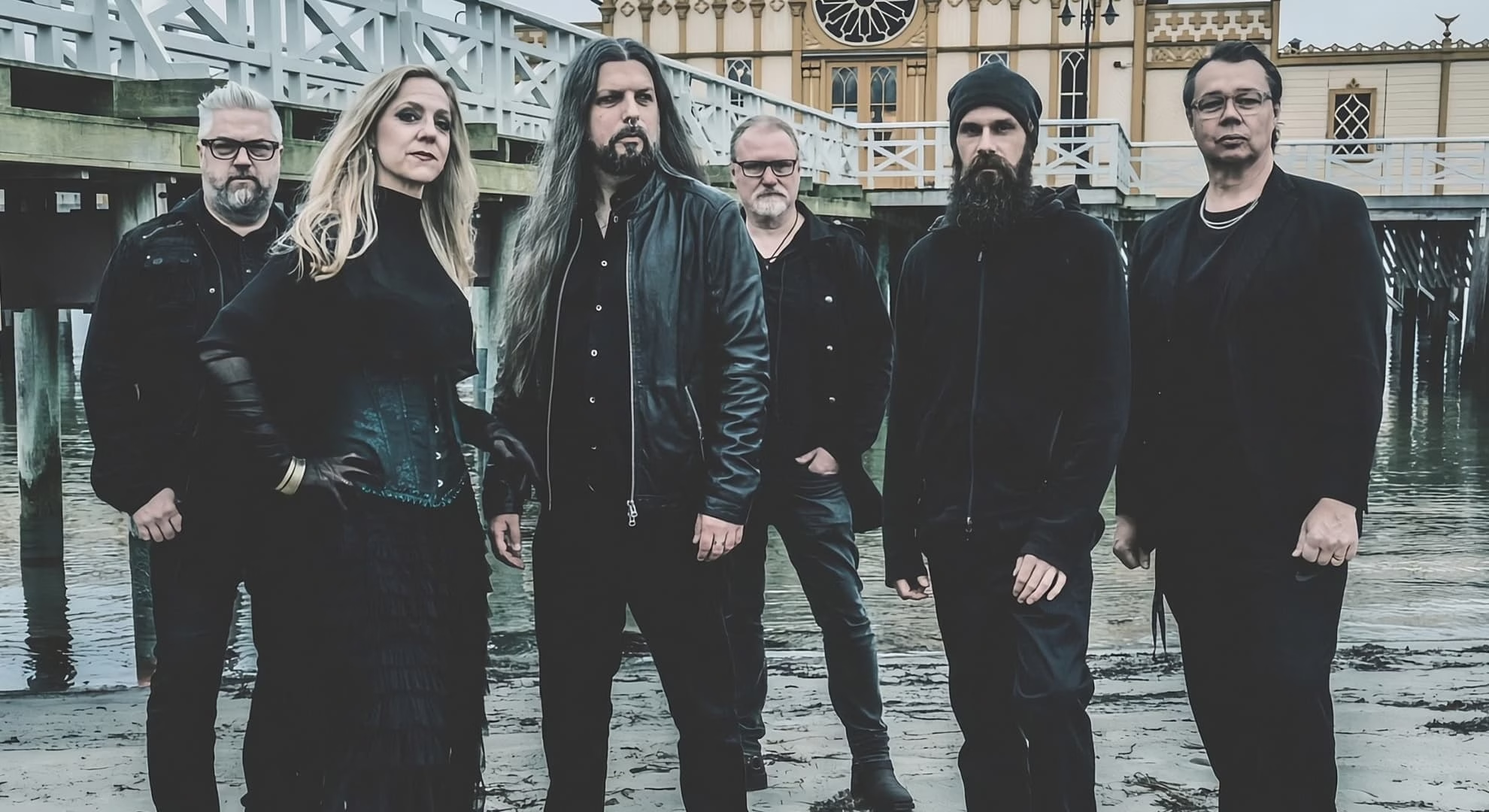


Swedish heavy music in the nineteen-nineties was defined by two competing gravitational centers. From Gothenburg came the melodic death school, defined by tightly arranged guitar harmonics and a structural aggression that would shape the following decade of extreme metal. From elsewhere in Sweden came a different impulse: slower, more atmospheric, drawing from British gothic rock and early doom-death to produce a school of dark romanticism whose commercial peak burned bright between 1999 and 2005 before dissolving almost entirely into the wider melodic metal market. It was in Borås, in 1992, that Beseech positioned themselves directly at this second center.
Their founding placed them in precise company. Tiamat had released ‘Wildhoney’ in 1994, which remains the record that demonstrated how far Swedish gothic metal could move from its death-doom origins without losing structural weight. Lake of Tears, Katatonia’s early work, Cemetary—each band offered a distinct interpretation of what darkness might sound like in a Nordic register that had little patience for the operatic excess that defined some of the genre’s British variants. Beseech, founded in Borås as Cemetary had been, worked within this tradition without imitating any single branch of it.
What the Voices Argued
The band’s first demo, ‘Tears,’ appeared in 1995, followed by the debut album ‘…From a Bleeding Heart’ in 1998 and ‘Black Emotions’ in 2000. Each of these records established a working vocabulary, but the specific identity of the band crystallized on ‘Souls Highway’ in 2002, when vocalist Erik Molarin joined Lotta Höglin in the lineup that would come to define the band’s most remembered period.
Höglin had joined in 2000; Molarin followed in 2001. Their contrasting registers—his baritone gravity against her melodic range—created a duality that operated less like the “beauty and the beast” convention that had spread through European gothic metal since Theatre of Tragedy’s development of it in the mid-nineties and more like two halves of a single argument.
The albums ‘Drama’ (2004) and ‘Sunless Days’ (2005) continued this argument. Then, in 2006, the band dissolved. A first reunion followed in 2013 and produced ‘My Darkness, Darkness’ in 2016, but that incarnation did not include Höglin or Molarin. The argument was suspended. ‘Future. Present. Past.’ is the first record since dissolution on which both vocalists appear together, and ‘Hesitation’ is its third single in the campaign sequence.
Filmed in Sweden, Framed in Monochrome
The official music video for ‘Hesitation’ premiered on May 29th, 2026, via the Despotz Records channel on YouTube. It was co-directed by Erik Molarin and Mathias Coulouri of Coulouri Photography. The production is a single video spanning all three singles from the album campaign — ‘Boundless Space,’ ‘End This,’ and ‘Hesitation’ — rather than three discrete productions.
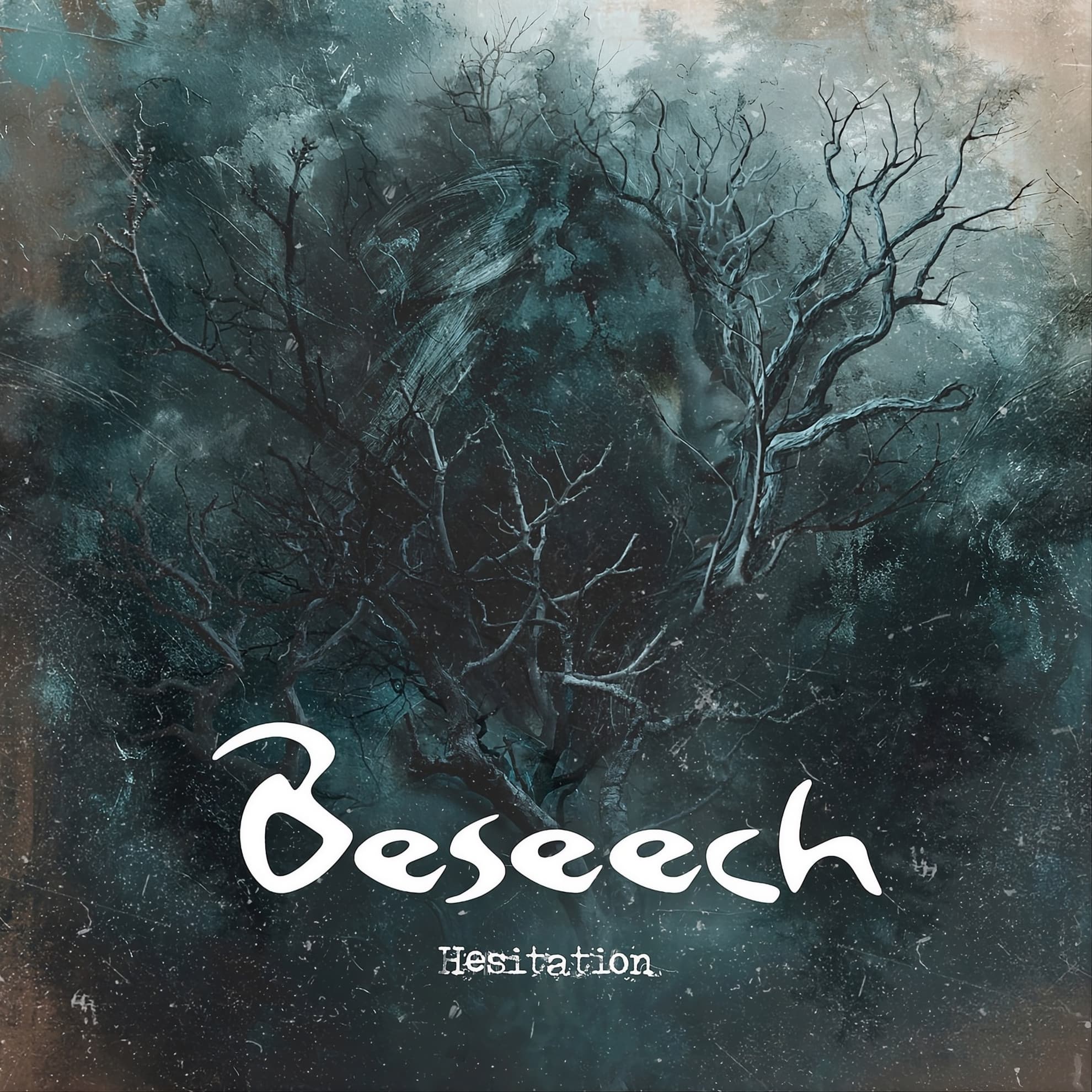
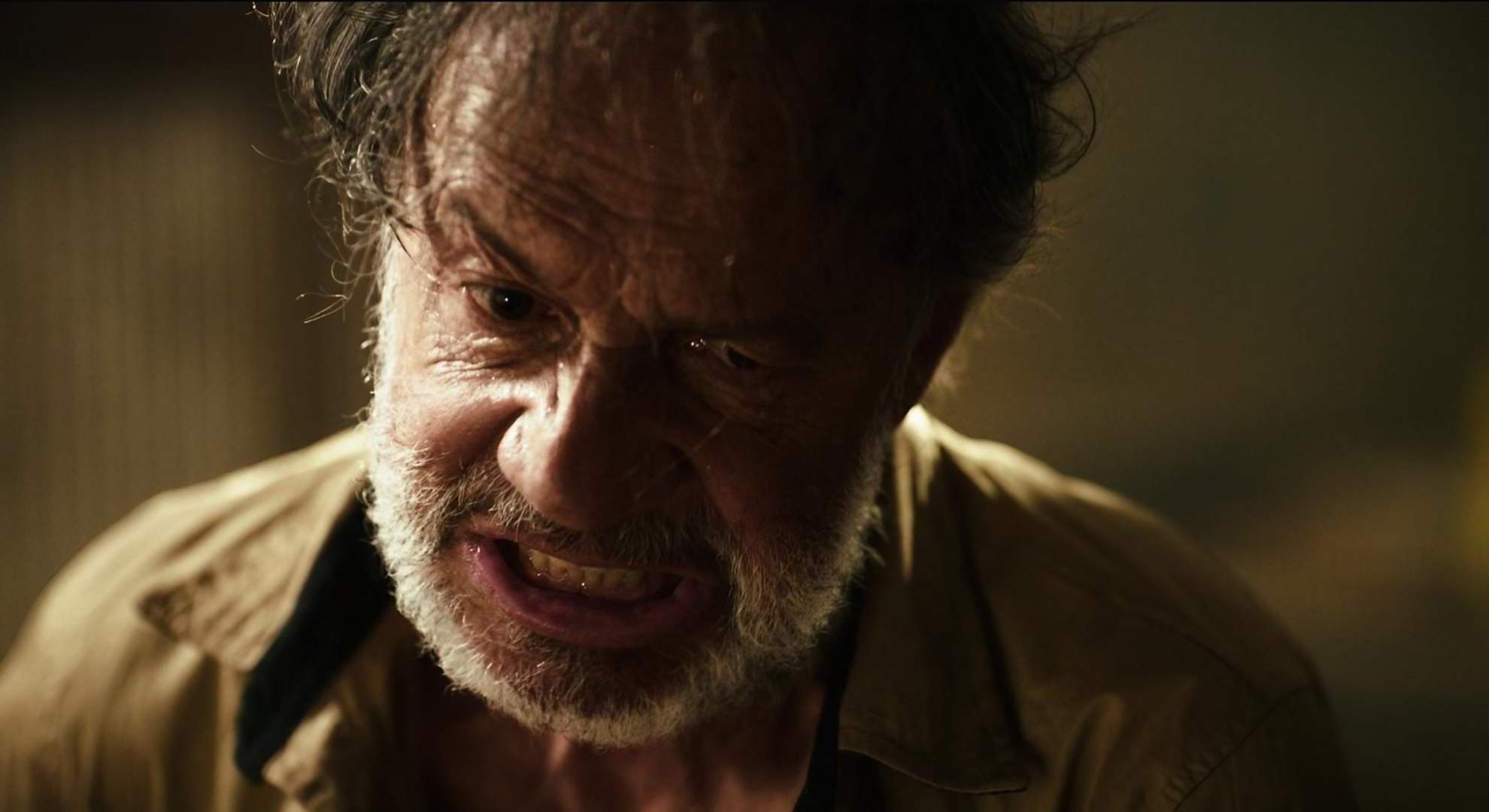
The visual approach is a disciplined one. The video employs a cool, desaturated palette—grays and near-blacks dominating the frame, with skin tones appearing in the wan register of winter light drained of warmth. The camera work is unhurried: held wide shots that allow the space around the performers to carry emotional weight, punctuated by close-ups that focus on the vocalists’ faces and hands without ornamental editing.
The cutting rhythm tracks the song’s tempo without slavishly mirroring it, allowing certain passages to linger slightly beyond what a faster edit might permit.
The location reads as interior and spare—stripped surfaces, controlled shadow—placing the video within a long Scandinavian tradition of using studio environments as chambers of psychological rather than geographic specificity. This is not a landscape video. It refuses the forests and northern light that have decorated a significant portion of Swedish gothic and black metal production, choosing instead a contained space in which the vocalists’ presence is the primary subject.
In this it operates closer to the sensibility of Katatonia’s mid-period video work, where emotional interiority was staged as literally interior space.
The Song’s Double Refusal
The lyrics of ‘Hesitation’ open with negation: “Never gonna lie again, / Never gonna give in.” The refrain builds on this structure of refusal, accumulating declarations of what the subject will not do—will not fall, will not beg, will not accept. These are set against an opposing current: an “always” that acknowledges holding on, an “always willing to embrace.”
The tension between the two grammatical registers—never against always—is the formal shape of what the song describes: an internal condition that will not resolve into either surrender or release.
The line “will you give me words to explain what I see in us / how our souls intertwine to a path to the other world” asks the collaborating voice for language that the speaker cannot produce alone. This is not decorative sentiment. In the context of a vocal pairing twenty years in the making, it carries a specific biographical charge: the speaker requires the other voice to complete a meaning that is structurally unavailable to one voice working alone.
The video does not illustrate this thematically. It enacts it. Molarin and Höglin appear within the same frame repeatedly—not as a conventional duet staging in which two performers alternate, but as simultaneous presences whose proximity is itself the visual argument. The shared frame is the answer to the lyric’s question.
Toward August 28th
‘Future. Present. Past.’ is an eleven-track album scheduled for release on August 28th, 2026 via Despotz Records, a Stockholm-based independent label with a catalog that has ranged across punk, rock, and metal. It was produced by Christian Silver, the band’s current drummer, who also produced earlier Beseech material. The album cover artwork is credited to Fulton Hobbs; the individual single covers across the campaign were designed by Brazilian designer Rafael Sales.
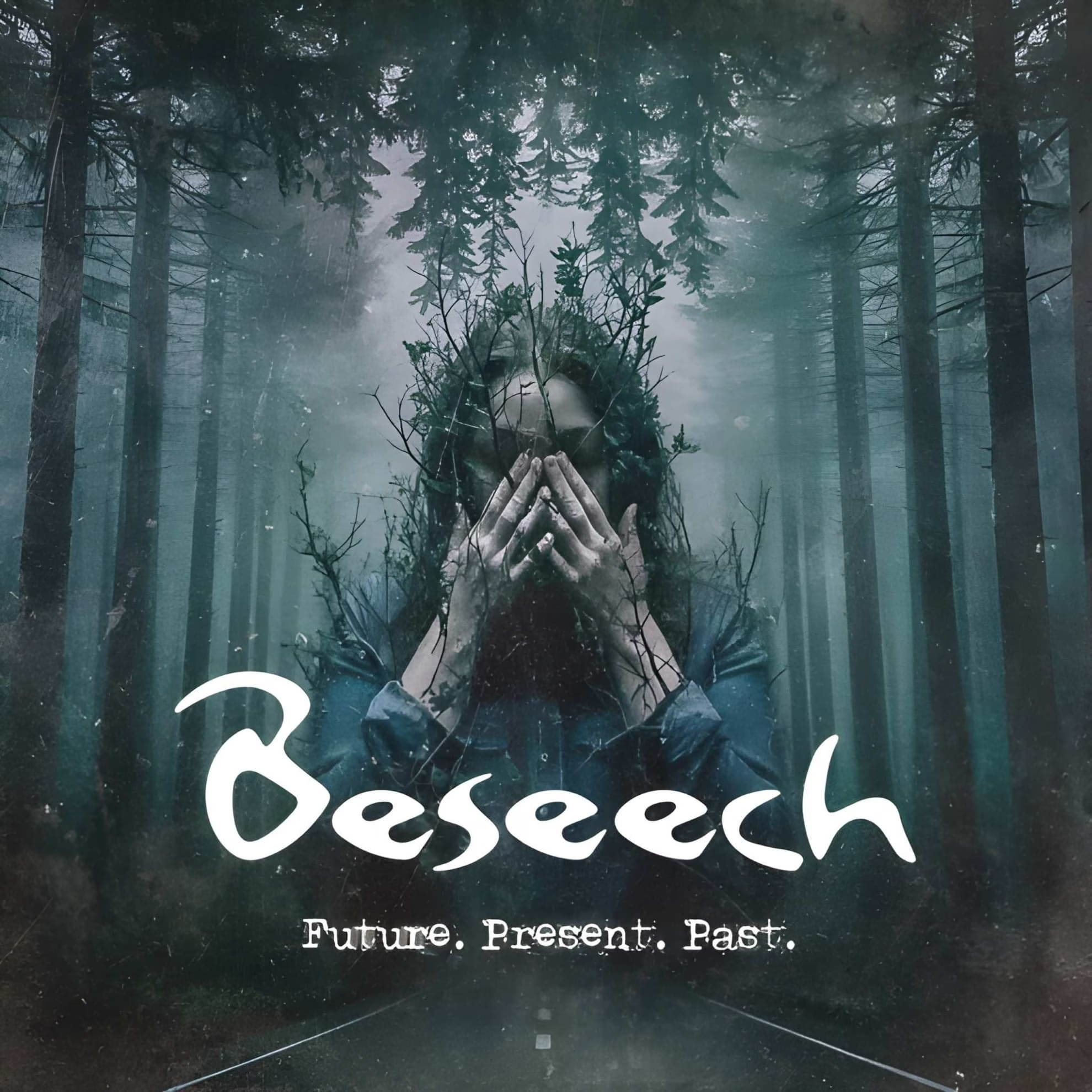
The tracklist runs from ‘Ambiguous Mind’ through ‘Between Worlds,’ with ‘Hesitation’ positioned second and ‘Boundless Space’ and ‘End This’—the two preceding singles, both drawn from the same single video production that spans all three tracks—placed third and fourth.
The title places chronology itself as the album’s organizing theme: future before present before past, the sequence run backwards, which is less a temporal trick than a statement about the emotional order in which reunion makes sense.
The Sound of an Argument Resumed
What Beseech have assembled in ‘Hesitation’ is not nostalgia reassembled for an anniversary. It is, rather, a specific two-voice argument that was interrupted by dissolution and that can only be completed by the two voices that began it.
The video, in its restraint, directs attention toward exactly this: two performers sharing a frame, a cool palette that removes decorative warmth, a camera that waits rather than moves. The single does not try to recover the nineteen-nineties. It tries to finish a sentence that was left unfinished in 2006.
When a band’s defining argument is embedded in the specific pairing of two voices rather than in a musical style, can the work completed after a long interruption carry the same weight as the work that preceded it—or does the interruption become part of the meaning?
Leave a Reply