
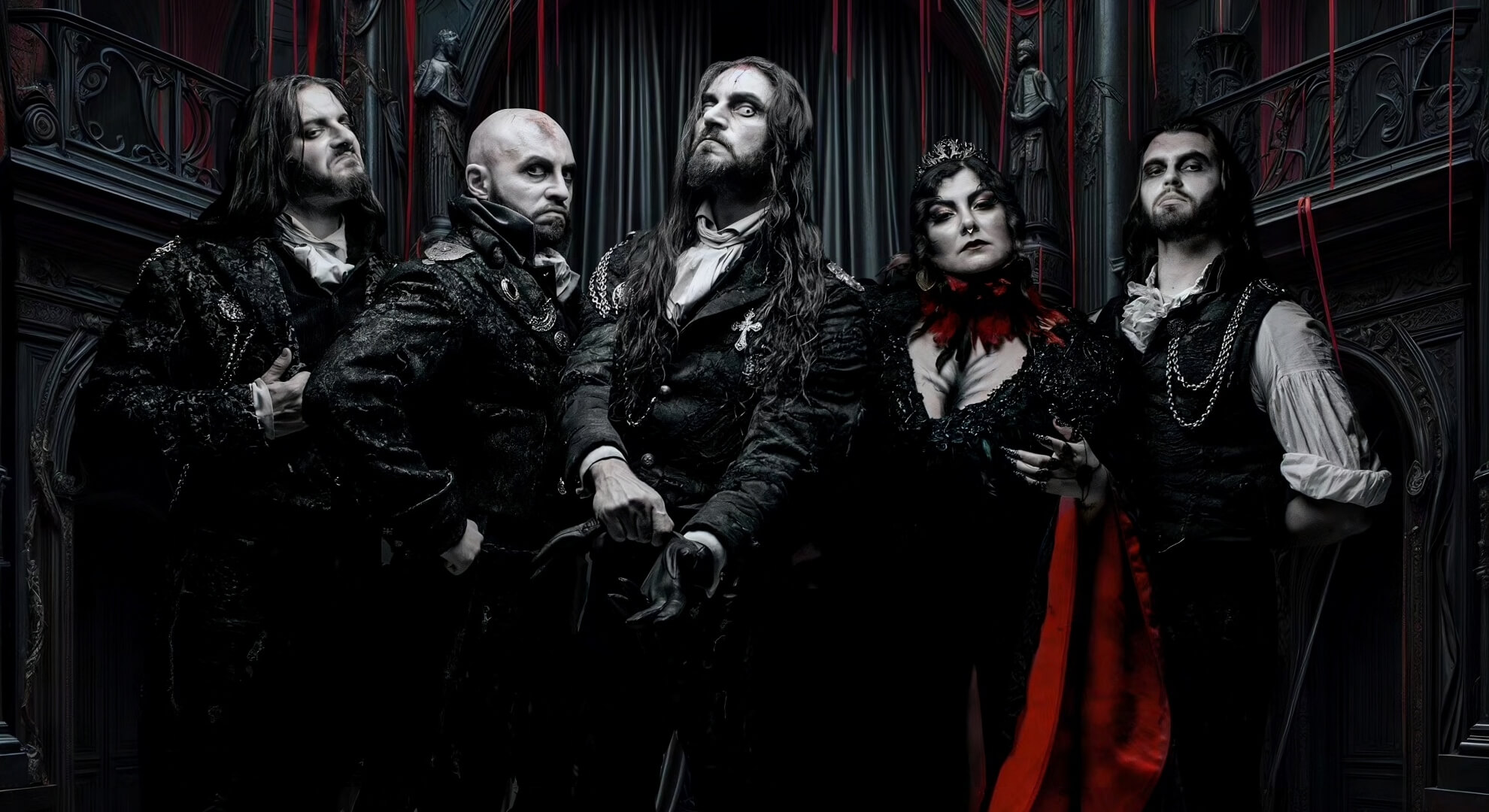


The ornate lobby of the Aztec Theatre is a disorienting threshold. Columns carved with Coyolxauhqui — the Aztec moon deity, eyes lit a permanent red — line the approach to the main hall, and the three-ton chandelier suspended above dates from 1929, installed on the very day the stock market collapsed. When Fleshgod Apocalypse takes the Aztec Theatre’s stage on April 22, the confrontation between their Italian operatic excess and this Mesoamerican temple-as-concert-hall will not merely be atmospheric. It will be historically freighted.
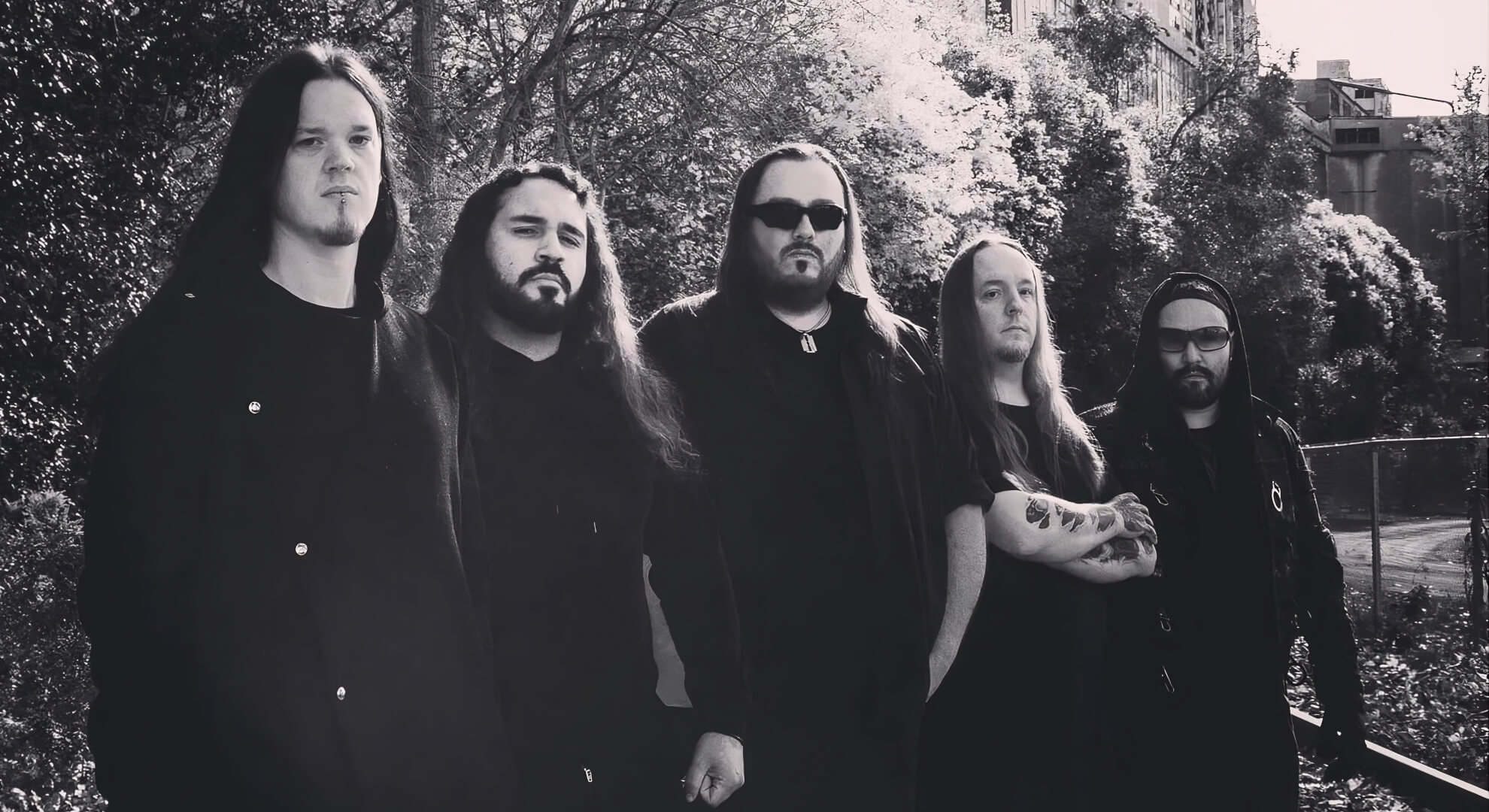
Fleshgod Apocalypse have spent nearly two decades making the argument that death metal and the European classical tradition share the same obsession with mortality and grandeur — and that this obsession is not decorative. Their 2024 album ‘Opera,’ the sixth in their discography and released through Nuclear Blast Records, is the most concentrated statement of that position to date. The album’s ten tracks are structured as acts in a theatrical work, moving from anguish through survival toward something that cannot quite be called resolution.
The conceptual weight is genuine. Frontman and founding member Francesco Paoli’s fall during a mountain climbing accident in August 2021 left him with multiple injuries and a prolonged recovery. ‘Opera’ does not dress this up as metaphor; the fall and its aftermath are the album’s literal subject. Paoli described his aim for the record as guiding the listener through his own recovery process — not as triumph but as testimony.
What distinguishes ‘Opera’ from its predecessors is not its ambition, which has always been extreme, but the degree to which soprano Veronica Bordacchini has moved from touring collaborator to structural center. Bordacchini became an official band member in 2020, and on this record her vocal line is not ornamentation.
In ‘I Can Never Die’ and ‘Per Aspera ad Astra,’ she carries the album’s primary emotional argument.1 The tension between her classical precision and Paoli’s controlled aggression is not a contrast of opposed registers — it is a deliberate investigation of what a human voice can simultaneously hold.
Frozen Soul and the Severity of Texas
Fort Worth’s Frozen Soul offers a different proposition. Founded in 2018 and signed to Century Media Records, the band draws from the methodical, grinding traditions of Bolt Thrower and Obituary — bands for whom speed was never the essential point. Their two full-lengths, ‘Crypt of Ice’ in 2021 and ‘Glacial Domination’ in 2023, have found them a steadily growing audience. Chad Green’s vocals are direct, the arrangements deliberate, the weight something applied rather than accelerated into.
Texas has produced metal of lasting consequence — from the groove-centered aggression of Pantera to the more recent brutality of Power Trip — and Frozen Soul fit a tradition of treating heaviness as a moral stance.2 Placing them alongside Fleshgod Apocalypse is not a matter of genre proximity but of contrast used productively. Both bands arrive at extreme weight through entirely different philosophies of what that weight means.
The Theatre at 104 North St. Mary’s
The Aztec Theatre opened June 4, 1926, as an atmospheric picture palace designed by the firm of Meyer and Holler — the same partnership responsible for the Egyptian and Grauman’s Chinese Theatres in Los Angeles. The interior was the most elaborate example of Mesoamerican-themed atmospheric design in the United States: polychromed columns modeled on Mixtec and Zapotec ceremonial sources, organ grilles of gilded serpents representing Quetzalcoatl, and a fire curtain depicting the 1519 meeting of Hernán Cortés and Montezuma II that has hung above the stage for a century.3
The theatre also carries violence in its history. In 1932, during a dispute between management and the projectionists’ union, a sulfur bomb detonated inside — burning six people, two critically. The men believed responsible were never charged. The Aztec Theatre closed in 1989, sat vacant for years, and was added to the National Register of Historic Places in 1992. It now operates as a concert hall with a capacity of 1,477 — a restored ceremonial space that has never required external justification for its own strangeness.
A Tour That Keeps Its Own Calendar
The Don’t Go in the Forest 2026 tour is headlined by Swedish theatrical metal act Avatar, and Fleshgod Apocalypse appear as direct support. Frozen Soul, who also accompany the headlining dates, complete a three-act bill of considerable range. The San Antonio stop falls on April 22, with doors at 6:00 p.m. and the show beginning at 7:00 p.m. The event is all-ages, and every attendee requires a ticket regardless of age.
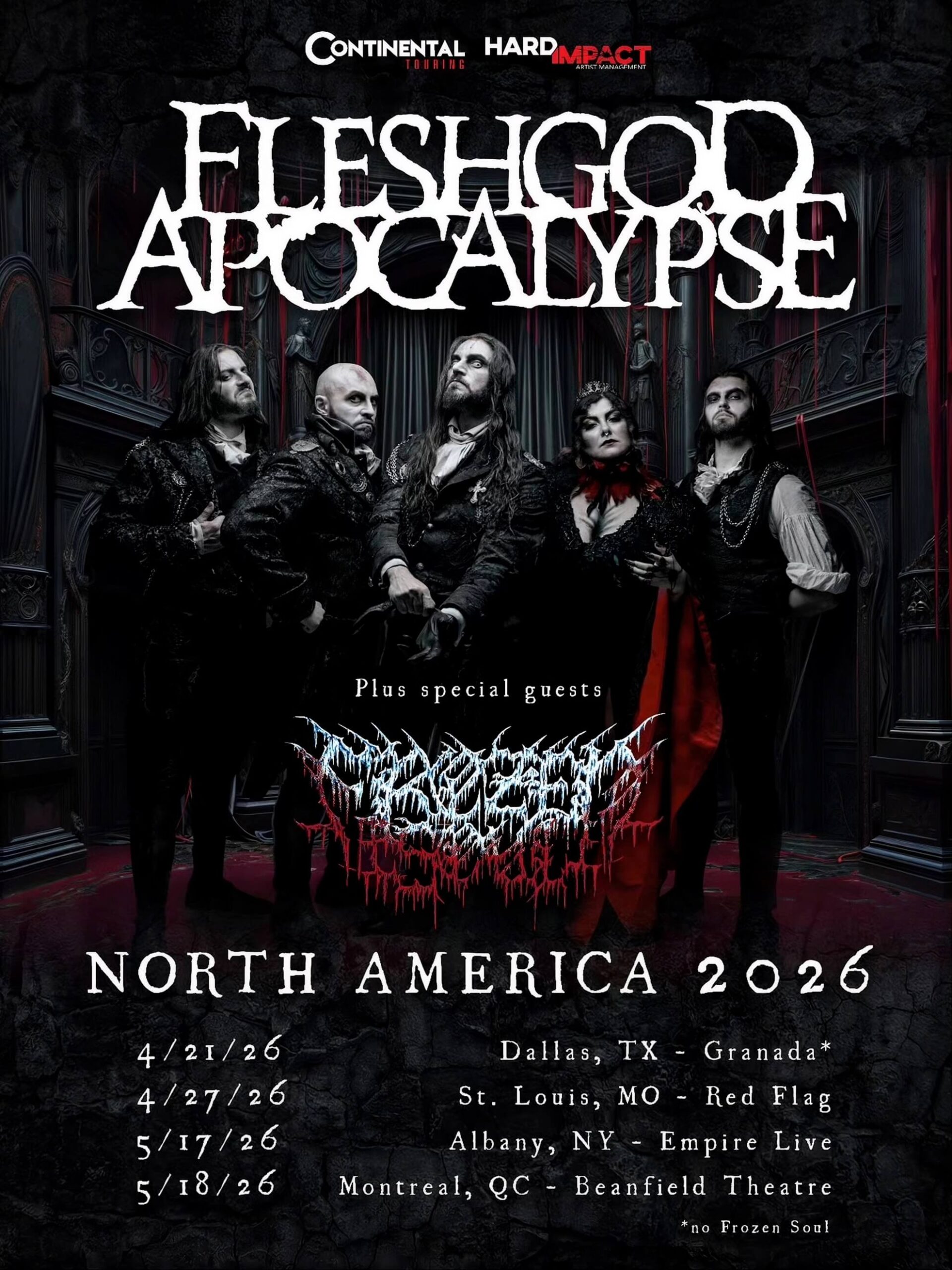
General admission floor tickets are available from $59, with reserved seating options across the mezzanine and balcony sections — the latter accessible by stairs only. No prior confirmed performance by Fleshgod Apocalypse at the Aztec Theatre specifically could be verified at the time of publication. Tickets are available now through major ticketing platforms.
San Fernando Cathedral and the Weight of 1836
Four blocks north of the Aztec Theatre, facing Main Plaza, the Cathedral of San Fernando has been a working religious site since 1738. Its present form dates from an 1868 Gothic Revival renovation directed by architect François P. Giraud, who replaced the original bell tower and part of the nave with twin towers, pointed arches, and triple entrance portals, while preserving the colonial sanctuary walls beneath.
The structure’s connection to the Battle of the Alamo is direct and documented. In 1836, General Antonio López de Santa Anna ordered the blood-red flag of no quarter — the signal that the Alamo’s defenders would be shown no mercy — raised from the cathedral’s tower. The tradition that the remains of Alamo defenders are interred in its crypt has never been conclusively settled, though the association has accumulated weight across nearly two centuries.
At night, the Gothic Revival facade serves as the projection surface for ‘San Antonio: The Saga,’ an installation by Xavier de Richemont that plays on designated evenings. For the visitor arriving early to the Aztec Theatre, the cathedral holds nearly three centuries of consecration, conquest, and survival compressed into carved stone — four blocks and a few minutes’ walk from the night ahead.
The Night Itself
What makes the Aztec Theatre unusual among American concert halls is that its own history — the labor bombing, the decades of abandonment, the Mesoamerican ceremonial interior that was always both extravagant and incomplete — already constitutes an argument. No performer needs to bring that argument from the outside.
Fleshgod Apocalypse arrive in April with a record composed from one man’s account of his own near-death, performed by a band that has replaced every foundational element of its earlier form with something more demanding. The encounter between that record and that hall is not incidental to the night. It is the night.
‘Opera’ was composed as a private accounting — one man’s passage from mortality toward renewal — and has since been performed in public for nearly two years. When that material reaches a hall whose ceremonial interior was designed to induce awe in a paying crowd, what does the act of performance do to the act of confession?
References
- Susan McClary, ‘Feminine Endings: Music, Gender, and Sexuality’ (Minneapolis: University of Minnesota Press, 1991), 53–55. ↩︎
- Deena Weinstein, ‘Heavy Metal: The Music and Its Culture,’ rev. ed. (New York: Da Capo Press, 2000), 23–27. ↩︎
- Gerald Moorhead et al., ‘Aztec Theatre,’ in SAH Archipedia, eds. Gabrielle Esperdy and Karen Kingsley (Charlottesville: University of Virginia Press, 2012) ↩︎
Leave a Reply