


Geography plays a starring, chaotic role in the grand narrative of heavy music—it is far more than a mere setting. Take, for instance, the industrial landscape of late 1960s Birmingham: it was not just where Black Sabbath happened to be; it was the birthplace of their defining frequencies of doom. Likewise, the frigid, solitary fjords of Norway did not merely frame black metal; they prescribed its characteristic treble-heavy, hypothermic aesthetic.
As we look toward February 1, 2026, we must look beyond the mere logistical fact that Rivers of Nihil are scheduled to perform at the Boro Room in Bogotá, Colombia. We must look instead at the meeting of two distinct spiritual geographies: the rusted, post-industrial melancholia of the American Rust Belt and the high-altitude, breathless intensity of the Andean metropolis.
This event marks a pivotal moment in the career of the band. It is a debut—a first landfall for the group in a country whose devotion to heavy metal is a form of secular religion. For a band that has spent the last decade shifting the boundaries of technical death metal, this performance represents a litmus test of their new identity.
Rivers of Nihil: The Evolution of Industrial Decay
The weight of this arrival in Colombia is rooted in the burden of history the band carries from Reading, Pennsylvania. This environment of decay and rust has always permeated their sound, distinguishing them from their peers. In the broader context of technical death metal, the genre often functions as a sonic response to the acceleration of late-stage industrialization, where the complexity of the music mirrors the intricate, often alienating structures of the modern world.1
Their discography has famously followed a seasonal narrative, but the Bogotá show is less about a timeline and more about the culmination of these shifts.
The transition from the elemental fury of their early work to the jazzy, autumnal heartbreak of ‘Where Owls Know My Name’ proved that extreme metal could be a vehicle for sophisticated emotional storytelling. This was followed by the bleak, industrial realism of ‘The Work,’ which captured the isolation of a global standstill. Now, the band has entered a fifth season—a self-titled rebirth that strips away experimentation in favor of a direct, aggressive focus on songcraft.
Lineage and the Realist Tradition
To perceive Rivers of Nihil in their proper context is to see them as the heirs to a lineage that began with the technical precision of Chuck Schuldiner’s Death and the atmospheric sprawl of early Opeth. However, where their predecessors often looked toward the mythological or the abstract, Rivers of Nihil have rooted themselves in a gritty, terrestrial realism.
Their focus on the work—the physical and spiritual toll of modern existence—mirrors the industrial realism found in the literature of Upton Sinclair or the social critiques of Émile Zola. Just as the novel ‘The Jungle’ exposed the gears of the American industrial machine, the recent output of the band serves as a sonic examination of the psychic damage inflicted by the grind of capital.
Historically, metal has often acted as a site of negotiation for the working-class sublime, where the sheer volume and technicality of the music provide a sense of agency within an otherwise disempowering economic environment.2
In a cinematic sense, their sound possesses the grainy, high-contrast texture of New Hollywood films from the 1970s—think the urban decay of William Friedkin or the industrial desolation of David Lynch’s ‘Eraserhead.’ They stand apart from the sun-bleached, hyper-polished technical death metal of the West Coast, opting instead for a sound that feels heavy with the soot of the Northeast.
In the current metal environment, they are peers to acts such as Ne Obliviscaris and Black Crown Initiate, yet they remain distinct through their commitment to the lean and mean philosophy of their 2025 rebirth.
Deep Inside the New Sonic Framework
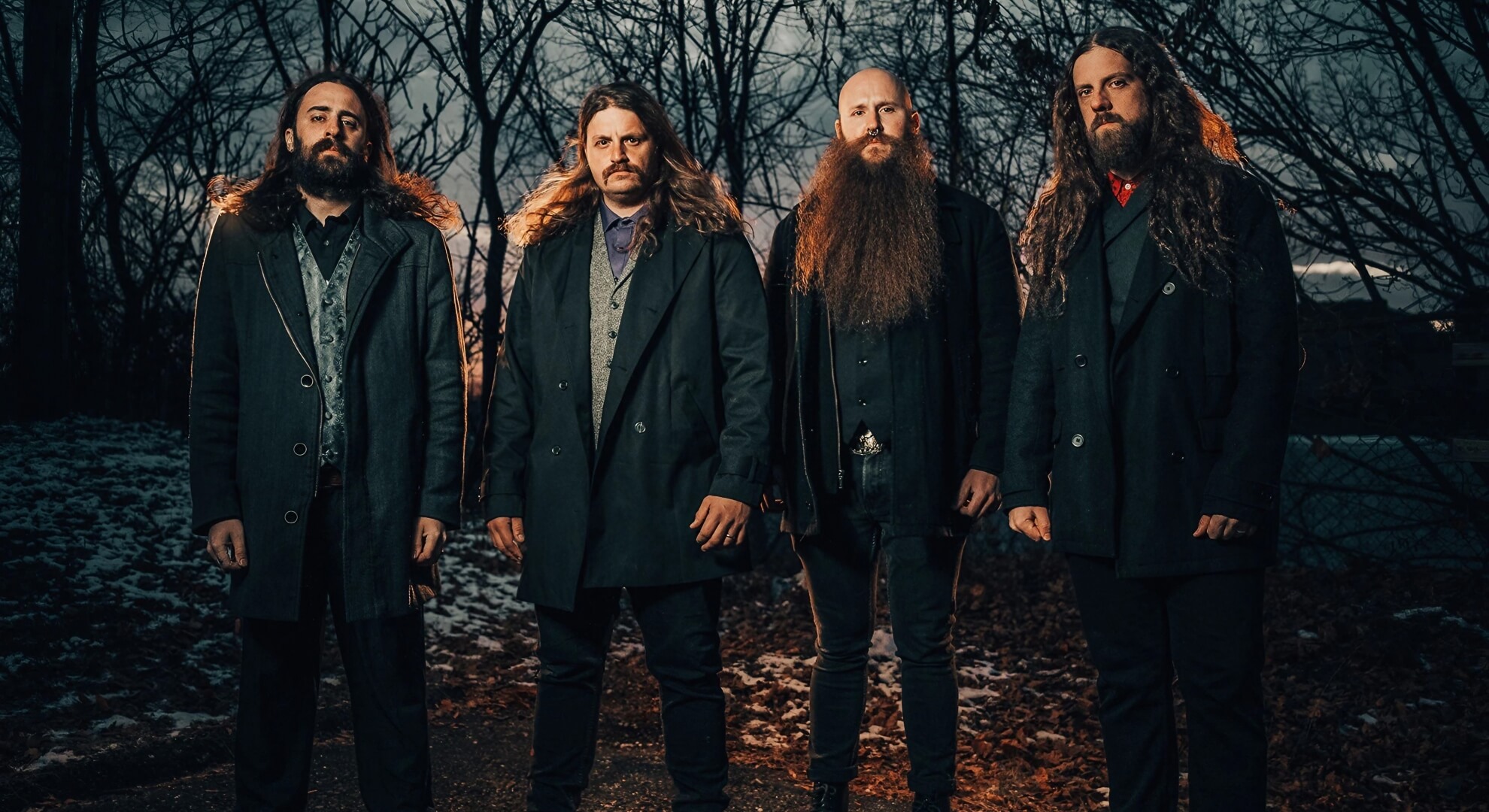
The setlist for the February 1st show will be a monument to this new era. The 2025 self-titled album marks a stark departure, following the departure of longtime vocalist Jake Dieffenbach. The band opted for a restructuring where founding bassist Adam Biggs stepped to the microphone, joined by Andy Thomas on guitars and clean vocals.
Guitarist Brody Uttley describes the track ‘House of Light’ as the one that encapsulates the nature of what it is that they do perfectly, signaling a shift where the technicality serves the melody rather than obscuring it. The result is material written to be felt in the gut.
For the Colombian audience, this evolution is significant. They are not receiving a band in its infancy, nor one resting on past successes. They are witnessing a metamorphosis. The clean vocal quota that some critics questioned on the record will likely be transformed into a collective roar in the Boro Room. South American audiences are renowned for singing everything—solos, drum fills, and choruses alike.
The track ‘American Death’ deserves specific attention. Its cynical critique of internal decay in the United States takes on a complex new layer in Colombia. Performing this song in a country that has lived for a century under the geopolitical shadow of the United States transforms it from a cultural critique into a dialogue about empire and shared dystopian realities.
The lyrics describe a goddamn American dream that is as much about Capone as it is about Kennedy, providing a biting commentary on a system that the band views as spiraling toward a final, hollow conclusion.
Dynamics of the New Lineup
Rivers of Nihil landing in Bogotá is a different beast entirely. Without a traditional frontman pacing the stage, the focus shifts to a tight, musical core. Adam Biggs, tethered to his instrument while delivering complex vocal patterns, creates an intensity that radiates from the rhythm section. As a founding member, his transition to the spotlight serves as a stabilizing force for the identity of the group.
The integration of Andy Thomas adds a second focal point, creating a hydra-headed vocal attack. For tech-death aficionados who value instrumental proficiency, the multitasking of this lineup—Biggs on bass and vocals alongside Thomas on guitar and vocals—will be a point of high admiration. Brody Uttley remains the principal songwriter and architect of the sonic shift, while Jared Klein provides the technical backbone required for the complexity of the genre.
The Geography of Noise and the Ultra Metal Ethos
The fervor of the Colombian crowd is rooted in the Ultra Metal scene of 1980s Medellín. In a violent era, bands such as Parabellum created a sound so raw it reportedly influenced the Norwegian Black Metal inner circle.
Metal here was never just a fashion statement; it was a survival mechanism—a noise created to drown out the sound of conflict. This phenomenon aligns with scholarly observations of metal in the Global South, where the genre often provides a vital semiotic space for youth to process localized trauma and political instability.3
At 2,640 meters above sea level, the air is thin, yet the crowd possesses a stamina that often baffles visiting artists. Unlike the analytical stance found in some markets, the Bogotá crowd engages with physical desperation. Themes from ‘The Work’—the crushing reality of labor and the struggle for meaning—are not abstract concepts here; they are daily life. When the band performs ‘Dustman,’ they are singing the soundtrack of the daily struggle of the city.
Visceral Realities at the Boro Room
Located in the Chapinero district, the Boro Room offers the ideal tier for this ritual. Its capacity of roughly 700 souls provides an intimacy that technical death metal often lacks in larger venues. The sound is direct, hitting the chest without getting lost in arena reverb. It grounds high-concept music in a visceral reality of low ceilings and packed bodies.
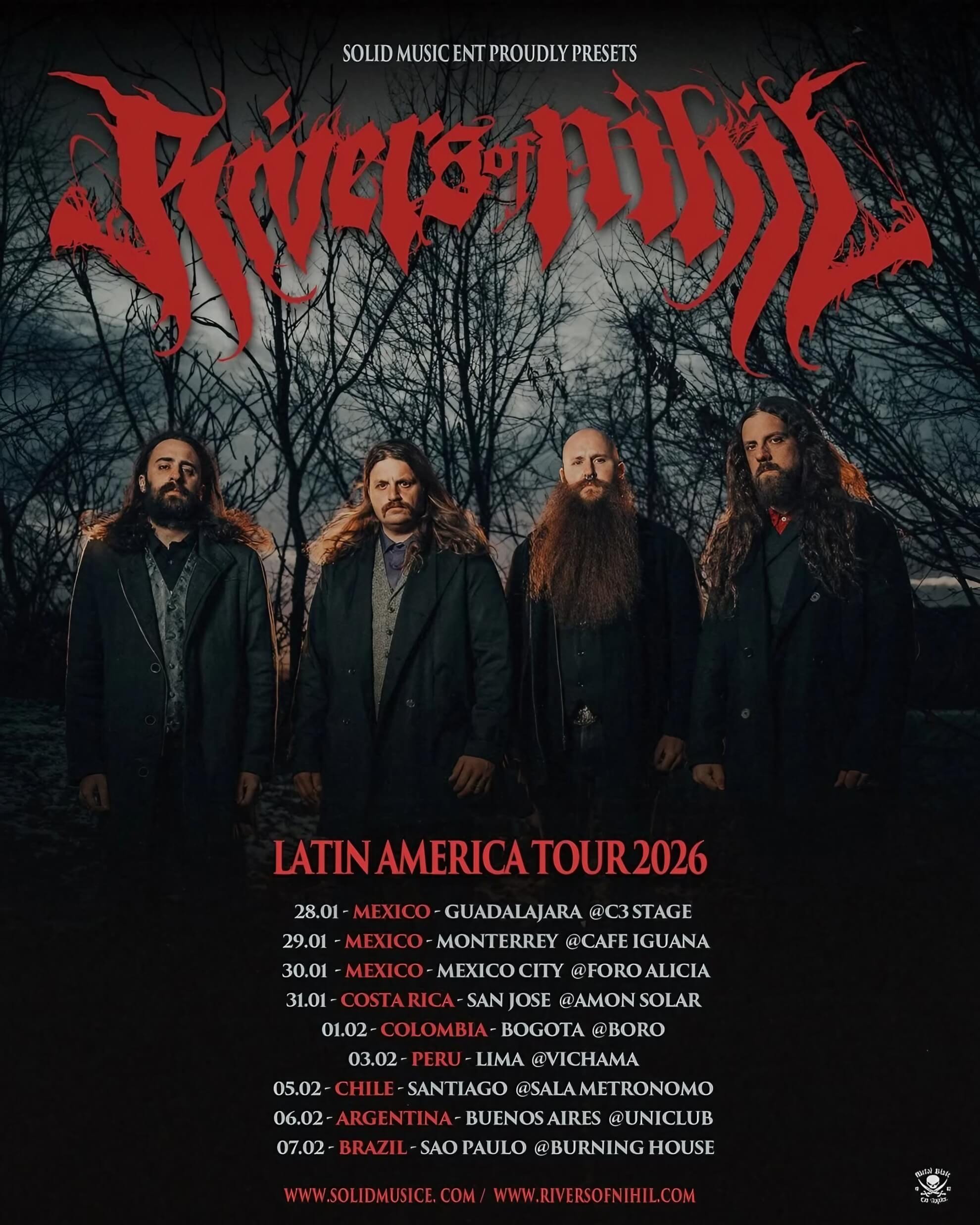
Held on a Sunday, the show takes on the quality of a last stand before the grind of the work week returns. Entry to this high-altitude ritual is tiered to accommodate the early devotees and those arriving as the date nears. Tickets for the performance are priced at 160,000 COP (approximately $40 USD) for the first phase of sales, rising to 200,000 COP (approximately $50 USD) for general admission closer to the event date. The evening begins as doors open at 7:00 PM, likely preceded by high-caliber local technical death metal talent.
Positioning the Latin American Leg
This Bogotá date is a significant pivot point in a broader continental journey that begins in late January. The tour commences on January 28 in Guadalajara at the C3 Stage, followed by Monterrey at Cafe Iguana on January 29, and Mexico City at Multiforo Alicia on January 30. After a stop in San José, Costa Rica, at Amon Solar on January 31, the band arrives in Bogotá on February 1.
The journey continues through the heart of South America, with performances at Vichama Rock Bar in Lima on February 3, Sala Metrónomo in Santiago on February 5, UNICLUB in Buenos Aires on February 6, and concluding at Burning House in São Paulo on February 7.
The anticipated setlist reflects the narrative arc of the career of the band. It is expected to open with the new anthem ‘The Sub-Orbital Blues,’ followed by the dual vocal attack of ‘Criminals.’ Emotional anchors such as ‘The Silent Life’ and ‘Where Owls Know My Name’ will serve as the peaks of audience participation, while the atmospheric weight of ‘Dreaming Black Clockwork’ represents the ‘The Work’ era.
The Alchemical Weight of the Night
The concert by Rivers of Nihil in Bogotá is a monumental event, marking the ultimate clash of the river and the mountain as the lights fall on Calle 55.
In the thin air of the Boro Room, the high-concept precision of the American Rust Belt will finally meet the raw, physical desperation of a city that has long used extreme music as a spiritual armor. This is the moment where technicality ceases to be a display of skill and becomes a vehicle for collective purging.
When the mechanical, unforgiving notes of ‘The Sub-Orbital Blues’ echo through the Andean night, the artificial distances of geography will vanish. What remains will be the shared recognition of the struggle—a sonic bridge between two decaying worlds that find their most honest expression in the relentless, purifying language of the riff.
How does the prospect of witnessing the industrial melancholia of Rivers of Nihil within the specific, high-altitude ritual of the Boro Room alter your perception of their transition toward a more visceral, lean and mean sonic structure?
References:
- Kahn-Harris, Keith. ‘Extreme Metal: Music and Culture on the Edge.’ Oxford: Berg, 2007. ↩︎
- Phillipov, Michelle. ‘Death Metal and Music Criticism: Analysis at the Limits.’ Lanham, MD: Lexington Books, 2012. ↩︎
- Wallach, Jeremy, Harris M. Berger, and Paul D. Greene, eds. ‘Metal Rules the Globe: Heavy Metal Music around the World.’ Durham, NC: Duke University Press, 2011. ↩︎

Leave a Reply