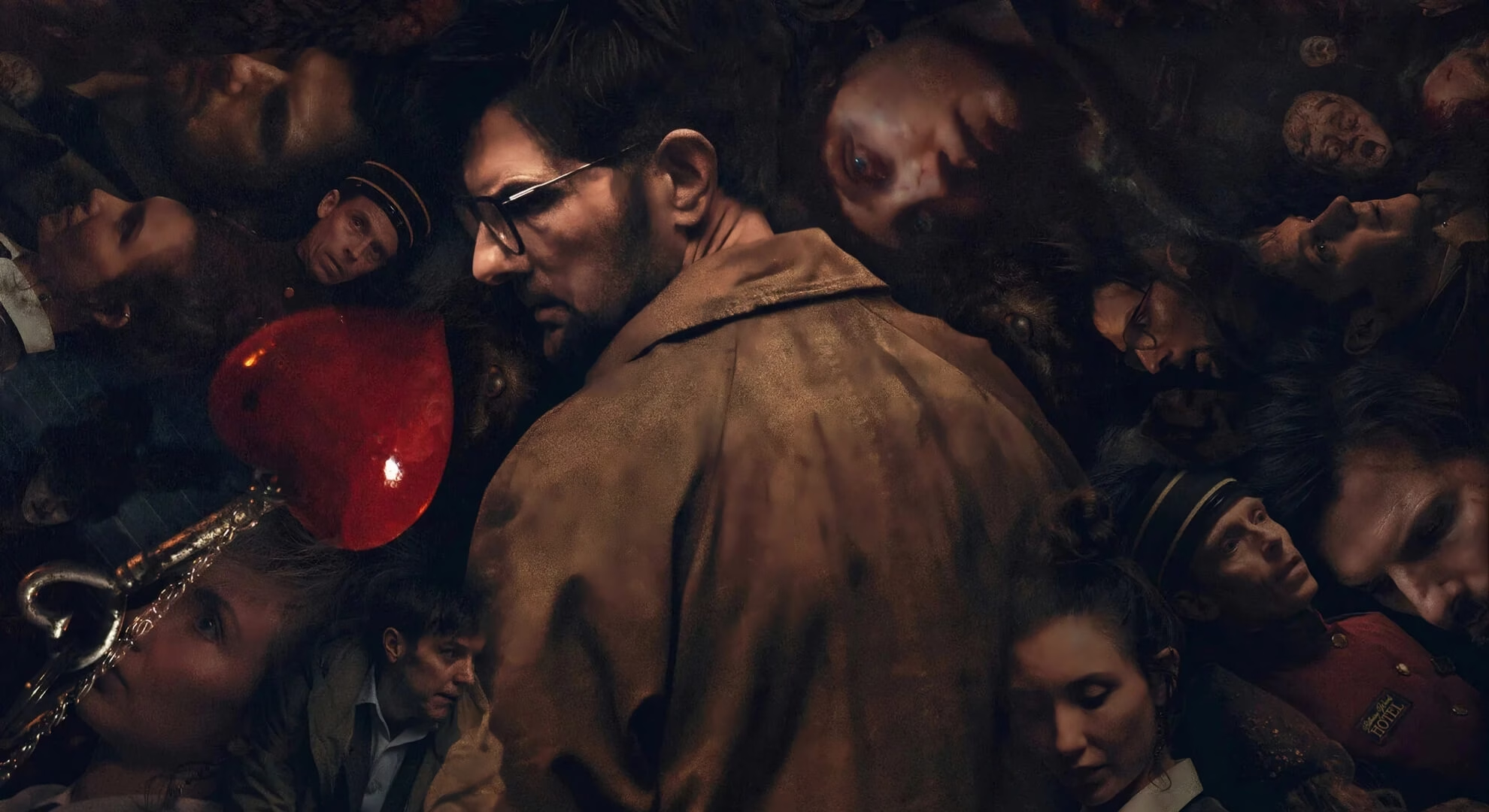


The hag witch figure of Irish pre-Christian tradition — the Cailleach, an elemental entity whose dominion runs from Samhain through Beltane — has persisted across centuries of oral transmission without resolving into a fixed textual form. What she can do, and whether she is propitiated or provoked, varies by county and by century, which is precisely what makes her so effective as a vehicle for cinematic dread: her properties remain genuinely uncertain.
Damian McCarthy’s ‘Hokum,’ which opens in US theaters on May 1 via Neon, places the Cailleach at the center of a folk horror film that uses her indeterminacy as both a formal strategy and an emotional engine.
McCarthy’s Three Films
McCarthy’s progression across his three features has been unusually deliberate for a filmmaker who spent over a decade making short films before his first feature. ‘Caveat,’ released in 2020 and filmed on the grounds of Bantry House in West Cork, established his preference for confined spaces and the horror of the unseen: characters whose peril arrives not through confrontation but through the accumulating recognition of how thoroughly they are trapped.
The film was shot under severe budget constraints, with McCarthy working as his own editor — a practice that foregrounded how rhythm and withholding function as instruments of dread.
‘Oddity,’ his 2024 second feature, extended that vocabulary into a multi-protagonist structure incorporating slasher, psychological, and supernatural elements within a folk horror frame. Its central object — a massive hand-carved wooden figure constructed by effects artist Paul McDonnell to McCarthy’s specifications — functioned as the kind of material presence his cinema consistently deploys: objects that are wrong in ways exceeding their physical description.
‘Oddity’ won the SXSW Midnighter Audience Award in March 2024 and the Audience Award for Feature Film at the Overlook Film Festival that April.
The Neon Acquisition
‘Hokum’ represents McCarthy’s most expansive production context to date. Neon acquired worldwide distribution rights at the 2025 Toronto International Film Festival in August of that year, before the film had screened publicly. The production brought together Roy Lee and Steven Schneider as lead producers — Lee as a producer of ‘The Ring’ (2002) and ‘It’ (2017), Schneider through his Spooky Pictures banner — alongside Derek Dauchy, Ruth Treacy, Julianne Forde, and Mairtín de Barra.
Cweature Features, Image Nation Abu Dhabi, Tailored Films, and Spooky Pictures serve as production companies, with support from Fís Éireann/Screen Ireland; principal photography took place in West Cork in February and March 2025.
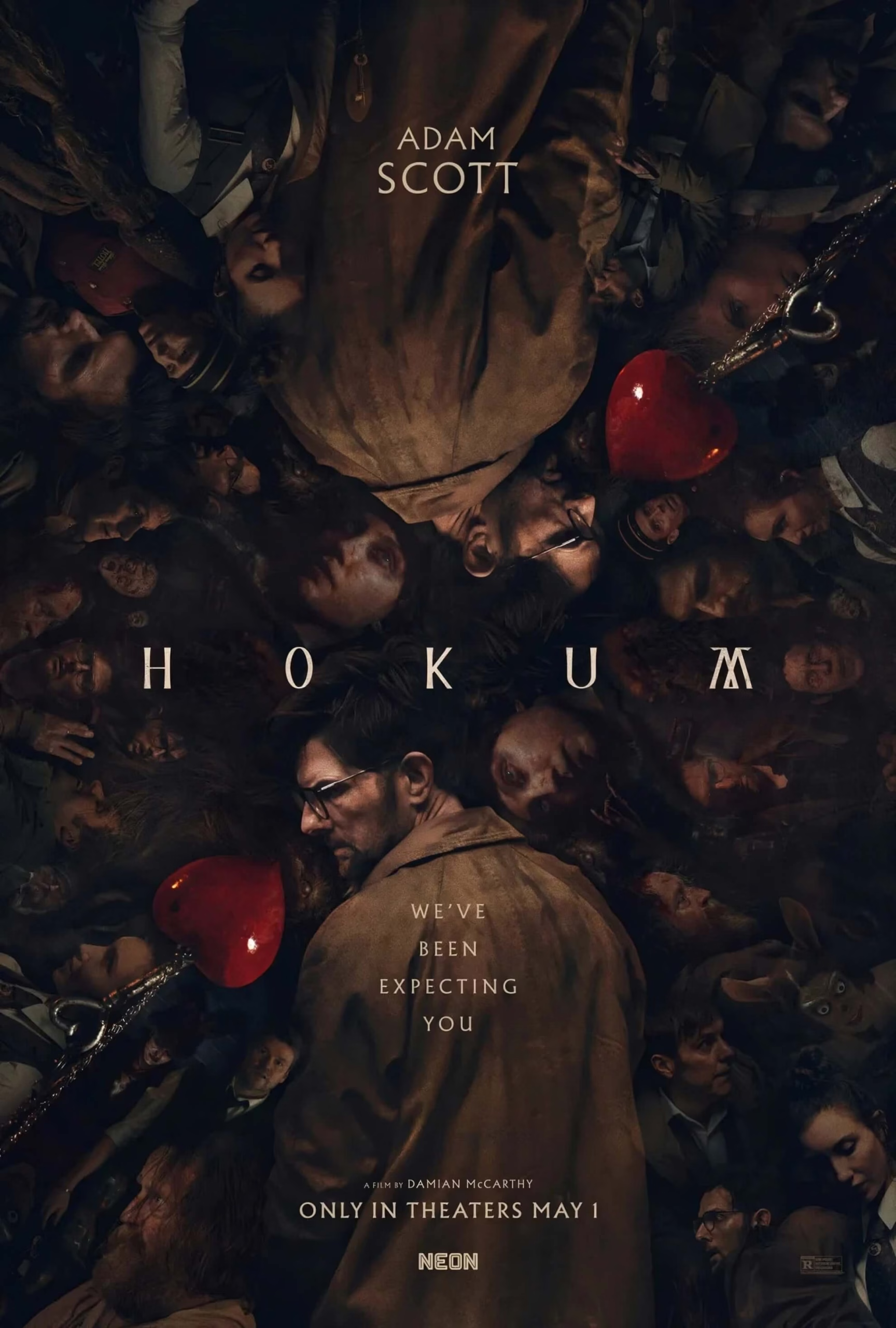
The film premiered as a Midnighter at SXSW on March 14, 2026 — the same festival section where ‘Oddity’ made its debut two years earlier — before screening as the Closing Night selection at the 2026 Overlook Film Festival. Rotten Tomatoes aggregates a 97% approval rating across 31 reviews at the time of the US theatrical opening, with a Metacritic score of 79 out of 100. ‘Hokum’ is rated R and runs 111 minutes.
The Witch and the Hotel
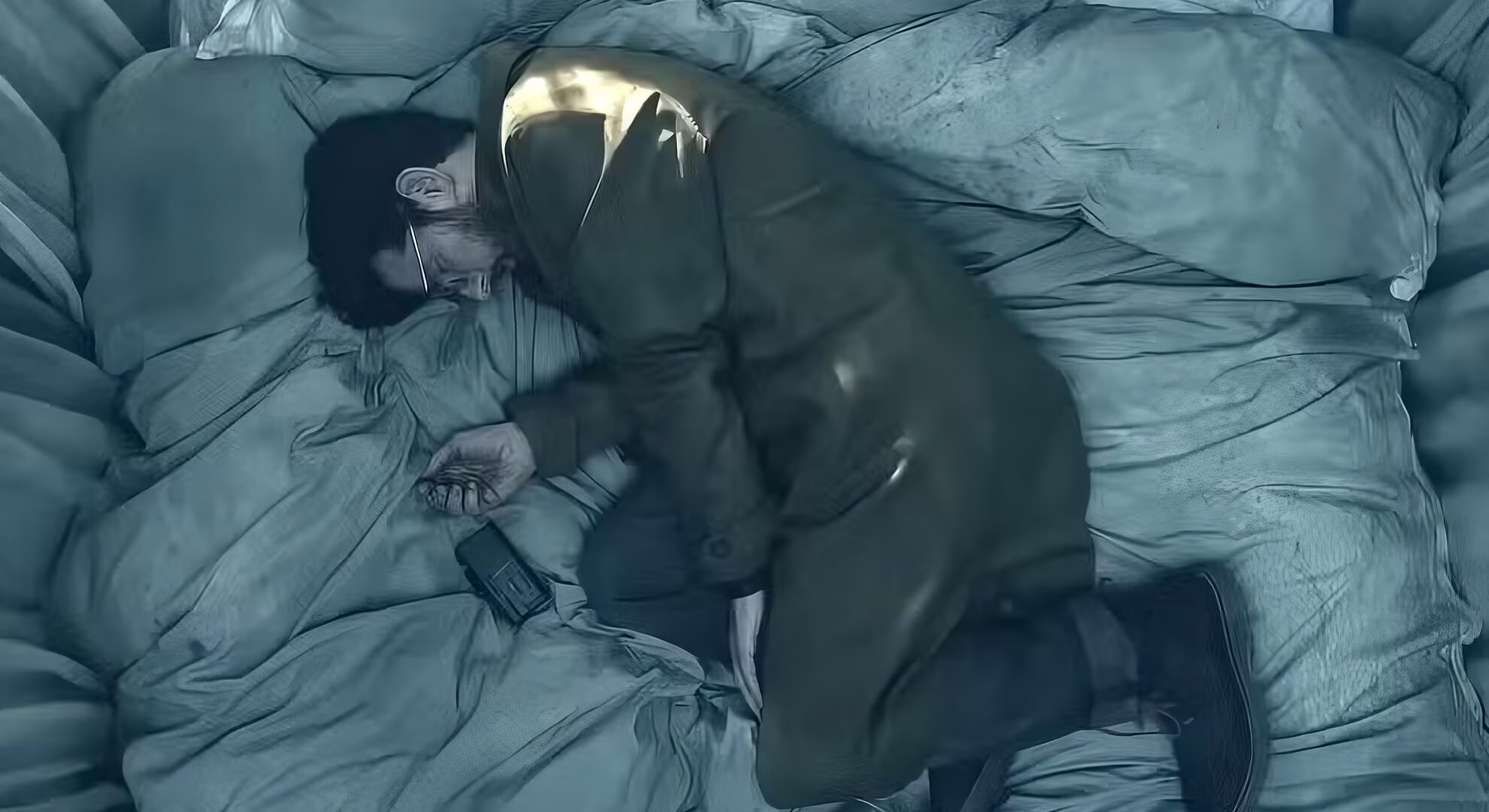
Adam Scott stars as Ohm Bauman, an alcoholic American horror novelist with Irish parentage who travels to a remote inn in West Cork to scatter his parents’ ashes in the terrain of their honeymoon.
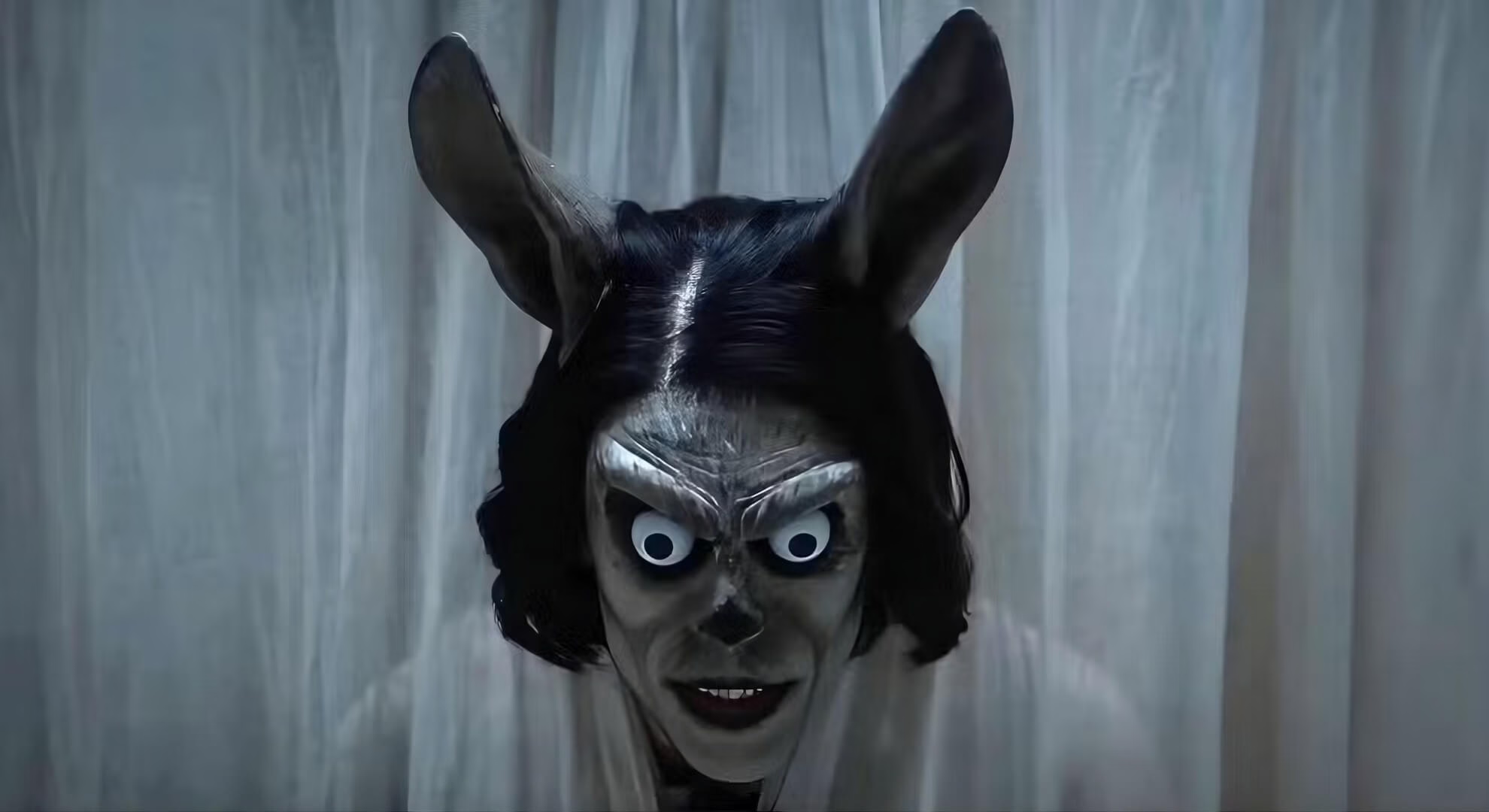
The hotel staff speaks of an ancient Cailleach said to inhabit the sealed honeymoon suite, and these accounts function in the narrative precisely as folklore functions outside of it: not as decoration, but as transmitted knowledge whose accuracy cannot be safely dismissed. When a bartender named Fiona, played by Florence Ordesh, disappears, Ohm — convinced she is trapped in the locked suite — is drawn into the suppressed history of the hotel.
The supporting cast includes David Wilmot as Jerry, a peripheral local figure whose itinerant position gives him access to accounts that more settled residents suppress; Peter Coonan as Mal, the hotel manager; Brendan Conroy as Mr. Cobb, an elderly figure who uses the Cailleach legend to frighten children in the hotel’s common areas; Michael Patric as Fergal; Will O’Connell, Austin Amelio, and Sioux Carroll, the latter credited as the Witch.
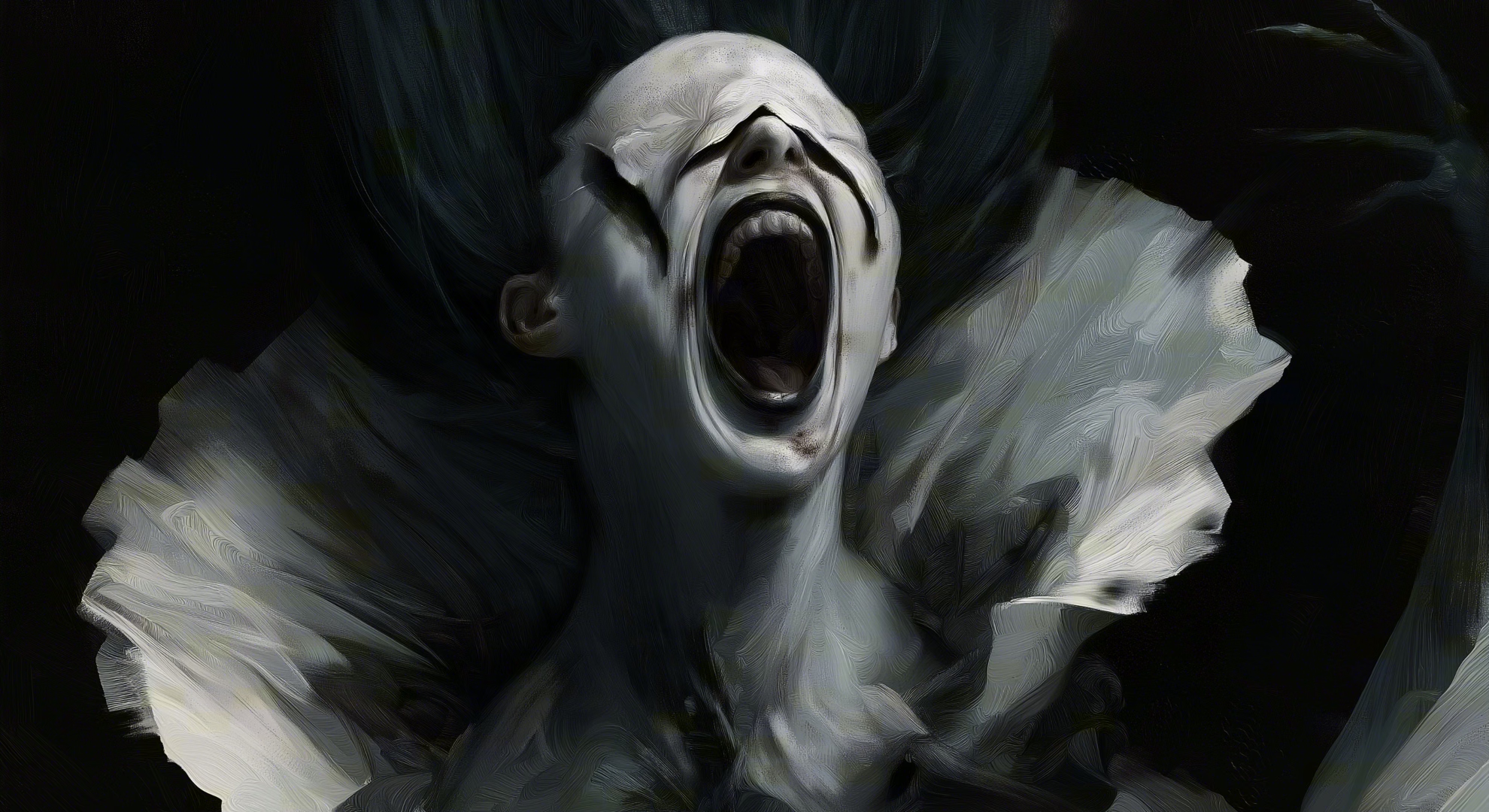
Documented critical response at SXSW and Overlook describes the witch figure not as a conventional revenant but as an elemental entity consistent with the shapeshifting and seasonal properties attributed to the Cailleach in Irish folk tradition.
What Colm Hogan Does in the Dark
The formal collaboration between McCarthy and cinematographer Colm Hogan — continued from ‘Caveat’ through ‘Oddity’ and into ‘Hokum’ — is organized in the latter film around POV restriction and negative space.
Production designer Til Frohlich and set decorator Ciara McKenna created the Billberry Woods Hotel set, which critical response describes as recalling the visual grammar of Roger Corman’s Edgar Allan Poe productions — a closed, decaying interior carrying the weight of prior habitation — while maintaining the contemporary grounding required by the film’s present-day setting.
Editor Brian Philip Davis, who cut ‘Oddity’ as well, manages ‘Hokum’ through what the Roger Ebert review characterizes as a rhythm that moves between shock and dread without settling into either as the default mode. Composer Joseph Bishara, whose prior credits include the ‘Insidious’ and ‘Conjuring’ franchises, provides a score that documented response describes as favoring sustained tension over conventional stinger delivery.
Cailleach and the Oral Record
The specific tradition ‘Hokum’ invokes is not interchangeable with the broader Euro-American witch taxonomy that dominates commercial horror. The Cailleach — documented in Irish and Scottish folk tradition as an elemental female entity associated with winter, desolation, and raw terrain, whose temporal authority runs from Samhain on October 31 to Beltane on May 1 — carries attributes that distinguish her from the literary witch of the Early Modern period and from the Satanic witch figure anchoring American folk horror from ‘The Blair Witch Project’ (1999) to Robert Eggers’ ‘The Witch’ (2015). She is not a human figure corrupted through pact or practice; she is a pre-human presence whose relationship to mortals is oblique and whose methods vary by account.
What McCarthy does with this material — positioning the sealed hotel room as the Cailleach’s claimed territory, invoking her powers in the calendar window her tradition specifies — constitutes a formal engagement with Irish pre-Christian source material that has historically received less direct cinematic attention than its Scottish counterpart.
The Irish supernatural tradition has tended to enter mainstream horror cinema at one remove, filtered through the Gothic and the psychological rather than through its folk specificity; McCarthy’s consistent return to West Cork and to that region’s oral record is a more direct engagement than the tradition has typically received.
A Tradition Waiting
‘Hokum’ arrives in US theaters at the point in McCarthy’s career where the formal practice accumulated across ‘Caveat’ and ‘Oddity’ — the confined space, the oral tradition invoked rather than explained, the cinematography organized around what cannot be seen — meets a production and distribution context capable of amplifying that practice to a significantly wider audience.
Whether a folk horror vocabulary built across low-budget West Cork productions retains its specific properties at the scale Neon brings to its releases is precisely the question the theatrical run poses. The Irish pre-Christian supernatural tradition has been waiting for a filmmaker of McCarthy’s documentary seriousness; ‘Hokum’ will determine how large an audience has been waiting too.
Damian McCarthy has built his formal practice across ‘Caveat,’ ‘Oddity,’ and ‘Hokum’ around Irish terrain, pre-Christian oral tradition, and spatially confined settings as primary sources of dread — how do you read this geographical and folkloric specificity in relation to the broader critical discourse around folk horror, which has increasingly claimed traditions well outside the British and Irish contexts in which the subgenre was initially theorized?
Leave a Reply