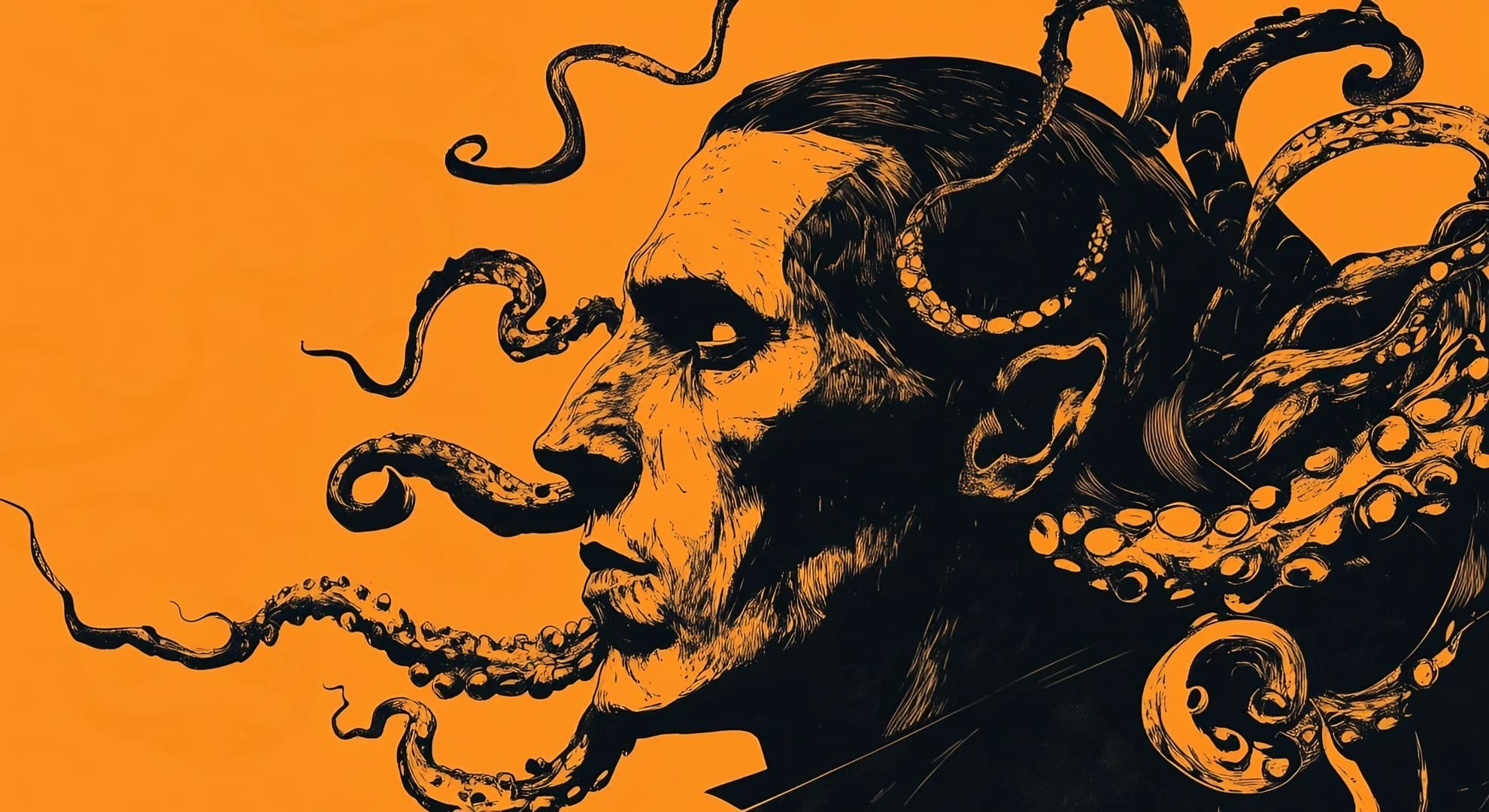


Lovecraft spent nearly his entire life within the same square mile of Providence, Rhode Island, walking streets he later disguised only thinly as Arkham and dying within blocks of the house where he was born. That geography no longer sits at the margins of the biennial convention built around his name.
Four guided walks through College Hill this August retrace more than thirty sites drawn directly from his fiction, alongside a Guest of Honor roster whose own work has spent decades adapting, narrating, and arguing with what he left behind.
A City Written as Fiction
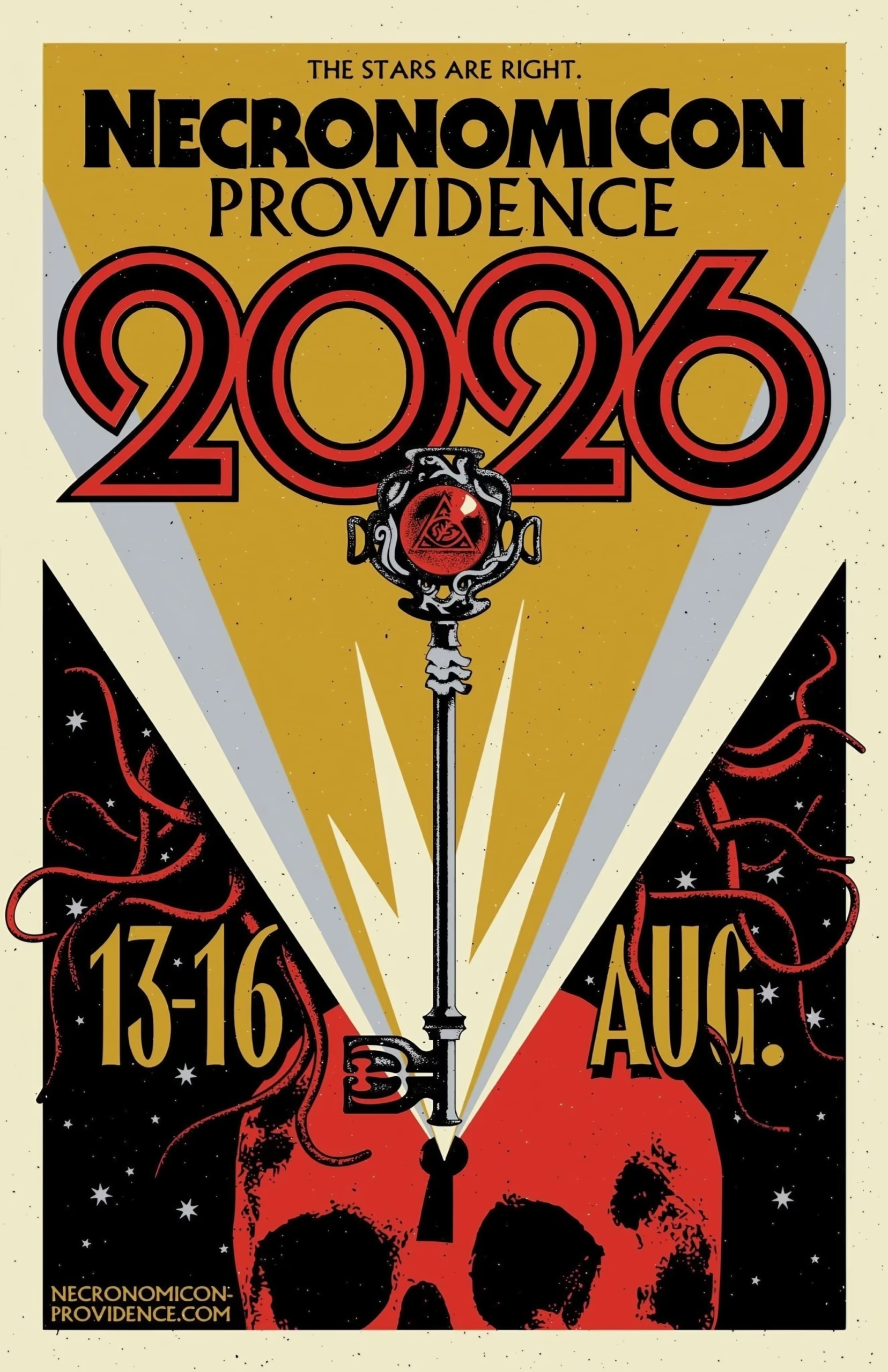
NecronomiCon Providence, organized biennially by the Lovecraft Arts and Sciences Council since 2013, holds its 2026 edition in mid-August, near the anniversary of Lovecraft’s August 20th birthday, though the exact dates have varied from year to year.
The 2026 edition runs August 13th through 16th at the Providence Graduate Hotel and the Omni Hotel, with additional programming spilling into the surrounding downtown blocks and up onto College Hill, the neighborhood where Lovecraft lived for most of his life and which the convention’s own materials trace directly to sites in his fiction.
Four guided walking tours this year, led by Lovecraftian geographer Donovan Loucks and by Rory Raven, retrace a 2.5-mile route that climbs roughly 175 feet up College Hill, passing Lovecraft’s last two homes and more than 30 documented sites drawn from ‘The Shunned House,’ ‘The Call of Cthulhu,’ ‘The Case of Charles Dexter Ward,’ and ‘The Haunter of the Dark.’
The tours do not simply illustrate the fiction; they reverse the relationship, treating the surviving colonial-era streets and buildings as the primary text and the stories as commentary written on top of them.
Voices Redrawing the Weird
The 2026 Guests of Honor list draws as heavily from academia as from genre fiction, and the pairing is deliberate. Dr. Chesya Burke, an Associate Professor of English at Stetson University and director of its Africana Studies program, brings a research focus on the intersections of race, gender, and genre; her monograph ‘Hero Me Not’ examines the X-Men character Storm as a composite of recurring Black stereotypes in comics.
Linda D. Addison, the first African-American writer to receive the Horror Writers Association’s Bram Stoker Award, joins her as a Guest of Honor with five collections, two Rhysling Awards, and an HWA Lifetime Achievement Award to her name.
Jeff VanderMeer returns as a Guest of Honor after appearing in the same role in 2024, the year his Southern Reach novel ‘Annihilation’ had already been adapted into a Paramount film; the repeat booking signals a convention willing to build continuity around a single author’s ecological strain of weird fiction rather than rotating through names for novelty alone.
Gou Tanabe, the Japanese manga artist whose adaptations of Lovecraft’s stories have been translated into five languages and earned an Eisner Award nomination for ‘The Hound and Other Stories,’ extends that continuity into visual adaptation, while Jon Padgett, the former editor of the now-concluded ‘Vastarien’ literary journal and the primary vocal interpreter of Thomas Ligotti’s audiobooks, represents the small-press and weird-audio side of the field that convention stages rarely feature.
A Curated Weird Market
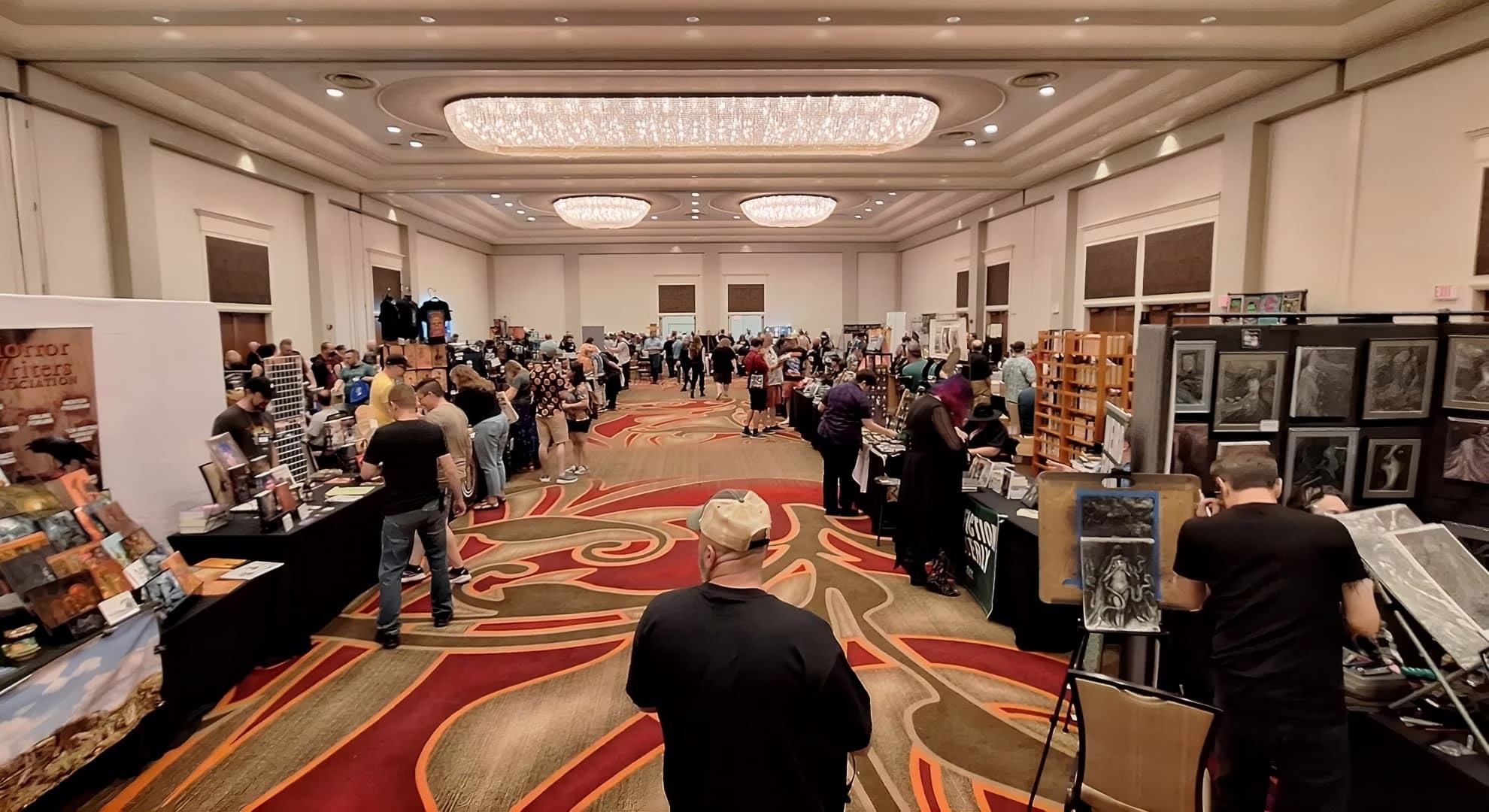
Programming for 2026 also includes the Grand Emporium of Weird, a vendor hall staged as a standalone show at the Omni Hotel. The convention as a whole, including all single- and full-day passes, is capped at 2,000 guests and attendees, a limit set through the Providence Fire Marshall.
The confirmed vendor list includes Necronomicon Press, the small press founded in 1976 that has published Lovecraft criticism and rare texts for five decades, alongside Hippocampus Press, another long-running specialist in weird fiction scholarship and reprints.
Chaosium, the publisher behind the ‘Call of Cthulhu’ tabletop role-playing system, anchors the gaming side of the hall, joined by the H. P. Lovecraft Historical Society, which produces audio drama and film adaptations of the author’s stories.
The hall’s public hours, separate from full convention registration, let non-passholders enter for a reduced fee, keeping the vendor floor legible as a piece of Providence’s own cultural calendar rather than a members-only trade show sealed off from the city around it.
Passes to the Pilgrimage
Passes for the 2026 convention are sold in two tiers through Eventbrite. A General Pilgrimage Pass, covering all four days of talks, panels, art exhibits, workshops, screenings, gaming, and vendor-hall access, costs $185 USD (approx. COP 592,000); a Silver Key pass, at $325 USD (approx. COP 1,040,000), adds a ticket to the Cthulhu Prayer Breakfast, a convention T-shirt, and early access to the vendor hall and workshops.
Walking tour tickets cost $15 USD (approx. COP 48,000) per person, and general-public entry to the Grand Emporium of Weird costs $5 USD (approx. COP 16,000) for visitors without a full pass. All amounts are approximate, calculated at an exchange rate of roughly 3,200 COP per USD at the time of writing.
The City as Primary Text
What separates NecronomiCon Providence from a convention that could stage itself in any themed hotel ballroom is its refusal to treat Providence as scenery. The walking tours, a Guest of Honor roster split between literary academics and Lovecraft’s adapters, and a vendor hall stocked with presses that have kept his criticism and his rediscovered contemporaries in print for decades all argue the same point: the fiction and the city remain legible only when read together. A convention that could exist almost anywhere chooses, again this year, not to.
For readers who return to Lovecraft’s stories today, despite or because of everything complicated in his biography, does walking the actual streets he wrote change what those stories mean, or only where they happen?
Tourism Partnership
We reach an audience that travels with intention — drawn to documented history, dark heritage, and the cultural weight of the places they seek out. If you operate tours, cultural experiences, accommodation, or heritage sites aligned with that ethos, we would like to hear from you. We consider partnerships with tour operators, travel agencies, hostels, hotels, museums, and any organization whose work engages seriously with dark tourism, gothic culture, or historical travel. We do not promote services we cannot stand behind editorially. Reach us through our Contact page.


Leave a Reply