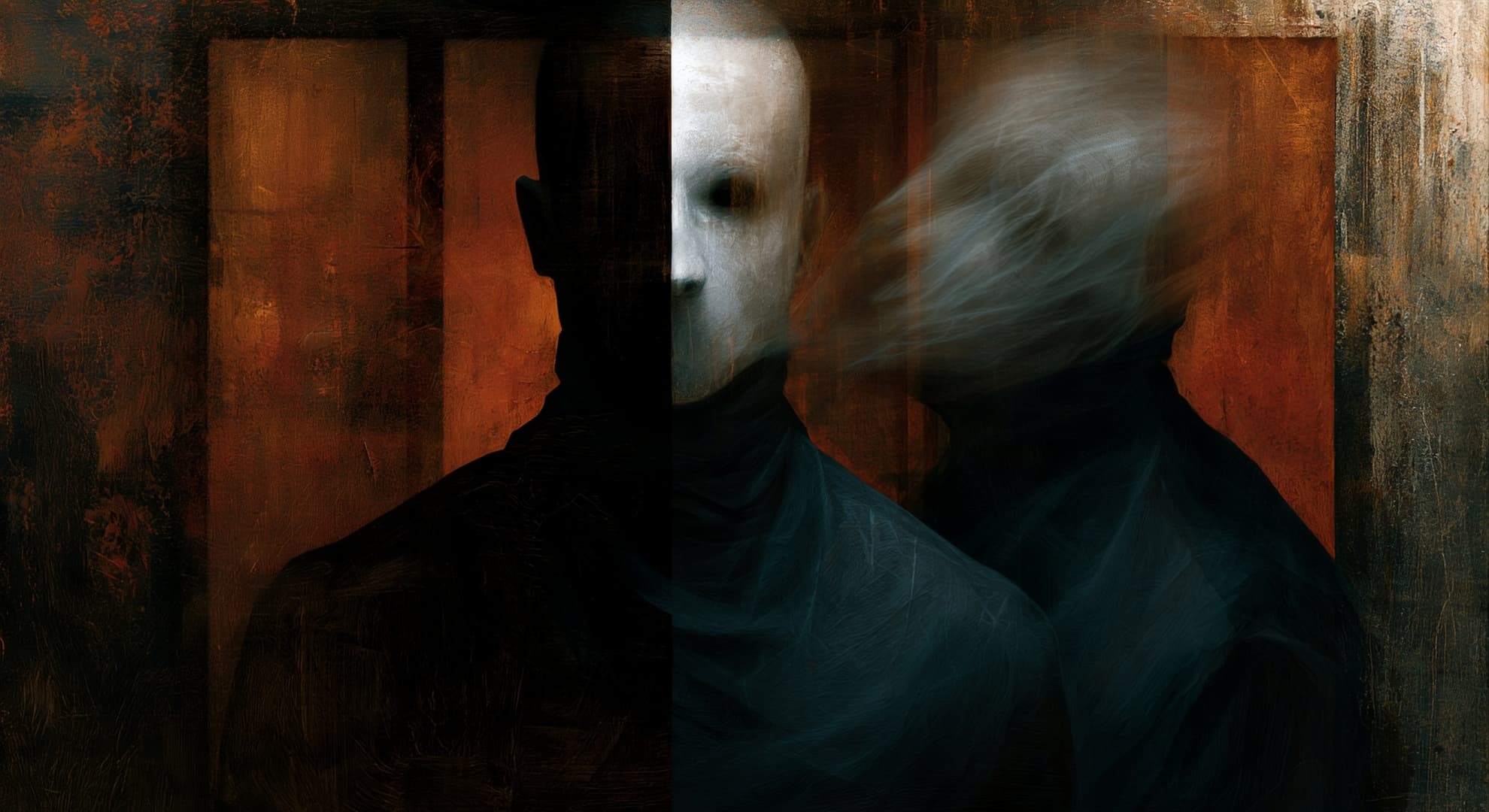


The same cell blocks that Frank Darabont lit for ‘The Shawshank Redemption’ in 1994 will, on the night of May 16th, 2026, be walked by four rotating groups of investigators carrying electromagnetic field meters and audio recorders in the company of television personalities whose careers were built on exactly this activity.
ParaPsyCon Se7en, the seventh consecutive edition of the paranormal convention held inside the Ohio State Reformatory in Mansfield, arrives at a point where the question it raises has become harder to dismiss: what does it mean to hold a convention inside a site that carries its own documented argument for why investigation is warranted there?
Where Cinema Ends and Shadow Begins
The Ohio State Reformatory was designed as a facility for young, first-time offenders — Romanesque arches, towers modeled on German castles, deliberate visual grandeur intended to inspire rehabilitative aspiration in those confined within it.
Construction began in 1886; the facility admitted its first inmates in 1896 and operated for 94 years. Over that period it housed approximately 154,000 individuals, more than 200 of whom died from disease, suicide, and violence. Overcrowding and institutional neglect eventually prompted a 1978 lawsuit by former inmates that accelerated closure in 1990.
That combination of original ambition and accumulated failure was what drew location scouts to the Reformatory for the 1994 film adaptation of Stephen King’s ‘Rita Hayworth and Shawshank Redemption’ — the same characteristic contrast that made it a convincing visual grammar for a story about dignity surviving institutional cruelty.
After the film’s release the prison’s cultural position shifted: it was simultaneously a contested space of real suffering and a site where one of American cinema’s most examined stories about hope had been staged. When the Mansfield Reformatory Preservation Society acquired the property for one dollar in 2000 and began restoration, the dual identity was already fixed.
‘Ghost Adventures,’ ‘Portals to Hell,’ ‘Ghost Brothers,’ ‘Destination Fear,’ and ‘Scariest Places on Earth’ have all filmed inside the Reformatory since then. By 2018 the facility was attracting more than 120,000 visitors annually.
ParaPsyCon, organized by Black Shamrock Events and hosted by Tri-C Ghost Hunters, did not create the Reformatory’s paranormal reputation. What it did, starting in 2020, was frame that reputation as a convention format — using the site’s two identities simultaneously: the Shawshank corridors as the daytime self-guided tour, the cell blocks where temperature drops and disembodied voices have been documented by repeated investigation teams as the Saturday night ‘Ghost Hunt.’
From the Warrens to the Wild
The confirmed guest lineup for ParaPsyCon Se7en spans more than three decades of paranormal television and two distinct investigative traditions.
John Zaffis — nephew of Ed and Lorraine Warren, founder of the Paranormal Research Society of New England in 1998, and lead investigator of SyFy’s ‘Haunted Collector’ (2011–2013) — represents the field’s demonological lineage.
‘Haunted Collector’ centered on the investigation and removal of objects alleged to carry paranormal attachments; Zaffis’s career traces directly to the investigative practice that produced ‘The Conjuring’ franchise. Brian J. Cano, who worked alongside Zaffis on ‘Haunted Collector’, returns to the Reformatory floor.
Dr. Mireya Mayor, presenting alongside Russell Acord on Saturday at 2:45 PM, occupies the opposite methodological position. A primatologist, National Geographic wildlife correspondent, and Emmy-nominated television scientist, Mayor co-discovered a new mouse lemur species in Madagascar and has spent six seasons applying field biology methodology to cryptid investigation on Discovery Channel’s ‘Expedition Bigfoot.’
The distance between her framework and Zaffis’s is not incidental: booking both on the same programme is a statement about the current range of the paranormal convention’s credentialed audience.
Heather Taddy — documentarian and investigator from A&E’s ‘Paranormal State’ (2007–2011), the series following the Penn State Paranormal Research Society — joins Zaffis, Satori Hawes, and Cody Ray DesBiens for a Q&A panel Sunday afternoon at 2:45 PM.
Dustin Pari, a ‘Ghost Hunters’ alumnus, takes the Sunday speaker stage with a presentation on the Montauk Project. Ken Gerhard presents on aquatic cryptids including the Lake Erie creature known as Bessie. Dave Schrader, Cindy Kaza, and Shane Pittman close Saturday’s programming with a panel on paranormal methodology.
Investigation as Convention Format
ParaPsyCon Se7en’s programming is layered into three levels of access, each offering closer proximity to the Reformatory’s documented investigation zones. Standard admission covers the full two-day speaker track — ten confirmed presentations across Saturday and Sunday on subjects from interdimensional models of paranormal activity (Mike Ricksecker, Saturday 11:45 AM) to UFO investigations (Ben Hansen, Saturday 1:45 PM) — as well as the vendor floor, which hosts more than 80 tables, and the self-guided tour of the facility.
The Celebrity Ghost Hunt on the night of Saturday May 16th (8:30 PM–2:30 AM) is capped at 80 participants divided into four rotating groups, each moving through four designated active zones inside the Reformatory. The confirmed celebrity participants include Zaffis, Pari, Cano, Ricksecker, Gerhard, Dan Sturges, Mayor, and Taddy. This is the event’s most direct offer: organized access to the facility’s most investigated spaces alongside investigators whose television work has established the interpretive frameworks the audience brings to those spaces.
A pre-weekend Cindy Kaza Gallery Reading inside the Reformatory on Thursday May 14th (7:00–9:00 PM) opens the programme; the VIP Kickoff Party on Friday May 15th at the Lofts & Rails Event Center in Mansfield runs 8:00–11:00 PM and includes a celebrity auction.
Dates, Venue, and Admission
ParaPsyCon Se7en runs May 15th–17th, 2026, at the Ohio State Reformatory, 100 Reformatory Road, Mansfield, Ohio, USA. The main convention days are Saturday May 16th (10:00 AM–5:00 PM) and Sunday May 17th (11:00 AM–5:00 PM).
General admission for adults 18 and over is $30 USD (approx. COP 111,800) per day. A weekend pass covering both May 16th and May 17th is $50 USD (approx. COP 186,300). Students aged seven to 17, seniors 55 and over, and attendees with college ID or military credentials pay $25 USD (approx. COP 93,200) per day. Youth aged six and under are admitted free. All standard admission tiers include the speaker programme, celebrity interaction areas, vendor floor access, and the self-guided tour. Celebrity autographs, photographs, and merchandise are priced separately by each guest.
The VIP Kickoff Party and Celebrity Ghost Hunt carry separate ticket prices (Ghost Hunt pricing confirmed as TBD at the time of writing). The Premier Package — $400 USD (approx. COP 1,490,400), combining full weekend access, both premium events, priority entry, and Se7en merchandise — is sold out.
The Cindy Kaza Gallery Reading is $50 USD (approx. COP 186,300) per person. Tickets are available through the Ohio State Reformatory’s booking system via parapsycon.com. COP conversions are approximate, based on an exchange rate of approximately 3,726 COP per USD at the time of writing.
The Argument the Venue Makes
What seven consecutive years at the same institution confirm is that ParaPsyCon has found something the paranormal convention circuit rarely sustains: a site whose independent cultural weight carries the event without requiring the event to carry it. The Ohio State Reformatory was significant before 2020.
The convention’s value lies in its capacity to organize access to that significance — to frame the overnight investigation, the speaker programme, the vendor tables, and the celebrity Q&A sessions as components of a single sustained engagement with a place rather than as a generic convention programme staged inside a famous location.
The booking of Dr. Mireya Mayor alongside John Zaffis does not reconcile field science and demonological tradition; it confirms that the paranormal convention at this stage does not need to. It needs to demonstrate that the range of approaches investigators bring to contested sites is as wide as the sites themselves warrant.
The Ohio State Reformatory, which has warranted attention from film crews and paranormal television productions across more than 30 years, clearly meets that threshold.
Leave a Reply