


A festival that stakes its identity on discovery inevitably has to decide what discovery actually means when the film in question has spent five years inside the very laboratory system built to produce festival premieres. Óscar Martín’s ‘Upiro’ reaches Fantastic Fest’s 21st edition as a world premiere in the strictest sense, with no prior festival bow and no acquired distribution deal preceding its Austin unveiling, yet the film’s route there runs through an international development pipeline that shaped the project long before a single frame screened publicly.
A specialized-competitive festival built to certify the discovery of unseen work is, in this case, certifying a discovery years in the making.
A World Premiere Already Vetted
‘Upiro’ screens at Fantastic Fest’s 21st edition as one of thirty-five world premieres inside a program that also carries the North American premiere of ‘A Prayer for the Dying,’ Dara Van Dusen’s Berlinale-vetted frontier plague drama, which this publication covered ahead of its own Austin bow.
Set against each other, the two premieres describe the festival’s dual function in a single edition: one title comes pre-validated by a non-specialized top-tier festival, the other carries no festival history at all, its only vetting completed inside genre-specific development labs rather than a competition slate.

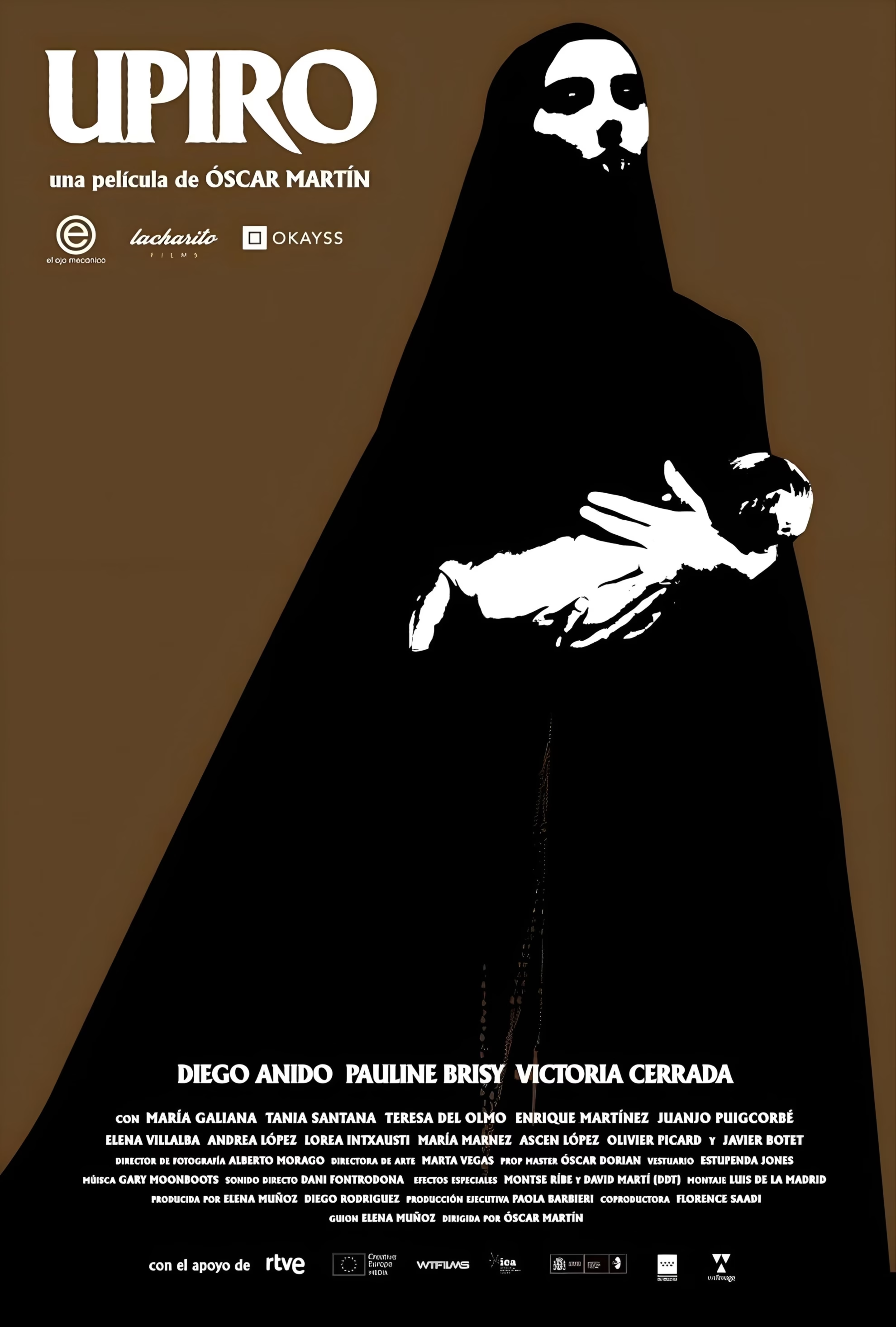
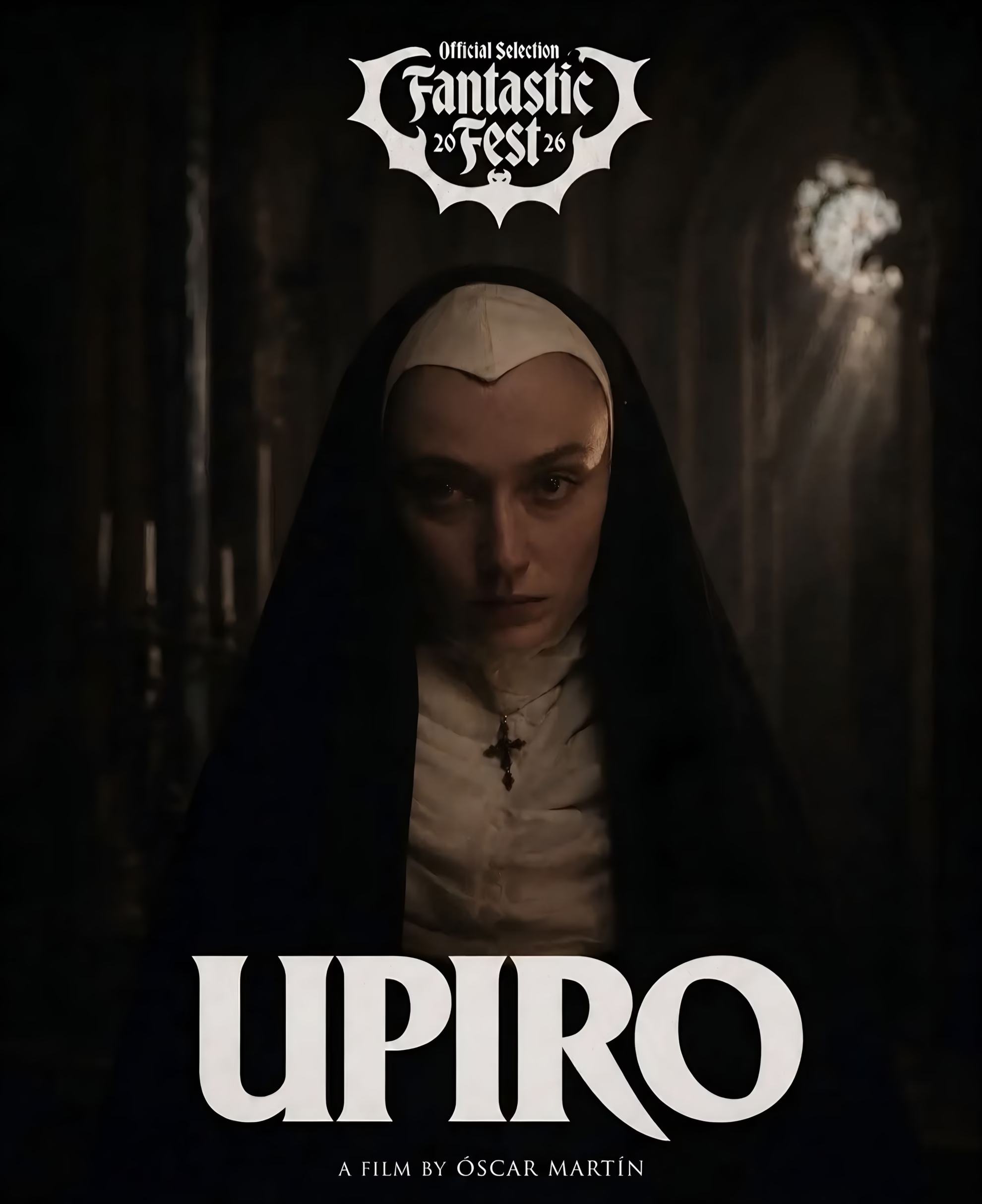
Óscar Martín’s film follows Ana, a young woman sent to a cloistered Spanish monastery in 1755 to atone for her sins, where several novices are dying of a mysterious blood affliction that an unorthodox priest traces to an ancient, bloodthirsty upiro, with the cast led by Pauline Brisy, Diego Anido, Javier Botet, and Spanish character actors Juanjo Puigcorbé and María Galiana.
Amber T of Fangoria singled the film out alongside ‘A Prayer for the Dying’ as one of the lineup’s more historically grounded genre offerings, a pairing that positions this edition’s discovery mandate around films that stage the past rather than update it.
A specialized-competitive festival’s world premieres carry a different institutional weight than its imported premieres. They are the titles the festival itself discovers rather than the titles a festival validates on behalf of an audience elsewhere, and ‘Upiro’ belongs to the first category in a way few other 2026 selections do.
From Habsburg Panics to a Spanish Pulpit
The word at the center of Martín’s film, upiro, descends from the same Slavic root that produced the modern English “vampire,” a term that entered Western European vocabulary through a specific and well-documented historical episode rather than through folklore alone.
Between 1725 and 1732, a series of exhumations in Habsburg-controlled Serbia turned peasant burial disputes into matters of imperial record.
Peter Plogojowitz died in the Serbian village of Kisiljevo in 1725; nine of his neighbors died within weeks, and villagers who exhumed his body reported it undecayed and full of fresh blood, a claim documented by the Austrian official Frombald in an account that reached a wide European readership.
The following year, a former soldier named Arnold Paole died near Medveđa, and a similar wave of deaths prompted Austrian military physicians Johann Flückinger and Glaser to conduct their own exhumations, producing the 1732 report Visum et Repertum.
Scholarship on the period reads these cases as the moment the vampire entered Western intellectual discourse as a modern figure, produced by an Enlightenment society working out its own anxieties about religious authority, medical evidence, and the borderlands where empires and belief systems collided.1
‘Upiro’ relocates that same collision onto Spanish ground and gives it a specific documented anchor of its own. According to the Spanish trade outlet Audiovisual451, the production drew its central premise from an authenticated eighteenth-century case: a Franciscan friar, exhumed after death, whose body was found with blood still warm, an event that turned him into a local object of veneration and supplied Óscar Martín and his writing and producing partner Elena Muñoz with a real ecclesiastical record of the faith-versus-reason argument they wanted to dramatize.
Setting that record inside a cloistered monastery during the same decades that produced the Habsburg reports does not merely borrow vampire iconography; it restages the underlying civilizational dispute, empirical medicine attempting to explain what a religious community insists is supernatural, on a second stage of the same eighteenth-century argument.
A Premiere Five Years in the Making
‘Upiro’ did not come to Fantastic Fest directly from a script page. The project won three prizes at Ventana Sur’s Blood Window Lab in 2021, including a mentorship with executive producers, a script-analysis consultation, and an invitation to the industry program at Sitges International Fantastic Film Festival of Catalonia’s Pitchbox, alongside a parallel invitation to the NAFF/B.I.G industry program at the Bucheon International Fantastic Film Festival in South Korea.
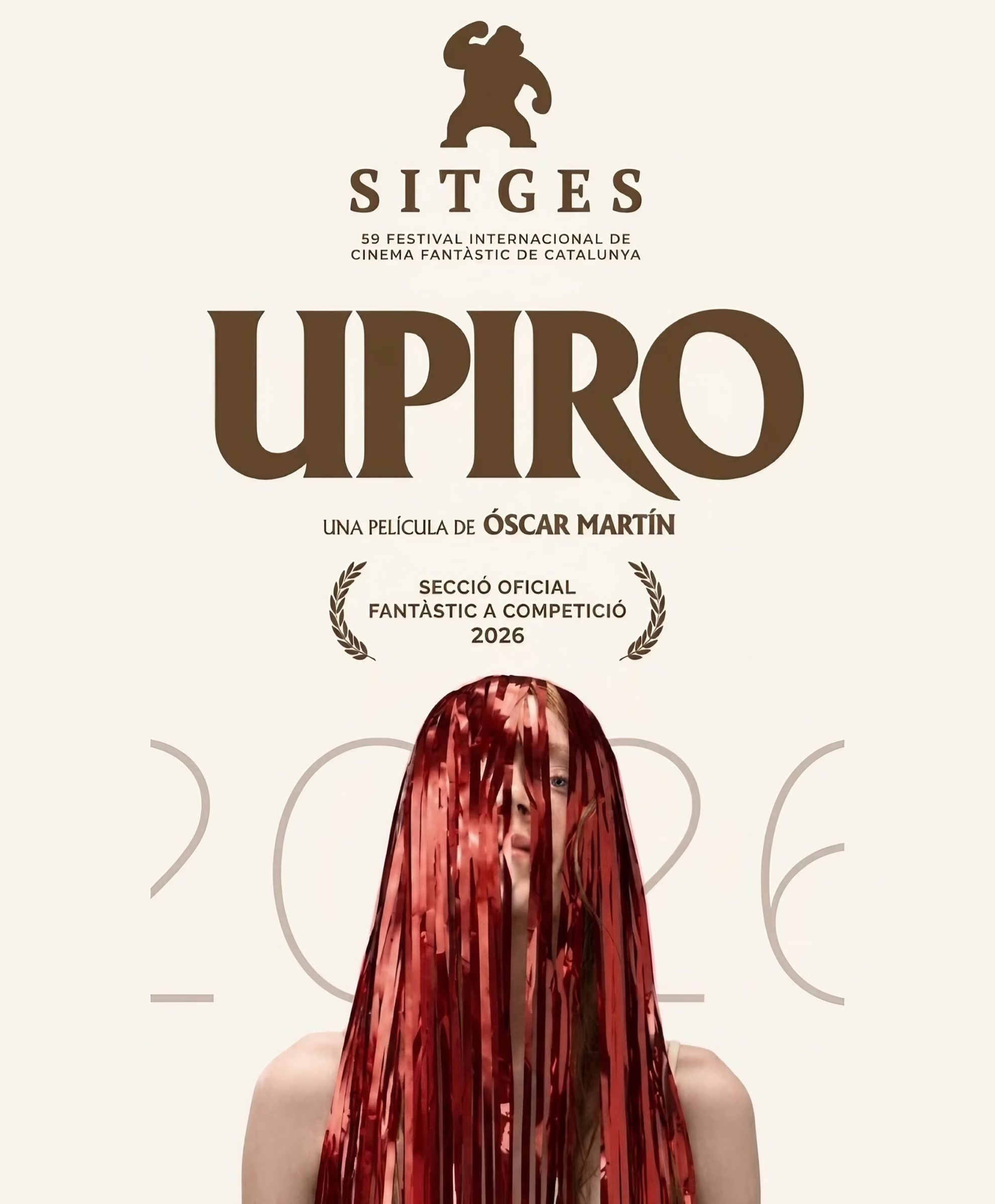
That circuit continued through additional labs in Cannes, Brussels, Mexico City, and Santiago, and it also shaped the film’s financing. Muñoz’s Madrid-based production company, El Ojo Mecánico, developed ‘Upiro’ as a Spain-Belgium co-production alongside La Charito Films and Okayss, drawing support from Spain’s Comunidad de Madrid, the European Union’s MEDIA program, and a 300,000-euro commitment from the Spanish public broadcaster RTVE.
A specialized-competitive festival’s world premiere slot functions here as the terminus of a years-long, multi-country vetting process rather than a chance discovery, which complicates any account of festival premieres as spontaneous finds.
Badges Still Open for the Final Days
Fantastic Fest’s 21st edition runs September 17th through 24th, 2026, entirely inside the Alamo Drafthouse South Lamar at 1120 South Lamar Boulevard in Austin, Texas.
Full eight-day badges sold out ahead of the festival; a Second-Half badge covering September 21st through 24th remains available at $275 (approx. COP 858,000), alongside an Industry badge at $545 (approx. COP 1,700,000). Walk-up single tickets, where available, are priced at $15 each (approx. COP 47,000), sold at the box office roughly ten minutes before each screening and excluded from opening- and closing-night titles.
Feature submissions for the 2026 edition closed ahead of the program’s August announcement; the festival accepts entries through FilmFreeway on a rolling basis ahead of each edition, the same pipeline that first brought ‘Upiro’ to festival programmers’ attention through its lab placements rather than a cold submission.
Certifying a Five-Year Circuit
A specialized-competitive festival’s discovery mandate is easiest to describe in the abstract and hardest to verify in a single title. ‘Upiro’ offers an unusually clean test case, because its five-year, multi-country development history is publicly documented at every stage, from the 2021 Blood Window prizes through the Sitges, Cannes, Bucheon, Brussels, Mexico City, and Santiago labs that followed.
What Fantastic Fest certifies when it programs the film as a world premiere is not the discovery of an unknown filmmaker so much as the successful graduation of a project through the exact institutional apparatus the international genre circuit built to produce festival premieres in the first place.
Fantastic Fest’s 21st edition, opening its Wisconsin plague drama against a Spanish monastery vampire film with an equally documented eighteenth-century source, is treating both historical arguments, epidemiological and theological, as evidence that period-set genre cinema remains one of the circuit’s most reliable exports.
Readers who have their own list of projects moving through Ventana Sur, Sitges Pitchbox, or the BIFAN and BIFFF industry labs right now, ahead of any festival premiere, are welcome to flag which ones they are tracking toward a future world premiere slot, at Fantastic Fest or elsewhere on the circuit.
Tourism Partnership
We reach an audience that travels with intention — drawn to documented history, dark heritage, and the cultural weight of the places they seek out. If you operate tours, cultural experiences, accommodation, or heritage sites aligned with that ethos, we would like to hear from you. We consider partnerships with tour operators, travel agencies, hostels, hotels, museums, and any organization whose work engages seriously with dark tourism, gothic culture, or historical travel. We do not promote services we cannot stand behind editorially. Reach us through our Contact page.
Reference
- Erik Butler, ‘The Rise of the Vampire,’ in ‘Metamorphoses of the Vampire in Literature and Film: Cultural Transformations in Europe, 1732–1933’ (Rochester: Camden House, 2010), 25–26. ↩︎




Leave a Reply