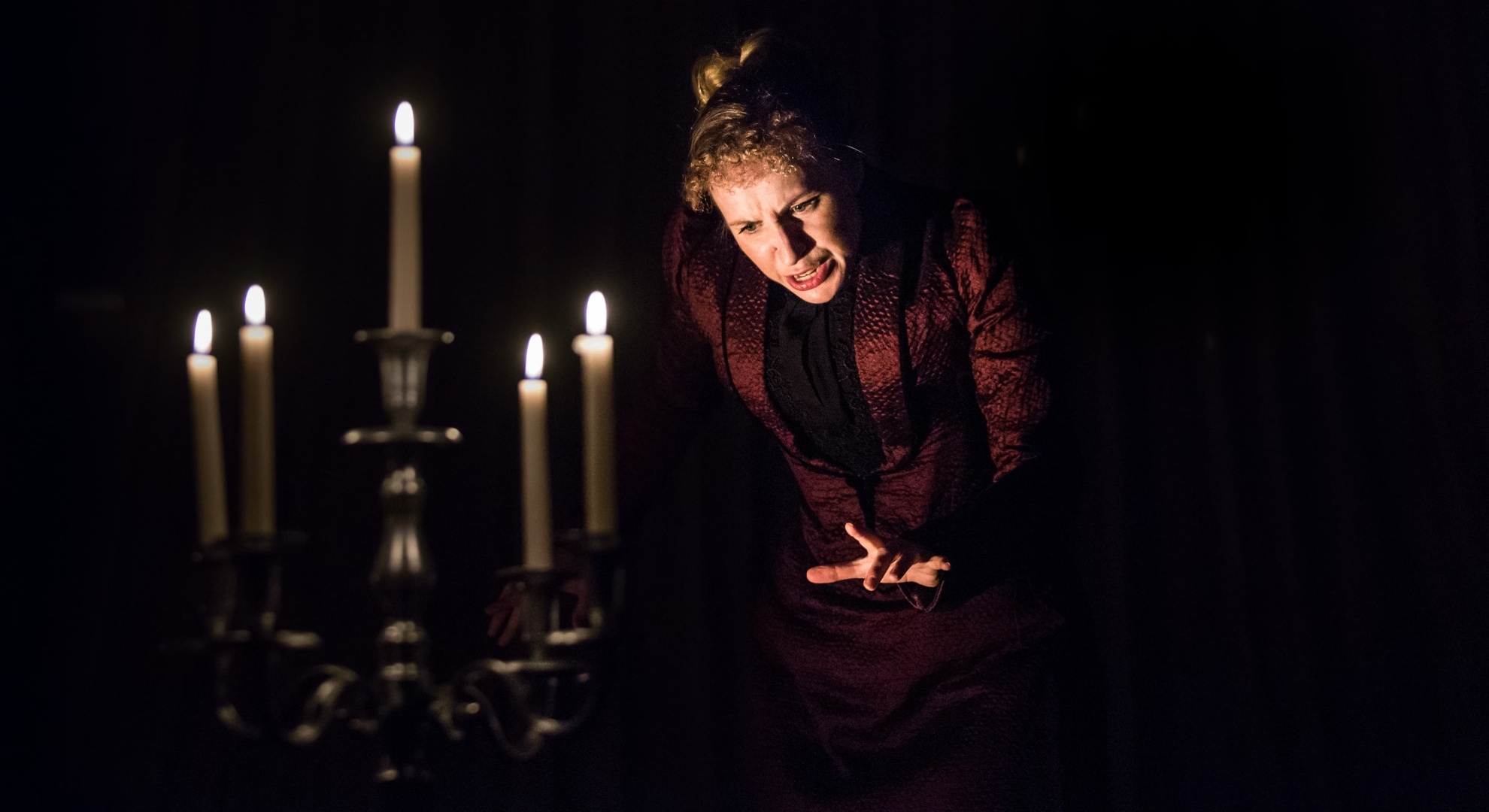


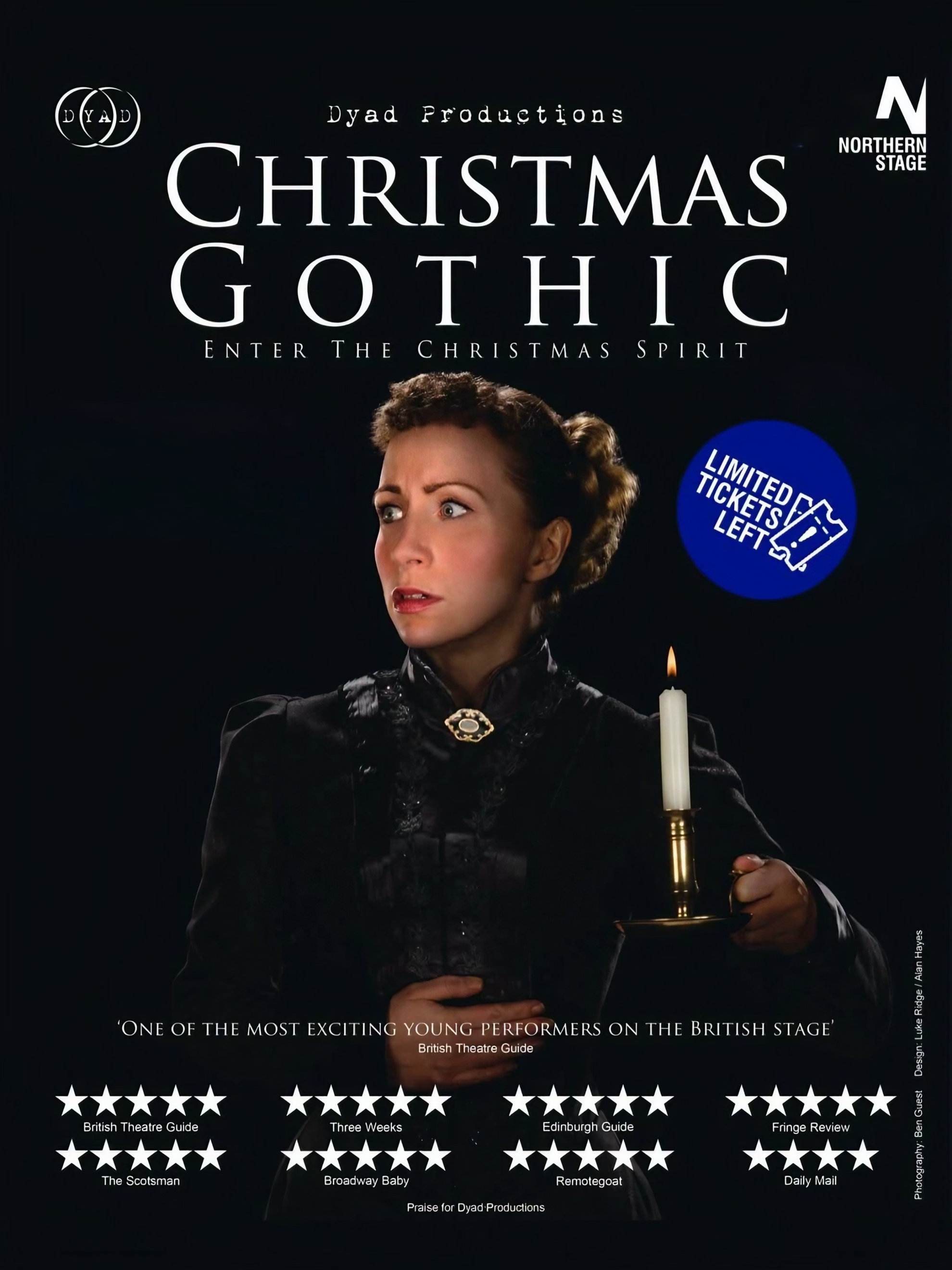
Christmas Gothic, a solo staging by Dyad Productions of three seasonal tales of terror, plays Farnham Maltings in Farnham, England, on November 30th, 2026, then The Blakehay in Weston-super-Mare, England, on December 1st, and The Blake Theatre in Monmouth, Wales, on December 2nd. Each performance begins at 7:30 in the evening.
The production rests on a custom older than the theatre that now carries it: the telling of ghost stories on the longest nights of the year, around a fire, in a room that has shut the cold out and let something else in. Dyad presents the evening as a revival of that Victorian habit, and the revival is the real subject, since the occasion of the telling is staged as deliberately as the tales told.
What Is on Stage
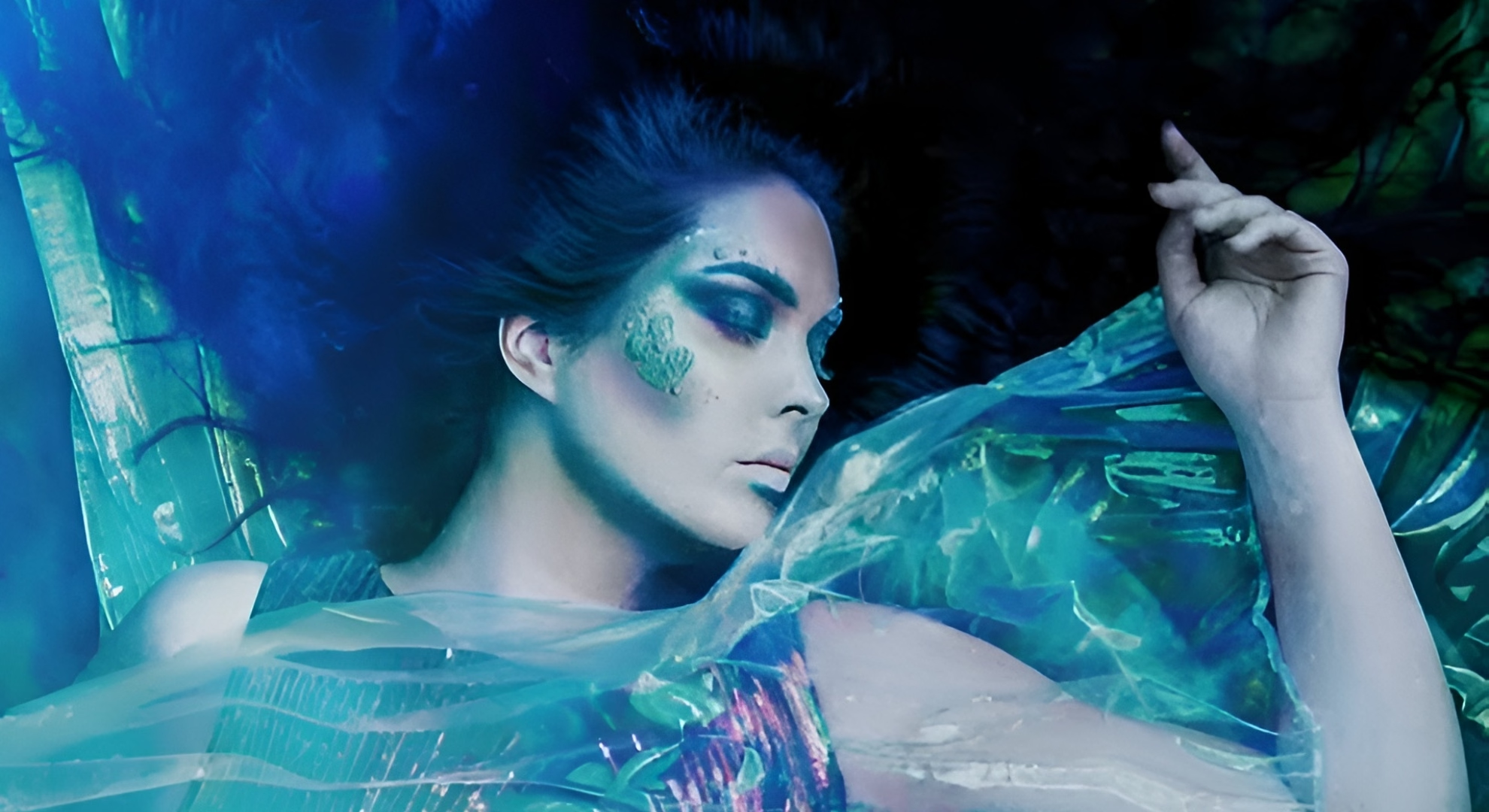
Rebecca Vaughan adapts and performs all three tales. The company describes the central figure as a dark and spectral woman who lights a candle and tells haunting stories of the festive season, and its own wording says that Dyad “resurrects a Victorian tradition” rather than inventing one. Christmas Gothic is the company’s follow-up to Female Gothic, which toured internationally.
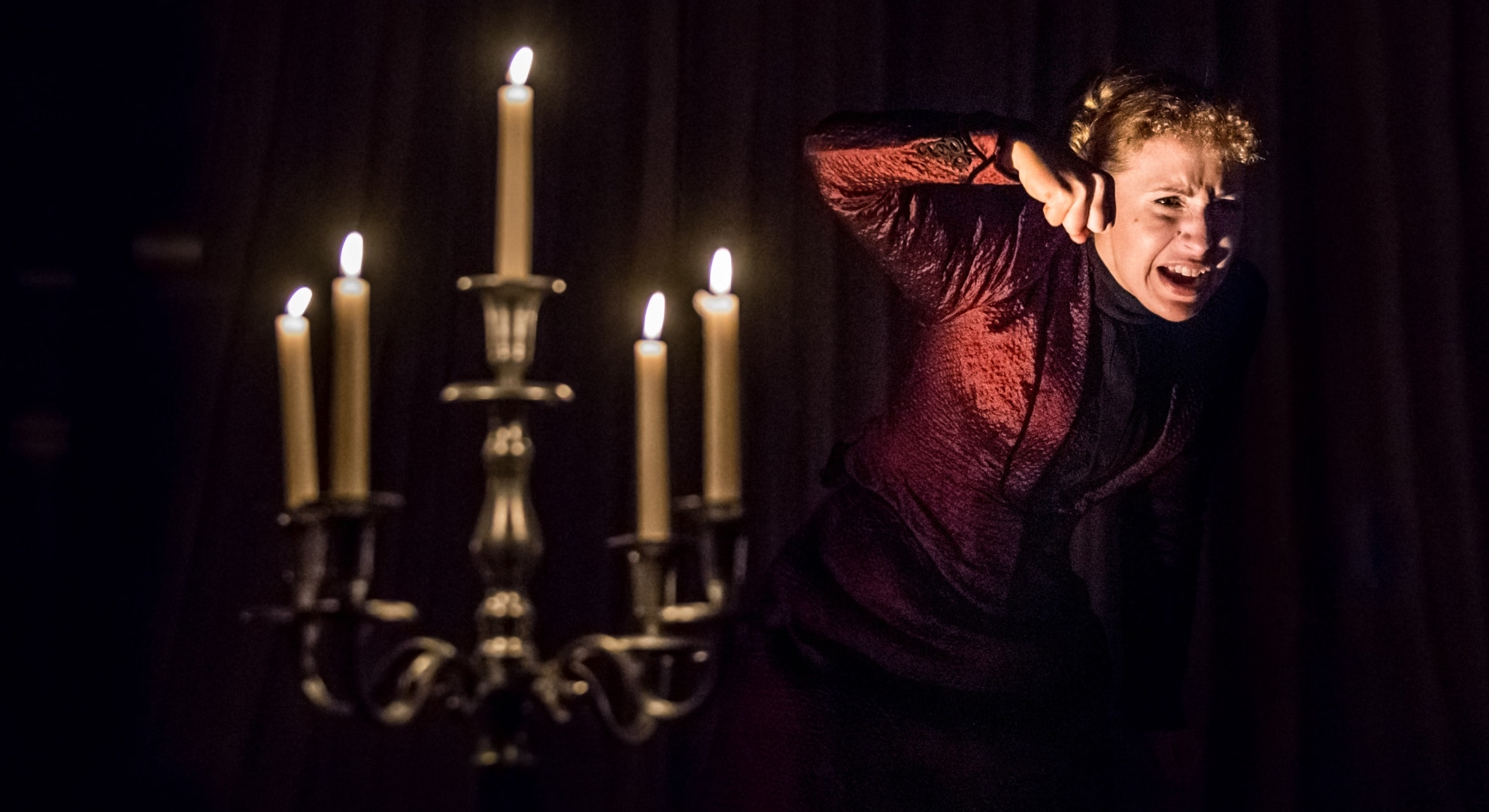
Dyad is the partnership of Vaughan and Elton Townend Jones. Townend Jones is credited as director on earlier seasons of Christmas Gothic, although the 2026 venue listings consulted for this preview credit only the adaptation and performance to Vaughan.
According to the company’s biography, the work dates from 2015 and is the only Dyad production released outside the Edinburgh Fringe, a distinction the company attributes to its festive nature.
Why a Lone Teller Matters
The central choice is the smallest one available: one performer, one voice, one flame. Because the company gives the teller a nature of her own, spectral and dark, the choice changes who stands behind the tales.
A full dramatization would set three hauntings before the audience as events to be watched at a distance. A teller sets them in the room as events to be received, and the figure who frames them belongs, by the company’s own account, to the same order of being as the figures she describes. The auditorium becomes the household in which the story is told.
The season sharpens that effect. Christmas is the festival of hearth, family, and household continuity, and it is also the season that Victorian writers and readers filled with ghosts. The domestic anxiety that Gothic fiction has always carried, the suspicion that the safest room in the house is the one most open to what came before, finds its natural date on the calendar here.
The earlier coverage of supernatural belief in Victorian mourning practices traces how grief and ghost lore were bound together in the period, and a lone candle in a dark hall is the image the company has chosen to hold that bond at the center of the evening.
The Historical Record
The Christmas ghost story took its settled form in the periodical press. Caley Ehnes uses Elizabeth Gaskell’s ‘The Old Nurse’s Story,’ published in the 1852 Christmas number of Dickens’s ‘Household Words,’ as a case study in how appearing in a Christmas number changed the genre: the ghost story, formerly a modern text taking part in contemporary debates on spiritualism, became a social text suited to the season.1
Two causes are visible in that account. One is institutional, the Christmas number as an editorial and commercial vehicle. The other is doctrinal, the quarrel over spiritualism from which the form was being detached, a quarrel set out in the earlier account of spiritualism and occult societies in Victorian Britain.
The convention was fixed enough in 1891 to be parodied. Jerome K. Jerome opened ‘Told After Supper,’ published that year, with the remark that “It always is Christmas Eve, in a ghost story,” and went on to observe that whenever a handful of English-speaking people gather round a fire on that night, ghost stories follow.
Jerome describes the custom as an oral and social one, and it is that situation, rather than the printed page, that Dyad’s single teller restores to the stage.
How to Attend
At Farnham Maltings, the performance is on Monday, November 30th, 2026, at 7:30 in the evening in the Tindle Studio. The listing gives a running time of 75 minutes with no interval, recommends the production for ages 10 and older, and prices tickets at £19 including a £1 booking fee. At the time of research, the listing showed the performance as sold out. Access requests go to the box office on 01252 745444.
The Blakehay, at 20 Wadham Street, Weston-super-Mare, hosts the production on Tuesday, December 1st, at 7:30 in the evening, with tickets listed from £17 to £18 through the venue’s website. The Blake Theatre, on Almshouse Street in Monmouth, presents it on Wednesday, December 2nd, at 7:30 in the evening. Tickets there are £18, or £17 for those over 60 and under 18, with a booking fee, and are sold through TicketSource. The box office number is 01600 719 401.
A play about a haunting must produce the ghost. A telling requires only a voice, a flame, and a room willing to hear it, and that bare arrangement is the one Dyad has announced for these three performances.
Reference
- Caley Ehnes, ‘Winter Stories — Ghost Stories… Round the Christmas Fire: Victorian Ghost Stories and the Christmas Market,’ Illumine 11, no. 1 (2012): 6–25. ↩︎
Leave a Reply