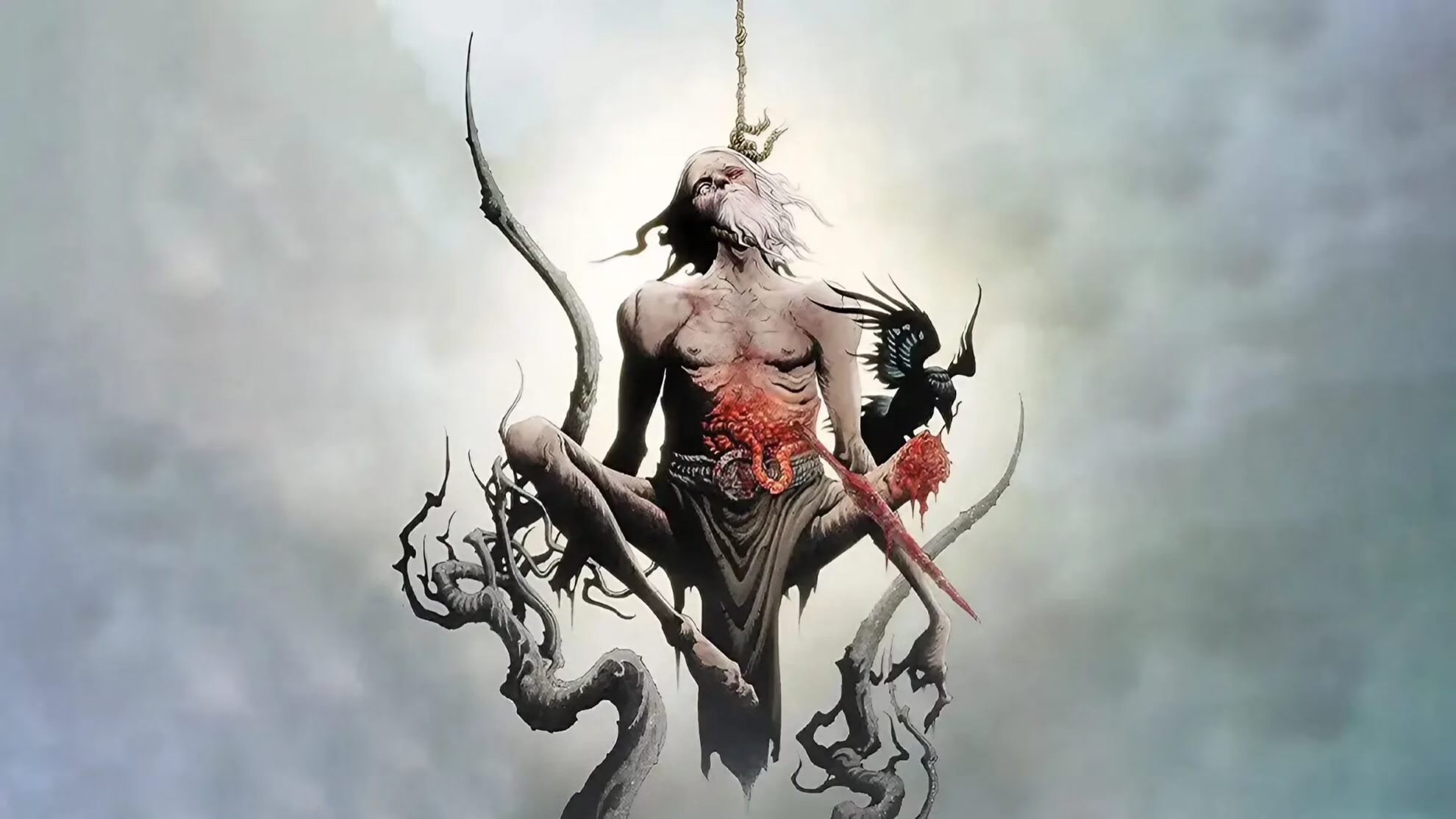


Folk horror carries a specific contract with its audience: the ancient world is not benign, and those who presume upon it do not leave intact. The subgenre’s structural argument, consistent across its most deliberate film entries and its documentary history in prose fiction, is not that old things are dangerous because they are powerful, but that old things operate by rules that predate and supersede the frameworks moderns bring to the encounter.
Comics have gestured at this territory across decades, from the rural hauntings embedded in EC Comics’ southern-gothic and folklore-inflected tales to the British horror comics tradition’s periodic deployments of ancient force — but the medium has rarely pursued folk horror as a formal argument rather than an atmospheric one.
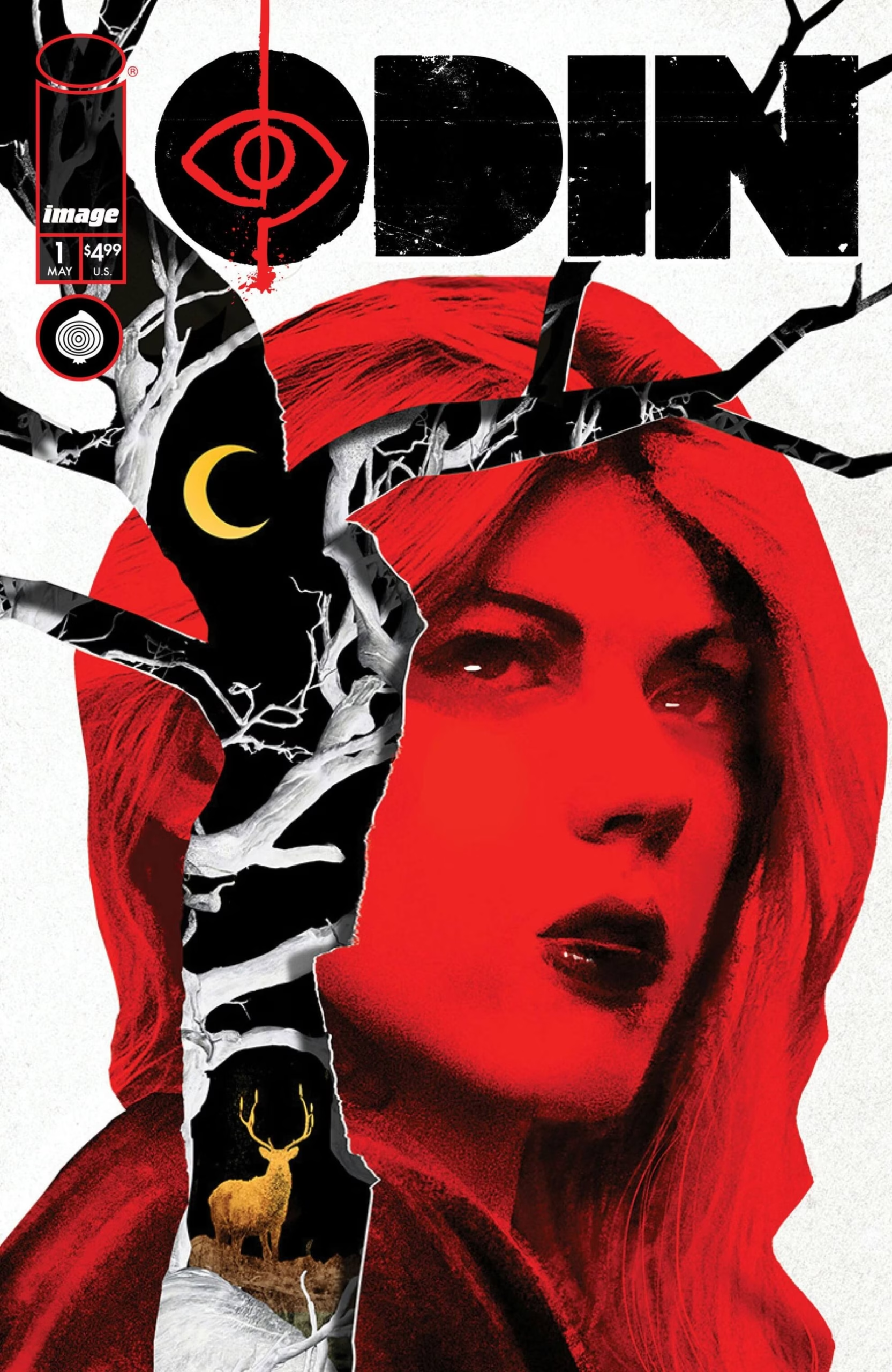
‘Odin’ #1, released by Image Comics through the Tiny Onion imprint on May 20th, 2026, is precisely that pursuit: a nine-issue limited series that positions the Norse tradition not as mythology to be adapted but as an operating logic to be reckoned with.
Folk Horror and the Forest It Needs
The nine-issue limited series, written by James Tynion IV and Marguerite Bennett, follows Adela, a journalist who goes undercover with a band of neo-Nazi punks traveling to the frozen forests of Norway. Their objective — framed as ideological destiny — is to summon the Norse Allfather and receive divine sanction for the white supremacist project they have organized around his name.
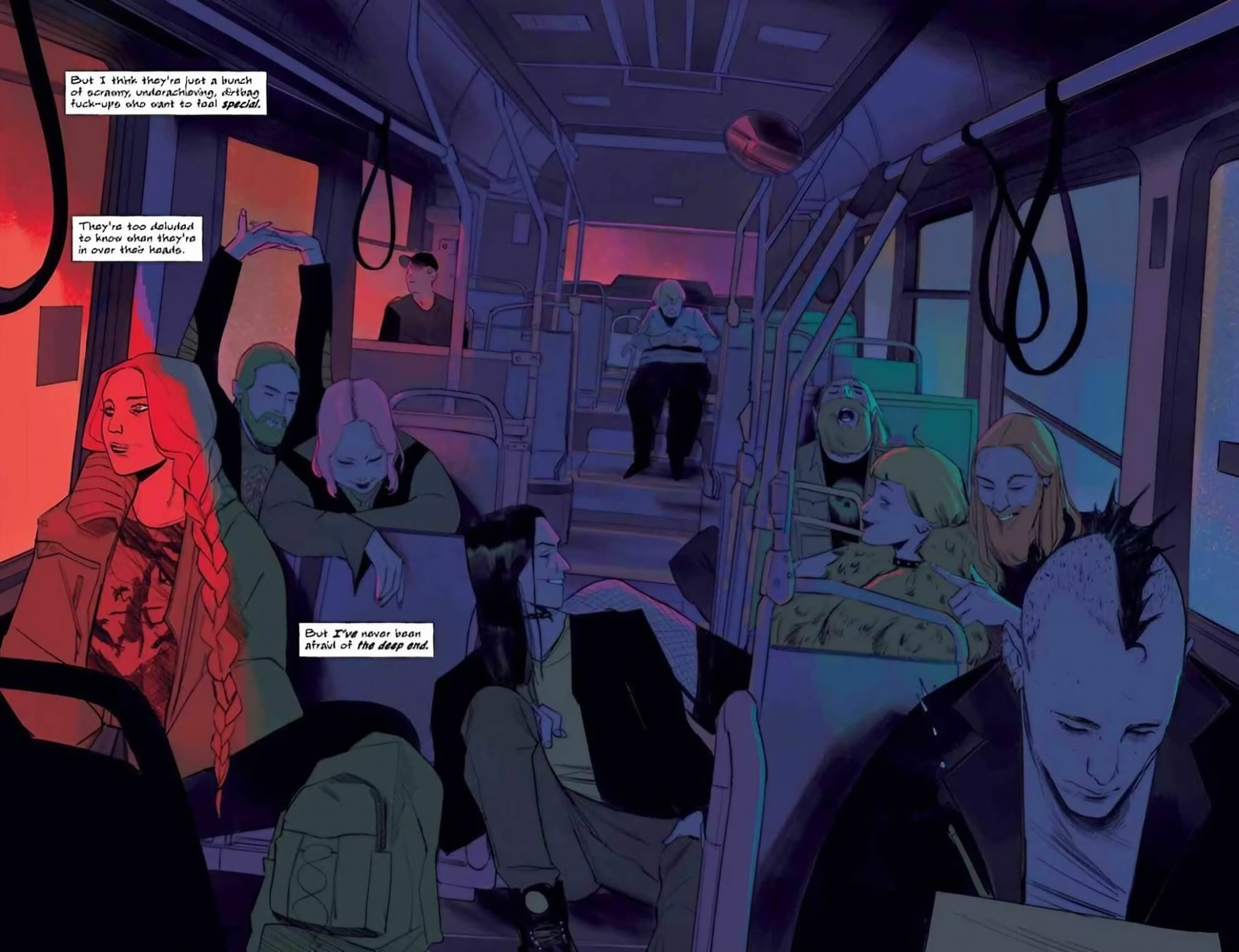
The official solicitation is precise about what they find instead: something “far older and stranger than any of them can comprehend,” with no gods arriving to answer their prayers.
This is not the horror of supernatural misidentification. The neo-Nazis in ‘Odin’ are not confused about what they are trying to invoke — they are wrong about their relationship to it. The distinction matters for the book’s governing premise, which draws on folk horror’s defining mechanism: the refusal of the ancient to recognize the claims of the contemporary.
Ari Aster’s ‘Midsommar’ (2019) — cited by Tynion and Bennett as a primary formal reference, alongside Jeremy Saulnier’s ‘Green Room’ (2015) — belongs to the same horror grammar. In ‘Midsommar,’ the protagonist discovers that the community she has entered operates by rules that predate her ethics, her psychology, and her assumption that she controls the terms of her own survival.
‘Odin’ applies this structure to a specific documented ideological formation: the appropriation of Norse mythology by far-right movements, a project with roots traceable to the SS-Ahnenerbe, the research body established in 1935 under Heinrich Himmler to excavate and systematize Germanic and Scandinavian cultural heritage as ideological legitimation.
Viking runes, Odinist imagery, and Norse cosmological symbols were treated as evidence of Aryan supremacy — a process that left a persistent contamination across the mythology into the twenty-first century, making the symbols themselves sites of contested ownership.
What ‘Odin’ is asking is specific: what does a primordial force actually do with those who invoke it to sanction themselves? The horror grammar of the answer is implied in the book’s premise. The forest does not care who enters it bearing someone else’s name.
Tynion, Bennett, and a Five-Year Premise
Tynion IV holds multiple Eisner Awards and has positioned horror at the center of his independent work since leaving mainstream monthly superhero publishing.
‘Something Is Killing the Children’ (BOOM! Studios), ‘W0rldtr33’ (Image Comics), ‘The Nice House on the Lake’ (DC Black Label), ‘Department of Truth’ (Image Comics), and ‘Exquisite Corpses’ (Tiny Onion/Image Comics) form a sustained engagement with horror’s formal possibilities across a range of subgenres — creature horror, digital-age cosmic horror, paranoid historical conspiracy, and psychological dread among them.
Bennett’s prior work sits at the intersection of dark fantasy and gothic horror. Her ‘Mommy Blog’ one-shot (Ninth Circle/Image Comics) and the current ‘Witchblade’ reboot (Top Cow Productions/Image Comics) signal a sensibility oriented toward horror that activates within intimate structures — family, community, body.
The collaboration with Tynion on ‘Odin’ marks their first extended original horror project together, and the stated gestation period — five years of development conversation — suggests a premise that survived significant internal pressure-testing before the scripts were committed to paper.
Nine Scripts, No Concession
All nine issues of ‘Odin’ were written before #1 reached the shelves. Tynion announced this at ComicsPRO in February 2026, noting that the scripts were completed in the fall of 2025. The practical implications for a horror limited series are more significant than they might initially appear.
A serialized story written to conclusion before reader response can influence it is formally distinct from one shaped mid-run by sales data or editorial pressure applied between issues. Whatever the book commits to in its opening pages — whatever tonal decisions, whatever pacing choices, whatever the precise nature of what waits in the northern forest — will not have been adjusted to accommodate external forces.
The complete-scripts approach is, in this specific context, a formal statement: the book will be what it intends to be, not what its reception pressures it to become.
Cadonici’s Lines, Bellaire’s Red
Letizia Cadonici’s work on ‘House of Slaughter’ (BOOM! Studios) — the companion series to ‘Something Is Killing the Children’ — demonstrates a specific facility: the management of spatial information across a panel sequence. Her line weight calibrates how much the reader can see at any given moment, controlling the field of information in ways that pace dread more precisely than narrative text alone can manage.
In a folk horror context, where the horror depends on the reader registering what the characters cannot yet see, this capacity for controlled information is the correct formal tool.
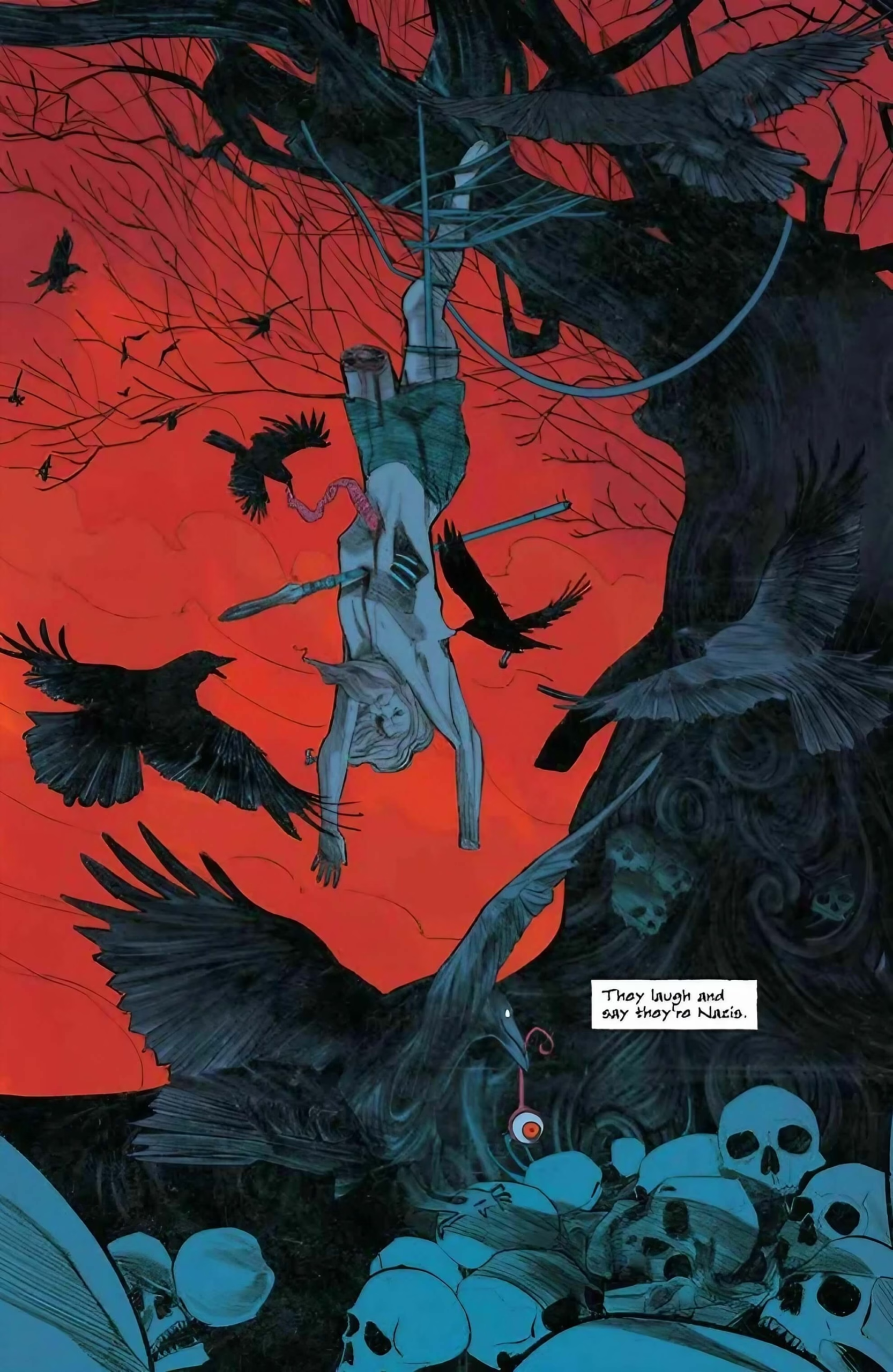
Jordie Bellaire’s color work on ‘Odin’ makes its thematic argument through palette restriction. The Norwegian forest establishes a cold chromatic register — the blues and grays of permafrost and northern winter — and Bellaire’s red intrudes against it at strategic moments, operating not as atmospheric decoration but as argumentative punctuation.
Advance preview materials indicate that Bellaire’s chosen palette compresses the red specifically into the sequences where the horror of the book’s central encounter begins to coalesce. Red here carries more than one meaning — it is the color of blood, of ideological banners, of the violence both imported into the forest and encountered there.
When Cadonici’s panel composition narrows the frame to Adela’s position within the group and Bellaire’s red arrives as the cold palette’s interruption, the effect is precise: the violence the book is about was already present before the forest moved.
Tom Napolitano’s lettering and Dylan Todd’s design work complete the production. Steve Foxe edits. The main Cover A across the series, illustrated by Alex Eckman-Lawn, presents the book’s visual argument for its full run. Variant covers for #1 are provided by Cadonici (1:10), Christian Ward (1:25), Martin Simmonds (1:50), and Jae Lee (1:100).
What the Forest Refuses to Sanction
Horror comics have engaged with ideological violence — with systems of belief that produce atrocity — across the medium’s documented history, but rarely with the formal precision that folk horror makes available. The subgenre’s specific contribution is not violence or dread in themselves but the demonstration that certain frameworks of thought are simply wrong in ways that cannot be corrected by those who hold them.
‘Odin’ #1 deploys this precisely against a historically documented formation: an ideological appropriation of ancient symbols that has, since the nineteen thirties, proceeded on the assumption that the symbols can be owned, weaponized, and made to serve a political program. The folk horror argument is that they cannot.
‘Odin’ is published at a moment when the question of symbolic ownership — who has standing to name and invoke ancient imagery — is not abstract. The book’s nine completed scripts constitute a sustained argument that the answer will not be found in the ideological presumptions of those doing the invocation. What the Allfather does with those who summon him is, given the logic of the form, predictable: nothing the summoners anticipated.
Folk horror’s central mechanism — the refusal of the primordial to recognize the claims of those who invoke it — has appeared across film, fiction, and now sequential art. Within the documented history of horror comics, where has this precise encounter between ideological presumption and ancient indifference been most directly engaged, and what does that history suggest about the form’s particular capacity to stage that confrontation?
Leave a Reply