

In 1950, three narrators took up residence at the front of the Entertaining Comics horror line: the Crypt-Keeper, the Vault-Keeper, and the Old Witch, who presided over ‘The Haunt of Fear’ with a cackle and a stock of graveyard puns. Their office was less to frighten than to sentence. Each story opened with a host presenting a sinner to the reader in a caption that stretched across the top of the page, and each closed with that host confirming a punishment shaped precisely to the sin, a moral bookkeeping the publisher treated as the house style of its horror and crime titles alike.1
More than seven decades later, a witch still keeps the door. ‘Beware the Witch’s Shadow: Monster Bash’ #1 reached comic shops on September 30th, 2026, from American Mythology Productions, priced at $4.99 USD, approximately COP 16,290, as a mature-readers one-shot printed in black and white.
The solicitation promises three new tales told from inside the Witch’s hovel, with stories credited to G.O. Parsons, the screenwriter of the 2021 film ‘Willy’s Wonderland,’ and to S.A. Check, Alexander Banchitta, and James Kuhoric.
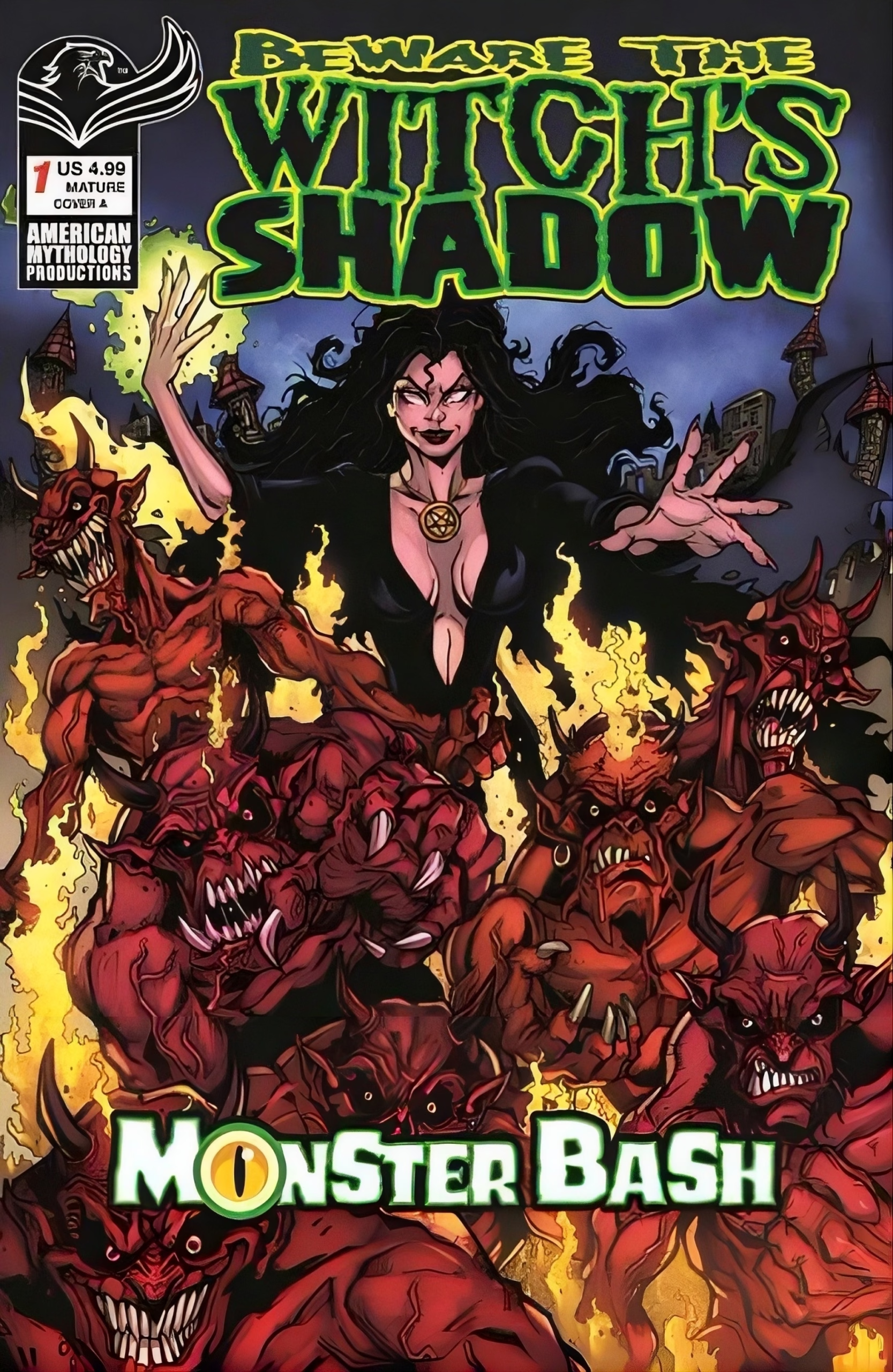
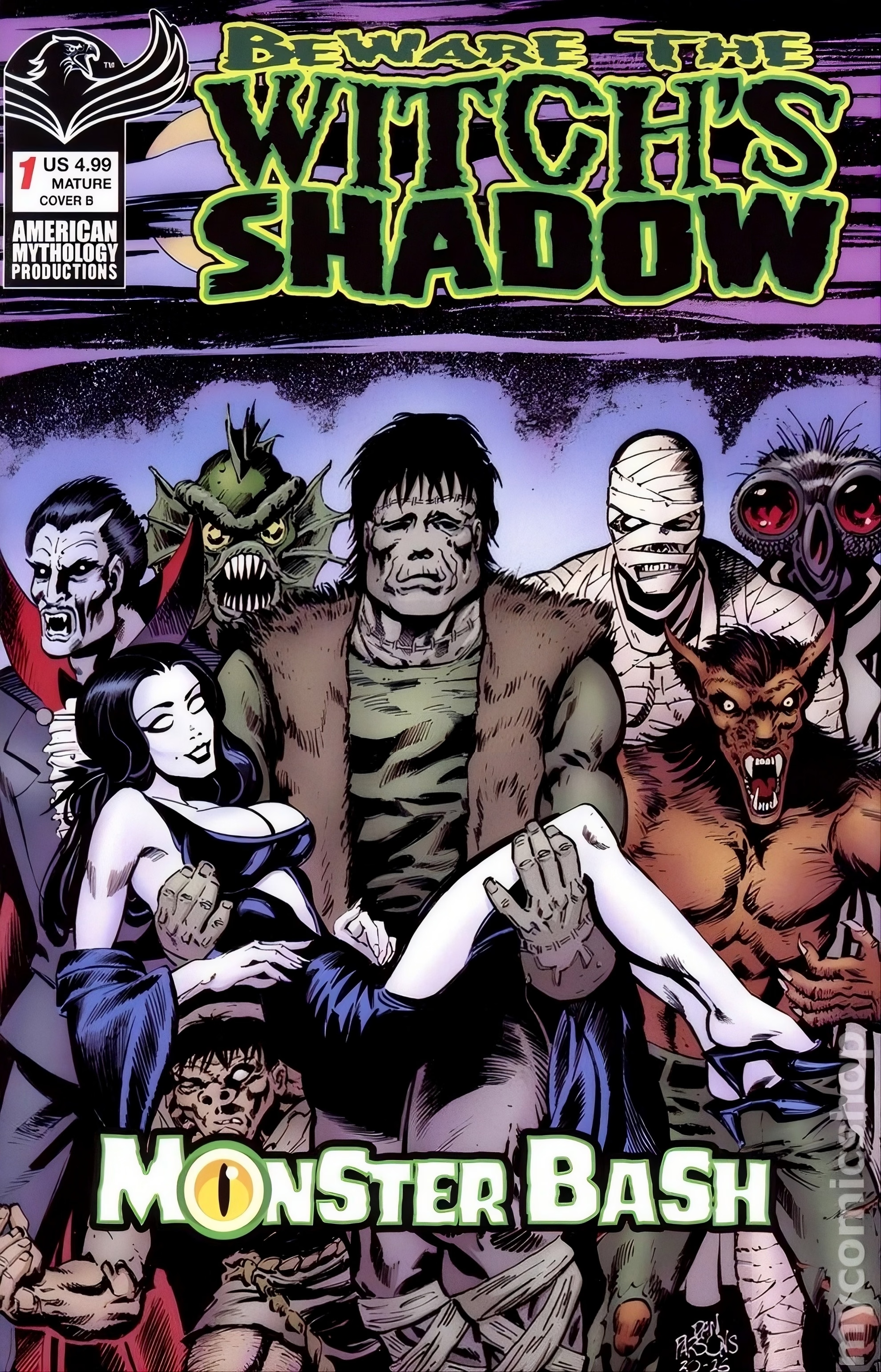
Puis Calzada supplies Cover A, with a variant by Dan Parsons, a Racy variant by Calzada, and a Risqué variant by Parsons completing a four-cover program. The announced materials list the interior artists only as various, so the interior art credits could not be confirmed at the time of publication; the letterer credit and the editor credit could not be confirmed either. As a periodical one-shot, the issue carries no ISBN, and a confirmed page count had not been published.
The Hovel and Its Guests
The book is not a revival so much as another night in an established house. The Witch has presided over a run of one-shots under the same banner, among them ‘Happy New Fear,’ ‘Winter Special,’ ‘Night Frights,’ and ‘Fangs for the Memories,’ each announced by the publisher as the return of a wisecracking host rather than as a fresh concept.
What separates her from the EC model is where the listener sits. The Old Witch addressed the reader from a safe proscenium, a narrator outside the fiction who judged characters inside it. The publisher’s own descriptions of this line place the tales inside the hovel, told to visitors as the life drains out of them, which turns the audience of each story into the next item on the menu. The frame is no longer a lectern; it is a trap with a storyteller at the center of it.
Justice Without a Badge
The Comics Code of 1954 is often remembered as a ban on gore, but its deeper target was jurisdiction. Its standards required that good triumph over evil, that crime be punished and never glamorized, and that police, judges, and other officials never be presented so as to invite disrespect; it struck the words “horror” and “terror” from titles and prohibited walking dead, vampires, ghouls, and werewolves outright.2
EC’s stories had never lacked punishment. Their offense was the identity of the executioner: the drowned victim rising from the lake, the murdered partner stepping out of the freezer, the monster serving as bailiff where the Code wanted a policeman. The industry’s new rules demanded that justice flow through lawful institutions, and the horror anthology existed precisely to route it around them.
The premise that this format transgresses because it punishes without redeeming is therefore only half right. The format transgresses because it convenes a rival court, one in which the dead testify, the monster passes sentence, and no officer of the state is present to take credit. A witch who is judge, jailer, and executioner at once is the purest expression of that alternative bench.
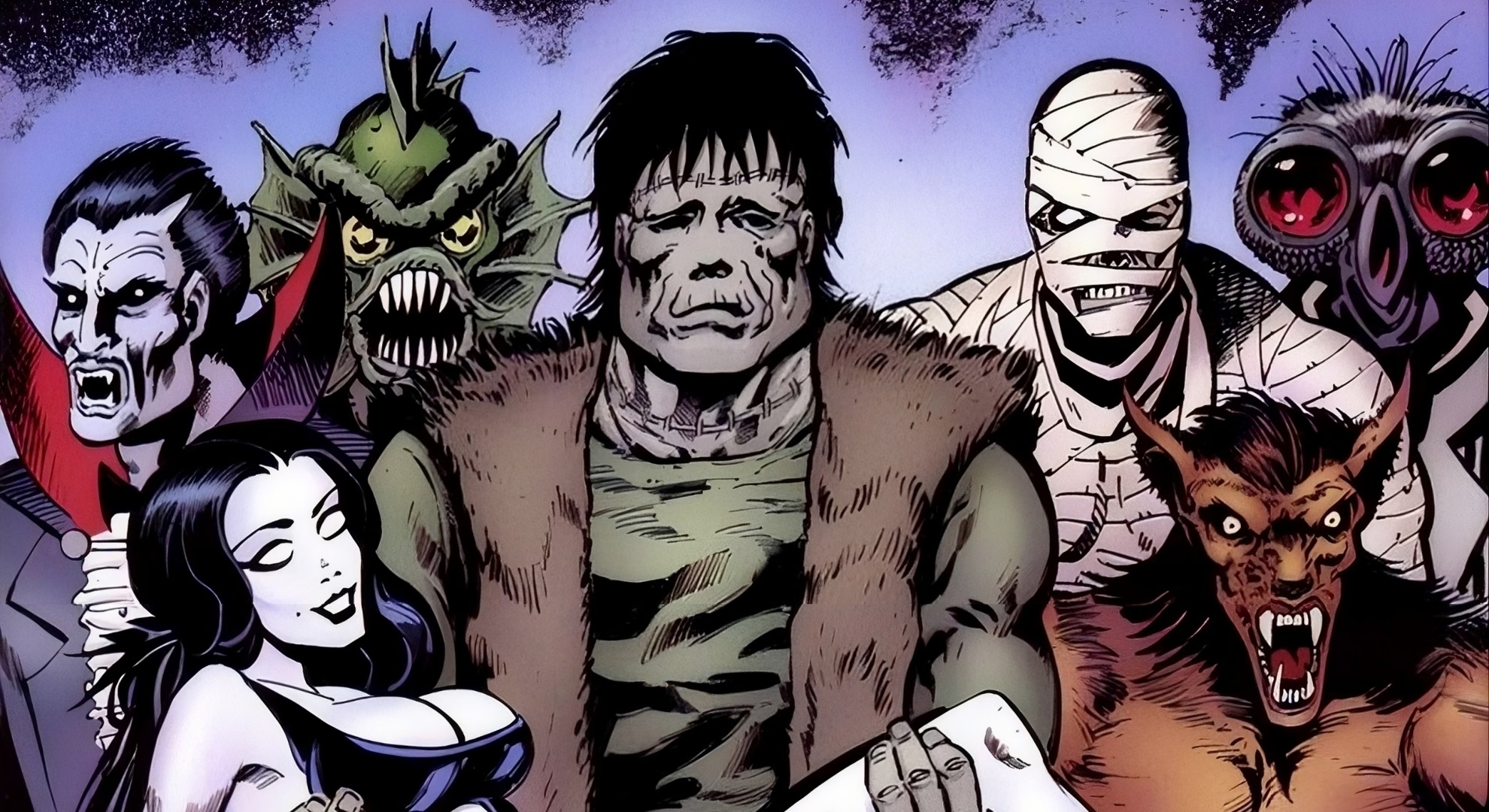
The ‘Monster Bash’ subtitle sharpens the point. An issue promising to howl at the moon gathers, as its selling premise, the very roster of creatures the 1954 standards removed from the newsstand, which makes the one-shot less a nostalgic costume than an inventory of what was once confiscated.
The Pun Before the Blade
The Witch’s humor is not garnish. The EC hosts bracketed every atrocity with jokes, a pun before the first panel and another after the last, so that the reader entered and left each killing through a door marked as play. The laughter licensed the cruelty by announcing a game with rules, and the rules guaranteed that the guilty would pay.
American Mythology keeps that cadence in its own promotional voice, promising terror delivered with wisecracks, and Kuhoric bills himself in the same solicitation as a horror hack. The self-mockery belongs to the same tradition: a storyteller who admits the tale is a trick earns permission to make the trick vicious.
The risk runs in the other direction. A host whose jokes outnumber her verdicts becomes a mascot, and a mascot presides over a cabaret rather than a court. The wisecrack only works as a frame for sentencing when the sentence still lands with its full weight.
Ink Without Color
The black-and-white presentation carries more of the argument than any single story can. In a color horror comic, red announces the wound before the eye has read the figure; without it, blood and shadow share a single value, and a spreading pool of solid black on the floor of a panel is indistinguishable from the dark of the room around it.
Violence has to be found in shape and texture, in the density of hatching around a torn collar or the sudden flat black of an open mouth, rather than received as a flash of hue.
That equivalence suits a frame in which the storyteller is also the predator. When the Witch’s shadow and her victims’ blood are rendered in the same ink, the page itself refuses to separate the narrator from the harm she narrates.
The interior pages had not been previewed at the time of writing, so no individual sequence can yet be judged against that standard. The format commits the artists to a specific test all the same: the opening host panel, which in the EC template set the sinner before the reader, and the closing tag panel, which delivered the pun over the corpse, must carry their weight through contrast alone.
An artist who renders the Witch in heavy spotted blacks at the top of a story and then answers her with the same density on the final victim closes the circuit visually; one who treats the frame panels as a lighter, cartoon register leaves the court and the killing in separate rooms.
As a one-shot, the issue also sits apart from both the original graphic novel and the collected edition. Each tale must open, turn, and resolve within a handful of pages, which is the compression the twist-ending short story has always demanded, and the anthology gains nothing from later collection that it lacks as a single issue.
The Gavel Stays in the Woods
What survives from 1950 in this book is not gore, which color comics now deliver without restraint, but a jurisdiction: a place outside the reach of police and courts where verdicts come from the dead and the monstrous. The Witch’s hovel is that place, and her appetite for her own audience makes it stricter than the one EC built, because even the listener is no longer exempt from judgment. The book will be worth its black ink as long as the Witch remains a judge first and a comedian second.
If the EC horror host was always a judge in costume, does a Witch who devours her own listeners sharpen that courtroom into something crueler, or does punishing mere curiosity blur the moral sorting that gave these stories their sting?
References
- Qiana Whitted, ‘EC Comics: Race, Shock, and Social Protest’ (New Brunswick: Rutgers University Press, 2019), 133–136. ↩︎
- Bradford W. Wright, ‘Comic Book Nation: The Transformation of Youth Culture in America’ (Baltimore: Johns Hopkins University Press, 2001), 172–179. ↩︎

Leave a Reply