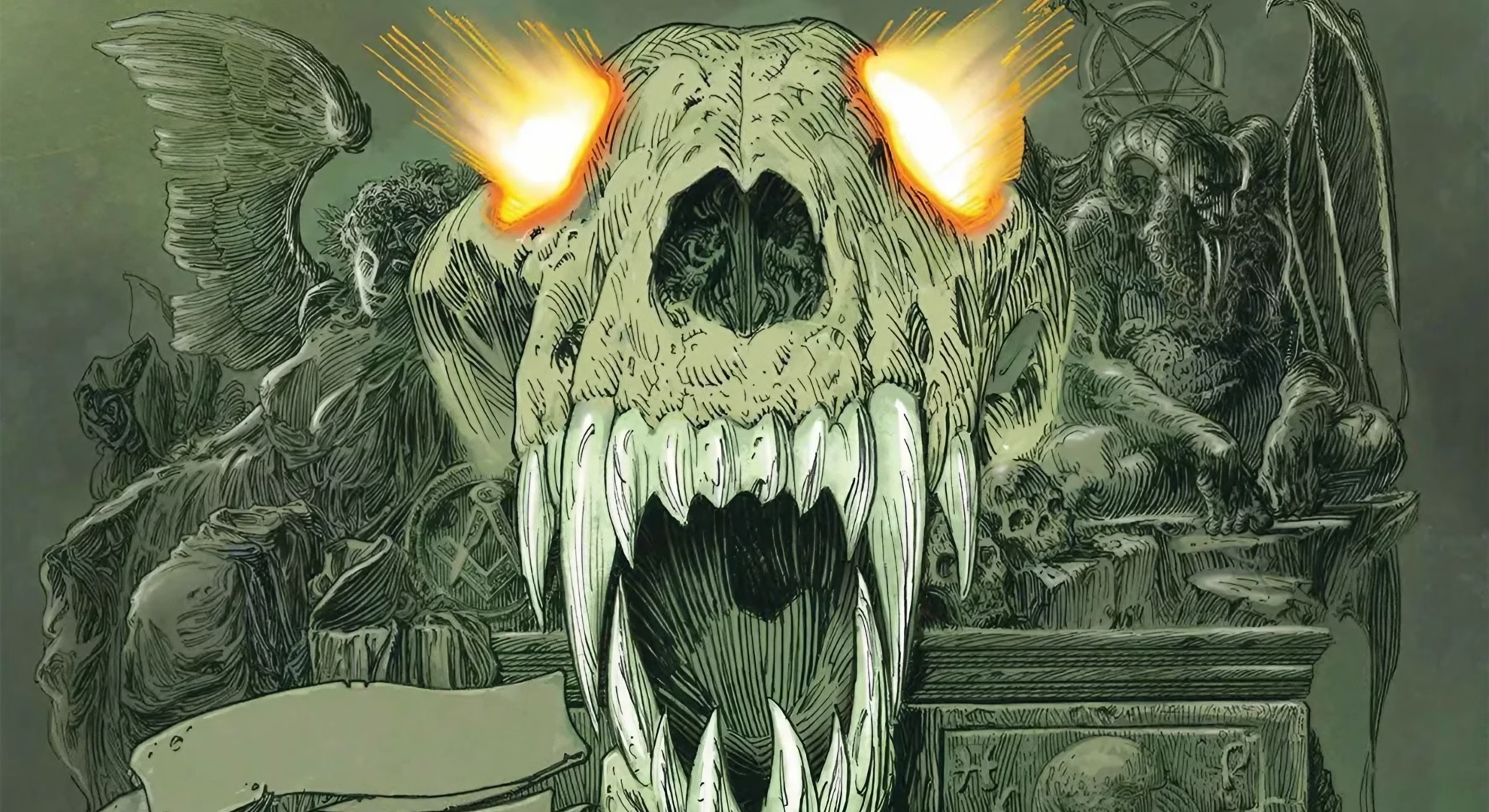


Between 1764 and 1767, something killed shepherds and children across the Gévaudan, a mountainous province of south-central France, and the killings became one of the first news stories to travel across Europe on the strength of print. Louis XV sent dragoons and then his own lieutenant of the hunt, François Antoine, who shot a great wolf at Chazes in September 1765 and had it stuffed for Versailles; the attacks continued until a local hunter, Jean Chastel, brought down another animal in June 1767.1
The episode left behind less a zoological answer than a pattern: experts dispatched to a remote district to kill a thing the people who lived there had already named.
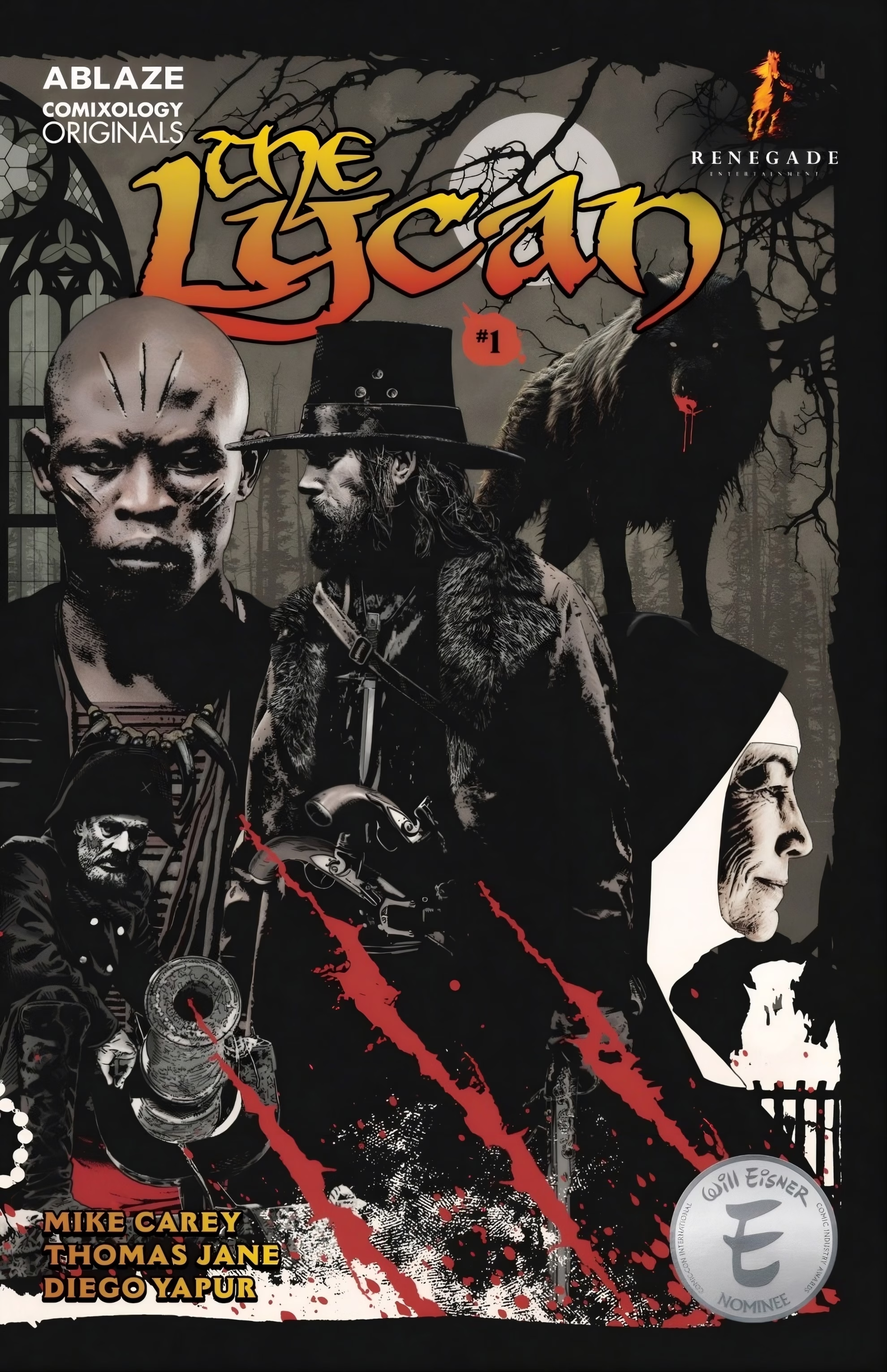
‘The Lycan’ #1, which reaches comic shops from Ablaze on September 30th, 2026, at $5.99 USD, approximately COP 19,200, moves that pattern offshore. International big game hunters, sailing home from Africa with live animals in the hold, are wrecked off a small British island, and Lord Ludgate trades repairs and provisions for a contract: find the beasts eating his subjects and destroy them.
The issue binds the first two chapters of a six-part series under a wraparound cover by Tim Bradstreet.
A Shipwreck Twice Delayed
Thomas Jane, the actor who played Frank Castle in the 2004 film ‘The Punisher,’ developed the story with writer and producer David James Kelly and commissioned the script from Mike Carey, whose 75-issue run on ‘Lucifer’ and 40 issues of ‘Hellblazer’ for Vertigo place him among the most sustained writers of gothic fantasy in American comics.
A print edition announced by AfterShock Comics for 2022 never reached shelves, and Jane, in a statement accompanying the Ablaze announcement in June 2026, recalled “a heartbreaking false start over a decade ago.”
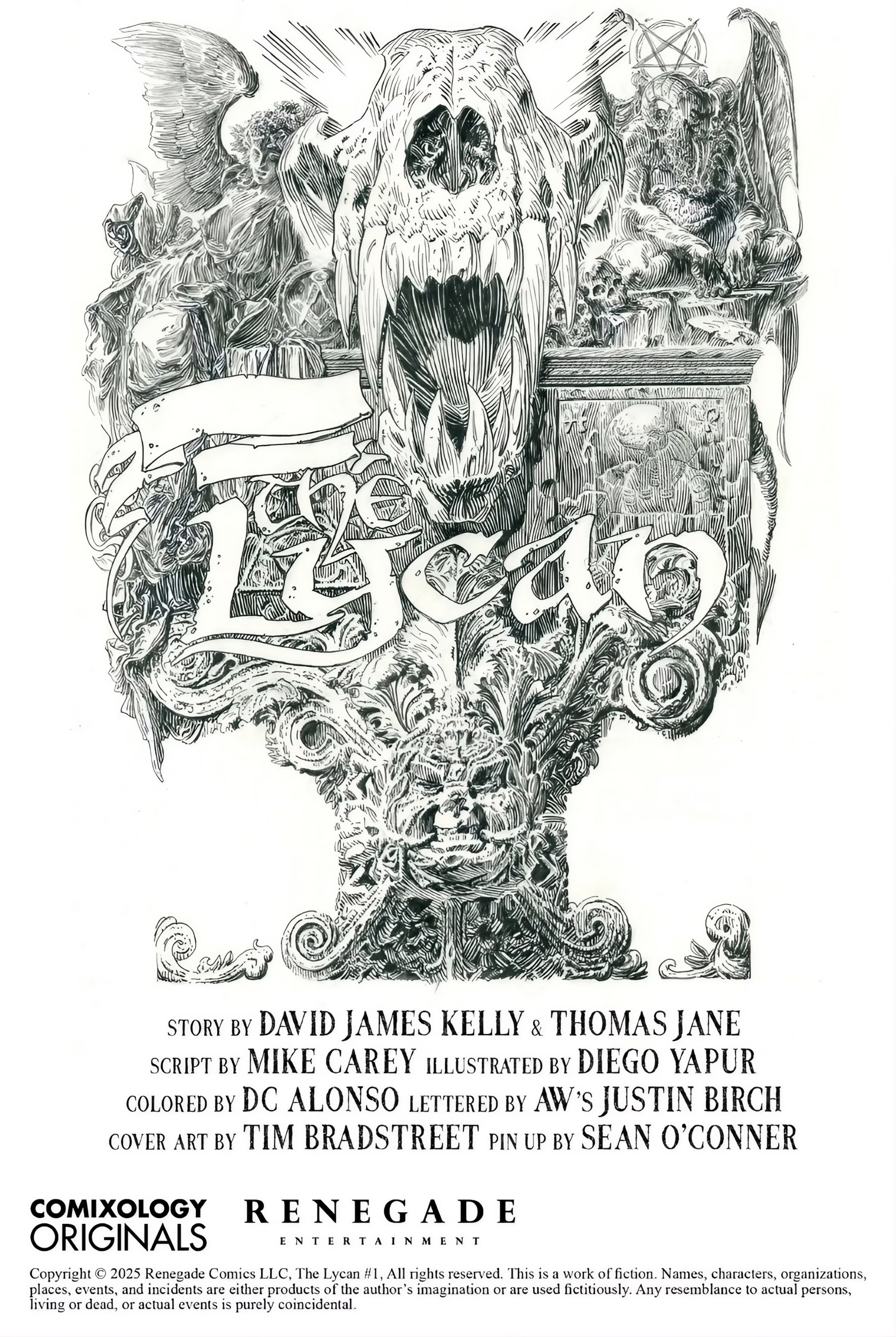
The series debuted instead as a Comixology Originals digital release in February 2025, the first title from Jane’s label Renegade Entertainment, and went on to 2026 nominations for the Eisner Award for Best Digital Comic and the Harvey Award for Digital Book of the Year.
Diego Yapur, an Argentine artist whose published credits include AfterShock’s ‘Lollipop Kids,’ Valiant’s ‘Life and Death of Toyo Harada,’ Heavy Metal’s ‘Sun Eater,’ and Opus’s ‘Death Dealer,’ draws the interiors; D.C. Alonso colors them; AndWorld Design letters the book, with Justin Birch credited for the studio on the released pages; Jane edits; and Bradstreet and Liam Sharp supply covers. A page count had not been confirmed at the time of publication.
One detail separates the solicitation from the page. Ablaze dates the voyage to 1777, while the opening caption of the released pages places the brigantine Calydonian 20 miles off the Scottish coast in 1797. Either year sets the wreck within living memory of the Gévaudan, close enough for these hunters to be the professional heirs of Antoine.
Rain Drawn Like Engraving
The first page of the story states Yapur’s method before a face is seen. The Calydonian heels across nearly the full height of the page, sails bellied white against a spiral of storm cloud, while the rain falls in long diagonal strokes that cross the ship, the sea, and the caption boxes alike.
The captions, stacked down the left margin, sit inside the weather rather than above it; only a horizontal strip at the foot of the page pulls the reader below deck, where two men discuss the cargo by a single lantern.
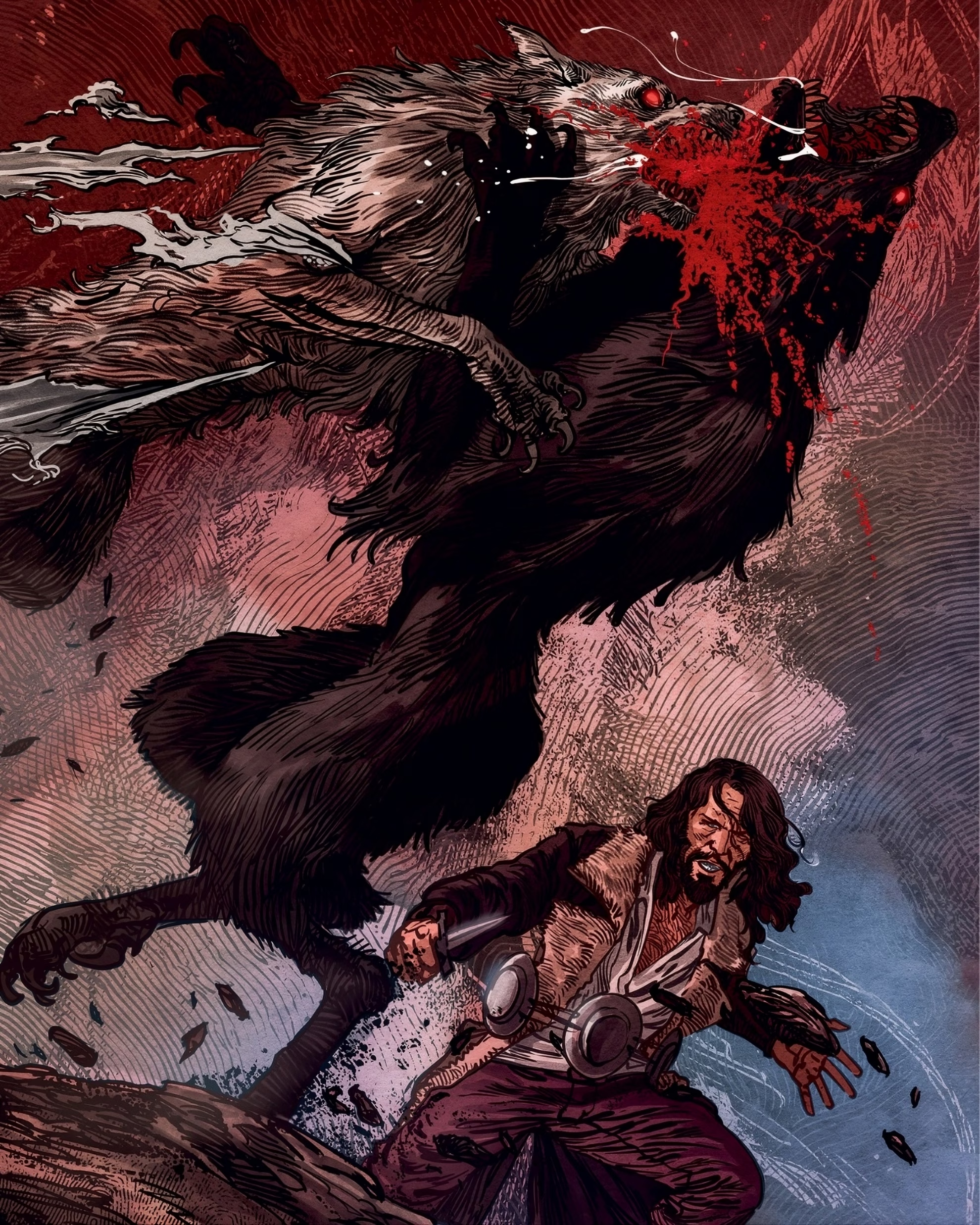
Yapur’s line is dense, hatched, and cut rather than brushed, closer to copperplate engraving than to the fluid ink of most contemporary horror comics. The Gévaudan beast reached its eighteenth-century public largely through engraved broadsheets whose creature changed shape from sheet to sheet, and Yapur’s hatching gives the island story the look of a document from the period that believed in its monsters.
Alonso holds the exteriors in a cold register of teal and slate and reserves amber for lantern light, so that warmth belongs only to enclosed human space. The next page drops into the hold from directly overhead: two men cross a plank deck between crates, and at the foot of the panel two tigers lie caged in straw, lit by the same small circle of amber.
The overhead angle looks down on hunters and trophies alike, a vantage that anticipates the reversal the premise promises.
The wreck is paced across three pages. A light ashore, which the captain takes for the Ulva lighthouse, begins to move, and a crewman fears it is no lighthouse at all. A tight panel isolates one sailor’s widened eyes, and the hull strikes rock beneath a sound effect whose pale, jagged letters splay across the panel like splintered planking.
The following page stacks horizontal panels while the rain hatching runs across the gutters, so that the storm overrides the frame the grid tries to impose. Carey makes the island’s first act toward the hunters a deception rather than an attack: men trained to follow signs are undone by a sign that lies.
A Ship Named for a Boar Hunt
The ship carries the name of the most famous hunting party in classical literature. In Ovid’s account, Diana sends a monstrous boar against Calydon because its king neglected her rites, and the heroes gathered to kill it end the hunt quarreling over the hide, with Meleager killing his own uncles and dying through his mother’s vengeance.2
A vessel called the Calydonian carries that outcome in its name: a hunt provoked by a local grievance, undertaken by outsiders, and liable to turn on the men who join it.
The contract compounds the irony. These are professionals who speak of animals as freight, and on the first page a crewman regrets that caged beasts do not fill a hold the way tea or saffron would. Marvel’s ‘Werewolf by Night,’ launched in 1972, placed the American comic-book werewolf inside the sufferer’s point of view; ‘The Lycan’ tells the story from the side of the men paid to end the curse, aligning it with the royal hunters of the Gévaudan.
The Light That Moves
The Gévaudan ended with a stuffed wolf at Versailles and killings that went on after it, a royal hunt that produced a trophy without producing certainty. ‘The Lycan’ opens at the point where that history turned uncomfortable, with trained hunters misreading a light on a dark coast, and Yapur’s engraved line makes each page resemble the broadsheets that once carried such panics across Europe.
The book’s strongest proposition is that expertise offers no protection against a monster the locals understand better than the specialists sent to kill it, and the first issue commits to that proposition from its opening weather to its final wreckage.
If the Gévaudan hunts ended with a trophy on display while the killings continued, can a werewolf story told from the hired hunters’ side sustain its dread, or does the professional’s point of view drain the horror that the sufferer’s perspective has long supplied?
References
- Jay M. Smith, ‘Monsters of the Gévaudan: The Making of a Beast’ (Cambridge: Harvard University Press, 2011), passim. ↩︎
- Ovid, ‘Metamorphoses,’ trans. A. D. Melville (Oxford: Oxford University Press, 1986), bk. 8, lines 260–546. ↩︎


Leave a Reply