

In 1938, René Magritte completed ‘La Clairvoyance’ — a canvas in which the painter, his back half-turned to the viewer, observes an egg on the table before him and commits to canvas not the egg but a bird in flight. The philosophical premise was precise: what the eye sees and what the mind apprehends are not the same territory, and the act of art consists in navigating the distance between them.
Magritte was Belgian. So is Emptiness, founded in Brussels in 1998. The coincidence of nationality carries no explanatory weight in itself. What it marks is that a tradition of radical formal proposition — the image that says something other than what it appears to show — has long been native to the territory from which this band emerged.
On July 17th, 2026, Emptiness release ‘Nowhere Speaks,’ their seventh full-length, through Season of Mist. It is a record that begins not with an introduction but with a continuation — entering mid-riff exactly where their 2014 album ‘Nothing But The Whole’ severed itself without warning — and closes by looping back to the opening riff of that same record.
Between those structural anchors, the album builds a world defined entirely on its own logic: a dimension removed from all human presence, indifferent to whatever listener might be attempting to enter it.
Brussels, 1998, and the Long Accumulation
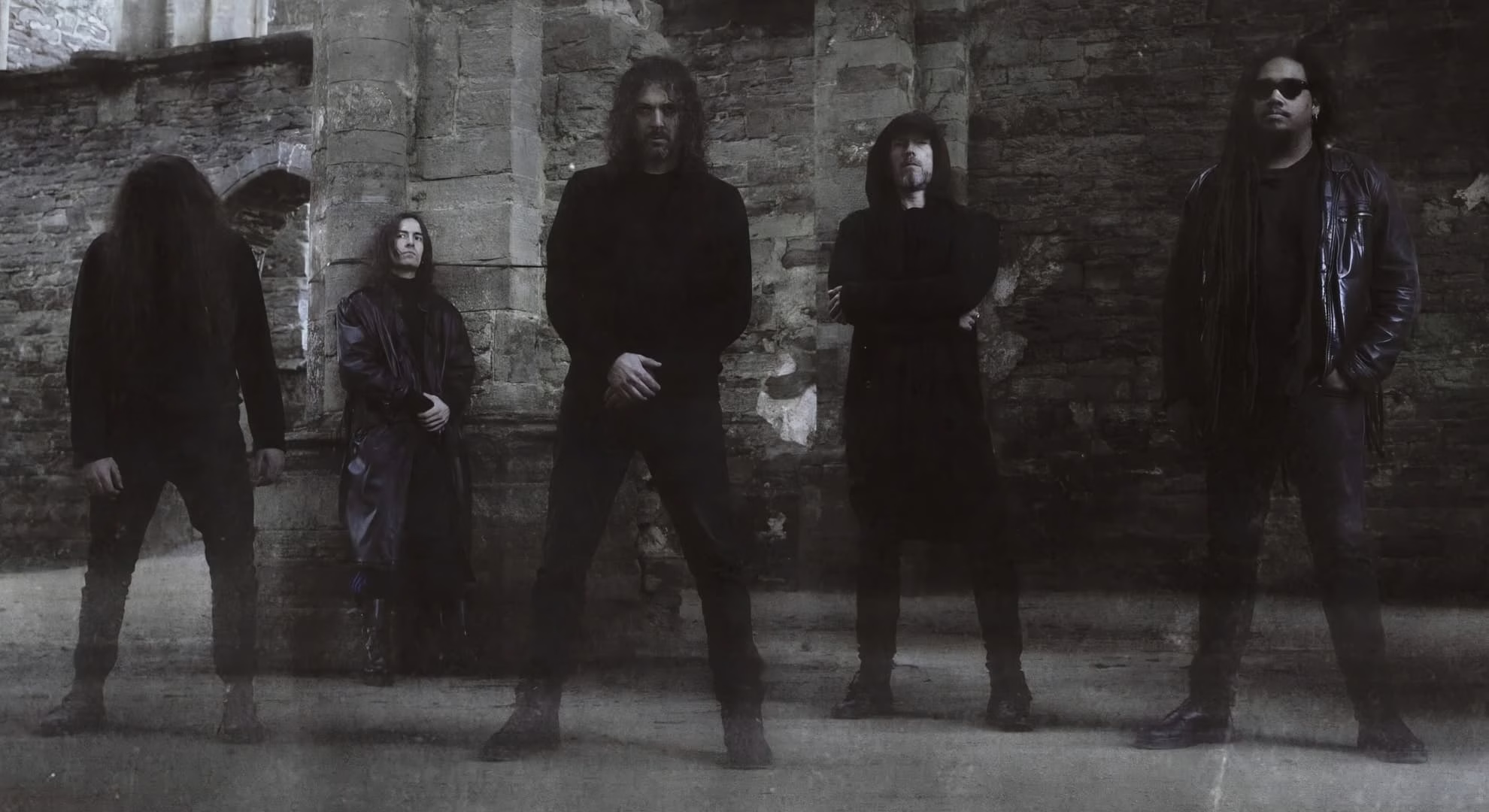
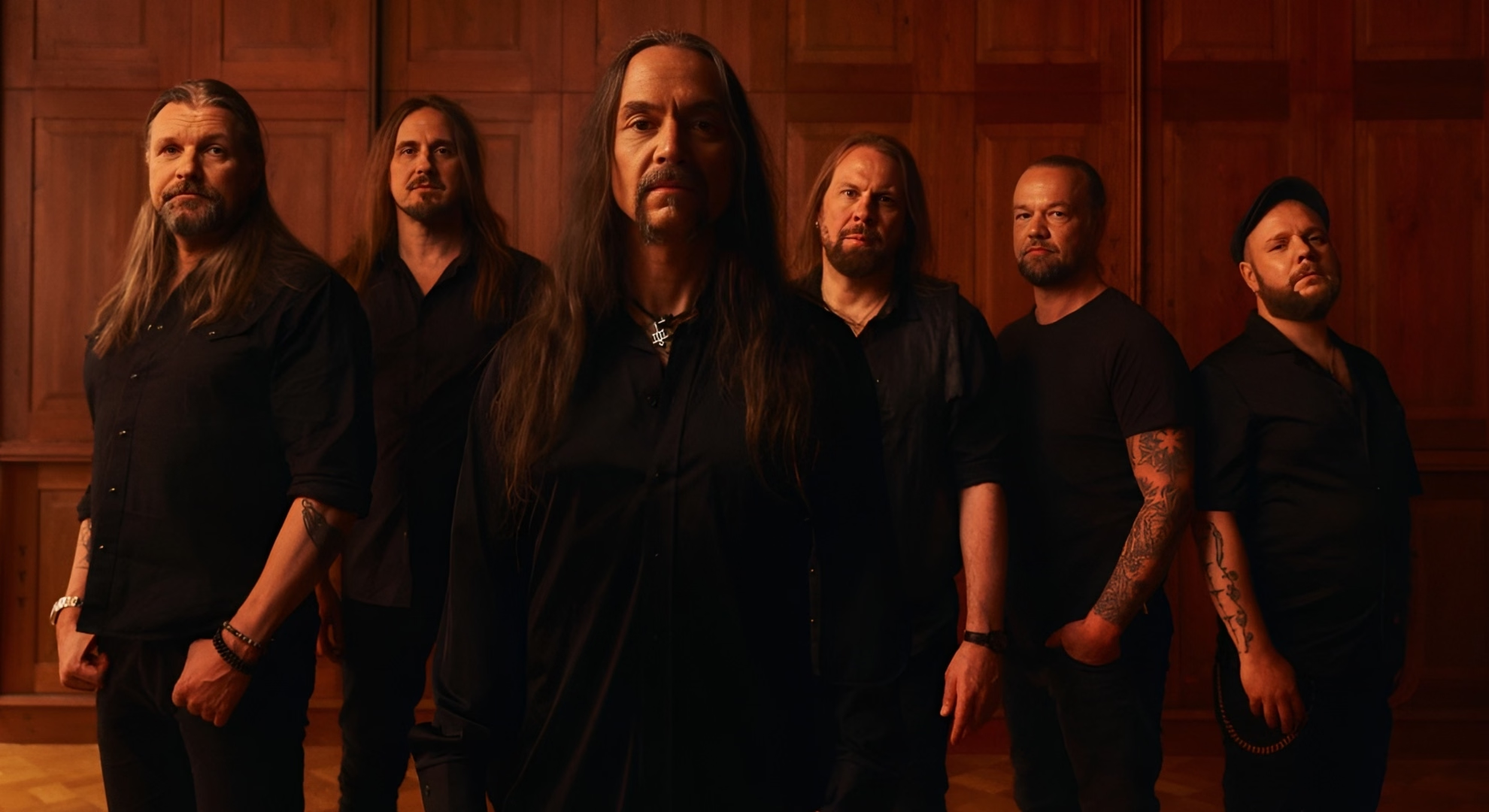
The history of Emptiness is, in the most literal sense, a history of refusal. Founded in Brussels by Jérémie Bézier and Olivier J.L.W., the band spent their first decade within the conventions of black and death metal before progressively dismantling those conventions from the inside.
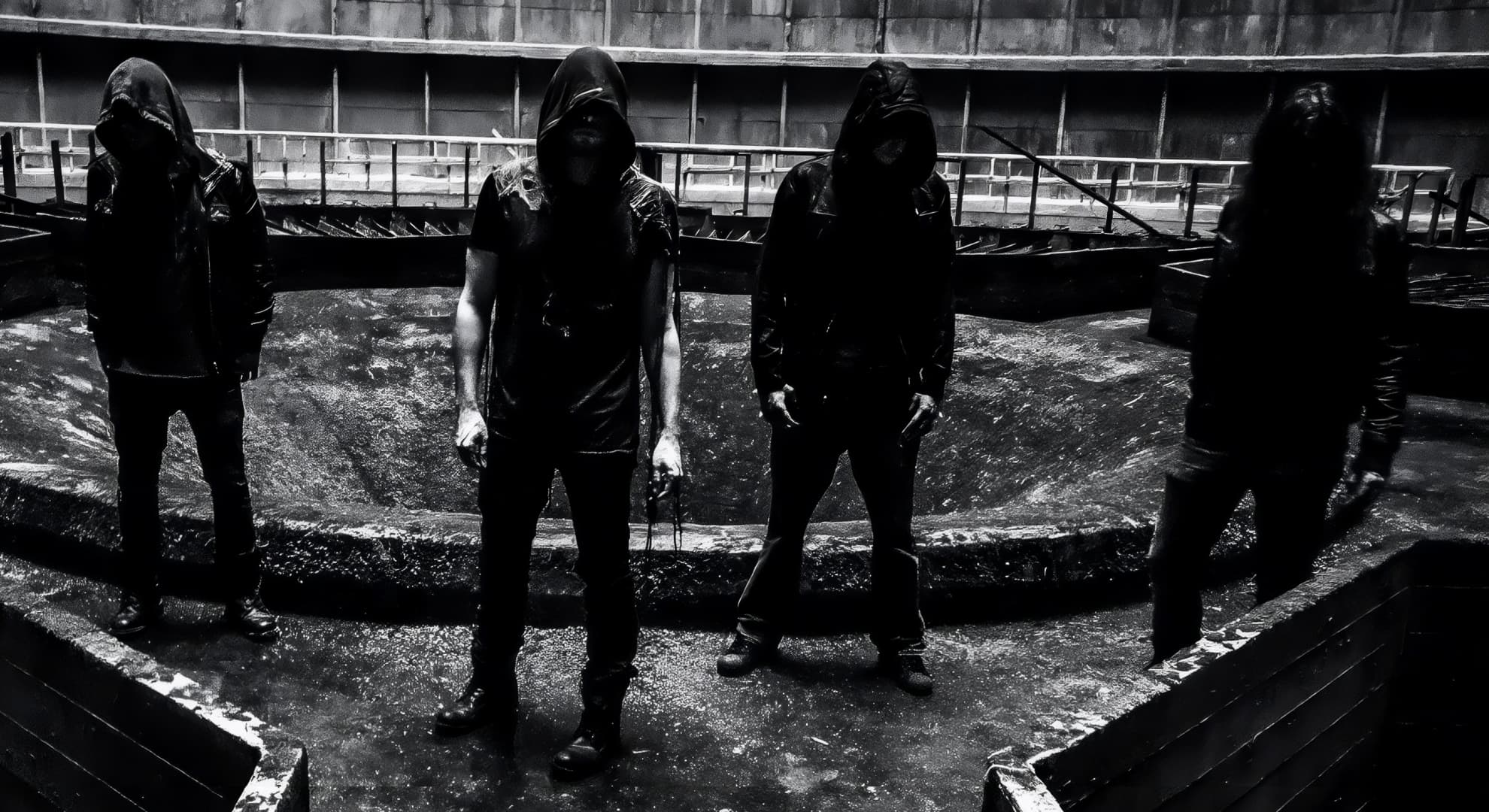
Their early catalog — ‘Guilty to Exist’ (2004), ‘Oblivion’ (2007), ‘Error’ (2012) — traces the arc of a band that absorbed the mechanics of extreme music and then began to test, one by one, how many of those mechanics could be removed before the music stopped being music.
‘Nothing But The Whole’ (2014) was the album that completed that process publicly. Strange, formally resistant, and almost entirely stripped of the genre markers that had governed the earlier work, it drew the critical attention of a wider underground audience while doing nothing to accommodate that audience’s expectations.
Its final gesture — a riff severed mid-bar, the record simply ceasing — drew years of speculation from listeners. It was not an error in the pressing or an artifact of the mastering. It was a deliberate punctuation mark, a pause held open across twelve years.1
‘Not for Music’ (2017), produced by Jeordie White and mixed by Sean Beavan, marked Emptiness’s first release through Season of Mist and their most decisive turn away from extreme metal frameworks.
Drawing on goth rock, coldwave, and industrial, the album pursued a fully inhabited palette rather than borrowed atmospherics. ‘Vide’ (2021) pushed further still: distortion-free, sung entirely in French, recorded in isolation across apartments, a cabin in the woods, and a Brussels rooftop, it was a document of claustrophobic confinement whose surrounding context — a global pandemic — only reinforced the collapse between the inner world being constructed and the one outside.
Emptiness performed ‘Vide’ in its entirety at Roadburn Redux 2021, confirming their standing in the avant-garde underground as precisely as any accolade could.
The Gap That Was Always a Promise
The structural conceit at the center of ‘Nowhere Speaks’ is not a retrospective gesture. When Bézier and Olivier J.L.W. conceived the new album as a direct continuation of ‘Nothing But The Whole,’ picking up mid-riff from its abrupt 2014 conclusion and closing by returning to that album’s opening, they were not invoking nostalgia. They were completing a formal argument that had been suspended for twelve years. The concept is precise: nothing and everything at the same time, a cycle with no fixed point.2
That logic — the work that begins and ends inside itself, that refuses a fixed point of origin or arrival — belongs to a tradition of art that treats the artwork as a system rather than a statement. The loop is not a stylistic decision but a philosophical one: if the record begins where another ended and closes where that record began, then neither album is complete alone, and neither album is ever fully over.
The opening track, ‘Nothing But The Whole (Part 2),’ runs one minute and nineteen seconds — less an overture than a resumption of breath held since 2014. The closing track, ‘All for Nothing,’ runs six minutes and thirty-seven seconds, and its final passage returns the listener to the riff with which ‘Nothing But The Whole’ opened more than a decade ago.
What lies between those poles — ‘The Threat,’ ‘Words to Wind’ (the album’s longest track at eight minutes and twenty-four seconds), ‘When the Whole Arrives,’ ‘The Clash of Forces’ — constitutes a world rather than a sequence of songs.
The Return to Density
‘Vide’ had established a particular kind of trust with the audience that follows Emptiness: the trust that a formal rupture, however disorienting, was not arbitrary. The distortion-free, French-language austerity of that record was not a retreat from the band’s established severity.
It was severity applied to a different register. What ‘Nowhere Speaks’ does with that trust is equally deliberate: it does not continue ‘Vide’ but moves away from it with the same purposefulness that distinguished the earlier departure.
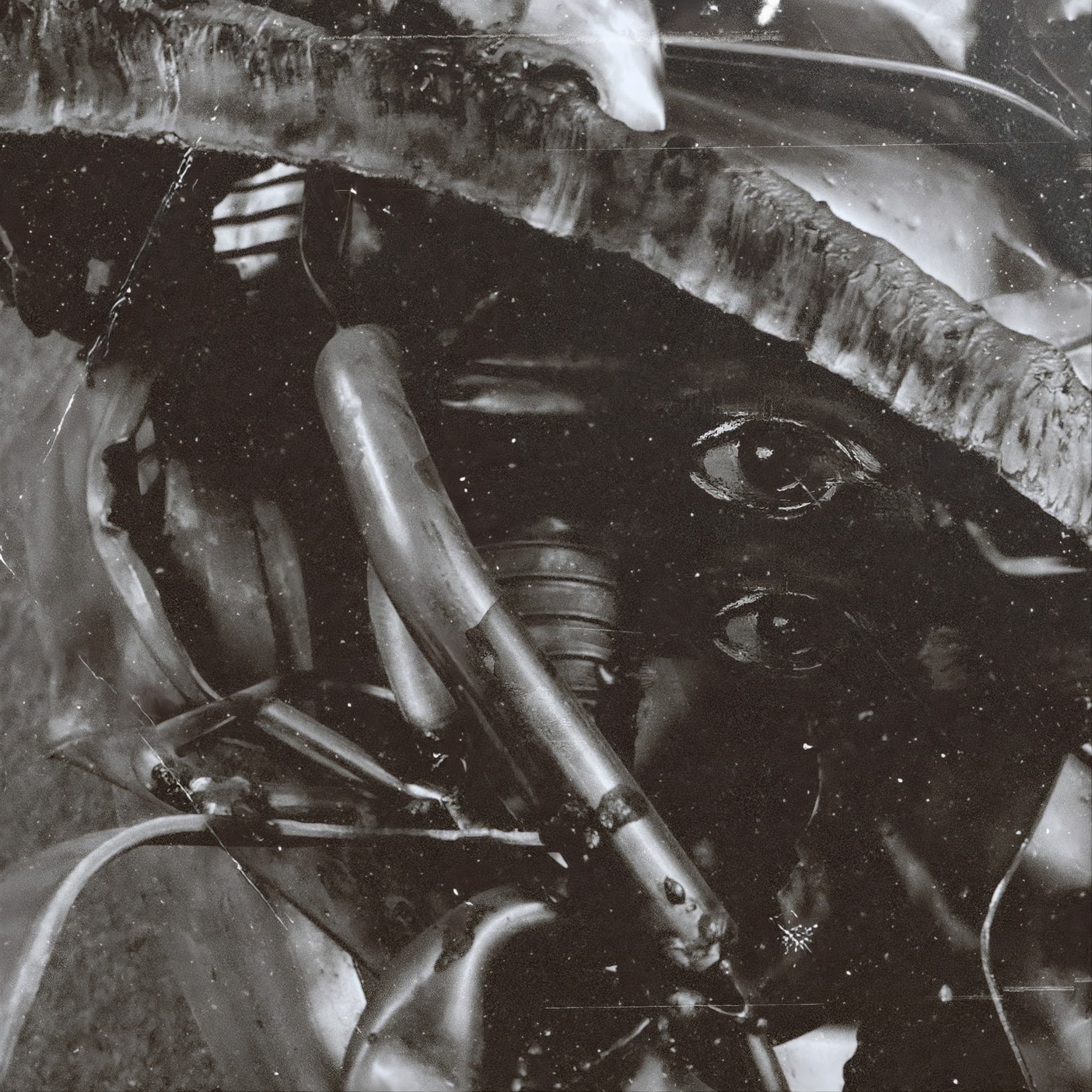
The entire record — save for vocals, keyboards, and additional effects — was captured live in the studio after four years of preparation, rehearsal, and testing designed to ensure the music could be performed with the weight and intention the compositions required. That production choice is not a period detail. It is an argument about where meaning in this music resides.
A studio assembled piece by piece produces a precision that has its own value; a studio captured live produces a tension that does not survive being assembled in pieces. Emptiness chose the latter because the record’s conceptual premise demanded it: a world governed by forces that operate in real time, without the distance of editing.
The production was handled internally by Bézier and Olivier J.L.W., the same closed circuit that has governed every Emptiness release. Bézier oversees sound across all its dimensions; Olivier J.L.W. directs the visual work in its entirety — artwork, photographs, the identity of every release conceived and completed from within the band itself.
That commitment to total creative control is not a recent posture. It is the condition under which Emptiness has always operated, and it accounts in part for the coherence of a catalog that spans genuinely disparate musical territories without ever sounding like a band in search of its own identity.3
Three Singles, Three Entry Points
The advance campaign for ‘Nowhere Speaks’ proceeded across three publicly released singles, each functioning less as a promotional excerpt than as a distinct angle of approach to the album’s central proposition.
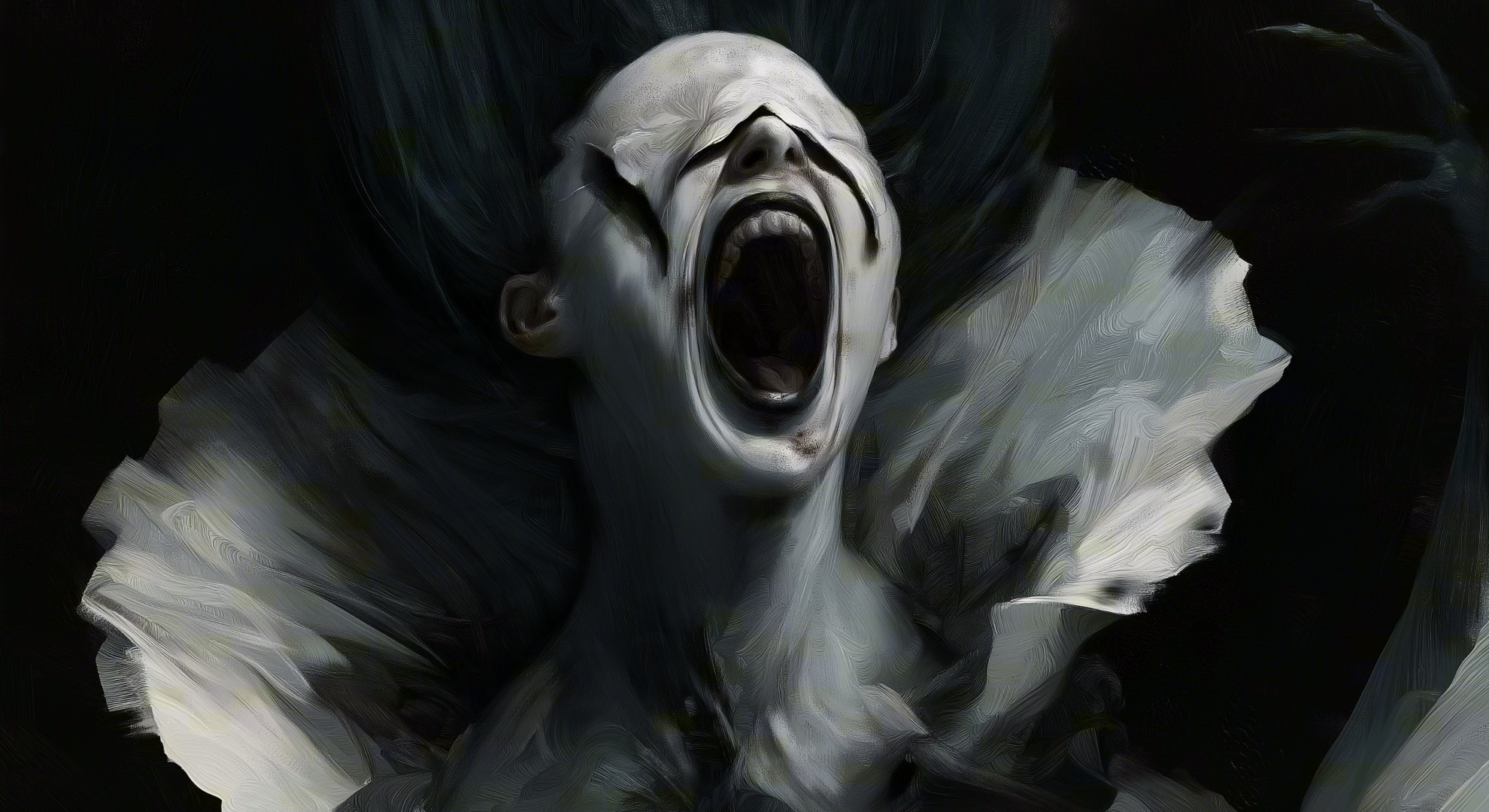
‘The Clash of Forces,’ released May 6th, 2026, as the lead single and accompanied by an official video, arrived without concession. The track does not ease its listener in; it transmits. The Season of Mist press materials described the visual content of the accompanying video as evidence of intrusion — the forces the record invokes pressing through into the visible — and the framing is consistent with what the band’s prior work has established: image and sound conceived as a unified field rather than a song with a video attached.
The second single, released between ‘The Clash of Forces’ and the title track, continued the record’s mode of confrontation without ornament. The title track itself, ‘Nowhere Speaks,’ arrived on July 1st, 2026, as both the final advance single and the album’s conceptual center.
The music opens in unhurried density — a body of sound that grows and presses inward without urgency, building toward an enclosing, unyielding force. The track inhabits the dimension the album describes without mapping it: a mind in torque, a dead world moving alongside something unresolved from the past, and through it all, something vast speaking into a landscape of sorrow addressed to no one in particular.
The Underground’s Long Circuit
Season of Mist, founded in Marseille in 1996 by Michael Berberian, built its catalog through the same experimental and avant-garde corners of extreme metal that Emptiness occupy. Its roster — spanning Mayhem, Ihsahn, Blut Aus Nord, Deathspell Omega, and Oranssi Pazuzu — represents a label that has consistently treated difficulty as a feature rather than an obstacle.
For a band that has never accommodated its audience, that institutional alignment is substantive. The label provides infrastructure without demanding the kind of market legibility that larger operations require.4
The formats in which ‘Nowhere Speaks’ is being made available confirm that alignment: a transparent 12-inch vinyl limited to 150 copies worldwide, a black 12-inch vinyl in gatefold with first pressing limited to 250 copies, and a jewel case compact disc with a ten-page folded booklet, alongside digital access through Bandcamp. The physical limitations are not artificial scarcity — they reflect the actual scale of an audience that finds this music through deliberate search rather than algorithmic placement.
The Bandcamp platform offers the most immediate and reachable channel for audiences discovering Emptiness beyond the European underground, particularly where the cost of imported physical media often exceeds local economic realities. By sustaining a consistent presence on the platform throughout their entire discography, the band has established it as the essential hub for a global audience. This digital availability serves as a critical bridge for international listeners who are otherwise excluded by the specialized physical distribution networks prevalent in European retail.
Outside the Originating Scene
The difficulty of Emptiness is not affectation. It is method. A band that has moved through death-doom, black metal, coldwave, goth rock, claustrophobic avant-garde minimalism, and back toward dense live intensity is a band that treats genre as a tool rather than a dwelling. The structural instability of Emptiness presents a specific hurdle for listeners whose understanding of extreme music is rooted in different historical contexts—traditions where sonorous weight functions less as a stylistic choice and more as a fundamental mode of survival.
It is a challenge that has nothing to do with national origin or scene affiliation. What ‘Nowhere Speaks’ communicates across those differences is precisely what cannot be reduced to cultural translation: the experience of music that refuses to be understood before it is entered. A record that begins mid-riff and closes by returning to another album’s opening riff is a record that assumes continuous engagement — that its listener carries the prior catalog as active memory. That assumption is itself an argument about what an audience is and what it owes a body of work.
Whether that argument lands depends on the listener’s willingness to accept the terms. For those who have followed the catalog from ‘Nothing But The Whole’ through ‘Vide’ and now to ‘Nowhere Speaks,’ the structural loop is the reward — a formal completion of a proposition suspended since 2014. For those arriving without that history, the record offers something different: the experience of entering a work already in progress, with no map provided and none promised.
The Cycle Without a Fixed Point
Twenty-eight years after its founding, Emptiness release an album that makes its own continuity the subject of its form. ‘Nowhere Speaks’ is not a summary of a career, nor a declaration of new direction, nor a retreat to earlier premises. It is the completion of something that was always incomplete: the riff interrupted in 2014, the silence held open across a decade of formally divergent records, the loop that only closes when the listener holds both ends simultaneously.
That ‘Vide’ sits between ‘Nothing But The Whole’ and ‘Nowhere Speaks’ — between the rupture and its resolution — is not incidental. ‘Vide’ was the record that proved Emptiness could move so far from their prior form that the prior form might seem irretrievable. ‘Nowhere Speaks’ demonstrates that the retrieval was always the intention. July 17th, 2026, marks the arrival of that demonstration.
For those who have held ‘Nothing But The Whole’’s severed final riff in memory since 2014 and followed Emptiness through the formal ruptures of ‘Not for Music’ and ‘Vide’: does a record that resolves a twelve-year structural gap invite a return to the full catalog as a unified sequence, or does the act of completion foreclose the generative uncertainty the open ending once carried?
References
- Joanna Demers, ‘Listening Through the Noise: The Aesthetics of Experimental Electronic Music’ (Oxford: Oxford University Press, 2010), 88–93. On the formal strategies of avant-garde music that resist resolution and refuse conventional structures of beginning, development, and closure. ↩︎
- Douglas Hofstadter, ‘Gödel, Escher, Bach: An Eternal Golden Braid’ (New York: Basic Books, 1979), 10–19. On self-referential loops and the formal properties of systems that contain their own structure as content. ↩︎
- John T. Caldwell, ‘Televisuality: Style, Crisis, and Authority in American Television’ (New Brunswick: Rutgers University Press, 1995), 234–240. On integrated authorship models in which image, sound, and text are conceived and executed by a single creative apparatus, and the effects of that integration on meaning production. ↩︎
- Will Straw, ‘Systems of Articulation, Logics of Change: Communities and Scenes in Popular Music,’ Cultural Studies 5, no. 3 (1991): 368–388. On the formation and function of underground scenes, and the institutional logics that sustain them independently of mainstream market structures. ↩︎
Leave a Reply