

Long before Sweden had a literary culture built on the printed page, its communities entrusted their most consequential words to stone. Runic inscriptions raised along trade routes, burial mounds, and property lines were not private keepsakes; they were public claims, cut to be read by strangers long after the person who commissioned them had died.
That same instinct toward durability sits at the center of a record due from central Sweden on September 4th, one that treats an old song less as an archival curiosity than as a claim still worth repeating.
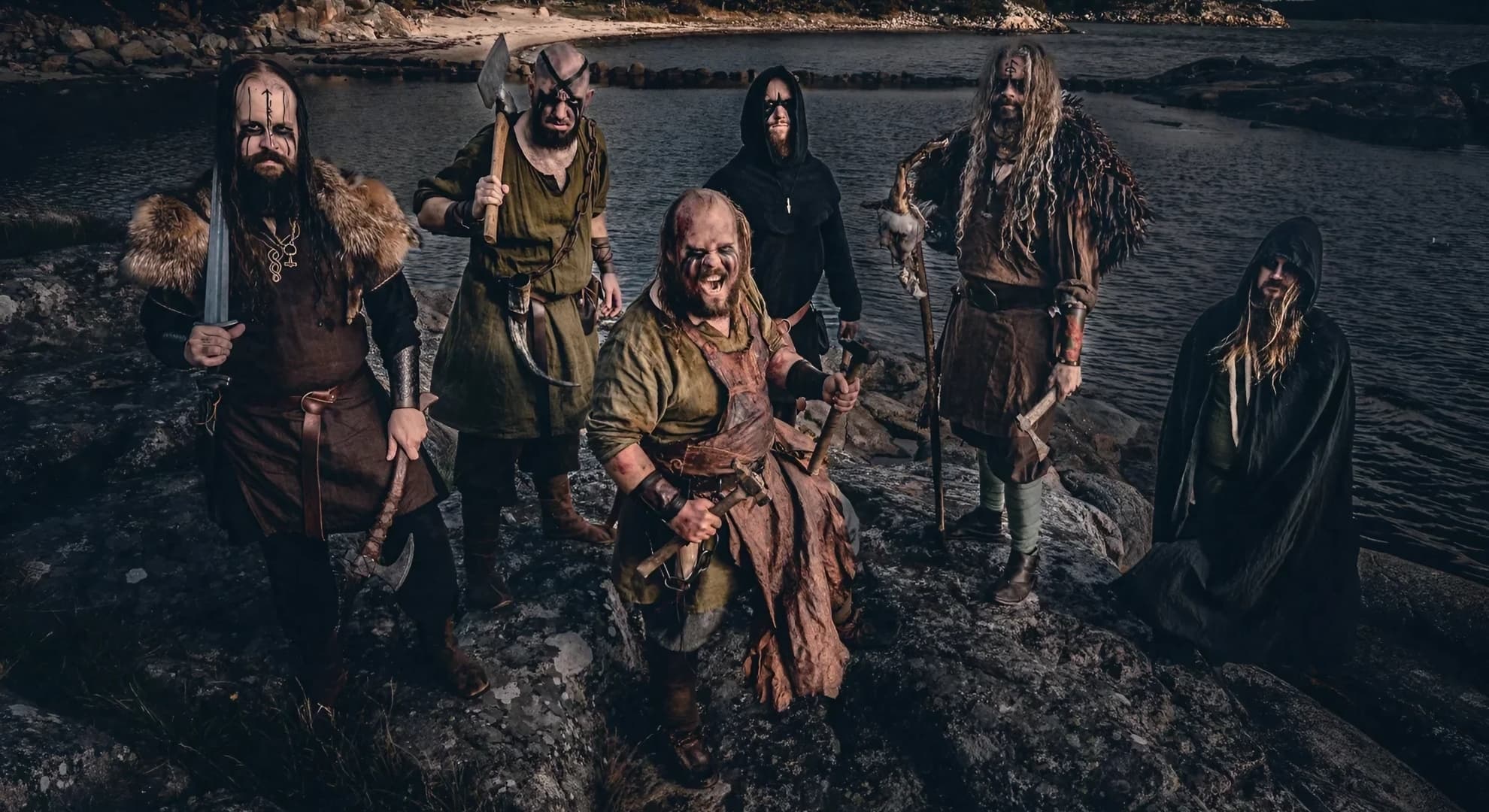
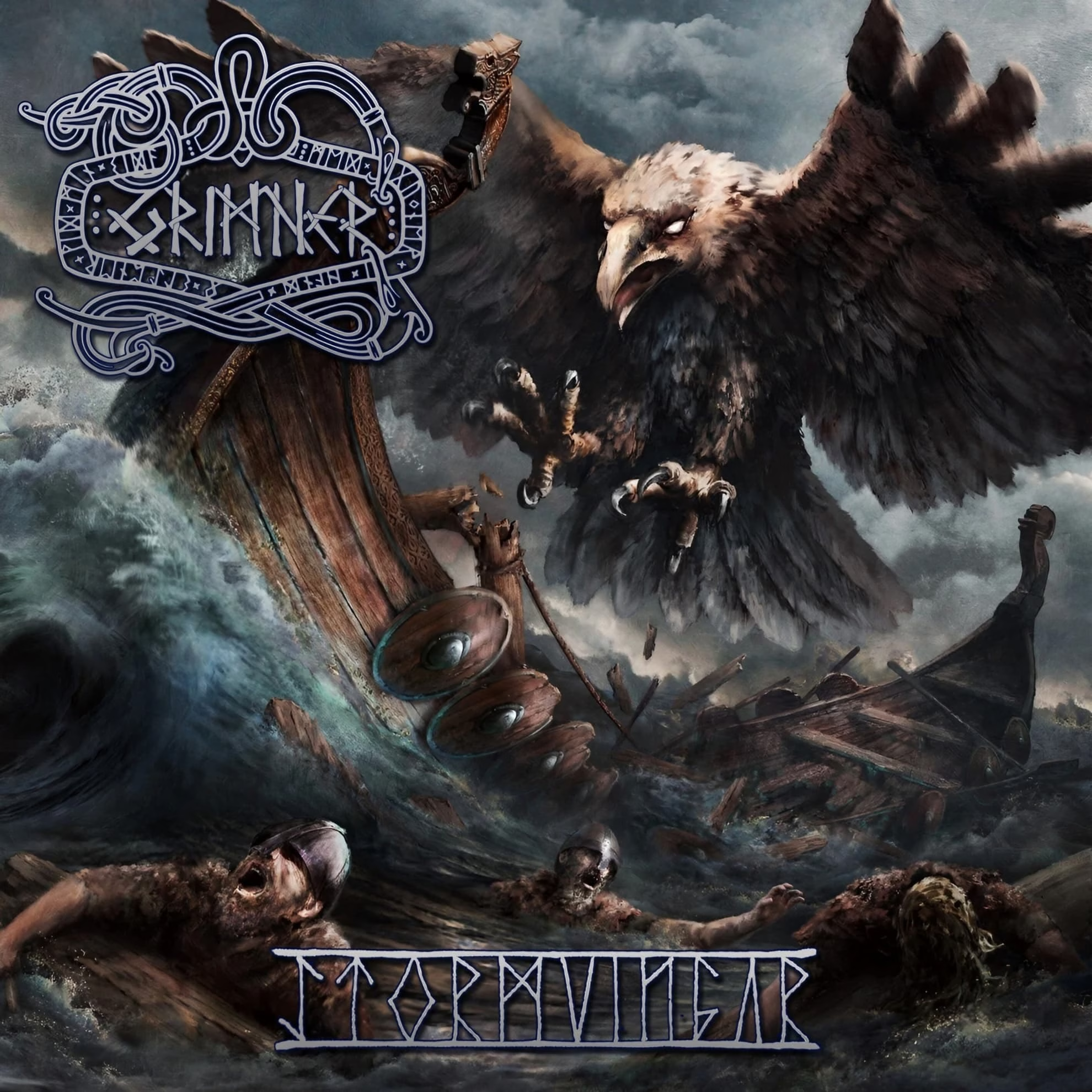
Grimner, formed in the town of Motala in 2008, built its identity on treating Norse mythology and Swedish folklore as living material rather than costume, a distinction the band has maintained across five albums sung exclusively in its native language. ‘Stormvingar,’ the group’s fifth full-length, is released via Despotz Records after nearly four years of silence, a return that folds founding vocalist Marcus Asplund Brattberg back into the lineup and recasts three songs drawn from the band’s own past as first-time studio statements in their current form.
A Voice Returns to Motala
Six musicians founded Grimner in Motala, a town on the shore of Lake Vättern in south-central Sweden, around a shared commitment to Viking-era subject matter and to Swedish as the language of performance. Where much of the international folk metal circuit reaches for English lyrics to widen its commercial footprint, Grimner kept its material in Swedish from the start, tying the band’s sound more closely to the specific folklore and history it drew from than to the genre’s broader export market.
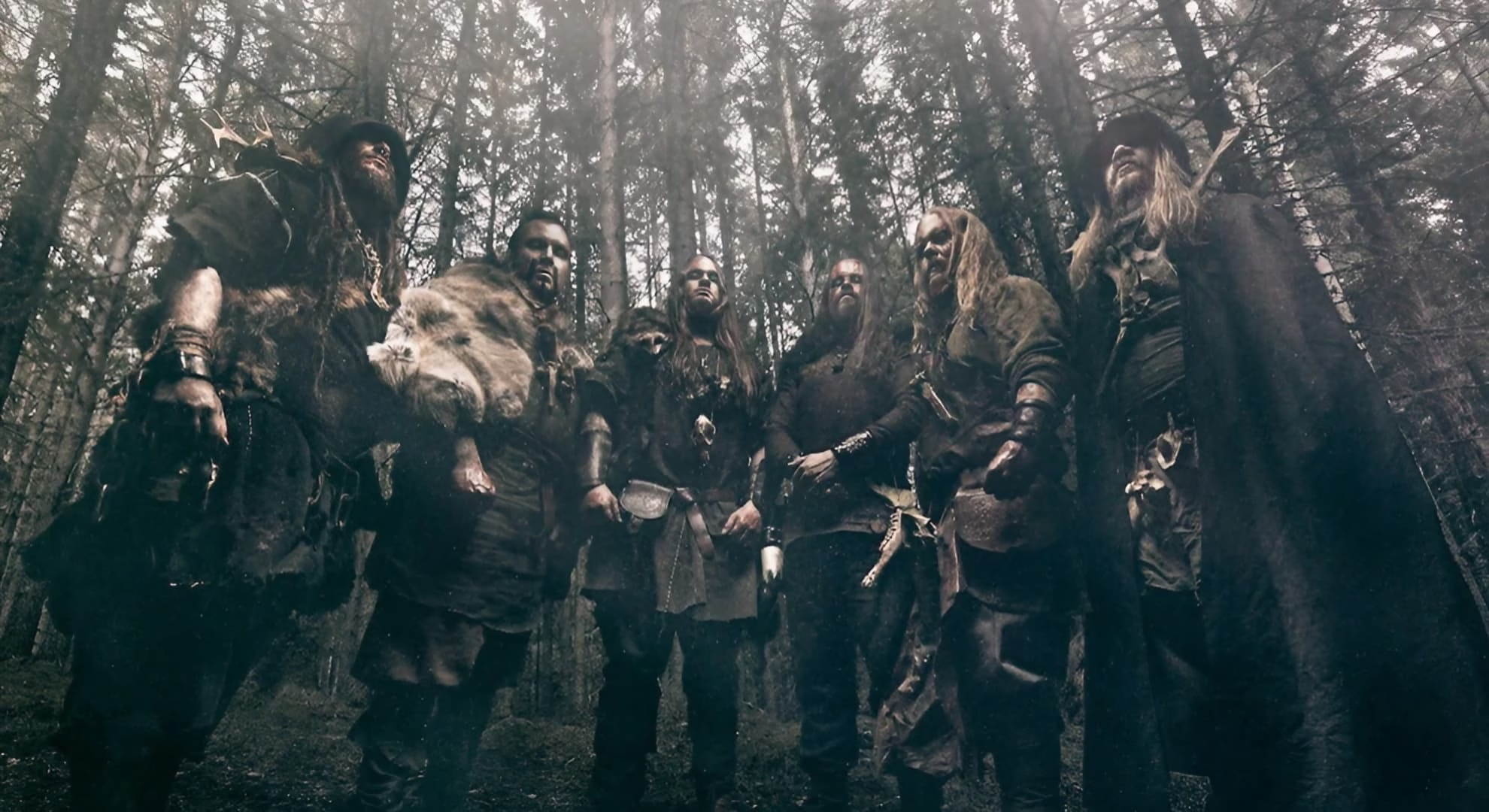
The catalogue that followed moved through several short releases before settling into full albums. The EP ‘Färd’ came in 2012, followed three years later by the acoustic collection ‘De Kom Från Norr.’ The debut full-length ‘Blodshymner’ followed in 2014, and ‘Frost Mot Eld’ in 2016 established the template that would define the band going forward: twin vocal registers, clean melodic lines set against harsh delivery, layered over flute, whistle, and keyboard drawn from Nordic folk tradition rather than added as surface decoration.
‘Vanadrottning’ followed in 2018, consolidating that approach, before ‘Urfader’ closed that chapter of the band’s discography, the group’s most recent full-length until now.
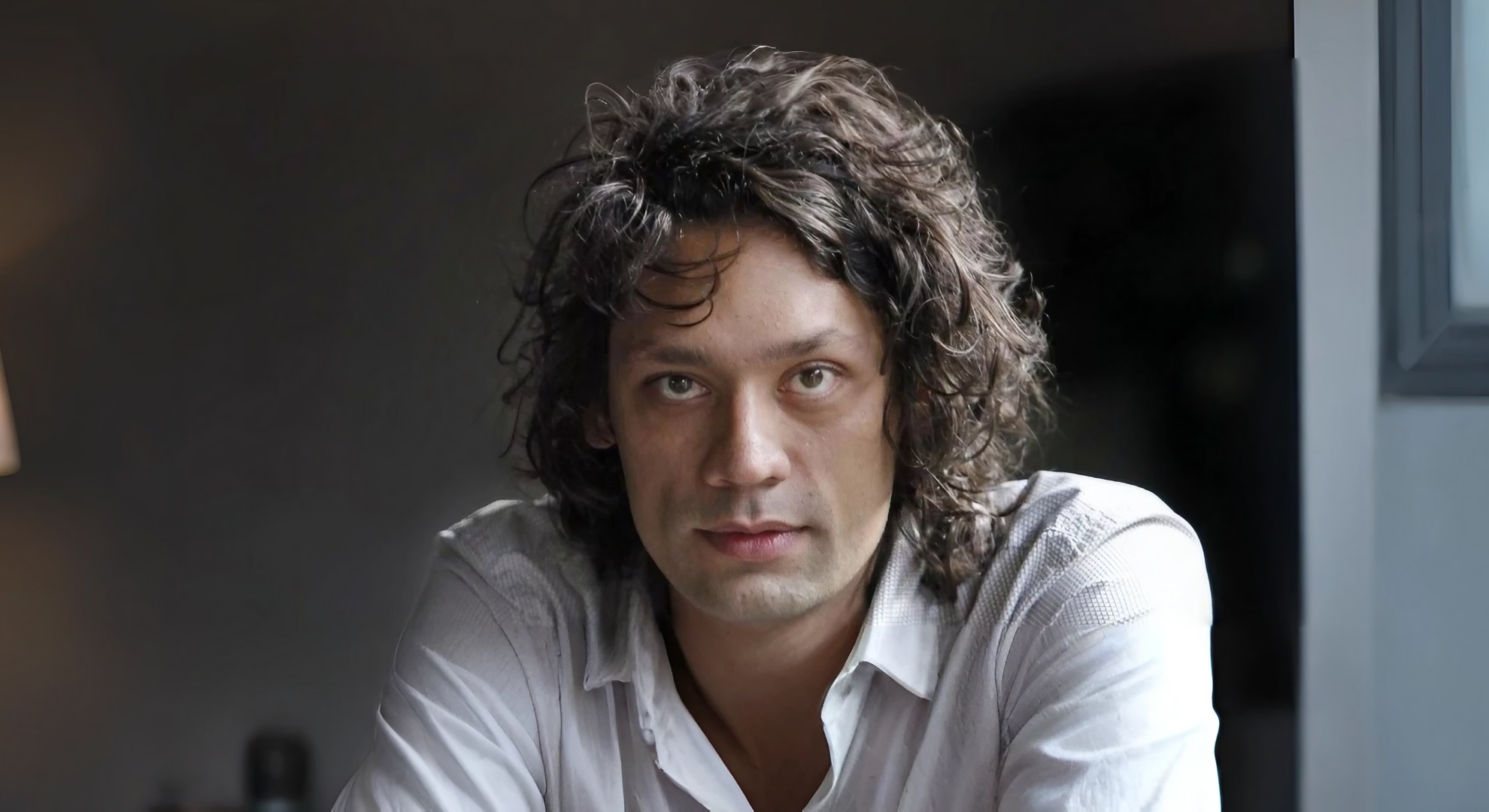
The lineup assembled for ‘Stormvingar’ — Ted Sjulmark and Brattberg sharing vocal and guitar duties, Johan Rydberg on flutes and whistles, Kristoffer Kullberg on keyboards, and brothers Anton and Axel Elowson on drums and bass — represents the most significant personnel change in the band’s history.
Brattberg, a member during the band’s earlier years, rejoins as the rhythm section is rebuilt around two new players, a coincidence of timing that mirrors the album’s own negotiation between past and present: a returning original voice singing alongside arrangements built by musicians who joined the band only this cycle.
The Years Since Urfader
‘Urfader,’ released on November 18th, 2022, is the record against which ‘Stormvingar’’s return has to be measured. The title translates to “the ancient father,” and the album marked a rebalancing in the band’s sound, pulling guitar work toward the aggression of Swedish death metal while keeping the folk instrumentation and pagan choral arrangements that had defined ‘Frost Mot Eld’ and ‘Vanadrottning.’
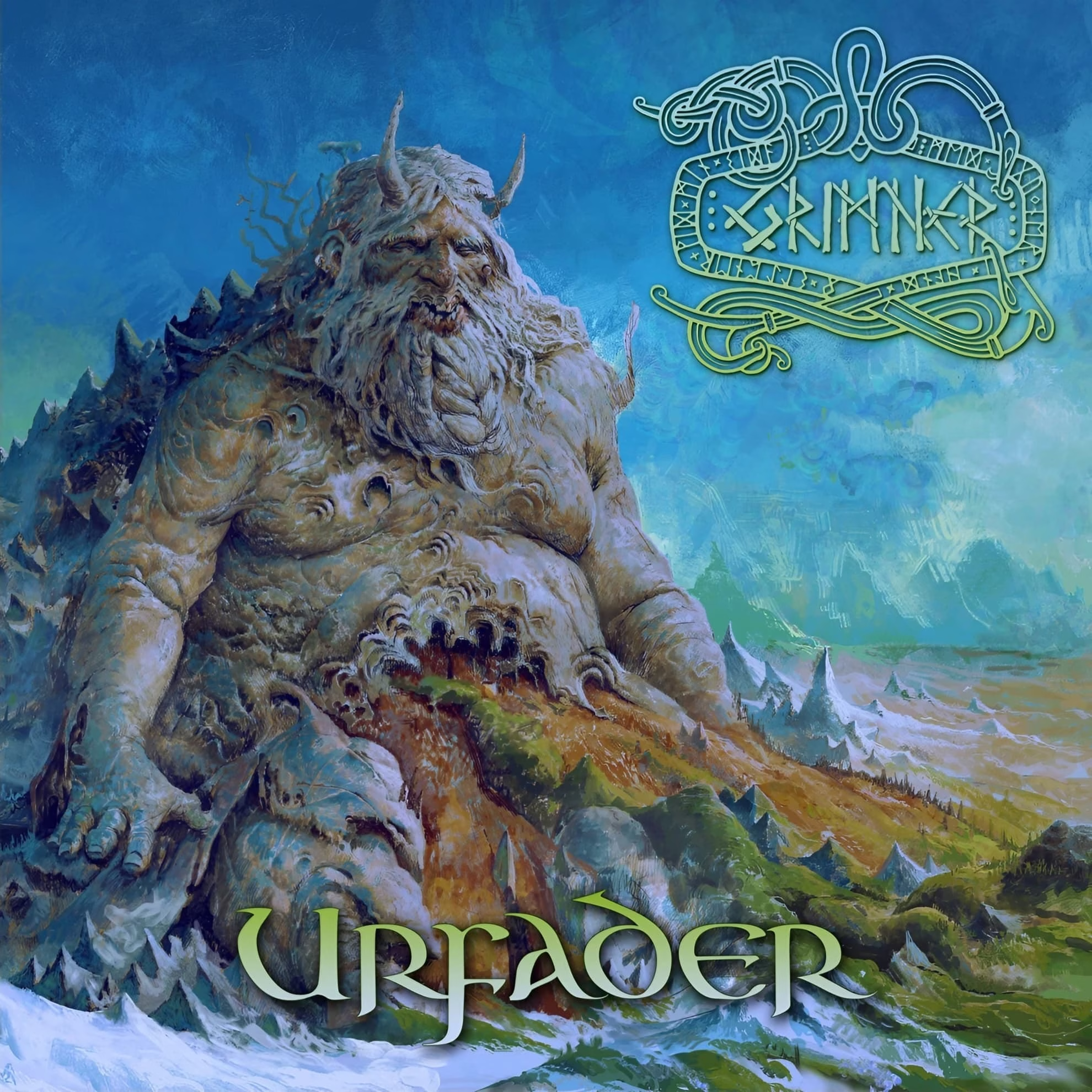
It was recorded and produced by Jakob Herrmann at Top Floor Studios and by Martin Boe at the band’s own Grimner Studios, mastered by Jacob Hansen at Hansen Studios, and released across CD, vinyl, and digital formats through Despotz Records.
The record drew guest contributions from figures across the Swedish and broader Nordic metal scene, including Sebastian Rosengren of Midvinterblot and Rasmus Ehrnborn of Soilwork, a detail that places Grimner inside a documented network of working Scandinavian musicians rather than an isolated genre exercise.
Almost four years separate ‘Urfader’ from ‘Stormvingar,’ the longest interval in the band’s discography, and the interruption forms real context for the material now on offer. A record built substantially on returning to earlier songs and earlier singers is one way a band can answer a long silence without pretending the interruption did not happen.
Singles From the North
‘Träldomens Far’ (‘The Father of Thraldom’), released March 13th, 2026, served as the first evidence of the album’s direction. The song retells material drawn from a classical Old Norse poetic source rather than inventing generic saga imagery, continuing the band’s established preference for working from attested medieval texts.
The track leans on the same twin-vocal structure — clean melodic verses set against harsh delivery — that has anchored the band’s sound since ‘Frost Mot Eld,’ set against a heavier, more direct riff pattern than much of ‘Urfader.’
The second advance single, ‘Irrbloss,’ followed on April 24th, 2026, and introduced a guest appearance from Mathias “Vreth” Lillmåns of Finntroll, contributing both harsh vocals and spoken passages. The song draws on will-o’-the-wisp folklore, accounts of travelers lured off safe paths by lights over marshland, and its arrangement matches that material with a folk melody pulled deliberately off balance, staying tuneful without settling into comfort.
In a statement accompanying the single, the band described the collaboration as one they had wanted to make public for some time, and noted that the finished album had rekindled an energy in the group that pulled them back toward earlier instincts even as the material pushed toward new ground.
A third single, ‘Runstenen,’ followed on August 14th, 2026, accompanied by an official video. Unlike the two singles that preceded it, ‘Runstenen’ does not represent new songwriting, a distinction significant enough to warrant separate treatment below.
Words Carved to Outlast
Runestones, memorial and commemorative stones raised across Scandinavia between the late Viking Age and the early medieval period, were inscribed in the Younger Futhark and served a documented public function distinct from private grave markers. They recorded journeys, commemorated the dead, and staked claims to land and inheritance in a culture that conducted most of its business orally.1
The function these inscriptions served has a name in the study of cultural memory: the transformation of transient, spoken tradition into a fixed form capable of outlasting the individuals who first spoke it.2
A band re-recording its own decade-old song for a new audience is engaged in a structurally similar act, even if the material in question is a metal record rather than a slab of granite — an old text given a new, more durable form, without erasing the fact that it existed before.
A Song Restored, Not Rewritten
‘Runstenen’ first appeared in 2012, as the third track on Grimner’s EP ‘Färd,’ recorded when the band was barely four years old. ‘Völvans Spådom,’ also from that same EP, resurfaces on ‘Stormvingar’ as well, and a third song, ‘De Kom Från Norr,’ originated as the title track of the band’s 2015 acoustic EP of the same name, this time given a full electric arrangement rather than the stripped instrumentation of its first release.
None of the three tracks is new to the band’s catalogue; all three are, in the album’s context, presented for the first time in the studio form ‘Stormvingar’ gives them.
That distinction matters more than a simple tracklist curiosity would suggest. Naming a song after a runestone was never, on its own evidence, a claim about permanence — the earlier version of ‘Runstenen’ existed only as a 14-year-old EP cut, hardly a durable object by the standard the title itself invokes.
What makes the gesture meaningful is the act performed on the song now: pulled back into circulation, re-recorded with a returning vocalist and a differently constituted band, and set alongside two other songs recovered from the same early period. The record does not simply reference the practice of runic inscription; it repeats its basic structure, taking an old text and re-cutting it so that it can be read again, by people who were not present the first time it was made.
The overlap between subject matter and method extends to how the album treats myth more broadly. Grimner’s lyrics draw on Norse cosmology and folklore as a body of specific, attested stories rather than a general atmosphere, a distinction genre scholarship on the wider Viking and folk metal tradition has identified as separating bands with a genuine relationship to the material from acts using it as unexamined decoration.3
Reworking three specific, identifiable songs from the band’s own past, rather than gesturing vaguely at a return to roots, fits that same pattern of specificity: the claim is not atmospheric, it is documented and traceable to a release date and a tracklist.
A Return Measured in Stone
‘Stormvingar’ stands as a record whose central argument is written into its production history as much as its lyric sheet: an album can honor a long silence not by pretending it never happened, but by pulling the past directly into the present tense and asking it to hold weight again.
A returning singer, a reconstituted rhythm section, and three songs recovered from albums most new listeners will never have heard sit inside the same record because Grimner’s version of continuity has always worked this way, treating its own history as source material rather than nostalgia.
For a documented, if linguistically bounded, audience beyond Sweden’s borders, the record makes that continuity legible without requiring translation: the recurrence of a 14-year-old title track, restored rather than rewritten, argues on its own terms that some things are worth carving twice.
For listeners who do not read Swedish, does hearing a folklore-rooted record entirely in its original language change what the songs mean, or does the distance become part of the experience itself?
If you are a band, artist, label, or promoter navigating the dark and independent scene, you need press materials that speak the language — not generic copy. Our Studio writes press releases, EPKs, bios, and website content for the underground and the vanguard alike. Plans start at $150, with turnaround as fast as 2 days.
References
- Sven B. F. Jansson, ‘Runes in Sweden,’ trans. Peter Foote (Stockholm: Gidlunds, 1987), 34–38. ↩︎
- Jan Assmann, ‘Cultural Memory and Early Civilization: Writing, Remembrance, and Political Imagination’ (Cambridge: Cambridge University Press, 2011), 15–19. ↩︎
- John Lindow, ‘Norse Mythology: A Guide to Gods, Heroes, Rituals, and Beliefs’ (Oxford: Oxford University Press, 2001), 40–44. ↩︎

Leave a Reply