

Long before any written record, the forests of the Low Countries and the fjord country to the north kept their gods in trees, in stones, and in the half-remembered names given to the spirits who guarded them. Few of those names survived intact. Fewer still made the journey from folk memory into formal language, and then into a black metal record released centuries after the beliefs behind them had receded into forgetting.
That journey belongs, improbably, to a project that began in the wet interior of the Pacific Northwest as the work of a single Belgian-born musician recording under a name borrowed from Scandinavian folklore.
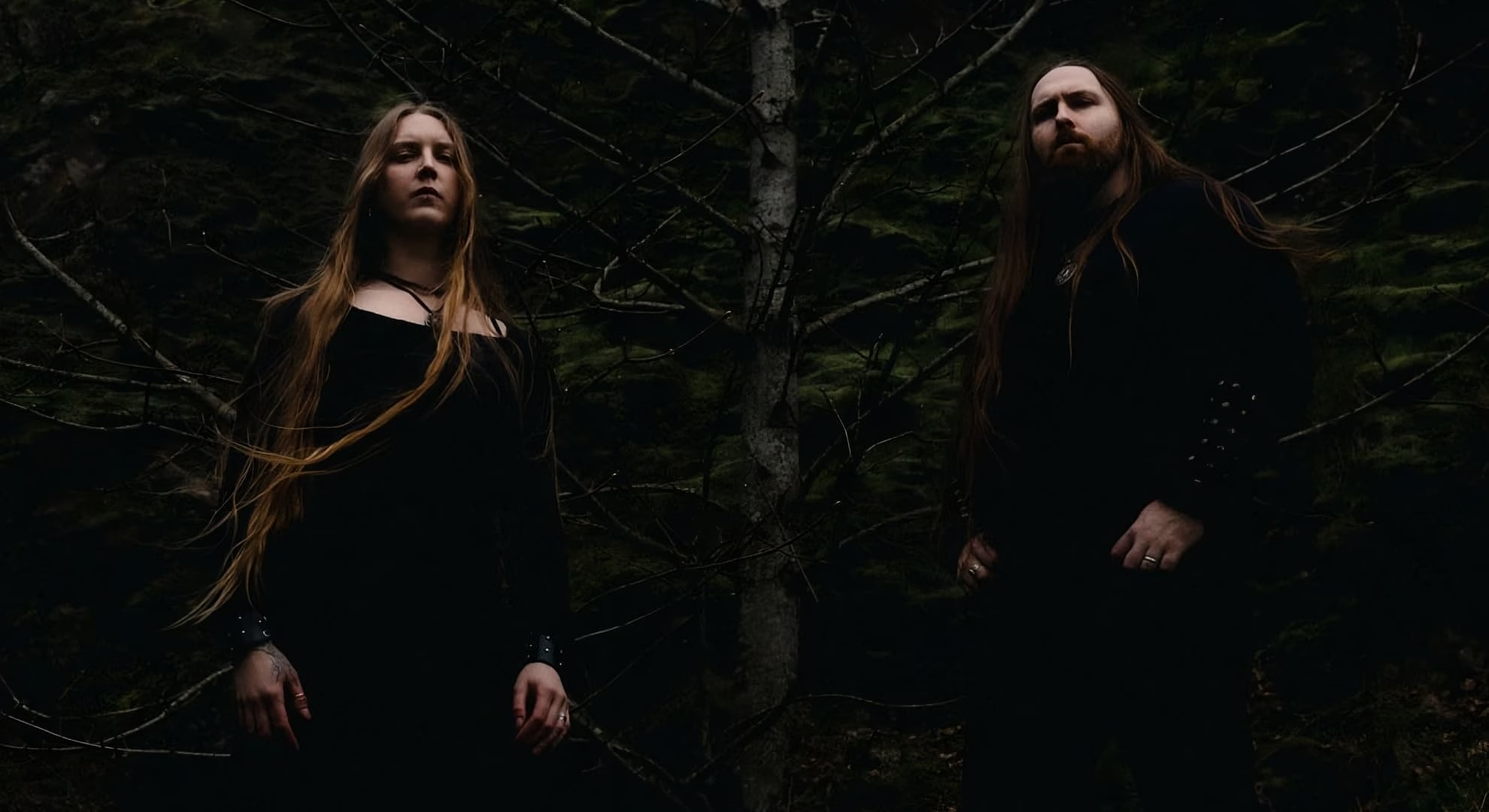
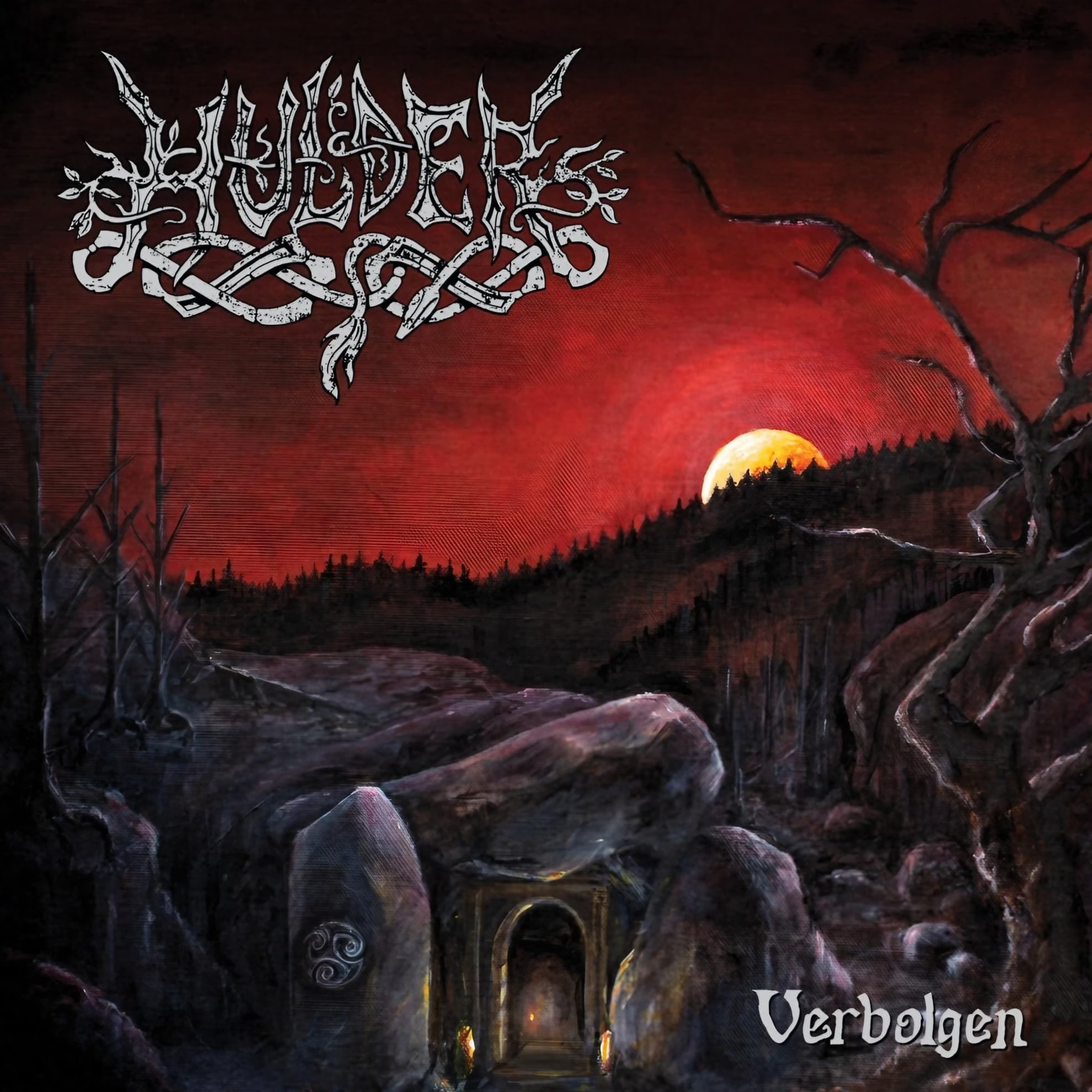
On August 7th, 2026, that project releases its third full-length album, ‘Verbolgen,’ through 20 Buck Spin in North America and Season of Mist across the remainder of the world, and does so for the first time as the work of two people rather than one.
A Decade of Solitary Ritual
Marz, the Belgian-born musician who performs as Hulder, released the project’s debut full-length, ‘Godslastering: Hymns of a Forlorn Peasantry,’ in 2021, after relocating to the Pacific Northwest of the United States.
The record announced a specific set of concerns: medieval devotional language turned toward pre-Christian ends, harsh second-wave black metal vocabulary, and a folk instrumentation with little precedent in the American scene from which it emerged. A follow-up mini-album, ‘The Eternal Fanfare,’ arrived the following year, refining the same preoccupations across five tracks rather than introducing new ones.
Scholarship on black metal’s engagement with pre-Christian belief has identified this turn toward reconstructed heathen material, rather than toward purely aesthetic or Satanic transgression, as a defining feature of the genre’s folk-adjacent and neofolk-adjacent wings.1
Hulder’s catalogue belongs to that current, drawing its vocabulary less from the church-burning mythology associated with early Norwegian black metal than from a slower, broader recovery of Germanic and Celtic devotional material predating Christianization.
By 2022, the project was touring extensively across North America, and by 2023 that touring had reached European stages for the first time, placing what was still largely a solo undertaking within a live circuit considerably larger than its recorded output might otherwise have suggested.
From Session Player to Co-Author
The album that preceded ‘Verbolgen,’ ‘Verses in Oath,’ arrived on April 4th, 2024, and represented, by any documented critical measure, the clearest statement Hulder had produced to that point.
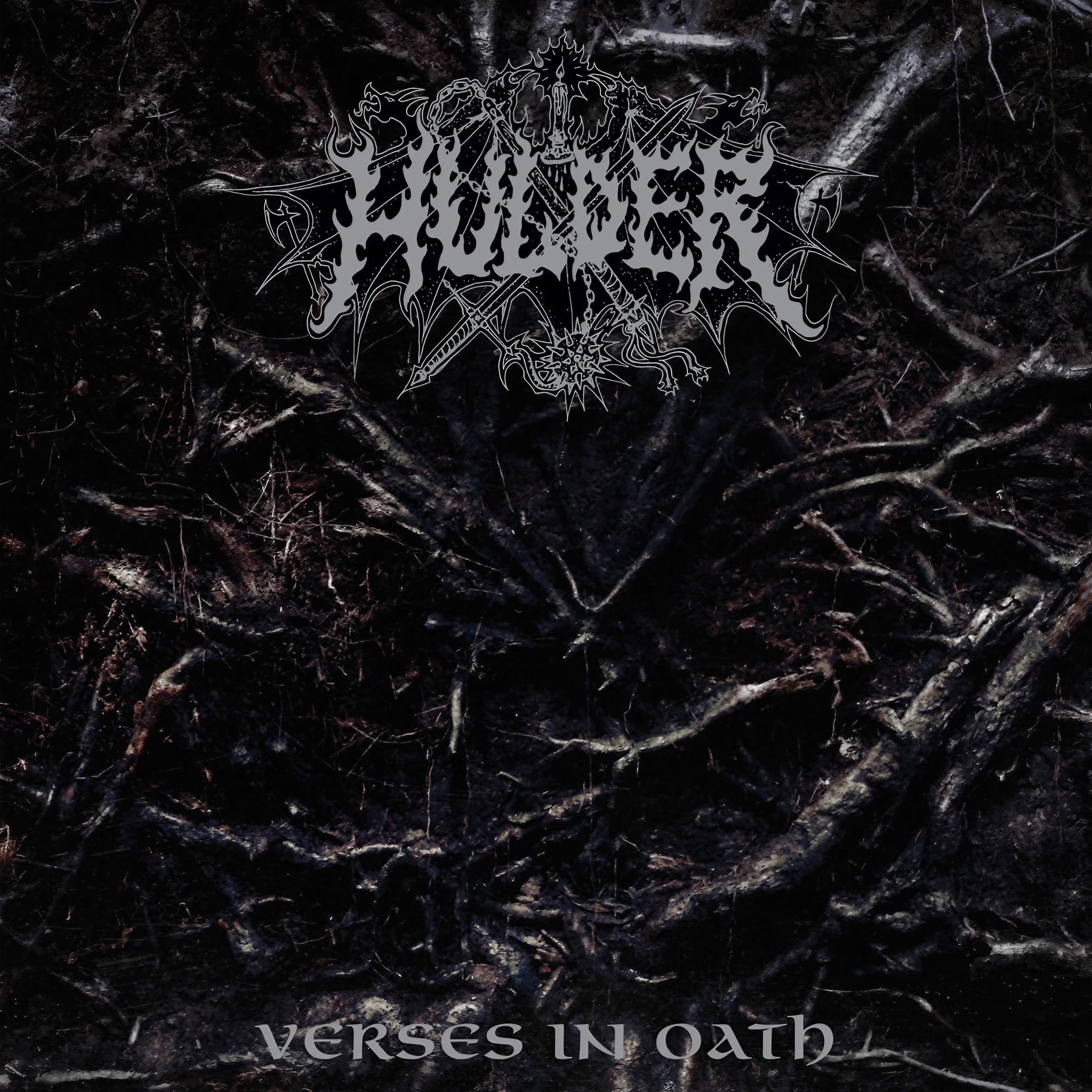
Reviewers described a record built from thunderous, low-tuned guitar work, tremolo melody kept legible rather than smeared into noise, and synthesizer lines folded into the mix as texture rather than ornament, anchored by the waltz-paced centerpiece ‘Hearken the End.’
The German-language outlet Zephyrs Odem placed the album alongside Darkened Nocturn Slaughtercult, Nornir, and Asagraum as part of a small company of acts capable of channeling second-wave black metal’s atmosphere without merely imitating it, while Angry Metal Guy rated the record four and one-half stars out of five.
‘Verses in Oath’ also carried Hulder into its largest live bookings to date, including a headlining position on the 2024 edition of the Decibel Magazine Tour.
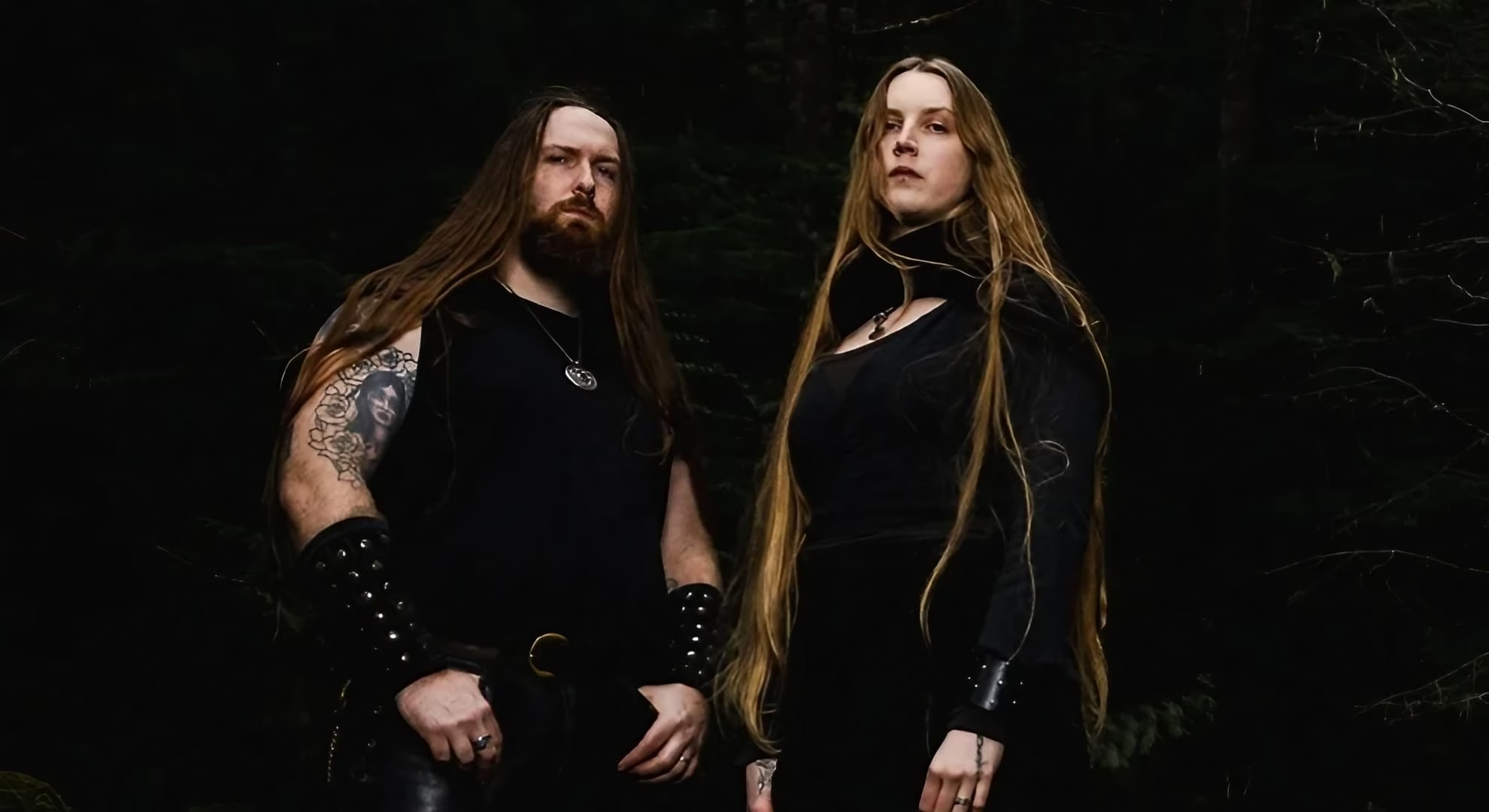
Necreon contributed to that record and to earlier Hulder releases in a session capacity; the precise instrumental role he occupied on those recordings could not be confirmed through research at the time of publication. What is documented is the change in his billing on ‘Verbolgen’: after years in a supporting position, he now stands as a full creative partner, credited alongside Marz on composition and lyrics across the majority of the album’s nine tracks.
The Forest Spirit’s Old Name
The name Hulder is not an invention. In Norwegian and broader Scandinavian folklore, the hulder, or “huldra,” is a seductive forest-dwelling spirit, beautiful when viewed from the front and marked by an animal’s tail or a hollow back when viewed from behind, a concealment that gives the being its name, derived from a root meaning hidden or covered.2
She belongs to a wider family of guardian spirits tied to specific terrain, forests, mountains, and waters each keeping their own such figure across Norwegian, Swedish, and Sámi tradition, and her dual nature, alluring and dangerous within the same body, made her a durable subject for storytellers warning against the seductions of the wild.
She is legend rather than history, a figure who explains the forest’s dangers without ever having been recorded as a historical person.
That duality, promise and warning bound into a single figure, gives Marz’s chosen stage name its working logic, and gives ‘Verbolgen’ its emotional register: a nine-track sequence concerned, by the band’s own account, with ancestral memory and the sovereignty of the natural world over human claims upon it.
The album does not retell any single huldra legend directly. It instead adopts the folkloric stance the huldra represents, nature as sovereign, beguiling, and ultimately answerable to no human order, and carries that stance across lyrics spread over three languages rather than one.
Three Tongues, One Rite
The album’s title is itself an artifact of that layered history, though not in the way early announcements suggested. ‘Verbolgen’ is an archaic, formal register of Dutch, the language of which Flemish is a regional variety, tracing through Middle Dutch to Old Dutch farbulgan and meaning enraged or wrathful.
It is not, on its own, a Proto-Germanic word; the language behind it belongs to the medieval and early modern periods, several centuries removed from Proto-Germanic itself, which had already split into the ancestors of the Norse, West Germanic, and Gothic branches by the early centuries of the common era, before disappearing entirely as a spoken tongue.3
Hulder’s lyrics reserve actual Proto-Germanic vocabulary for select passages within the album rather than for its title, a distinction the band’s own multilingual liner information makes explicit.
The word’s ancestry carries an incidental echo for a project fronted by a Belgian-born musician: linguists have long connected the same Germanic root, describing a swelling or kindling of anger, to the ethnonym Belgae, the name Julius Caesar recorded for the war-ready tribes of the Low Countries.
Whether or not the connection is intentional on Hulder’s part, it places the album’s chosen language inside a genuinely old argument about temperament and territory, considerably older than the black metal tradition now carrying it forward.
A Studio in Kemi, A Sound Restored
Mixing on ‘Verbolgen’ was again handled by Ahti Kortelainen at Tico Tico Studio in Kemi, Finland, continuing the arrangement used on ‘Verses in Oath.’ Kortelainen has operated the studio since 1987 and built a documented track record mixing and engineering Finnish melodic death and power metal, including early albums by Sonata Arctica and Kalmah and a run of releases by Eternal Tears of Sorrow.
That lineage sits at some distance from Hulder’s harsher, more folk-inflected register, and the continuity across two consecutive albums suggests a deliberate choice to retain a mix engineer familiar with keeping keyboard and acoustic texture legible against dense guitar work, a balance reviewers of ‘Verses in Oath’ singled out as one of that record’s strengths.
The Single That Opens the Door
The album’s campaign opened with ‘View From Nemeton,’ released as a single with an accompanying music video shot on analog film in Pacific Northwest forest.
The track borrows its title from Gaulish and British Celtic religious practice: a nemeton was a sacred grove or clearing, marked by no temple at all, in which ritual and assembly took place beneath the open canopy rather than within four walls.4
Locating the song’s imagery there, rather than in the Norse or Germanic vocabulary that dominates the rest of the album’s promotional language, signals the range the record claims for itself: not a single mythological tradition but a shared pre-Christian orientation toward sacred ground running from the Celtic fringe of northwestern Europe to the Germanic and Scandinavian north.
Taken on its own terms, ‘View From Nemeton’ favors mid-paced, ceremonial movement over the more driving tempos reported elsewhere on the tracklist, a choice consistent with a single meant to introduce mood rather than announce spectacle.
The single positions the album toward a record willing to slow down in service of atmosphere, though what that means across the full nine-track sequence remains, at the time of writing, something only the complete release will settle.
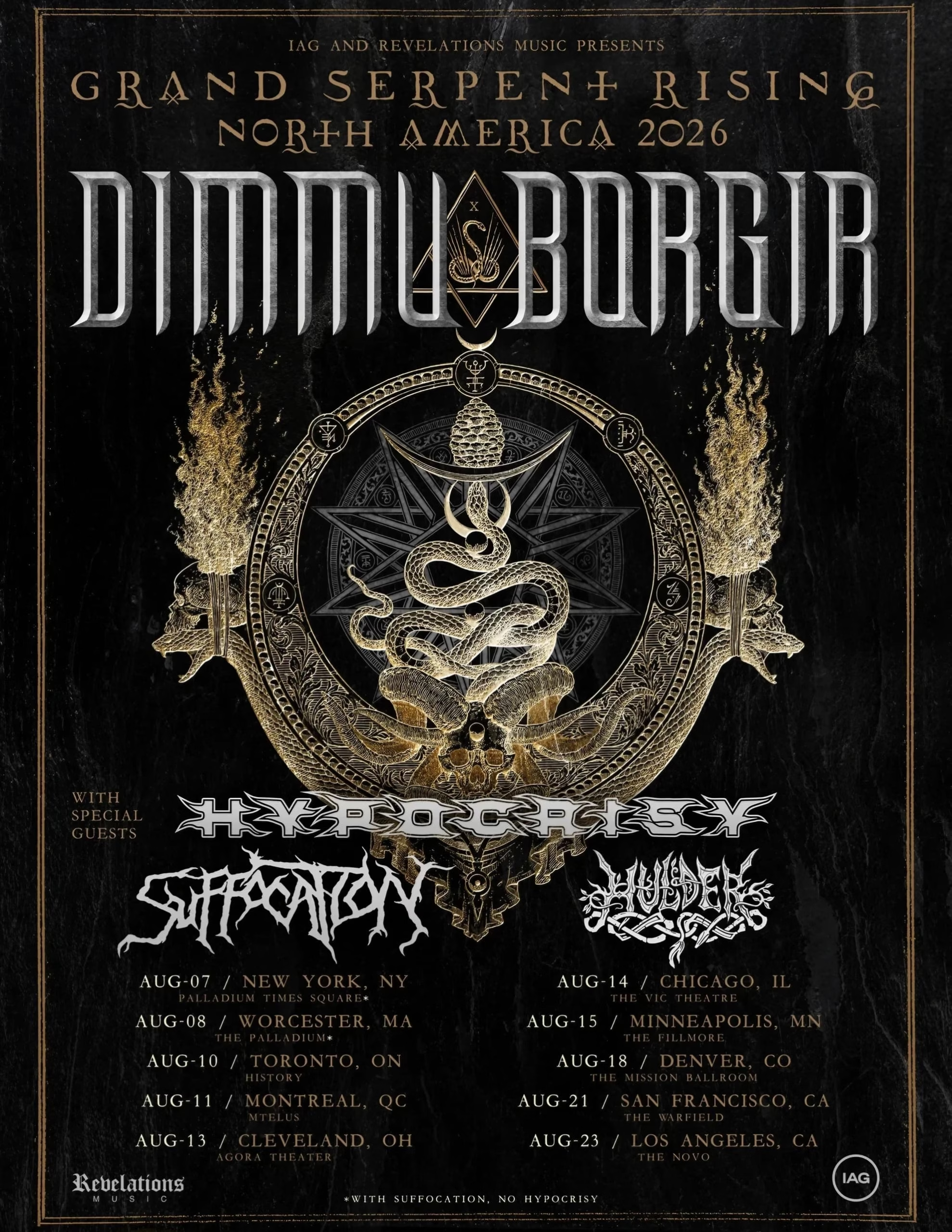
Hulder’s own confirmed reach is measurable through tour routing rather than through any claim of a worldwide following. Following the release, the band is scheduled to join Dimmu Borgir, Hypocrisy, and Suffocation on a North American tour, and a separate European run is set to take the group through Germany, France, Belgium, the Netherlands, Italy, Austria, Spain, and Portugal, among other markets.
The Old Tongues That Remain
What ‘Verbolgen’ documents, ahead of its release, is a project outgrowing the solitary frame it was built inside. A musician who began by voicing pre-Christian material alone now shares that authorship, and the languages carrying that material, English, Flemish, and Proto-Germanic, extend well past the Pacific Northwest scene in which Hulder first found an audience.
Fans who have followed the project from its early North American tours into headlining slots and European festival stages inherit a record built to be legible across more than one linguistic and mythological tradition at once. Whatever the album’s remaining eight tracks prove to sound like in full, the choice to formalize a decade of solitary ritual into shared authorship, and to carry that ritual across three languages rather than one, already represents a documented change in how the project understands its own history.
For listeners who first encountered Hulder as a solitary voice working alone in the Pacific Northwest, does the formal arrival of a second creative voice change what the project’s engagement with inherited, pre-Christian material means, or does shared authorship simply make explicit a collaboration that was already shaping the music from within?
References
- Granholm, Kennet. ‘Sons of Northern Darkness: Heathen Influences in Black Metal and Neofolk Music.’ Numen 58, no. 5–6 (2011): 514–544. ↩︎
- Simek, Rudolf. ‘Dictionary of Northern Mythology.’ Translated by Angela Hall. Cambridge: D.S. Brewer, 2007. ↩︎
- Ringe, Don. ‘From Proto-Indo-European to Proto-Germanic.’ Oxford: Oxford University Press, 2006. ↩︎
- Green, Miranda J. ‘The Gods of the Celts.’ Gloucester: Alan Sutton, 1986. ↩︎


Leave a Reply