


On Tuesday, April 28, 2026, a cultural collision of significant magnitude is scheduled to take place at the Centro de Eventos Royal Center in Bogotá, Colombia. In Flames, the Swedish progenitors of the “Gothenburg Sound” and architects of modern melodic death metal, will descend from the Scandinavian north to the high-altitude Andean plateau.
This is not merely a stop on a Latin American tour; it is a monumental sonic climax to a season steeped in Nordic darkness, following the recent intense sets from Dark Tranquillity at Teatro Astor Plaza and Katatonia at Capital Live Music. The show is a powerful nexus of artistic evolution, cultural homage, and the fervent ritualism that defines the South American metal spirit.1
As a historian of the genre and a participant in the scene since the days of tape-trading in the early 1990s, one observes this upcoming event through a lens that transcends the immediate commercial transaction of ticket sales. It is a moment where the ‘Foregone’ era of the band—a period defined by a self-conscious reconciliation with their own aggressive past—meets an audience whose devotion is rooted in a unique socio-political history of resistance and catharsis.
The Royal Center, a venue that has transformed over the years into a de facto temple for heavy music in the capital, will serve as the container for this volatile mixture of Swedish melancholy and Colombian fervor.
The narrative of In Flames in 2026 is one of survival and renaissance. Having navigated the treacherous waters of stylistic shifts that often alienated their core demographic, the band’s release of ‘Foregone’ in 2023 marked a pivotal moment of artistic reintegration.
Echoes from the Gothenburg Harbor
In Flames’ influence extends far beyond the confines of heavy metal. The “Gothenburg Sound,” which they were instrumental in forging in the early 1990s, represents more than a musical fusion; it is a direct expression of a particular Nordic existential outlook.
While their Florida counterparts in the death metal scene pursued a sonic equivalent of slasher horror realism—brutal, rhythmic, and visceral—the Gothenburg school drifted toward a Dark Romanticism.2 Much like the cinema of Ingmar Bergman or the paintings of Edvard Munch, In Flames’ early work was suffused with a uniquely Scandinavian dread, articulated not through silence, but through a cacophony of harmonized sorrow.
Guitarist Björn Gelotte articulates this friction not as a conflict, but as the band’s central thesis. “In every song we do, there is a certain melancholy to the melodies,” Gelotte has noted, explaining that “with aggression, needing that fragile melody is the strength of In Flames.”
This insight reveals that the “Gothenburg Sound” was never purely about speed or heaviness; it was about the vulnerability inherent in the melody—a “fragile” element that persists regardless of the surrounding distortion.
For years, however, this legacy seemed to be a burden the band sought to shed. The shift from the folk-laden3 harmonies of ‘The Jester Race’ to the alternative, synth-driven polish of ‘Siren Charms’ was a fundamental identity crisis that fractured their fanbase. However, the significance of the 2026 tour lies in the resolution of this schism.
With the ‘Foregone’ cycle, In Flames has ceased running from their shadow. Instead of viewing their death metal roots as a youthful indiscretion to be outgrown, they have reclaimed that vocabulary, weaving the thrash-influenced aggression of the ‘Colony’ era back into the modern melodic tapestry they perfected on ‘Come Clarity.’
Excavating the ‘Foregone’ Renaissance
The tour that brings In Flames to Colombia in 2026 is anchored by their fourteenth studio album, ‘Foregone.’ Released in February 2023, this record is not merely another entry in a vast discography; it is a calculated and triumphant reclamation of the band’s identity.
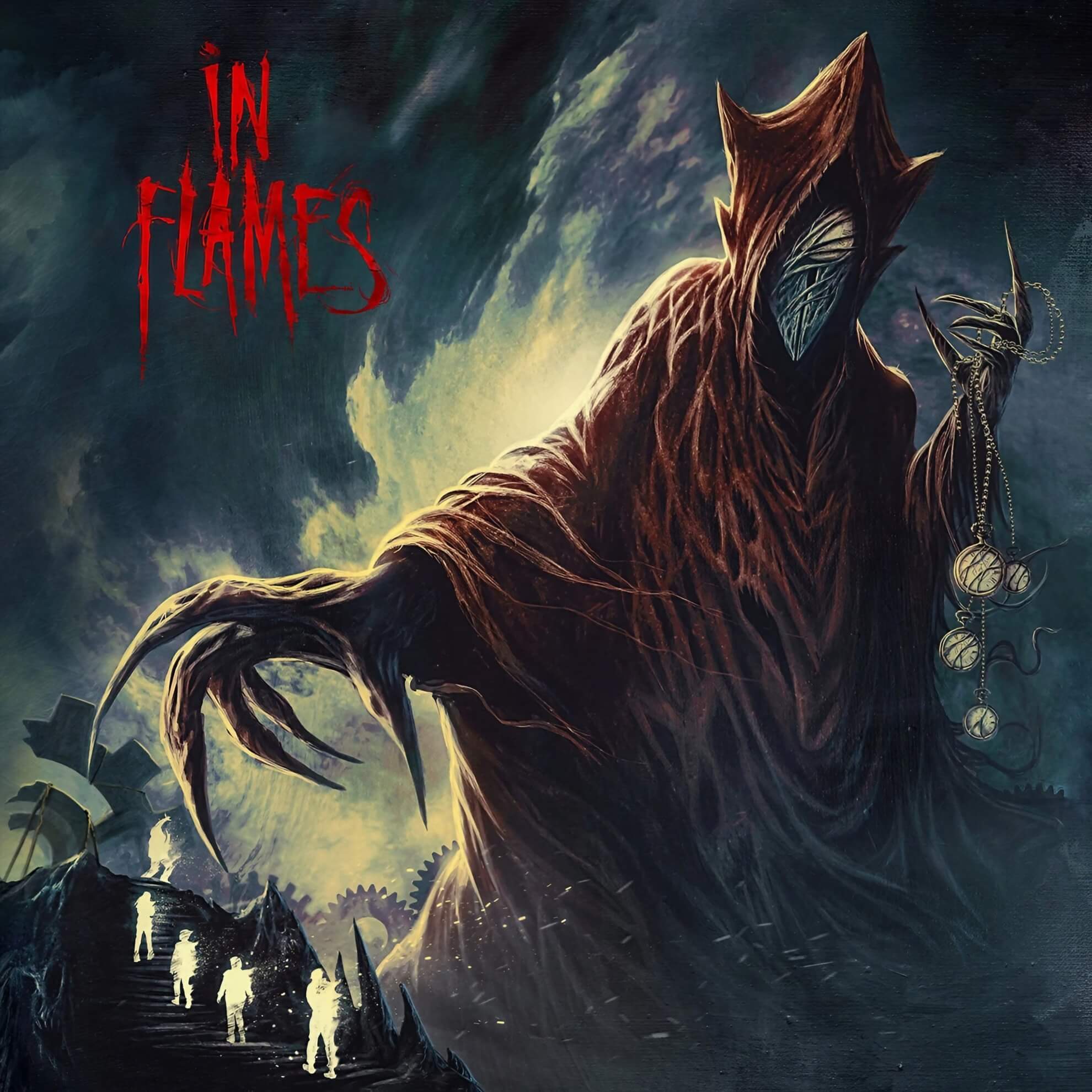
‘Foregone’ is obsessed with the concept of time—specifically, the running out of it. The artwork features the iconic “Jesterhead” mascot, not as the mischievous figure of the past, but as a menacing, skeletal entity presiding over the decay of the world. This shift from personal angst (prevalent in ‘I, The Mask’) to existential and global dread marks a maturing of vocalist Anders Fridén’s lyricism.
The track ‘The Great Deceiver’ serves as a thesis statement for the album, and Fridén himself has framed this thematic shift as a response to a collective, encroaching doom. “The album is about lost time,” he explains. “We cannot make up for the lost time… We are destined to end. That realization creates different emotions—panic, frustration, fear.” This confirms that the album’s intensity is not theatrical posturing, but a genuine reaction to the feeling that humanity has passed a point of no return.
In a post-pandemic world, these themes hit with a visceral weight. For the Colombian audience, familiar with social upheaval and environmental fragility, these lyrics are not abstract poetry but descriptive reality. As Fridén starkly puts it, “The real horror is what is going on in the news from around the world.”
Translating the Sound to the Stage
On stage, the ‘Foregone’ material integrates seamlessly with the classics. The tour’s setlists demonstrate a band that is no longer running from its past. The Bogotá show at the Royal Center will be a vibrant display of In Flames’ current power, not merely a dive into nostalgia. The band is boldly asserting the parity of their new material with their most influential works.
This confidence is demonstrated by strategically placing fresh tracks, like ‘State of Slow Decay,’ alongside classics such as ‘Food for the Gods,’ and will be a consistent theme throughout their performance.
To write about a concert in Bogotá without dissecting the audience is to ignore the most dynamic element of the event. The Colombian metal crowd is not simply a gathering of fans; it is a social phenomenon with a distinct history and reputation.4
This artistic lineage creates a fascinating dialogue with the local context. The “Ultra Metal” of 1980s Medellín was born of immediate, tangible violence—a sonic reflection of the socio-political realism that defined the era of the drug cartels.5
In contrast, In Flames offers a stylized, mythological violence. When these two histories converge at the Royal Center, it is a meeting of the raw and the refined, the brutalist concrete of the Andes and the gothic brick of industrial Sweden.
This history has instilled a profound sense of ownership in the Colombian metalhead (metalero). They view themselves not as passive consumers of imported culture, but as custodians of a global metal tradition. When international bands perform in Bogotá, they are stepping onto sacred ground. The audience’s ferocity is a way of honoring this legacy, transforming the mosh pit into a space where the structured melancholy of Gothenburg is metabolized by the visceral energy of the tropics.
The Ferocity of the South American Crowd
It is a common trope for bands to flatter local crowds, but the reputation of the South American—and specifically Colombian—audience is supported by consistent testimony from the genre’s titans.
Iron Maiden frontman Bruce Dickinson has publicly contrasted the “posers” often found at North American festivals with the “real rock and roll fans” of South America, specifically highlighting the unbridled energy found in Bogotá as a benchmark for authenticity.
This sentiment was echoed visually during Metallica’s Hardwired tour, where the band was so impressed by the Bogotá crowd’s fervor that they shared video footage of their stage prop mascot, “Doris,” crowdsurfing—a chaotic and dangerous feat that symbolized the audience’s absolute physical commitment to the show.
Dave Mustaine of Megadeth has also cultivated a special relationship with the region, often citing the rhythmic chanting of guitar riffs—the ubiquitous “oé, oé, oé” phenomenon—as a unique South American contribution to the live experience. This vocal accompaniment transforms instrumental passages into anthemic choruses, ensuring the audience is heard as loudly as the amplifiers.
In Bogotá, the crowd does not just watch; they perform. The chanting of guitar solos, the synchronized jumping that shakes the foundations of venues, and the expansive, violent-yet-fraternal mosh pits are standard. For In Flames, whose music relies heavily on melody and rhythm, this participation elevates the concert to a communal ritual.
The Royal Center as Modern Temple
The choice of the Centro de Eventos Royal Center for this performance is significant. While In Flames played the massive Simón Bolívar Park in 2023, the Royal Center offers a fundamentally different experience.
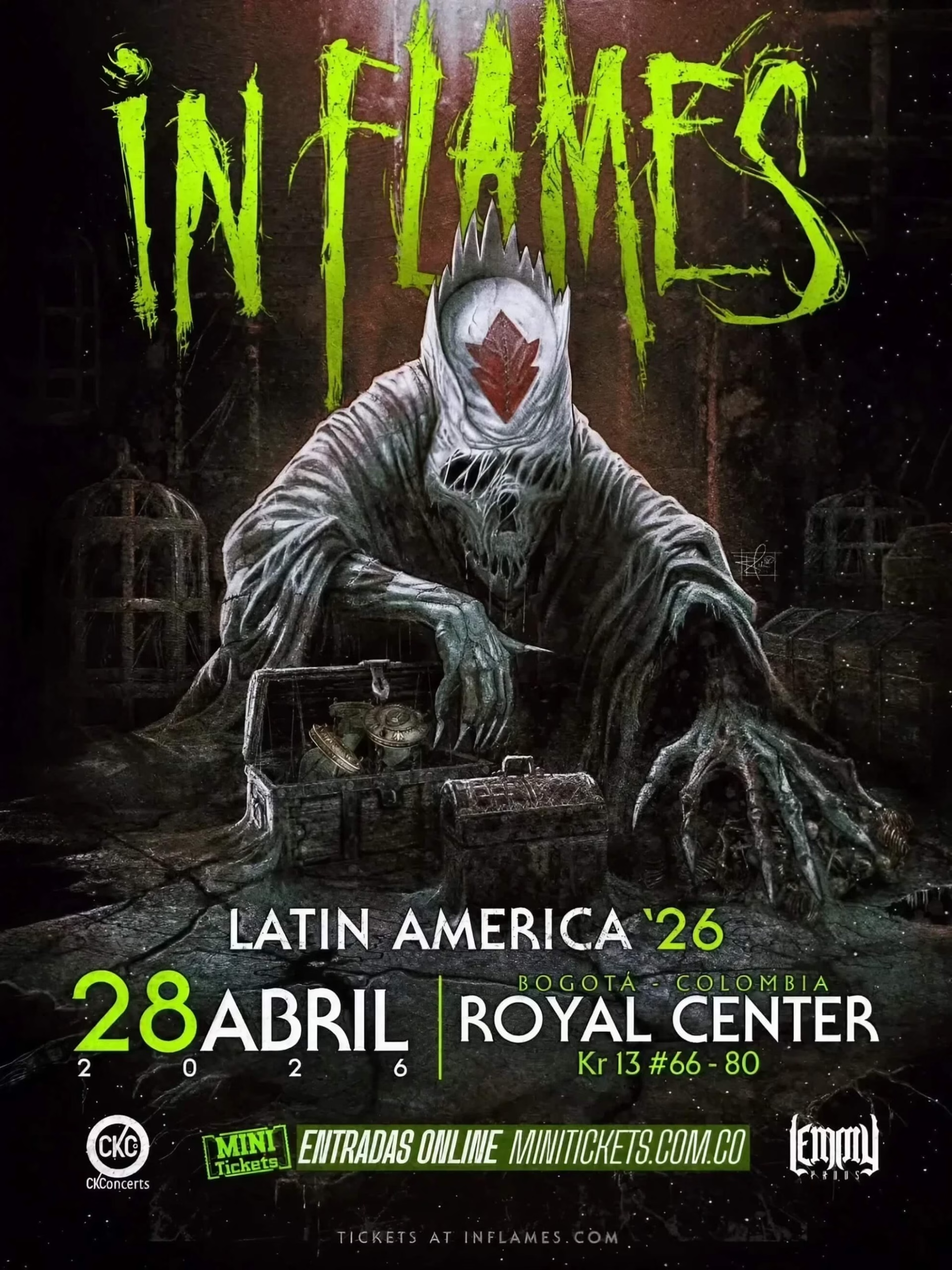
Located on Carrera 13 in the Chapinero district, the Royal Center is a multi-purpose venue that has become the de facto home for mid-tier international metal acts. It is a cavernous, rectangular hall with a capacity that fluctuates between 3,000 and 4,000 depending on the configuration.
The venue is notorious for its booming acoustics, which are viscerally loud. For a band like In Flames, whose sonic identity relies heavily on the clean separation of instruments to articulate intricate dual-guitar harmonies, the sound mix at the Royal Center can present a significant challenge. However, when the sound engineers dial it in correctly, the result is crushing, enveloping the audience in an inescapable wall of distortion that reverberates off the concrete.
The general admission floor serves as the beating heart of the venue, the specific geography where the mosh pits inevitably form. Unlike the open air of Simón Bolívar Park or the structured seating of a theater, the enclosed nature of the Royal Center traps both kinetic energy and heat.
The concert quickly transforms into a grueling ritual, with the third song typically marking the point where the physical endurance of the audience is tested. The air, heavy with sweat and humidity, creates a “sauna” effect that intensifies the entire musical experience.
Echoes of Previous Rites
The Royal Center has hosted legendary performances by acts like Cradle of Filth, Avantasia, Helloween, and Lamb of God. It is a venue where the barrier between artist and fan feels porous. The stage is high, but the proximity of the crowd is intense.
Reviews of previous shows describe the atmosphere as “suffocating” in the best possible way—a shared endurance test that bonds the audience and the band.
For the ‘Foregone’ tour, the production will likely be scaled to fit the stage. While they cannot bring the full pyrotechnics of a European festival, the lighting rig—crucial for the atmospheric shifts of the new album—will be immersive. The darkness of the venue enhances the light show, making the “Jesterhead” visuals loom larger and more menacingly than they would in daylight.
The End of Transmission
When In Flames takes the stage at the Royal Center, they are not merely performing a setlist; they are enacting a reconciliation between the estrangement of their middle era and the vitality of their origins. ‘Foregone’ is a meditation on the scarcity of time, a warning that the clock is ticking on both the planetary and personal scale. Yet, in the humid, oxygen-deprived air of a Bogotá mosh pit, that clock stops.
The ritual of the concert allows for a suspension of the very decay the album fears. In this high-altitude crucible, the “Gothenburg Sound” is no longer a historic artifact from a frozen port city, but a living, breathing entity fueled by Latin American fervor.
As the final notes ring out against the concrete walls of the Royal Center, the band and the audience will have achieved the ultimate defiance against the ‘Great Deceiver’ of time: a fleeting, yet absolute, moment of immortality where the past and future are incinerated in the heat of the present.
For those attending the Royal Center show, how does ‘Foregone’ direct engagement with themes of mortality reshape the emotional impact of these songs for you? Furthermore, how do you expect the distinct energy of the Bogotá audience will transform the album’s introspective focus on decay into a vibrant, defiant live experience?
References:
- Keith Kahn-Harris, ‘Extreme Metal: Music and Culture on the Edge’ (Oxford: Berg, 2007), 98. ↩︎
- Daniel Ekeroth, ‘Swedish Death Metal’ (Brooklyn: Bazillion Points, 2008), 241. ↩︎
- Michelle Phillipov, ‘Death Metal and Music Criticism: Analysis at the Limits’ (Lanham: Lexington Books, 2012), 45. ↩︎
- Deena Weinstein, ‘Heavy Metal: The Music and Its Culture,’ rev. ed. (New York: Da Capo Press, 2000), 220. ↩︎
- Nelson Varas-Díaz, Daniel Nevárez Araújo, and Eliut Rivera-Segarra, ‘Decolonial Metal Music in Latin America’ (Bristol: Intellect Books, 2021), 112. ↩︎
Leave a Reply