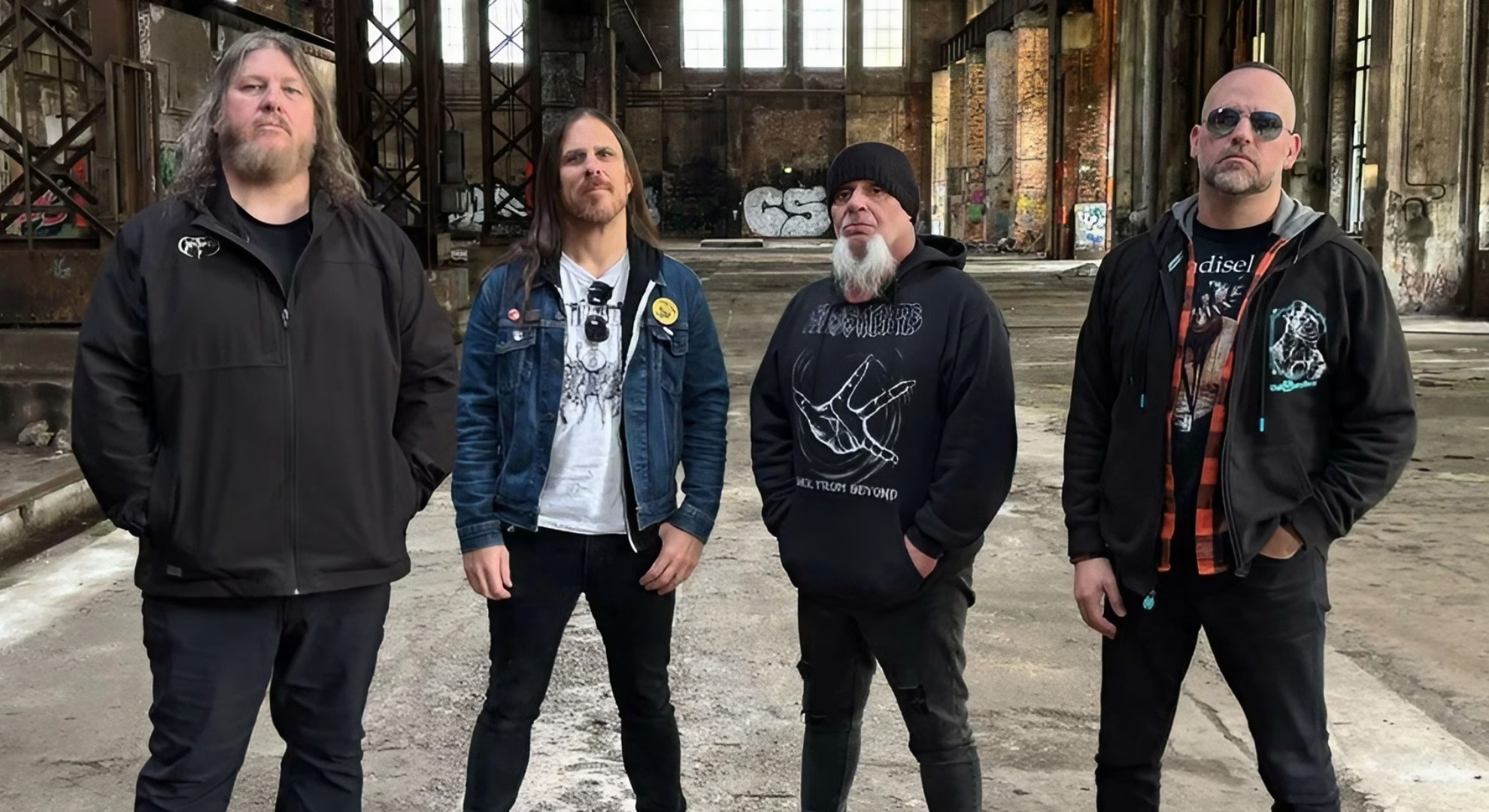


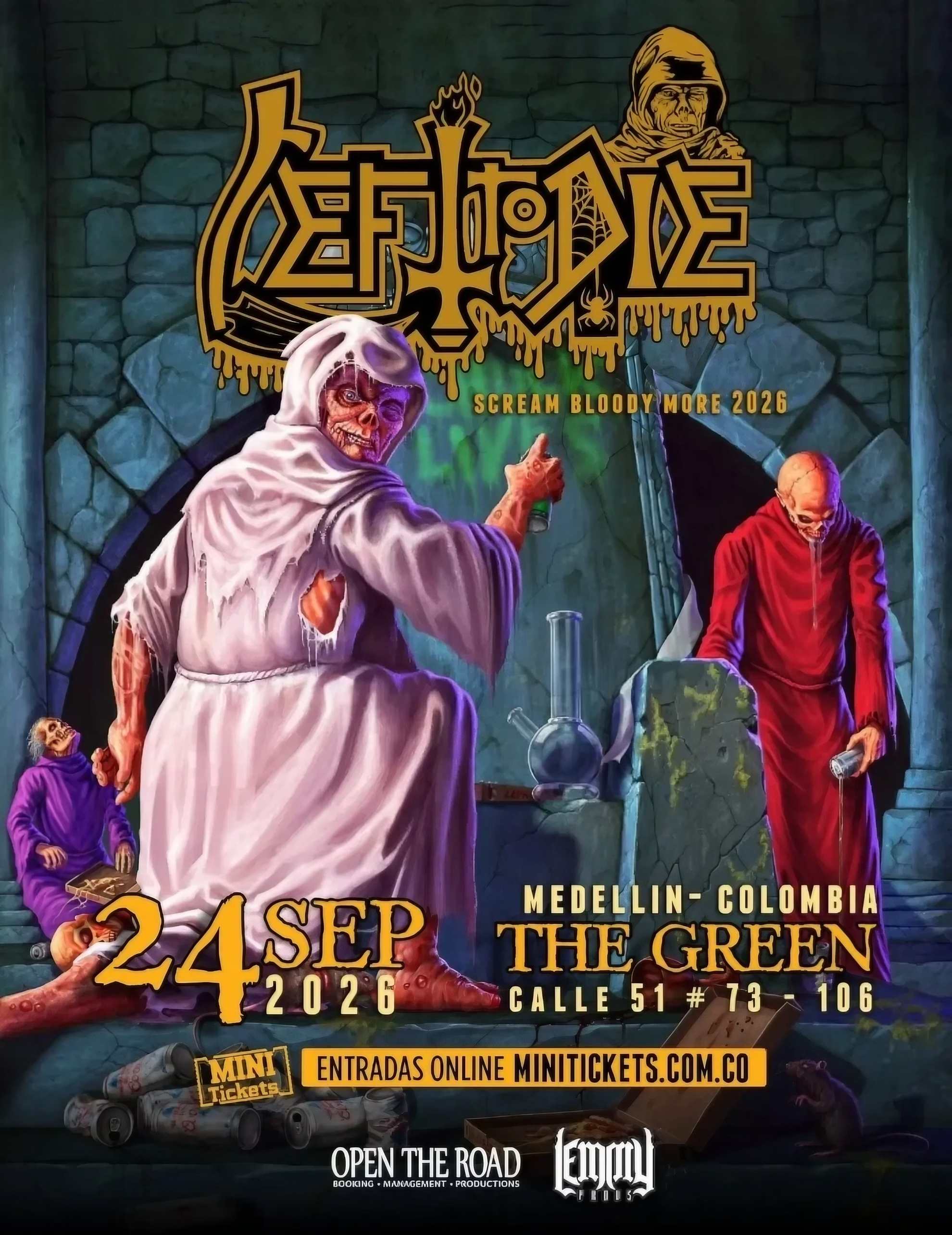
Nine hundred kilometers from the split-level Florida house where the songs were first taped, Medellín’s Green Club reopens its floor on September 24th, 2026 to two guitarists and one bassist who wrote significant portions of that tape’s afterlife themselves. Left to Die, the project built around Death alumni Rick Rozz and Terry Butler, brings its Latin American run through the Estadio corridor for a second time in barely a year, this time carrying an album of its own rather than a strict recreation of someone else’s catalogue.
The show sits inside a wider convergence. Death metal’s earliest, least polished recordings, made before the genre had settled on its own name, now travel to a Colombian city whose relationship with that same genre was built under conditions the original tape never anticipated.
The Riffs That Predate the Name
Rick Rozz and Terry Butler did not merely pass through Death’s lineup; they played on the two records most historians of the genre treat as its formal blueprint. Rozz supplied guitar on ‘Leprosy’ in 1988, and Butler received album credit for bass on that record, though Schuldiner performed the bass parts himself in the studio.
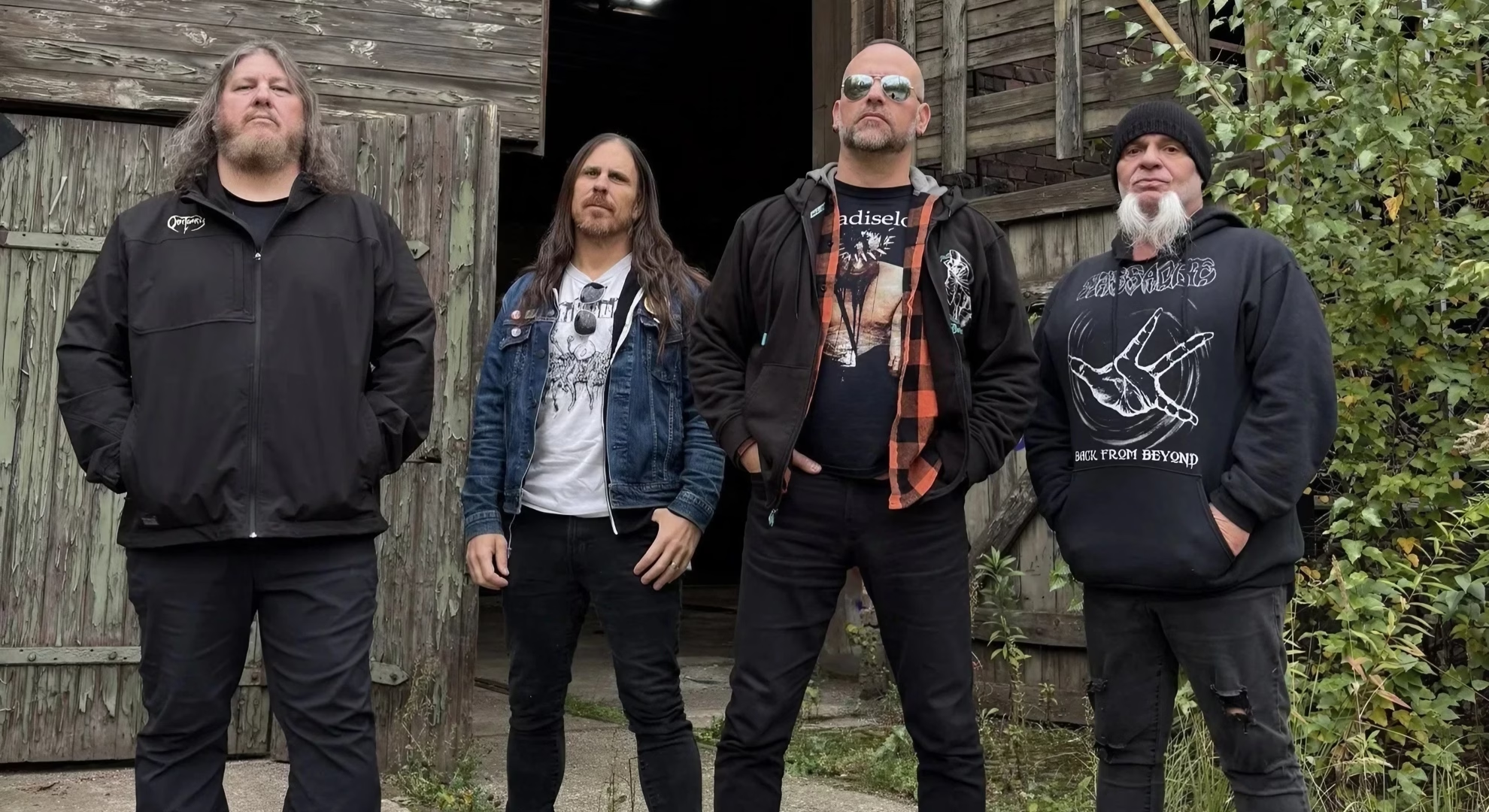
Butler’s own bass work reached the catalogue on the 1990 successor, ‘Spiritual Healing.’1 When the two later left Death’s orbit, they carried that unfinished business into Massacre, whose 1991 album ‘From Beyond’ stands as one of the genre’s own foundational Florida-scene documents.
Matt Harvey, primarily known for Exhumed and Gruesome, and Gus Rios, a veteran of Malevolent Creation, complete a lineup that treats faithful reproduction as a discipline rather than an act of nostalgia.
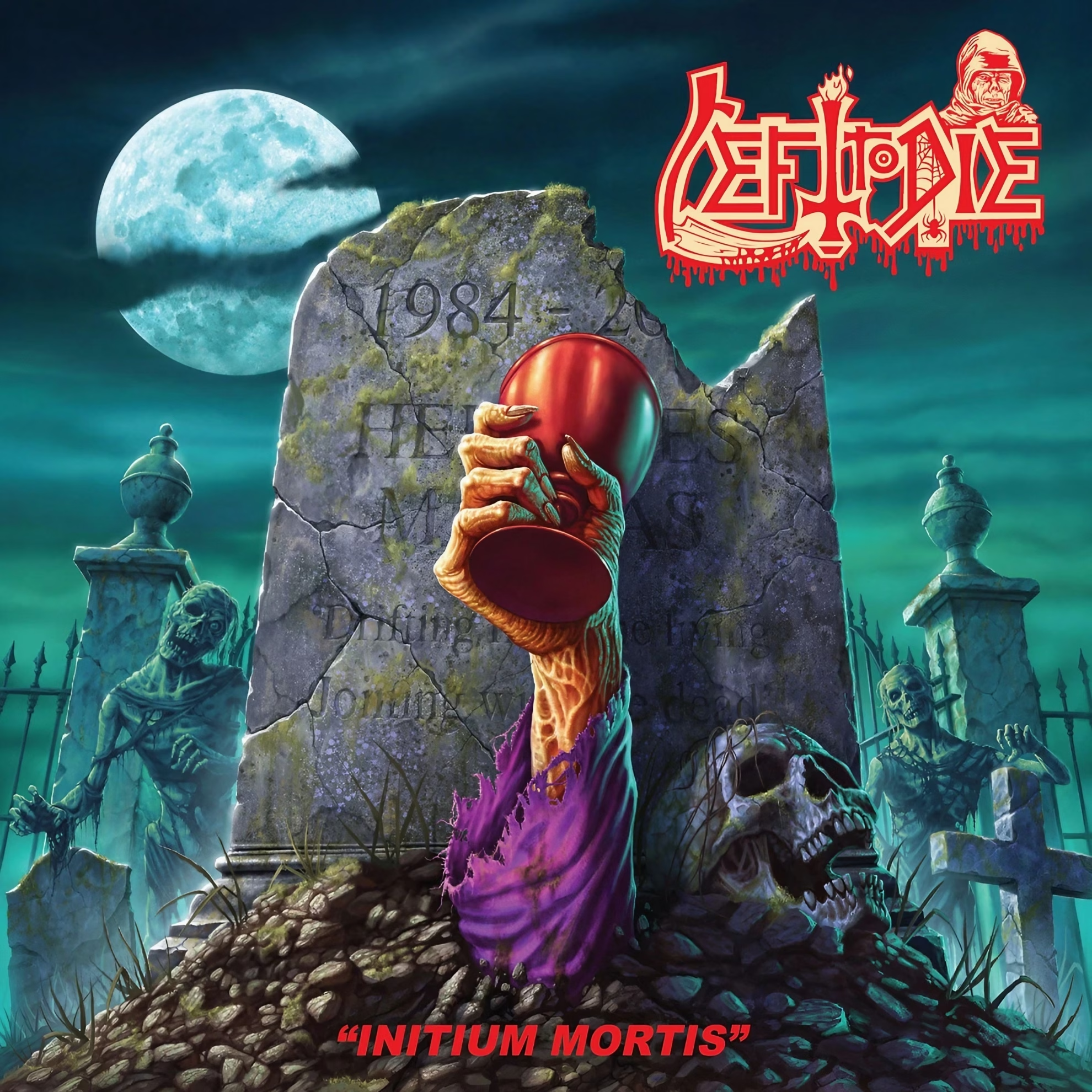
‘Initium Mortis,’ released July 17th, 2026 through Relapse Records, reaches further back than any of that discography. The album re-records demo material Chuck Schuldiner, Rozz, and vocalist Kam Lee cut in 1984 under the name Mantas, before the band called itself Death and before death metal existed as a labeled genre.
Vocalist and guitarist Matt Harvey, who joined Rozz and Butler alongside Rios to form Left to Die, explained that the goal was to let listeners who never heard the original demos experience them “with good production.”
The album’s second single, ‘Witch of Hell,’ comes directly from that 1984 material. Butler called the track “old-school death metal at its finest,” describing it as a direct blueprint for the death-thrash bands that followed.
What a Return Says in Medellín
Medellín’s relationship with extreme metal formed under circumstances the genre’s country of origin never had to reckon with. During the decades when cartel-era violence isolated the city from ordinary international traffic, imported metal circulated through cassette tapes, pirated recordings, and the rare touring band willing to make the trip.2
That scarcity produced listeners who treat access to a genre’s founding material as something closer to inheritance than casual consumption.
Left to Die already performed in Medellín within the past year, making the September 24th date a return engagement rather than a first crossing. The difference this time is what the band carries with it: an album built from material older than anything the city heard on that first visit, rather than a tour built entirely around Death’s existing catalogue.
A Second Night at Green Club
The Medellín date sits inside a broader Latin American run that closes at Mexico City’s HDX Circus Bar on September 30th, following earlier stops that carried the band through Brazil in January 2025 and, more recently, into Central America. In El Salvador, where Left to Die performed for the first time this year, local promoters framed the show as a direct encounter with death metal’s origin point rather than a revival act passing through.
Green Club, on Calle 51 in the Estadio sector of the Laureles-Estadio comuna, has become one of Medellín’s default rooms for international extreme metal acts unlikely to fill an arena but certain to fill a floor. Kampfar, Cult of Fire, and Riot V all played the same address earlier in 2026. Doors open at 7:00 PM.
The venue’s booking pattern signals a broader shift in how Medellín’s promoters court international extreme metal: rather than waiting for headline-scale package tours, rooms like Green Club now book acts directly, betting on a local audience whose appetite for the genre’s history needs no further proof.
What the Tapes Still Carry
Left to Die exists because two men who helped write death metal’s opening chapter decided those songs deserved a second life outside private tape collections. Medellín absorbed ‘Leprosy’ and ‘Scream Bloody Gore’ through smuggled cassettes decades before any American label considered the city a tour stop, and it receives the Green Club performance not as novelty but as the continuation of a relationship the city built for itself, tape by tape, long before Florida knew it existed.
Which of Death’s founding-era songs do you most want to hear rebuilt into a Green Club mosh pit on September 24th, and what does hearing that history performed live change about how you listen to the record?
If you are a band, artist, label, or promoter navigating the dark and independent scene, you need press materials that speak the language — not generic copy. Our Studio writes press releases, EPKs, bios, and website content for the underground and the vanguard alike. Plans start at $150, with turnaround as fast as 2 days.
References
- Albert Mudrian, ‘Choosing Death: The Improbable History of Death Metal and Grindcore’ (Los Angeles: Feral House, 2004), 45–52. ↩︎
- Robin Kirk, ‘More Terrible Than Death: Massacres, Drugs, and America’s War in Colombia’ (New York: PublicAffairs, 2003), 112–118. ↩︎
Leave a Reply