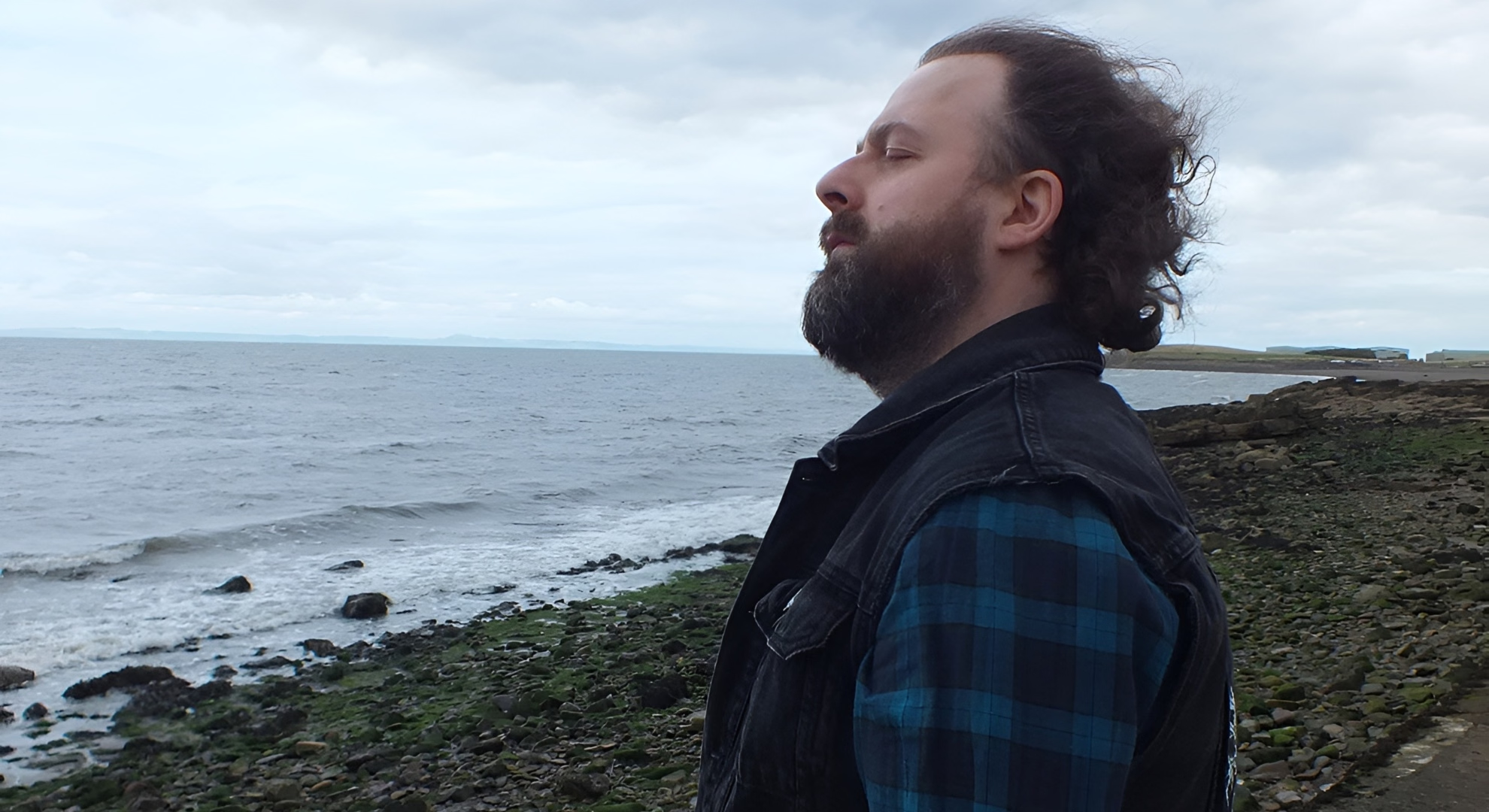


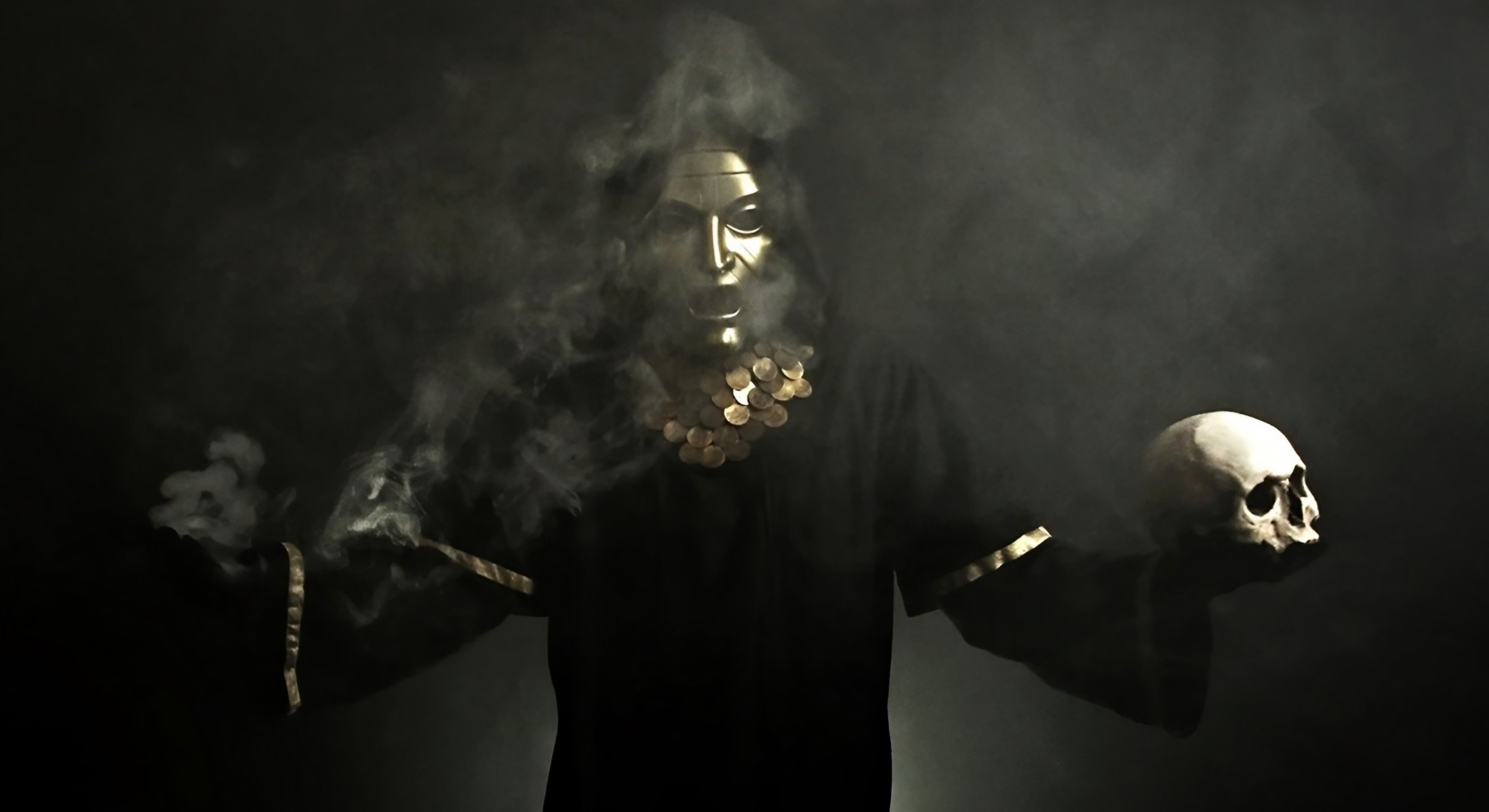
Exactly 281 years after a Jacobite army reached Derby, Ruadh release ‘Rising’ on December 4th. The fifth album from the Glasgow atmospheric black metal project of Tom Perrett, issued by Northern Silence Productions, runs to five tracks whose titles move from ‘Tandem Triumphans’ to ‘Escape and Exile.’
The date is a coincidence of the calendar. The subject is not: the five titles follow a single campaign through its victory, its turning point, its defeat and its flight.
The Campaign in Order
The rising of 1745 was the last attempt by the Jacobites to restore a Stuart monarch. Charles Edward Stuart, grandson of the deposed James VII and II, led a Highland army that gathered at Glenfinnan, where his father’s standard was raised on August 19th, 1745. That army defeated the government forces of Sir John Cope at Prestonpans on September 21st, occupied Edinburgh and crossed into England in November, reaching Derby on December 4th.1
At Derby the march stopped. Charles argued for London, but his senior commanders opposed it, and a council of war on December 5th resolved to turn back; the retreat north began the next day. Murray Pittock, one of the leading scholars of Jacobitism, describes the rising’s fate as arguably sealed from that retreat onward.2
The campaign ended at Culloden, near Inverness, on April 16th, 1746, and Charles left Scotland for France on September 20th, 1746. Parliament responded with legislation aimed at the clan system itself. An Act that received royal assent on August 12th, 1746, banned the plaid, the little kilt, trews and shoulder belts for any man or boy in Scotland other than officers and soldiers in royal service from August 1st, 1747, and the prohibition stood until 1782.3
‘Rising’ takes that sequence as its frame. In the announcement of the record, Perrett presents it as a concept album that condenses the rising of 1745.
The opening title, ‘Tandem Triumphans,’ borrows a Jacobite Latin motto, rendered as triumphing at last. ‘Prestonpans’ and ‘Derby’ name the victory and the turn, and ‘Defeat At Culloden’ and ‘Escape and Exile’ close the sequence. Nothing about the three unreleased tracks beyond their titles and order was public at the time of writing.
Where 1296 Left Off
Perrett formed Ruadh in 2018 in Glasgow as a solo project. The name, pronounced Roo-Ah, is the Scottish Gaelic word for red, and the project’s own statement links it to the burgh where he was born and raised, one of the oldest in Scotland, whose name translates as the red glen.
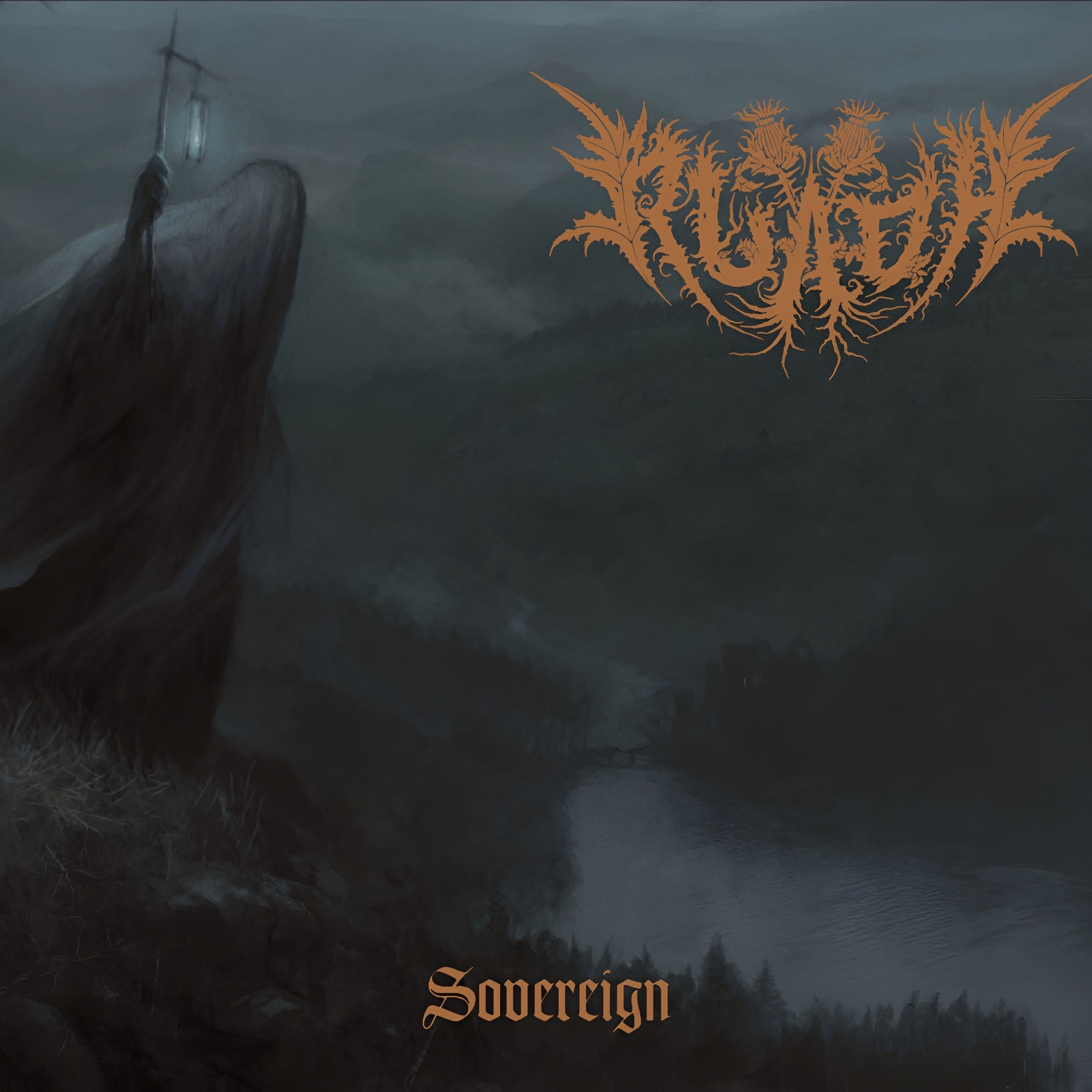
‘Sovereign’ followed on April 12th, 2019, ‘The Rock of the Clyde’ on May 22nd, 2020, and ‘Eternal’ on July 9th, 2021. The last is a five-track concept album organized around the wheel of the year, a calendar of seasonal festivals, in place of a campaign or a reign.
‘1296,’ released on April 7th, 2023, narrowed the frame to a single year. Its release page describes an album about the people and events of 1296, the year of the Sack of Berwick and the start of the English invasion in the First War of Scottish Independence, and says the six tracks cover the period selectively, as a shortened version of a conflict that lasted decades.
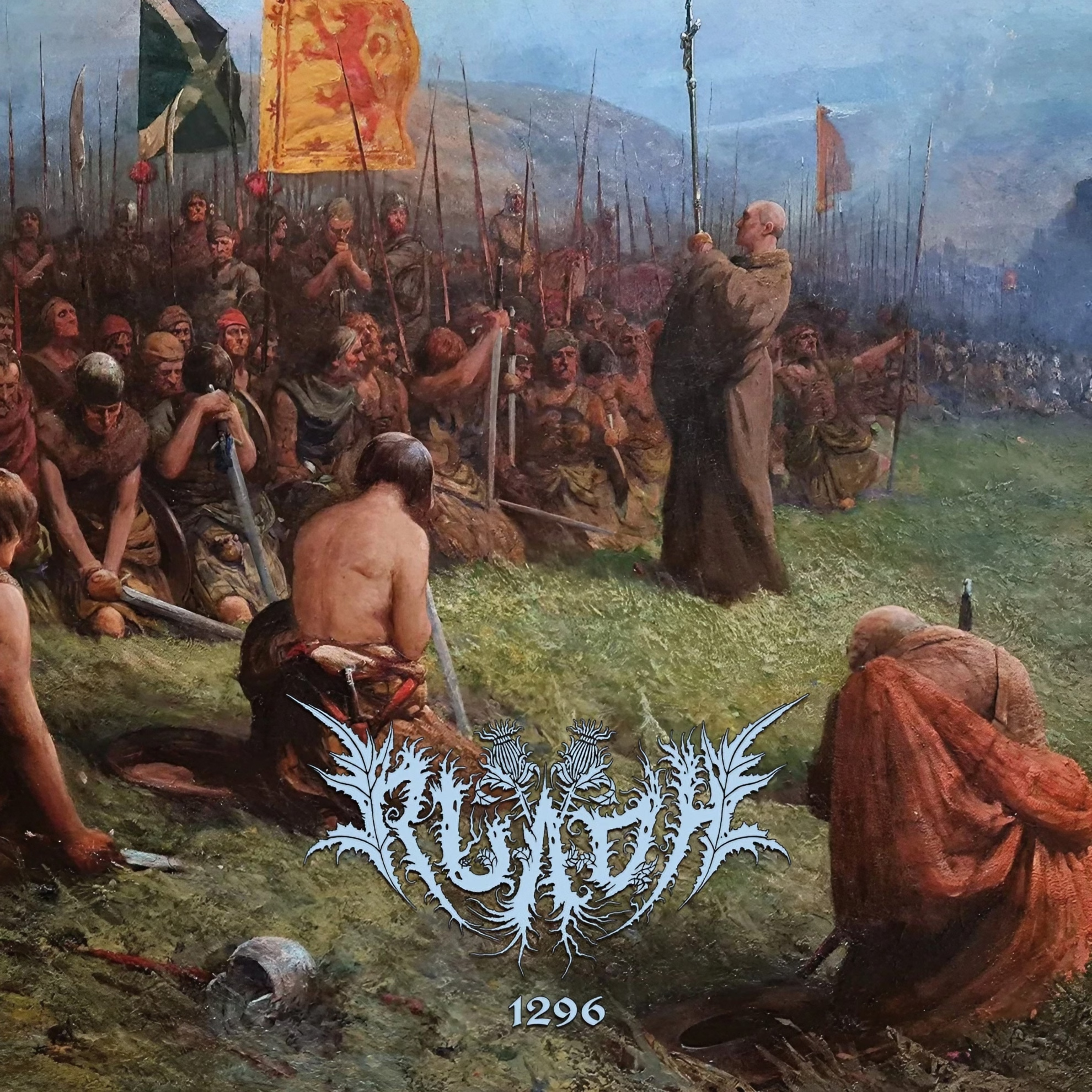
The running order opens with the 2:21 ‘Guardians of Scotland,’ passes through four longer tracks, among them ‘Sack of Berwick’ and ‘Toom Tabard,’ and closes on the 9:53 ‘The Treaty.’ Perrett wrote, mixed and produced the album at Red Glen Studios in Scotland. Mihai Puscasu is credited with writing and performing the drums, Kim Copland with the bass and Jaime Gomez Arellano of Orgone Studios with the mastering, while a second release page lists Alan Buchan on guitar.
Defeat was never absent from the catalogue, since ‘1296’ takes its title from the year of the Sack of Berwick. What changes is the ending.
On the project’s catalogued track sequences, ‘Rising’ is the first Ruadh record to close in defeat and flight, where ‘1296’ closes on ‘The Treaty.’ It also opens differently: ‘Tandem Triumphans’ runs 8:10, against the 2:21 of ‘Guardians of Scotland.’
The Two Public Tracks
Two tracks from the album are public. ‘Tandem Triumphans’ runs 8:10 and ‘Prestonpans’ runs 8:58, which sets the first two titles of the sequence near the 8:43 of ‘Sack of Berwick’ and the 8:38 of ‘Rise of the North’ on the previous record.
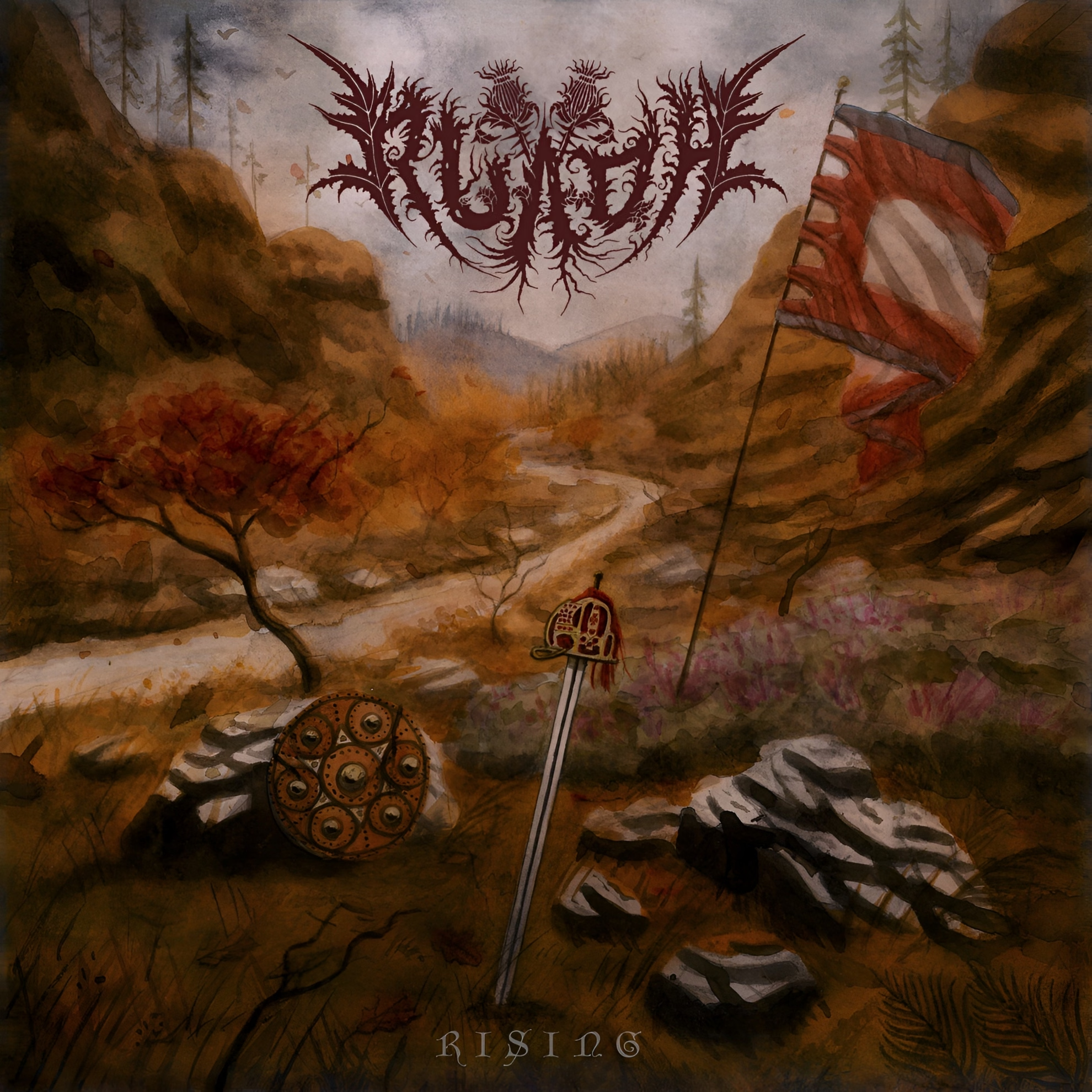
No lyrics were published for either track at the time of writing, and the release page lists no production, personnel or artwork credits. Press accounts of the announcement place the recording at Red Glen Studios, the same Scottish studio credited on ‘1296,’ but a producer credit for ‘Rising’ had not been confirmed at the time of publication.
‘Tandem Triumphans’ premiered on October 2nd, 2026, through the label’s official video upload, while the date on which ‘Prestonpans’ first became public could not be confirmed at the time of publication.
Reception Beyond Glasgow
Asked about the metal scene in his home city, Perrett said it is “small but good.” Saor, another Glasgow project working in atmospheric folk and black metal, belongs to it.
The route out of that scene is documented in his own account. Perrett said that Northern Silence Productions, a German label, contacted him to hear the finished debut after he posted a demo to the Ethereal Black Metal page on Facebook. He described the style as “home for me,” the music of the albums he grew up with, and said those albums led him to write ‘Sovereign.’
The story the record tells was never confined to Scotland either. Charles Edward Stuart was born in Rome in 1720 and brought up in Italy, and he sailed for Scotland from France in the summer of 1745, so that the campaign both began and ended outside Britain.
That memory was also made in print. Leith Davis argues that anti-Jacobite narratives, already in circulation before Culloden, were amplified after it and cast the defeat as inevitable, while Jacobite counter-memories persisted inside official print culture through reprinted speeches, trial accounts and popular histories.4
A concept album that sets the campaign in sequence adds a further telling to that contest, one that circulates, in the first instance, through a German label’s limited pressings.
The Physical Editions
The physical release is the definitive form of ‘Rising.’ Northern Silence Productions issues it as a digipack compact disc limited to 500 copies, which ships around December 4th.
The vinyl editions are gatefold pressings that include a download, limited to 199 copies on transparent green and black marble and 99 copies on white with green splatter; the smaller pressing is sold only through the label and the band, and both ship around January 1st, 2027.
A digital edition is also offered, and pre-orders are open on the Bandcamp page for ‘Rising.’
The Day Before the Turn
The release date sits one day short of the council that sent the Highland army home. Everything that can be documented before December 4th points the same way: a Glasgow project has set a campaign in order, from its motto to its exile, in the form of a concept album, and has placed that sequence in limited physical editions issued from outside Scotland.
What the three unreleased tracks say about that story remains for December 4th to settle, and nothing is asserted about them here.
Which moment of the Forty-Five, the victory at Prestonpans, the council at Derby or the flight after Culloden, would you most want a black metal record to dwell on, and why?
References
- Scottish History Society, ‘Supplement to The Lyon in Mourning: Prince Charles Edward Stuart, Itinerary and Map,’ Publications of the Scottish History Society 23 (Edinburgh: Scottish History Society, 1897), 90–97. ↩︎
- Murray Pittock, ‘Culloden, Great Battles’ (Oxford: Oxford University Press, 2016). ↩︎
- An Act for the More Effectual Disarming the Highlands in Scotland, and for More Effectually Securing the Peace of the Said Highlands; and for Restraining the Use of the Highland Dress (Act of Proscription), 19 Geo. 2, c. 39, sec. 17 (1746). ↩︎
- Leith Davis, ‘Jacobitism and Cultural Memory, 1688–1830,’ Elements in Eighteenth-Century Connections (Cambridge: Cambridge University Press, 2025). ↩︎





Leave a Reply