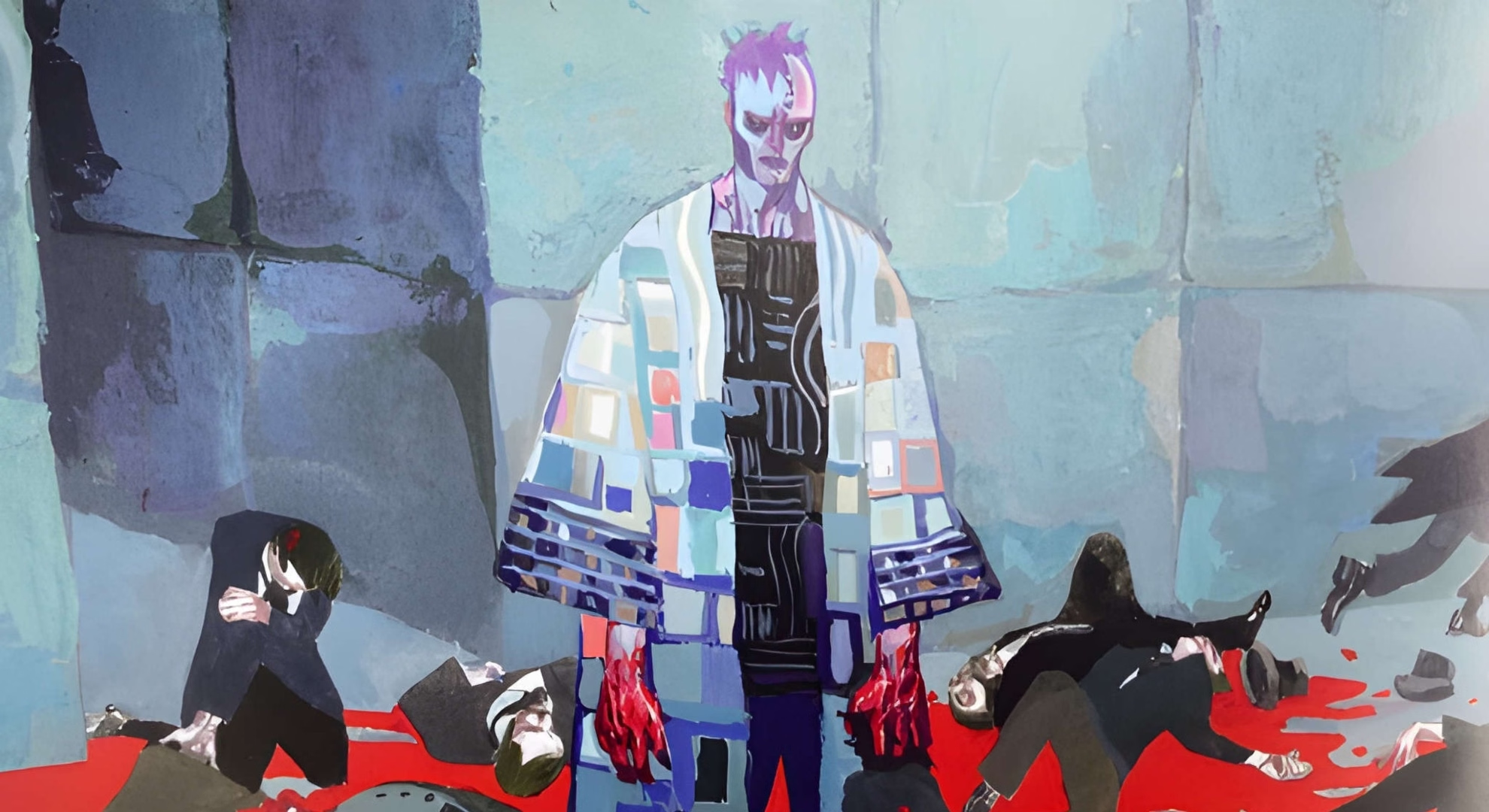


Within five years of its 1818 publication, Mary Shelley’s novel had already lost its creature’s voice. Richard Brinsley Peake’s 1823 stage adaptation, ‘Presumption; or, the Fate of Frankenstein,’ presented the being as mute, and the silence held through most of the twentieth-century film cycle. The myth that circulates under the name Frankenstein is largely detached from the book that produced it, a skeletal plot of creation and punishment stripped of the creature’s own long account of learning, loving, and being turned away.1
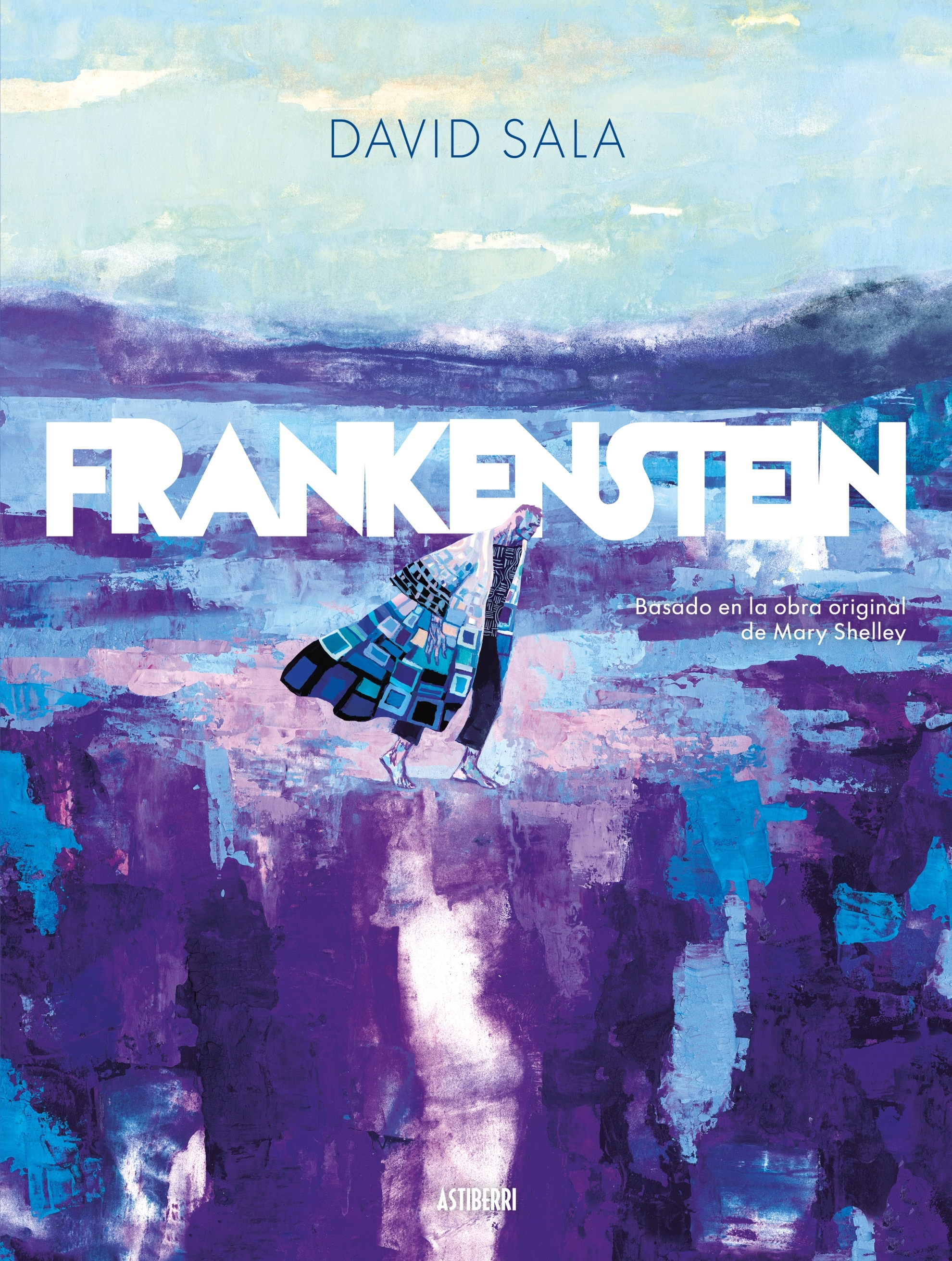
The French cartoonist David Sala restores that account and gives it a painted surface. His ‘Frankenstein,’ first released in France by Casterman on April 15th, 2026, appears in Spanish from Astiberri Ediciones on October 8th, 2026, translated from the French by Rubén Lardín.
It is an original graphic novel rather than a gathering of serialized installments, issued as a 232-page full-color hardcover in the publisher’s CMYK line at €39, approximately COP 140,000, under ISBN 979-13-87927-57-8. Sala wrote, drew, and painted the book himself, so its color is the drawing rather than a separate credit. Letterer and editor credits could not be confirmed at the time of publication.
A Trail Across the Ice
The pages released ahead of publication open in the Arctic, where Shelley’s novel also begins. Page five is one painted panel of snowfield and distant mountain in which Victor Frankenstein is a dark notch at the end of a line of footprints entering from the left edge. The only text is a caption in which he says the monster has taken everything from him.
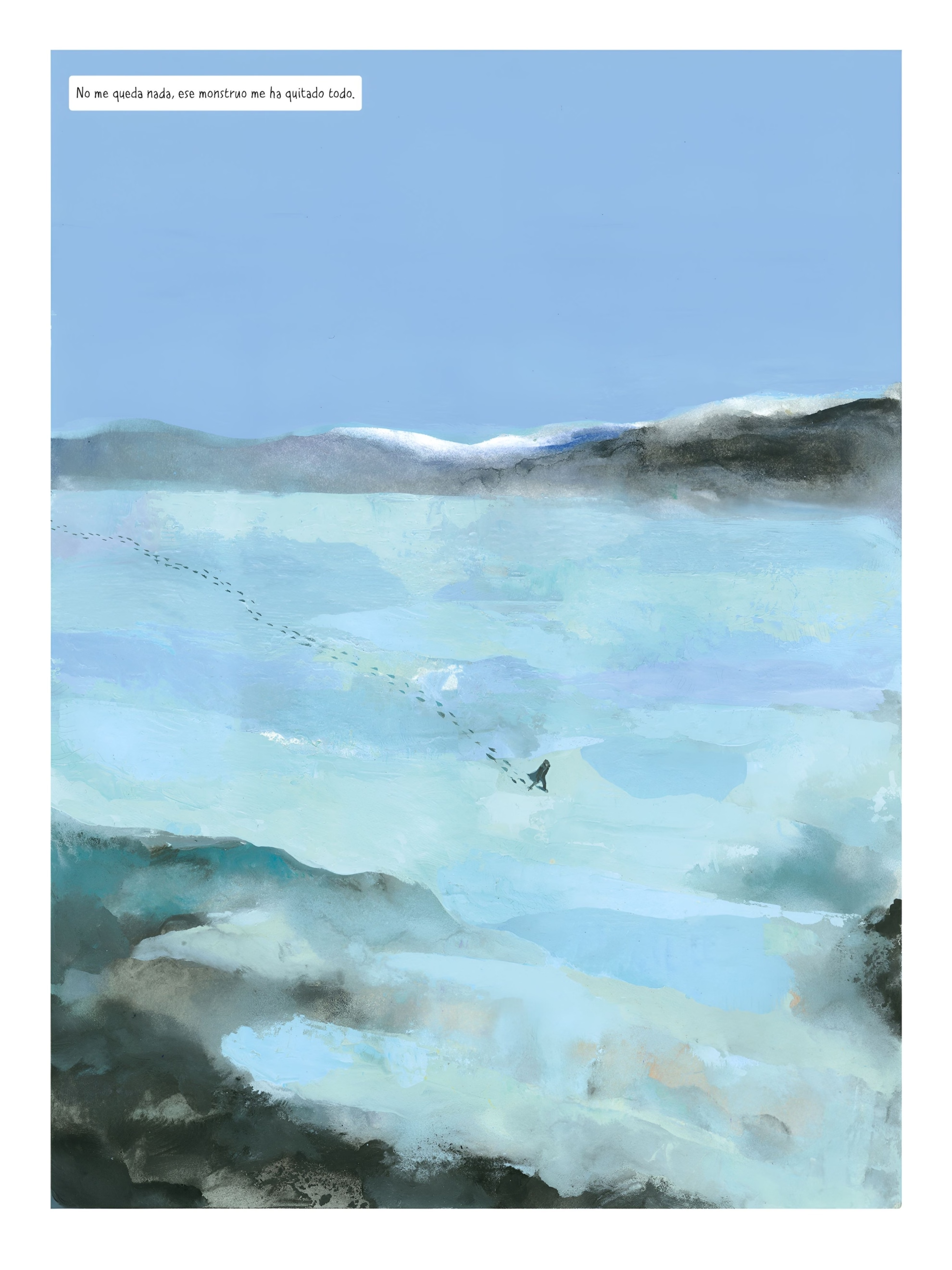
The footprints form the one continuous line on a page of scraped, layered bands of pale blue and gray, and the eye follows them in the direction of reading, so that time passes along the trail instead of across gutters.
The next page divides into two wide panels and closes the distance in a single cut. Above, the small figure shouts for the demon to show himself; below, he appears from the chest up, the violet stripes of his scarf the only saturated color on the page, as a caption states that he was once Victor Frankenstein and no longer exists. A speck in the snow becomes a face already emptied by a story the book has not yet told.
Magenta Over the Graves
Sala’s color does not describe; it assigns. Page 22 returns to Victor’s youth, and the cemetery where the student digs sits under a flat, unmodulated magenta sky, its crosses painted in the same pink, in black, and in blue across a violet hillside. No night ever looked like this. The magenta belongs to a remembered scene, colored by the obsession of the man remembering it rather than by moonlight.
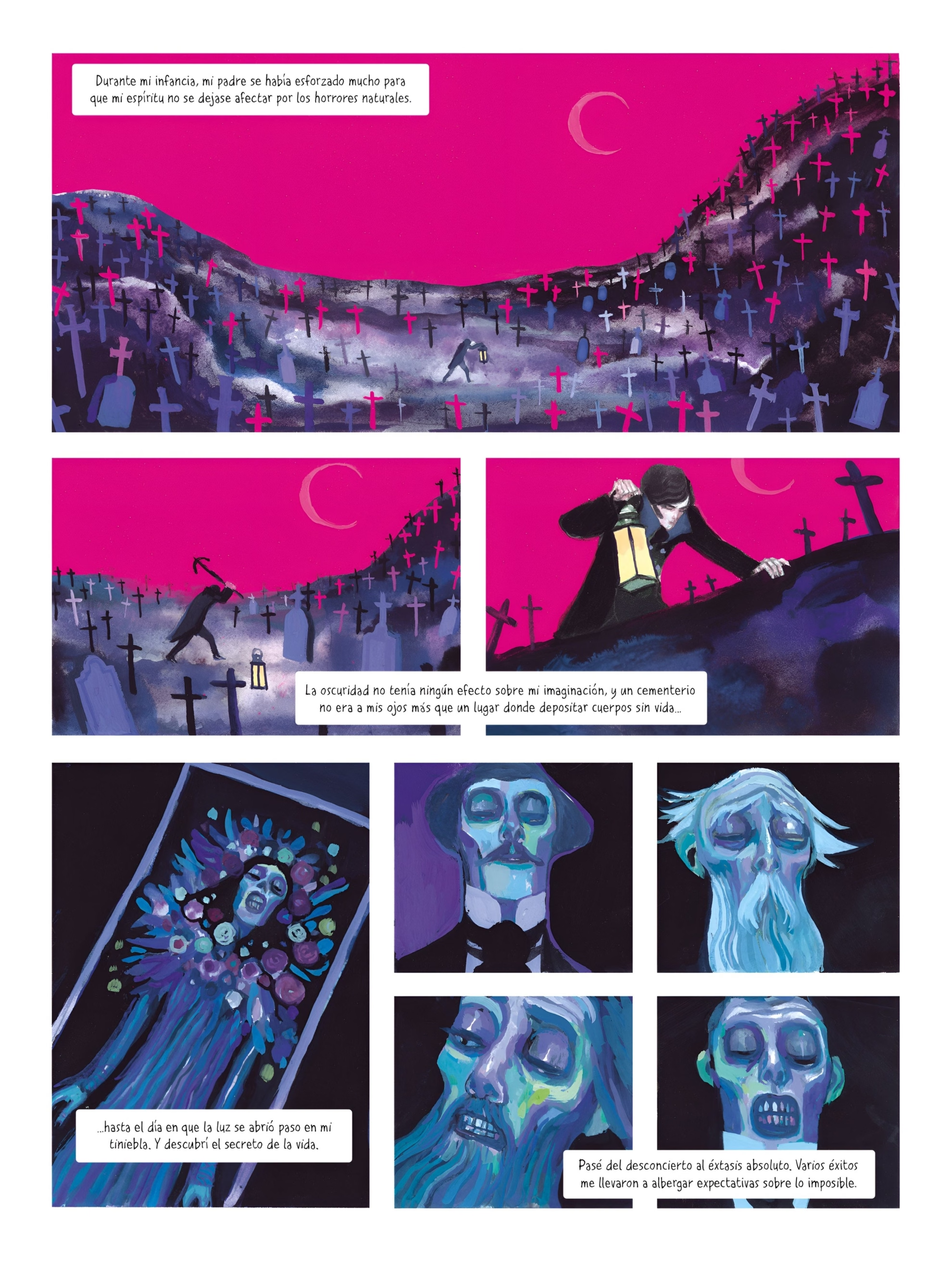
The lower tier changes register entirely. Five panels on black grounds present the exhumed dead, a woman among flowers and four men’s faces in cold blue and violet, eyes closed and mouths slack. The regular borders give the corpses the uniform spacing of a specimen tray, and the caption reporting Victor’s passage from bewilderment to ecstasy sits beside an open jaw.
The Charnel Room in Acid Green
The upper half of page 24 is a single dense panel in which skulls, ribs, limbs, and whole bodies cover a black ground around the standing student, with two bell jars glowing a poisonous yellow-green. With no floor and no horizon, bones lie flat against the picture plane like the motifs of a patterned textile, so the room registers less as a place than as the interior of a mind that has stopped distinguishing one body from another.
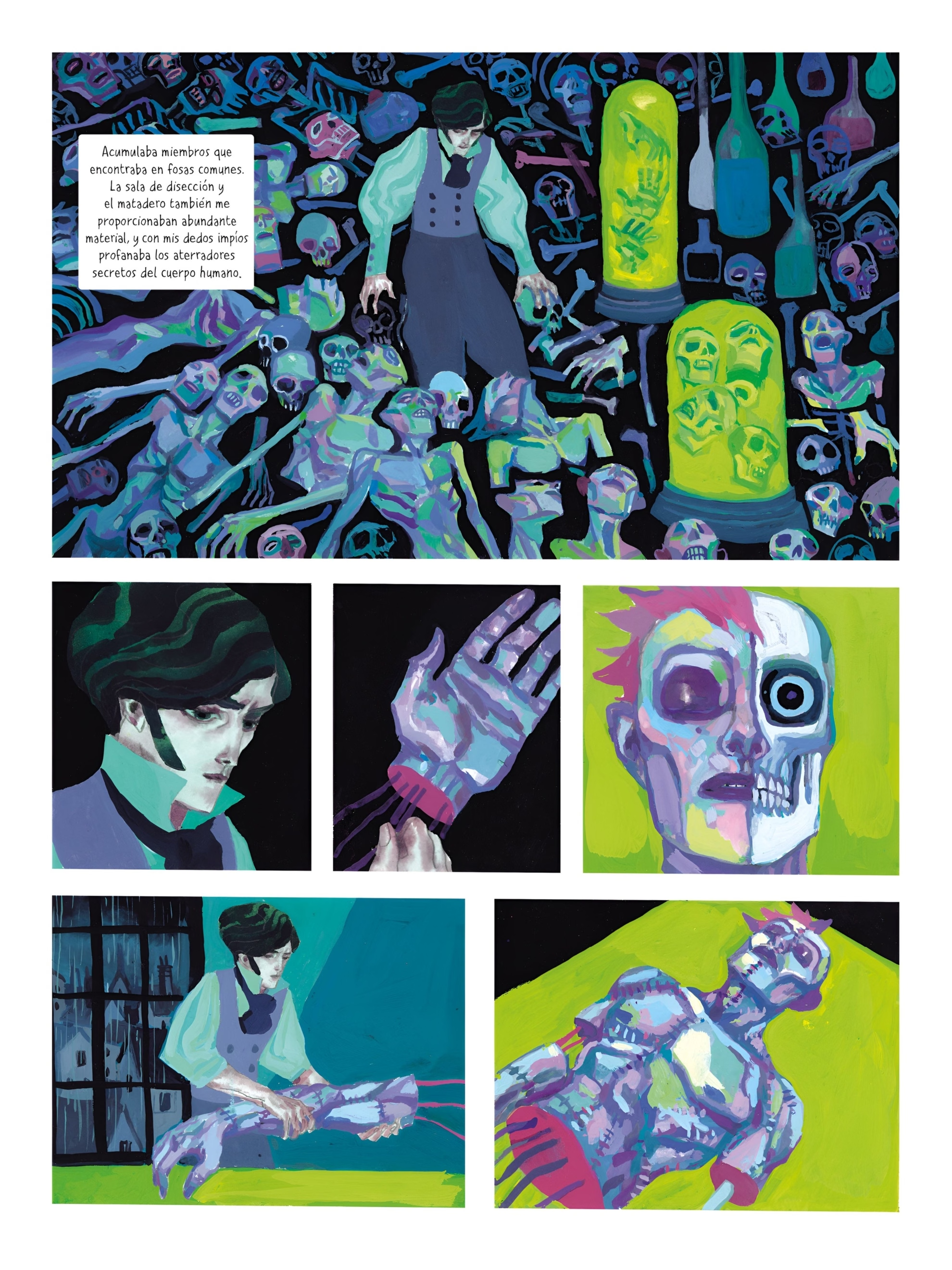
Below, the page slows into a severed hand held up by the wrist with pink tendons trailing, then a head split down the middle, half patched flesh and half white skull. Acid green floods the final panels as Victor lays out a stitched arm and then a whole assembled body. Across these pages, that unnatural green attaches to the laboratory alone.
Capitals for the Creature
The sharpest formal choice in the book is typographic. In the Spanish lettering, Victor’s captions are set in a mixed-case hand while dialogue appears in capitals, and once the creature takes over the narration, his captions move into capitals as well. His account reads as spoken testimony, matching Shelley’s structure, in which the creature tells his story aloud to his maker.
Page 115 stages the encounter with the blind De Lacey, the episode in which Shelley tests the creature’s chance of being received once his face is taken out of the exchange, and whose failure turns him toward violence.2 Eight panels in muted slate and cornflower blue follow him.
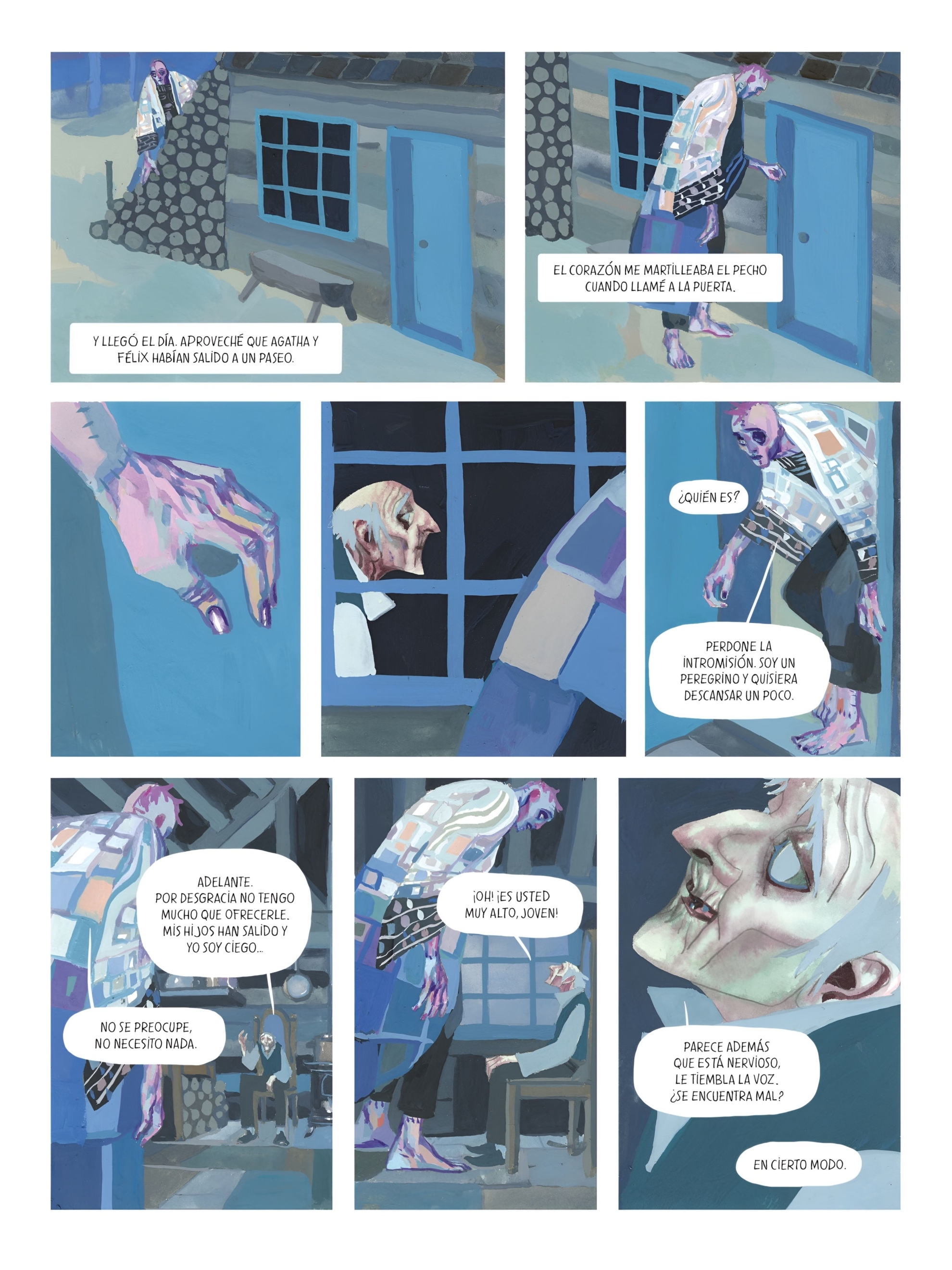
The third isolates his hand, stitched at the wrist and painted in lilac and pink, held just short of the wood, so that the knock the previous caption reported becomes a hesitation. In the next panel the old man’s profile appears at the window while the patchwork coat cuts diagonally across the frame, a body too large for the border that holds it.
Inside, the creature stoops under the rafters as De Lacey, hearing only his voice, exclaims at how tall the young man is. The final panel closes on the old man’s clouded eye as he asks whether his visitor is unwell, and the creature answers only that he is, in a certain way. The image supplies what the four balloons leave out.
The coat is the book’s most persistent invention. Pieced from squares of blue, gray, peach, and black, it recurs on the cover and rhymes visibly with the stitched body beneath it. Casterman’s catalog copy identifies it as a new symbol Sala introduced, a garment sewn for the creature by an innocent who herself suffers human cruelty. He wears a second body sewn by kindness over the first one sewn by ambition.
From Briefer to Breccia
Comics have adapted the novel since the Classics Illustrated edition of 1945, and Dick Briefer’s Frankenstein feature, begun in 1940, turned the creature into a serial character. Bernie Wrightson’s 1983 illustrated edition set pen-and-ink plates beside the complete text in the manner of nineteenth-century engraving. Moving a story from prose into a visual medium shifts it from telling into showing, and the adapter’s real choices lie in what showing can carry that telling could only report.3
Sala’s closer precedent is the Argentine cartoonist Alberto Breccia, whom his Spanish publisher names among his influences. Breccia and the writer Norberto Buscaglia adapted H.P. Lovecraft in the 1970s with ink wash, monotype, and collage, inventing a new surface for each tale. Sala’s layered gouache and knife-scraped paint belong to that approach, tested earlier in ‘Le Joueur d’échecs,’ his 2017 adaptation of Stefan Zweig, and ‘Le Poids des héros,’ his 2022 account of his own family history.
Twenty-Five Years in Bilbao
Astiberri Ediciones took shape in Bilbao in 2001 around Fernando Tarancón’s comic shop Joker, publishing the comics magazine ‘Trama’ for 44 issues and Lewis Trondheim’s autobiographical ‘Mis circunstancias,’ refounding in 2003 with Laureano Domínguez and Javier Zalbidegoitia. Tarancón named Fantagraphics, Drawn & Quarterly, and L’Association as his models, and Spanish editions of Craig Thompson’s ‘Blankets,’ Guy Delisle’s ‘Pyongyang,’ and Frederik Peeters’s ‘Píldoras azules’ defined the early list.
In November 2007 the house published Paco Roca’s ‘Arrugas’ and Miguel Gallardo’s ‘María y yo,’ two books that carried Spanish comics beyond the specialist shop; ‘Arrugas’ received Spain’s Premio Nacional del Cómic in 2008. Sala has published with Astiberri since his collaborations with the writer Jorge Zentner, and ‘Frankenstein’ appears in the publisher’s twenty-fifth year, placing the most frequently adapted novel of the Gothic tradition inside a list founded on the literary graphic novel.
A Body Worn as a Coat
Set side by side, the released pages divide the book into two color worlds. Victor’s memories burn in magenta and acid green, the colors of a mind that has turned the dead into material, while the creature’s account unfolds in the ordinary blues of a cottage wall and a winter door.
Without adding a word to the creature’s mouth, Sala gives the monstrous palette to the maker and the quiet one to the made, returning to Shelley’s novel the argument its stage and screen afterlives removed: the horror of the story lies in how the creature is seen, never in what he is.
If Sala paints Victor’s memories in magenta and acid green but lets the creature’s testimony unfold in the muted blues of an ordinary cottage, does the adaptation relocate the novel’s horror from the thing that was made to the eyes of the man who made it?
References
- Chris Baldick, ‘In Frankenstein’s Shadow: Myth, Monstrosity, and Nineteenth-Century Writing’ (Oxford: Clarendon Press, 1987), 1–9. ↩︎
- Anne K. Mellor, ‘Mary Shelley: Her Life, Her Fiction, Her Monsters’ (New York: Methuen, 1988), 44–51. ↩︎
- Linda Hutcheon, ‘A Theory of Adaptation’ (New York: Routledge, 2006), 22–27. ↩︎


Leave a Reply