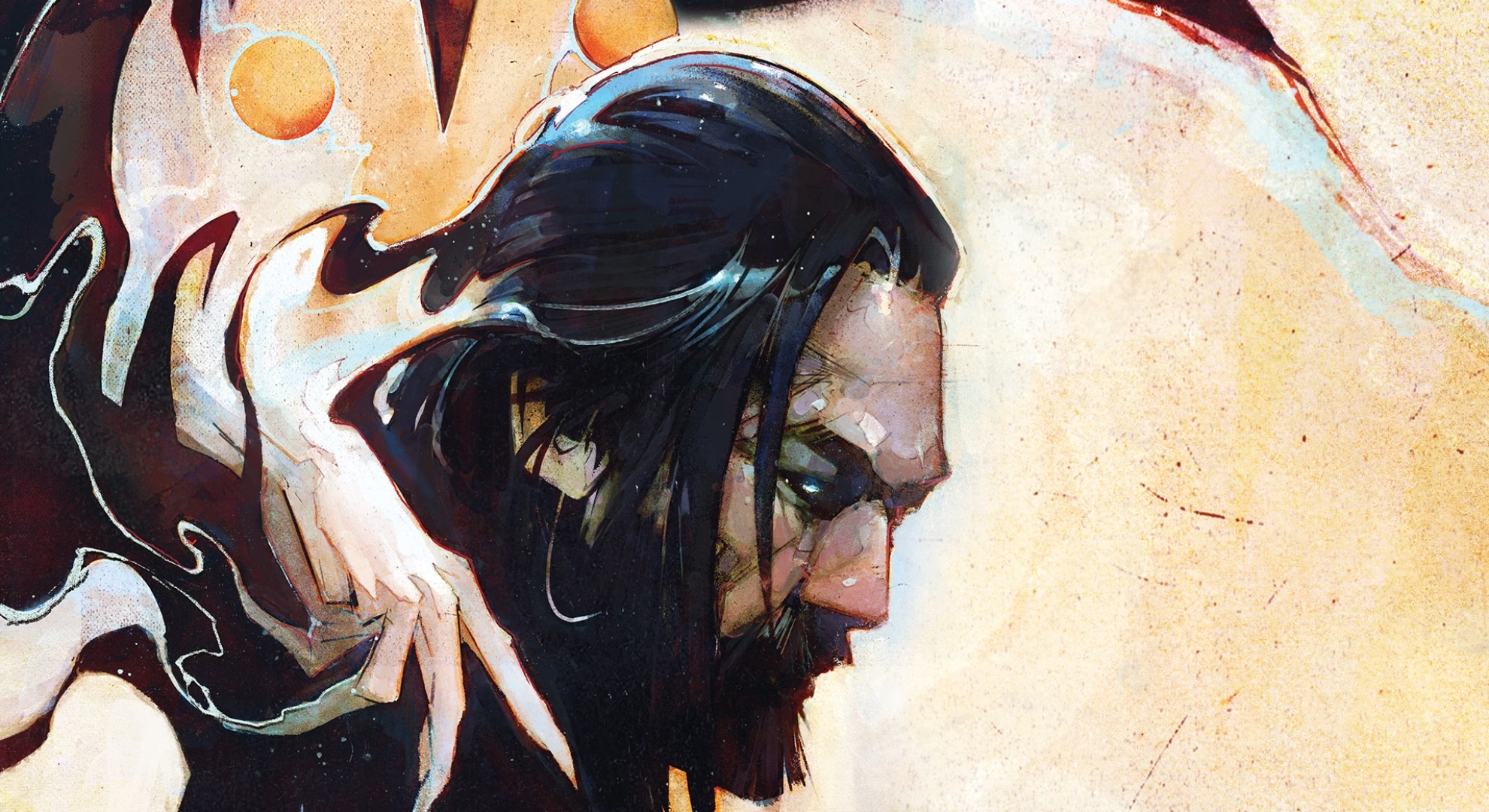


Long before the tengu settled into its modern image as a long-nosed guardian of the mountain ascetics called yamabushi, Japanese Buddhist writing treated the creature as a charge laid against the clergy. Across the late Heian and Kamakura periods it shifted from a malign spirit of indigenous folk belief into a Buddhist manifestation of ma, the personification of the passions that stand between a practitioner and enlightenment, a movement hastened by the spread of Pure Land devotion and its rebirth tales, some of which tengu themselves were said to narrate.1
The ‘Konjaku Monogatarishū,’ the vast twelfth-century compendium of Buddhist didactic tales, belongs to that literature. Its tengu protect no one; they prey on the weak will of monks, and only Buddhist ritual can subdue them. A spirit of this lineage does not attack a body so much as occupy a discipline.
That older, doctrinally loaded tengu is the one Mad Cave Studios has lodged inside its immortal shinobi, and ‘Honor and Curse: Eternal’ #7, on sale in comic shops on October 7th, 2026, puts the arrangement under its greatest strain yet.
Written by Mark London and drawn by Jaime Infante, with colors by Fran Gamboa and letters by Carlos M. Mangual, the issue runs 32 full-color pages at $4.99 USD, approximately COP 16,500, and its digital edition carries ISBN 9781545829752. Editor credit could not be confirmed at the time of publication.
Six Centuries of Stillness
Genshi Sakagura first appeared in February 2019, when ‘Honor and Curse’ became the fourth title Mad Cave launched. That 12-issue series, drawn by Nicolás Salamanca with colors by Tekino, followed an orphan raised among the Iga clan whose promise as a young shinobi is overtaken by the Tengu, a spirit that consumes him and leaves him no memory of what his body has done.
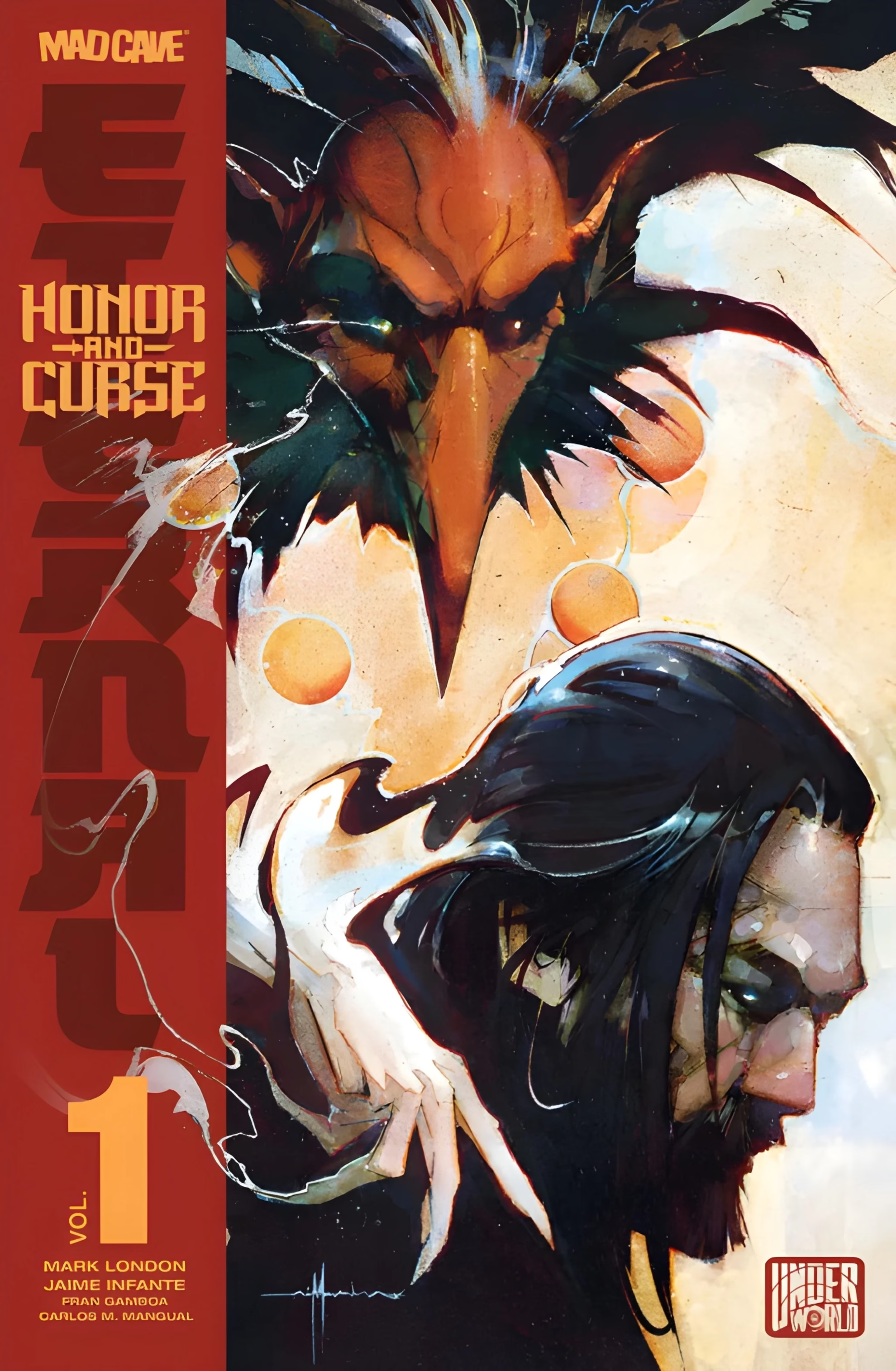
The sequel picked up the story on March 25th, 2026, some 600 years later. Genshi now lives in New York, running a protection company called Mountain Honor Protection that gives him a purpose without requiring him to be present in the world. Speaking in an interview published March 24th, 2026, London described the character’s creed plainly: “the only way to be good is to stop fighting,” because every fight strengthens the spirit the series names Minamoto.
The opening chapters broke that stillness with a terrorist strike, a kidnapping tied to Genshi’s past, and a cult threatening the descendants of the family he swore in the fifteenth century to protect. The second issue, released April 29th, set him against an enhanced soldier; the fourth drew him into a trap laid by the Order of Nine that ended in mass bloodshed and an explosion. The fifth, on August 12th, strapped him to an operating table for a “living autopsy” meant to cut the Tengu out of his soul, and the sixth, on September 9th, let host and spirit carve their way out of captivity together, straight into the neon of Exit City.
The series is serialized, planned at 12 issues, and its first collected edition, ‘Honor and Curse: Eternal’ Vol. 1, followed in July 2026 at 96 pages, with Vol. 2 scheduled for December 15th, 2026. Each issue functions as a single breach of Genshi’s silence, and the four-week gap restores, for the reader, the quiet he spends centuries guarding.
The cost falls on the captivity chapters: the autopsy and the escape form one movement split across two months, and the collected volume should read that movement as the continuous pressure it was written to be, a gain the monthly cliffhanger cannot offer.
Flight Through Exit City
The seventh issue converts the escape into a pursuit. Genshi runs across Exit City toward Mountain Protection while the Tengu refuses to loosen its grip on his soul; allies turn hostile, gunfire fills the streets, and the solicitation promises a betrayal that alters the course of the series. Exit City is itself the setting of a separate London series within Mad Cave’s Underworld shared universe, placing a fifteenth-century oath inside another book’s crime city.
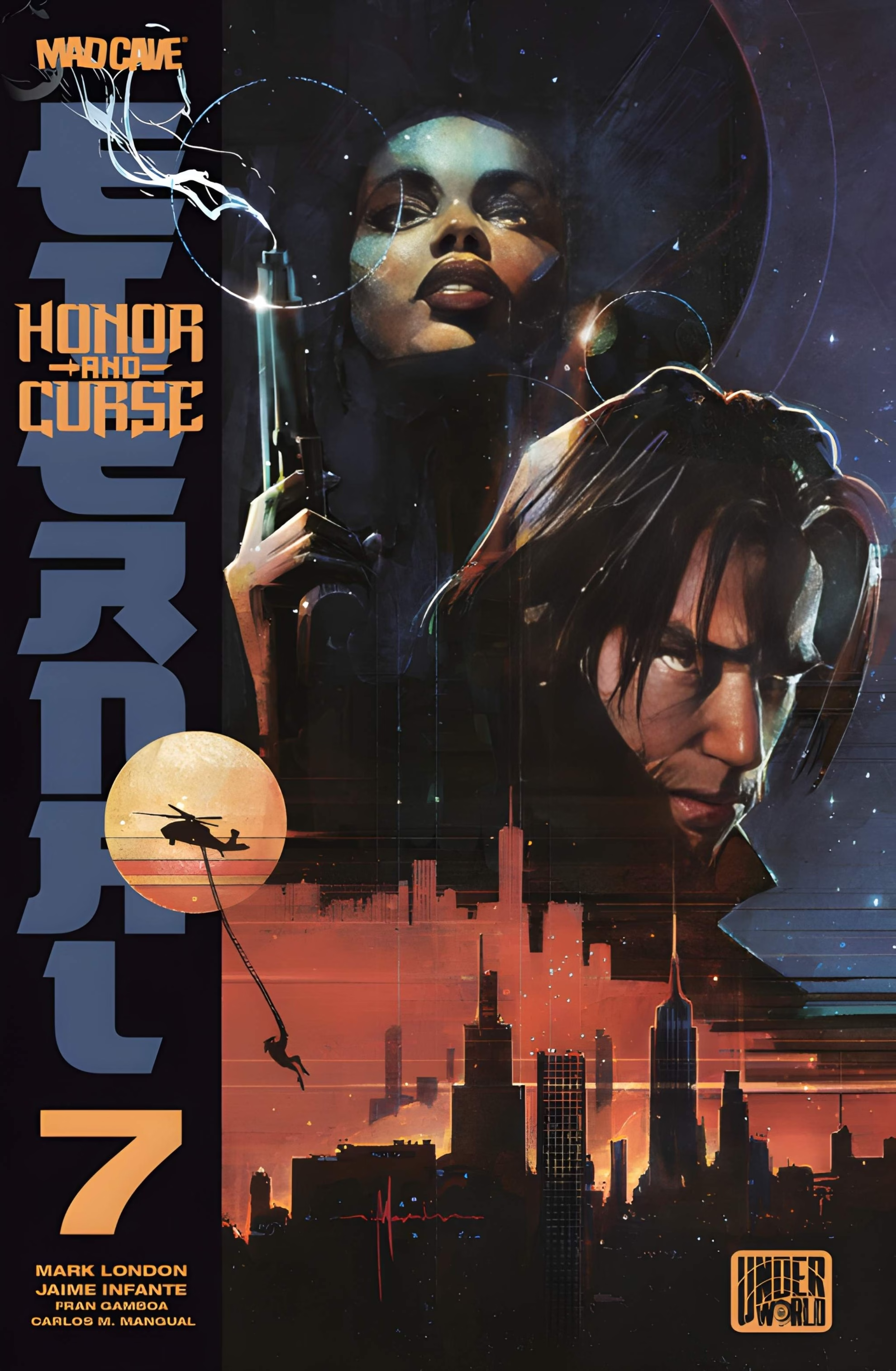
The direction of that flight carries the argument. Genshi is not running away from the monster toward safety; he is running toward the institution he created to keep the monster asleep, and he carries it with him. The sanctuary becomes a place he cannot enter whole, and every obstacle between him and its doors requires the violence that feeds his captor.
A Warden, Not a Benefactor
London has been explicit about that contract. In an interview published December 19th, 2025, he said: “The tengu withholds death like a warden, not a benefactor.” The line locates the horror in custody rather than in power.
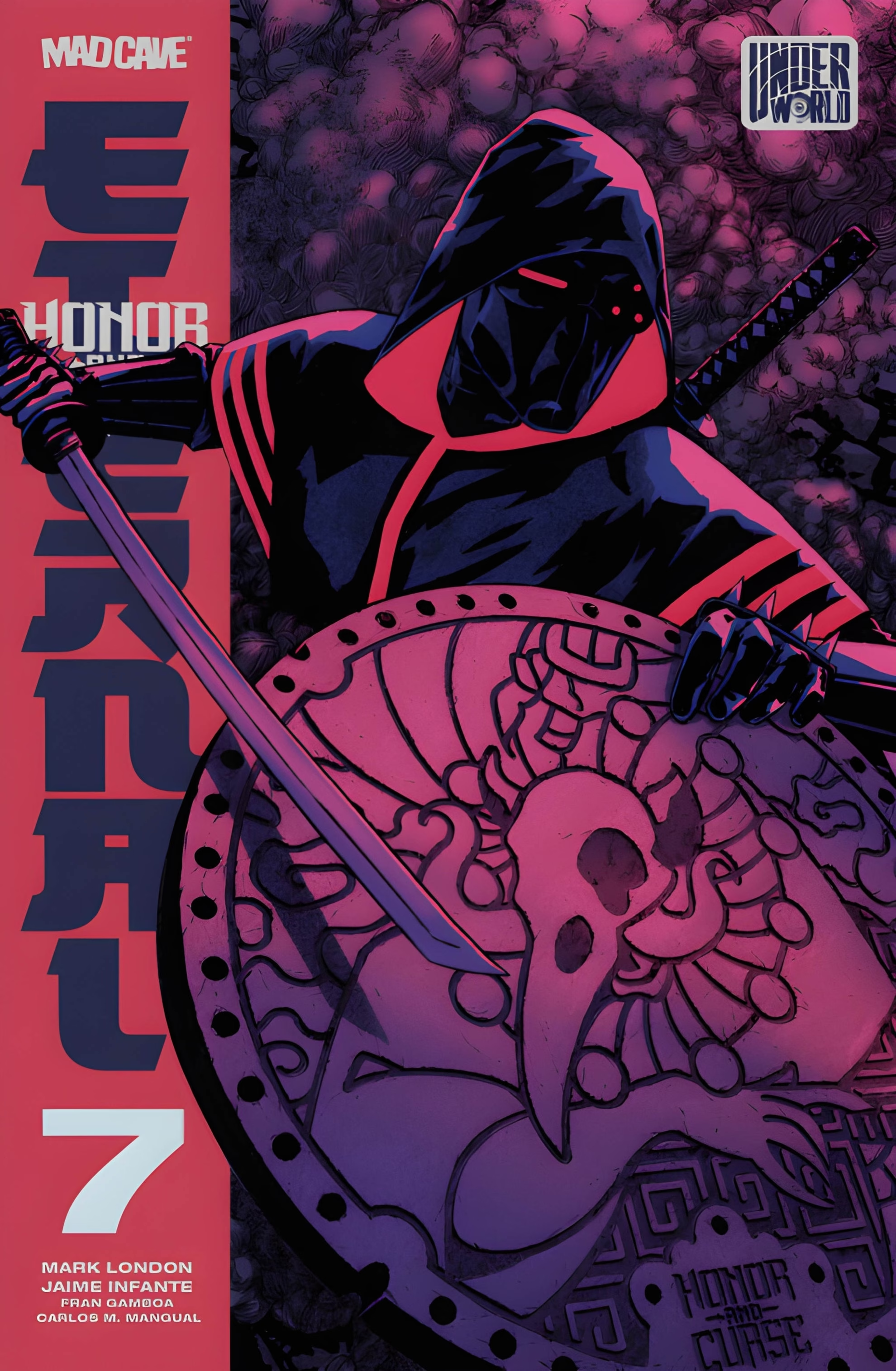
That formulation sits closer to the medieval record than the series’ own marketing vocabulary of a “war spirit” suggests. A Buddhist does not bargain; it obstructs, and the discipline it obstructs is exactly the one Genshi has chosen, a practice of meditation, silence, and the refusal of action. The Tengu grows stronger with each fight because fighting is the passion that practice exists to extinguish. In the seventh issue the logic closes around him: to reach his shelter he must fight, and every fight enlarges the debt.
London has also named Marvel’s Venom as part of the book’s lineage, citing the push and pull between host and entity. The symbiote is a partner whose appetites can be negotiated; the tengu of Buddhist didactic literature is an adversary of spiritual progress, and its victories are counted in lost discipline rather than lost control. When the book leans toward that second model, the curse reads as moral debt. When it leans toward the first, the Tengu shrinks into a power source.
The Surgeon’s Line
Infante, born in Madrid in 1989, studied film and philosophy and spent 10 years illustrating surgical manuals before his graphic novel ‘Dum Dum’ received the Best Comic award at the Barcelona International Comic Fair in 2025. London has said that background decided the assignment: Minamoto’s breakthroughs had to be visceral, and the same artist had to render stillness with equal precision.
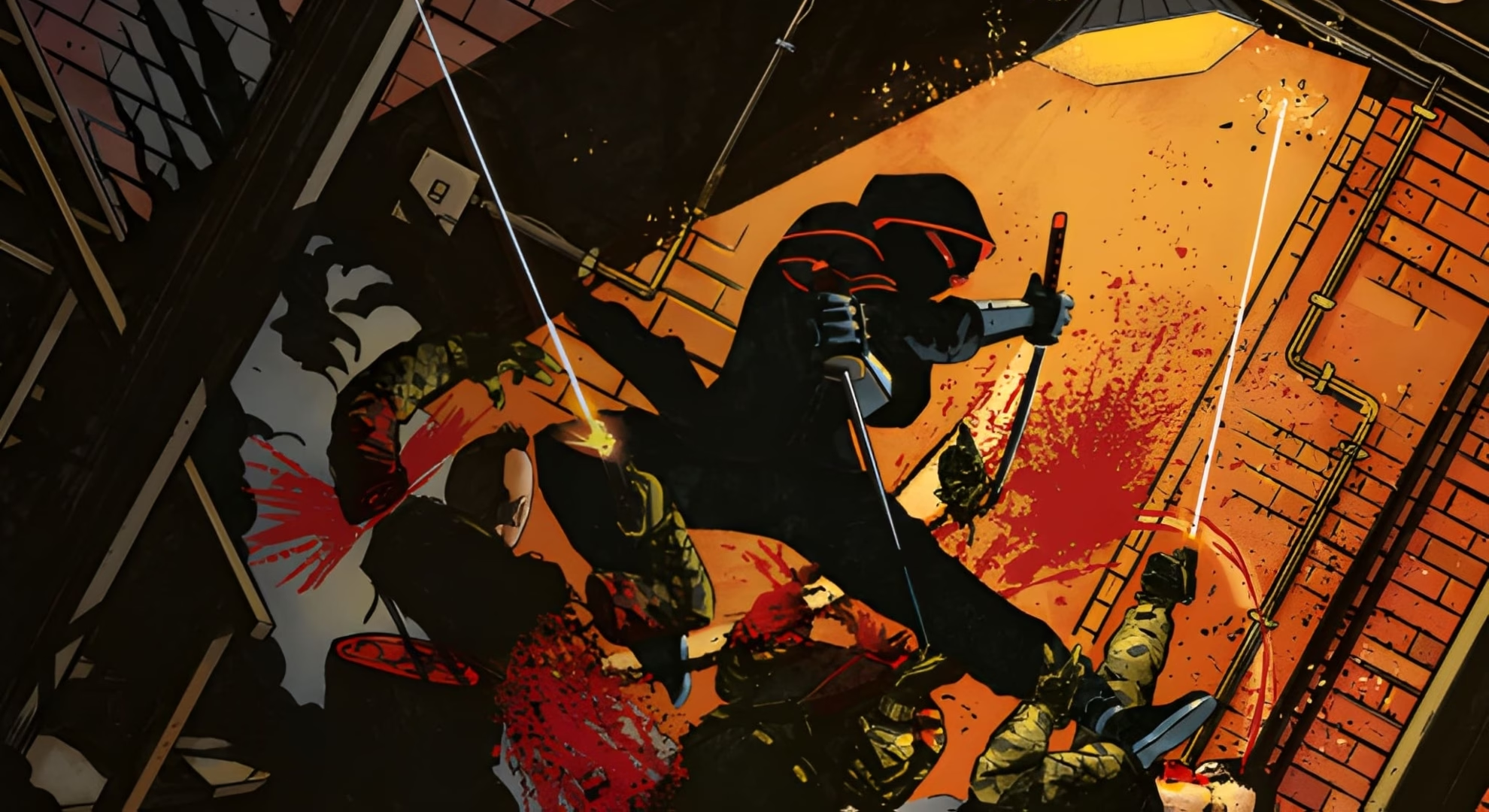
That pairing of extremes is the visual problem the series sets itself. A possession story drawn with clinical exactness places its horror at the contour of the body, at the instant a figure rendered with a surgeon’s respect for tissue stops obeying it. The fifth issue made that method literal, laying Genshi open on a table so a cult could try to excise the spirit, and the sixth inverted it, turning the body the cult failed to open into the instrument of its own release.
The seventh issue demands a different grammar of the page. A chase across a city depends on horizontal momentum, on panels that pass the eye forward without resistance, while the Tengu’s grip works as a counter-force pulling the figure back into itself. Gamboa’s colors carry the other half of that tension, since the neon of Exit City is an artificial light the story must keep distinct from whatever the spirit brings to the surface.
Interior pages from the seventh issue had not been released at the time of publication, so the balance Infante strikes between forward motion and inward collapse remains to be judged.
The Price of Sanctuary
What gives the seventh issue its weight is that Genshi’s refuge and his curse point in the same direction. A company created to protect others, reachable only through the violence the Tengu requires, turns the sanctuary itself into a site of accrual.
Should the promised betrayal come purely from human allies, the issue risks moving its horror from the soul to the plot, and a Tengu reduced to a hostile passenger would forfeit the doctrinal charge that separates this series from its host-and-entity models. Should the betrayal prove to be the spirit working through human hands, the book will have recovered the oldest sense of the creature, not a beast at the door but the passion that turns every protector into a debtor.
If the Tengu of ‘Honor and Curse: Eternal’ draws strength from every fight Genshi wins, can any victory in this series count as protection, or has each rescue become another installment on a debt he can never repay?
References
- Haruko Wakabayashi, ‘The Seven Tengu Scrolls: Evil and the Rhetoric of Legitimacy in Medieval Japanese Buddhism’ (Honolulu: University of Hawai‘i Press, 2012), 3–15. ↩︎


Leave a Reply