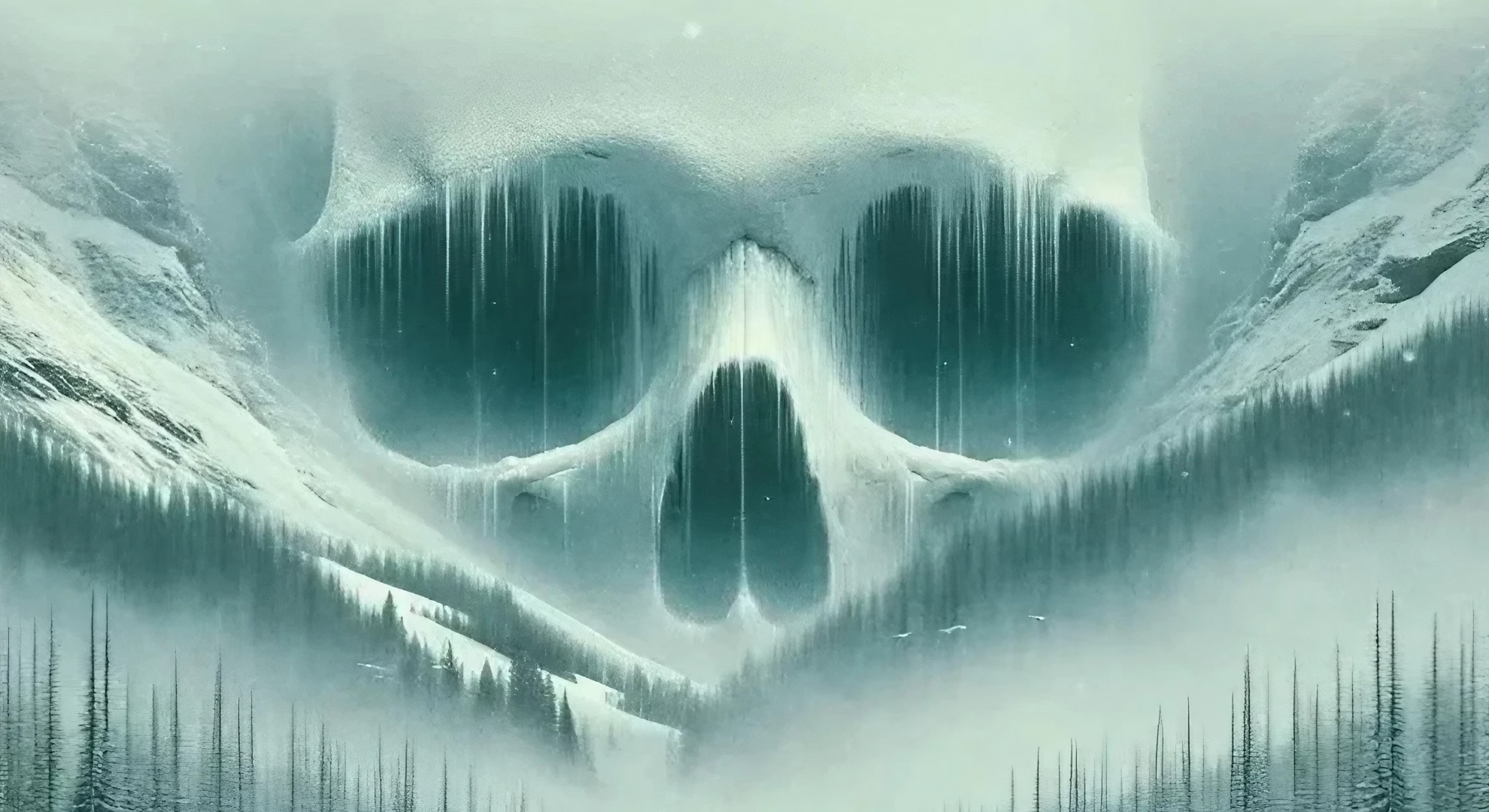


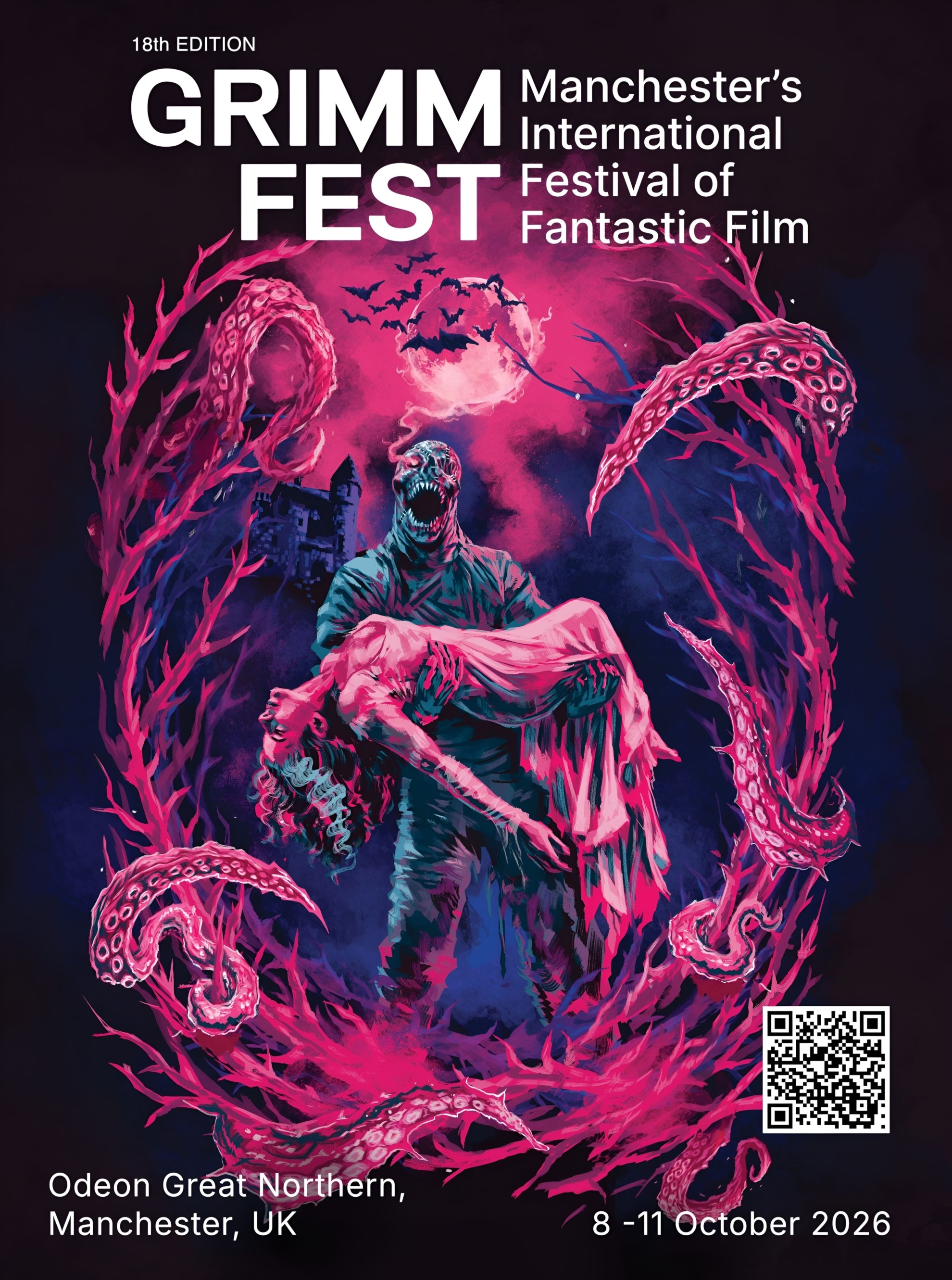
Few studios have their past and their present judged by the same audience within four days, yet that is the shape of this year’s edition of Grimmfest Manchester’s International Festival of Fantastic Film. On the afternoon of October 8th, a more complete cut of Terence Fisher’s 1958 ‘Dracula’ than British or American audiences have previously been shown opens the festival; roughly 30 hours later, ‘Ithaqua,’ the first film Hammer Film Productions has presented since John Gore Studios took control of the company, plays the same cinema.
The festival’s case for itself rests on that second screening, and on the premieres and short films around it, rather than on the revival that precedes it.
A Méliès Member in the North
Grimmfest enters its 18th edition as a competitive member of the Méliès International Festivals Federation, a standing that places every European short in its selection in contention for a Méliès d’argent and forwards the winner to the Méliès d’Or competition at Sitges. From this edition it is also a qualifying festival for the British Independent Film Awards in both shorts and features.
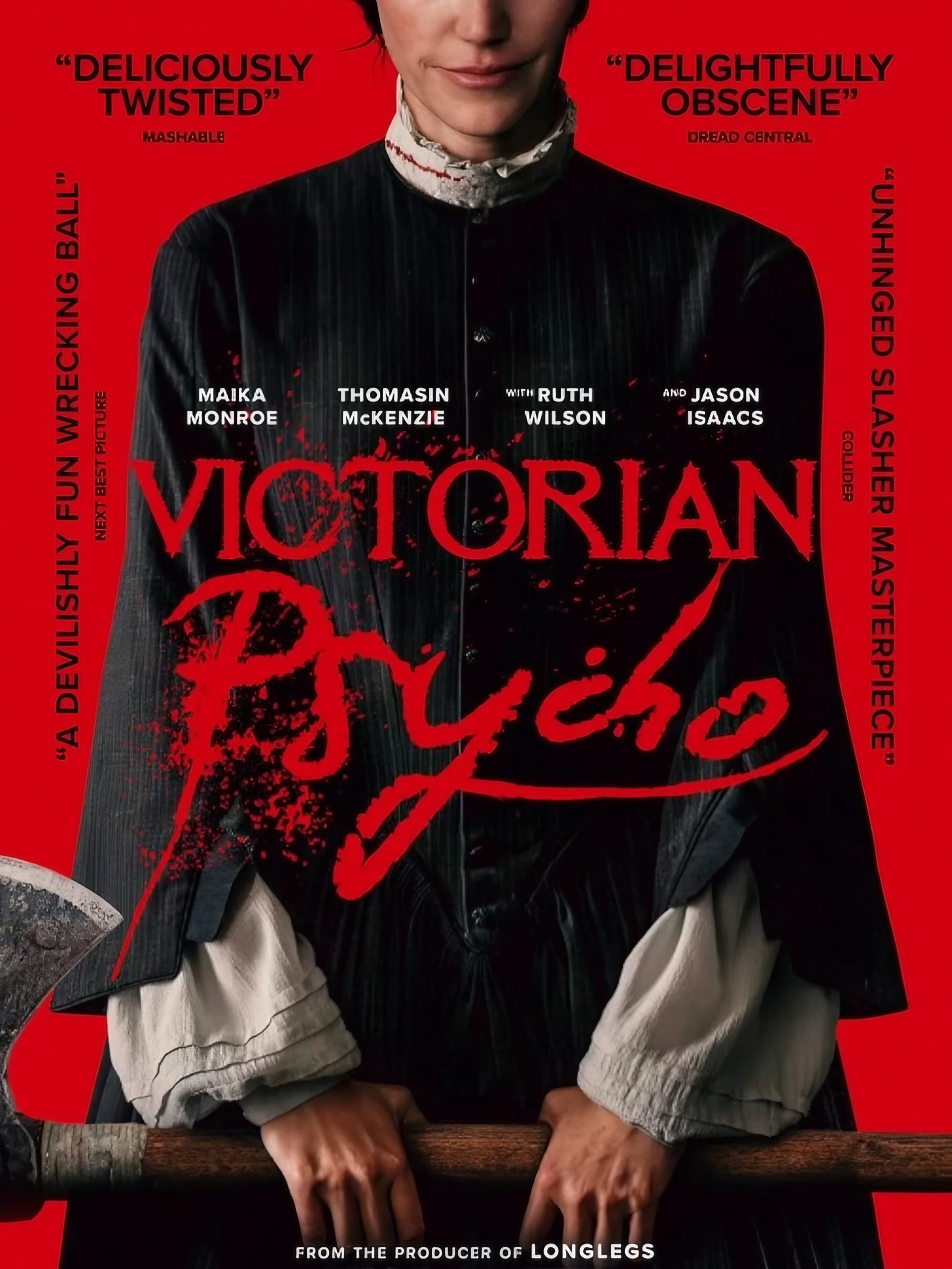
Its features hold a precise place in the circuit’s premiere sequence. Zachary Wigon’s ‘Victorian Psycho’ had its world premiere in the Un Certain Regard section at Cannes in May, and Manchester closes on its UK premiere on October 11th.
‘Ithaqua’ had its world premiere at FrightFest in London on August 29th and its United States premiere at Beyond Fest in Los Angeles on September 27th; Grimmfest receives it as a Northern UK premiere. Dave Boyle’s ‘Never After Dark,’ which this publication followed to the closing night of HorrorFest International in Utah in September, plays the opening night here.
Grimmfest’s function is not discovery in the sense Cannes or FrightFest practice it; it is where films launched in London, Los Angeles, and the south of France meet a Northern English audience, and the 2026 programme uses that position to stage a comparison. Its period-set work is grouped under a strand titled ‘Victorian Vile,’ and the opening restoration was a late addition to that strand rather than its anchor.
From Stoker’s Count to Derleth’s Wind
Hammer’s ‘Dracula’ is the traceable root of post-war British gothic film. David Pirie argued that the Hammer cycle, which began with ‘The Curse of Frankenstein’ in 1957, gave England the one body of popular cinematic myth it could claim as its own, standing in relation to the country as the western stands to the United States, and drawing its material from the nineteenth-century Gothic novel rather than from Hollywood’s monster series.1 Jimmy Sangster’s script reduced Bram Stoker’s 1897 novel to its central confrontation between Christopher Lee and Peter Cushing.
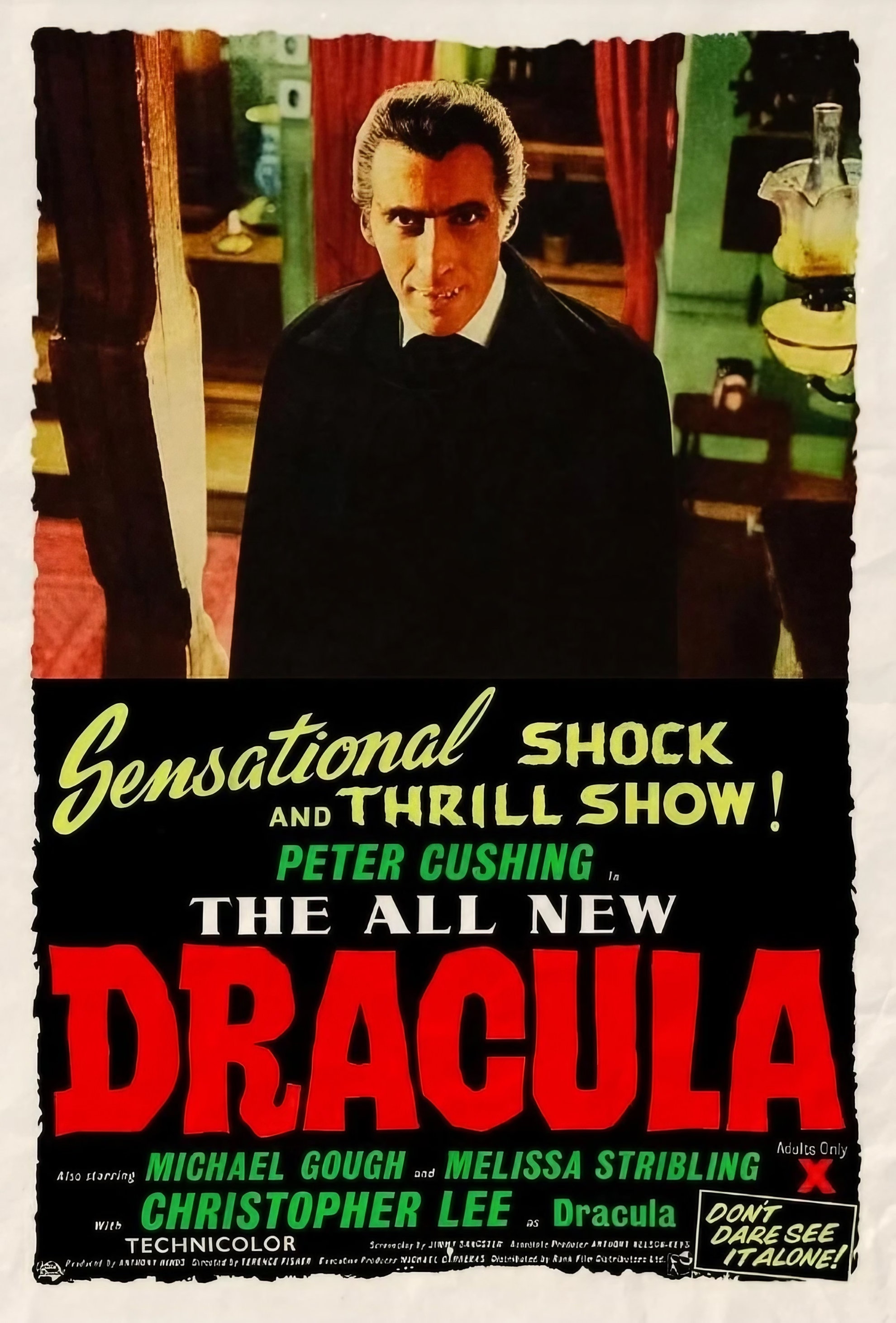
The version opening Grimmfest is a 4K restoration by Hammer and Silver Salt Restoration that reinstates footage from reels of the 1958 Japanese theatrical release; British and American censors had removed that material as too gruesome. The festival screens it ahead of a national cinema release on October 16th. The restoration adds minutes to a known text without altering its place in the lineage.
‘Ithaqua’ alters the lineage’s direction. Hammer’s original production run ended in 1979, and Casey Walker’s film is the first the company has presented under John Gore Studios. Its creature comes from August Derleth, who introduced a wind-borne entity of that name into the circle of writers around H. P. Lovecraft in the 1930s; Walker sets it at a starving fur-trade outpost in nineteenth-century Canada and combines that literary source with First Nations folklore.
Hammer’s first new monster under its present ownership is drawn not from the Victorian canon that supplied Dracula but from the American magazine fiction that developed beside it.
Weirder Tales in Manchester
The Weirder Tales shorts programme, which follows the restoration on October 8th, gathers films that rework scenarios associated with ‘Weird Tales,’ the American pulp magazine founded in 1923. S. T. Joshi’s study of the weird tale locates the form’s distinctive terror in a universe indifferent to human moral order, the premise Lovecraft carried into that magazine’s pages.2
Jacopo Marchini’s adaptation of Lovecraft’s ‘The Terrible Old Man,’ starring Franco Nero, has its world premiere in the programme. Nícolas Lobato and Thiago Tuchu’s ‘Favela Amarela’ transposes Robert W. Chambers’ cycle ‘The King in Yellow’ to present-day Rio de Janeiro, Kevin Ray and Matthew Fisher’s medieval parable ‘The Anchoress’ is an international premiere, and Kelsey Bollig and Matthew DuVall’s ‘The Bones Exist’ sets a creature among gold prospectors in 1850s Alta California.
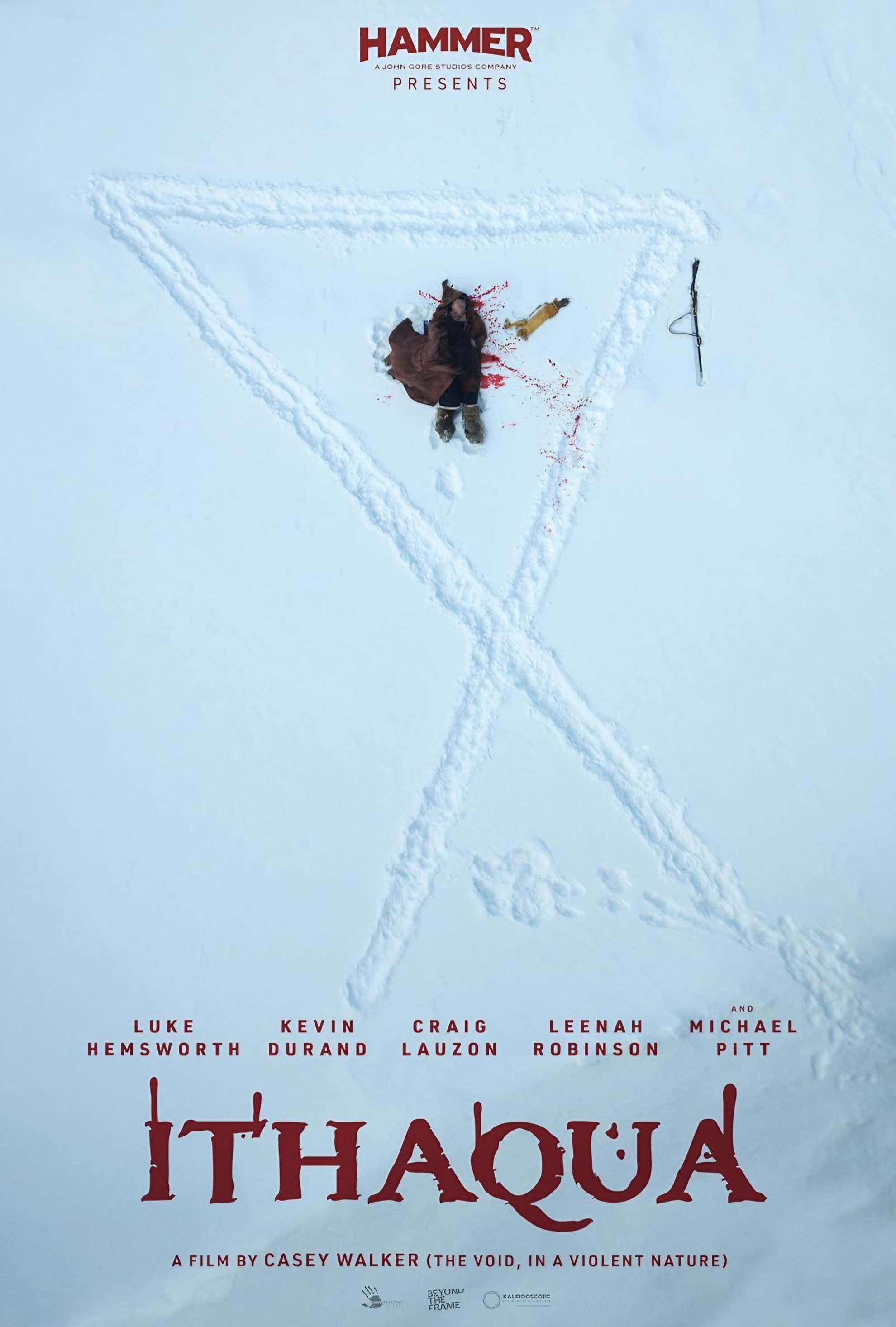
‘The Bones Exist’ and ‘Ithaqua’ share a premise, nineteenth-century frontier men facing a predator in the wilderness, giving the festival short and feature-length versions of the Western Gothic on consecutive days.
The feature strand applies the same method to the Victorian novel. ‘Victorian Psycho,’ adapted by Virginia Feito from her own novel and set at a remote house in 1858, casts Maika Monroe as a governess whose employment coincides with the disappearance of the household staff.
Taratoa Stappard’s ‘Mārama,’ which this publication reviewed on its United States release in April, follows a young Māori woman holding on to her identity in mid-nineteenth-century England, Minos Papas’ ‘Motherwitch’ sets a bereaved painter against the Kalikantzari of Cypriot lore in 1882, and Quarxx’s ‘The Ones Who Grieve’ confines a young woman to an isolated farm under a devout father at the century’s end.
Among the edition’s period titles, only ‘Dracula’ is old; the restoration serves as the reference point against which new nineteenth-century material is measured.
Producers Behind the Programme
Filmmakers Simeon Halligan and Rachel Richardson-Jones founded the festival in 2009 with programmer Steve Balshaw, then manager of the Salford Film Festival, beginning with a single Halloween night. The pair had set up the Salford production company Not A Number in 2008, and the first Grimmfest grew out of an event to promote their debut feature, ‘Splintered’ (2010).
Halligan, a Royal College of Art graduate who trained as an art director and production designer, went on to direct ‘White Settlers’ (2014) and ‘Habit’ (2017), both produced by Richardson-Jones. The festival now operates its own production arm, Grimmfest Films, and opened its 2025 edition with the world premiere of the pair’s ‘Past Life.’
A festival organized by working producers who needed a screen for their own film has kept a producer’s view of the circuit: its selection favors UK and Northern premieres for titles that need a regional audience, and this year it opens in partnership with a production company whose archive and current slate both appear on its schedule.
Four Days on Deansgate
The 18th edition runs October 8th through 11th, 2026, at the Odeon Great Northern, 253 Deansgate, Manchester, United Kingdom, with some late screenings on a second screen.
Every pass tier had sold out before opening: the Thursday gala pass at £26.99 (approx. COP 117,000), the Friday-to-Sunday weekend pass at £91.99 (approx. COP 399,000) and its concession version at £81.99 (approx. COP 356,000), and single-day passes at £33.99 to £36.99 (approx. COP 148,000 to 161,000).
Individual screening tickets cost £7.99 (approx. COP 35,000), with the opening restoration at £8.50 (approx. COP 37,000); single tickets for ‘The Fog,’ priced at £12.99 (approx. COP 56,000) and attended by Adrienne Barbeau, this year’s Lifetime Achievement Award recipient, have sold out. Peso amounts use the October 6th, 2026, rate of approximately COP 4,341 to the pound.
Submissions for this edition, accepted through FilmFreeway from November 1st, 2025, are closed; the festival takes feature and short submissions through the same platform for most of the year.
A Studio Judged in Manchester
A restored ‘Dracula’ confirms that Hammer’s archive still holds unseen material; a screening of ‘Ithaqua’ the following evening asks an audience to judge if the company can still originate work.
Grimmfest’s contribution is the sequence: it places the Victorian vampire inside a strand otherwise filled with new period films, follows it with a shorts programme that reworks the pulp tradition from which ‘Ithaqua’ emerged, and closes on a Cannes-premiered satire of the Victorian novel.
The 18th edition argues that British gothic cinema survives outside London by being reissued and by being remade, and that a regional festival is where those two processes can be compared on the same screen.
Where did you first see Terence Fisher’s ‘Dracula,’ on a television broadcast, a home-video edition, or a repertory print, and which scene would you most want to watch again now that footage from the 1958 Japanese reels has been restored?
References
- David Pirie, ‘A New Heritage of Horror: The English Gothic Cinema’ (London: I.B. Tauris, 2008). ↩︎
- S. T. Joshi, ‘The Weird Tale’ (Austin: University of Texas Press, 1990). ↩︎
Leave a Reply