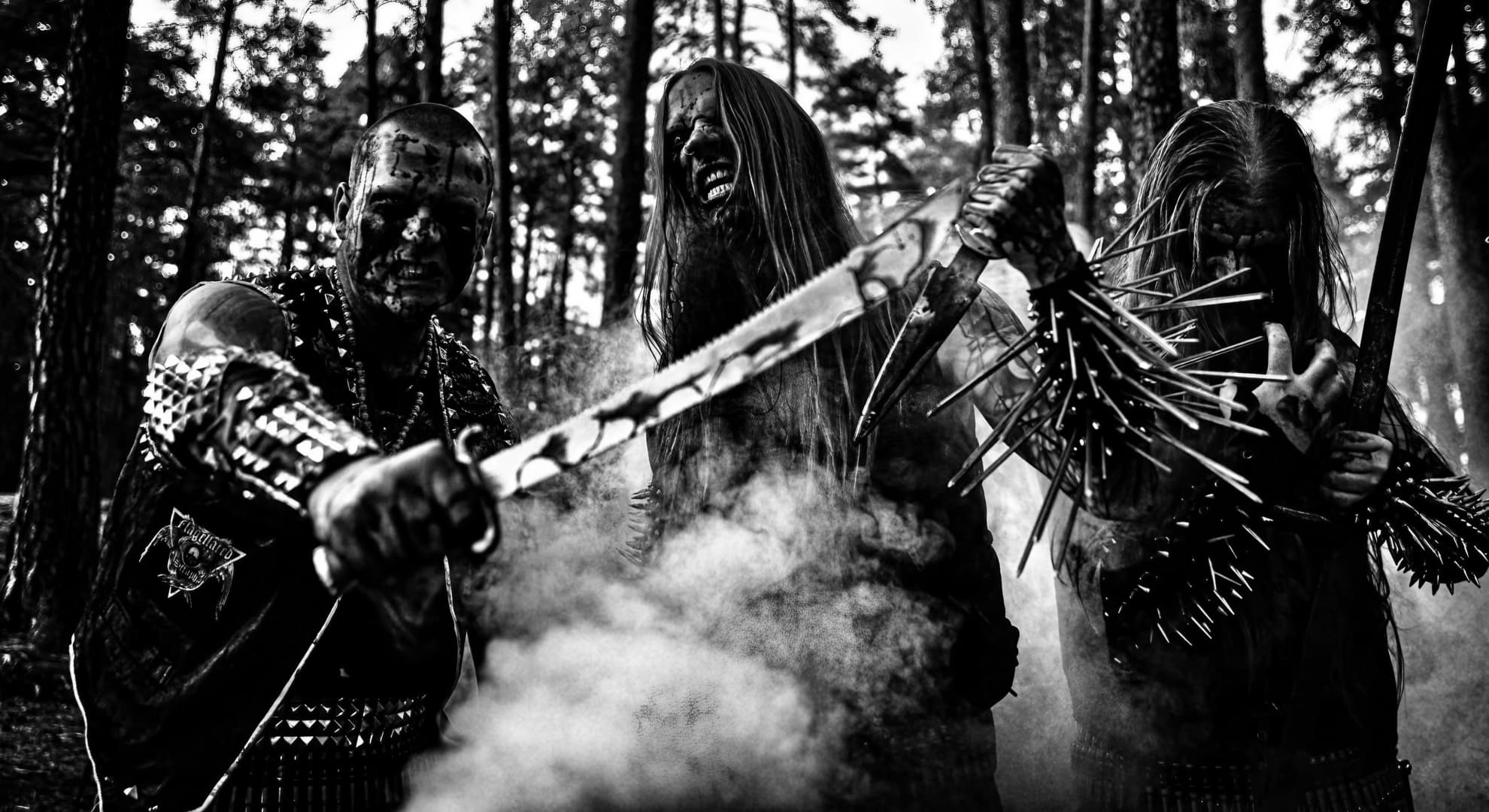


Long before amplifiers existed, soldiers of the early Christian church were told they fought an enemy without flesh: rulers, authorities, and forces arrayed in an unseen realm rather than an army to be met by contact. Black-thrash metal borrowed this vocabulary of invisible combat almost from its inception, dressing the same old antagonism in corpse paint and downtuned violence. A new Swedish quartet is now testing how much weight that inherited grammar can still carry.
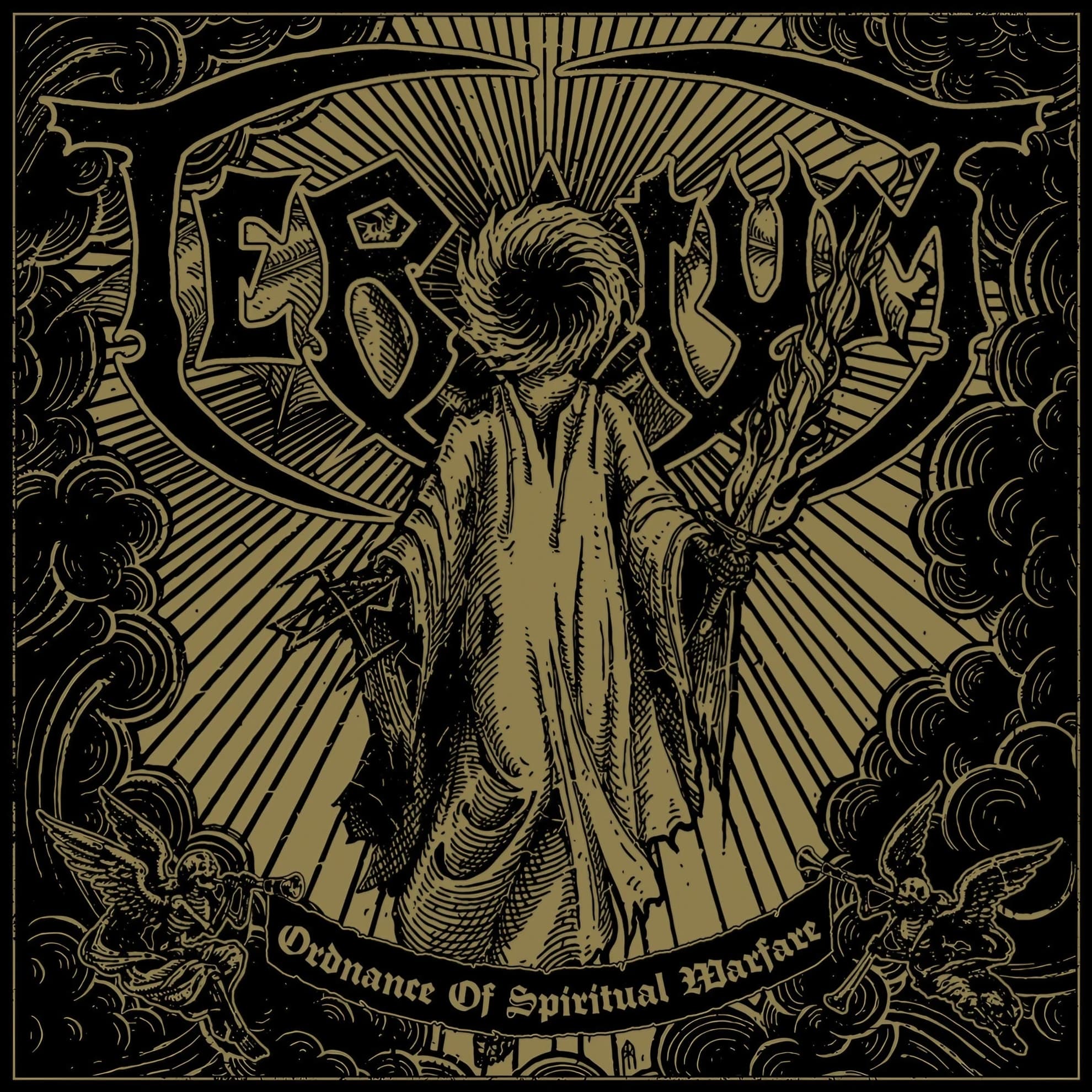
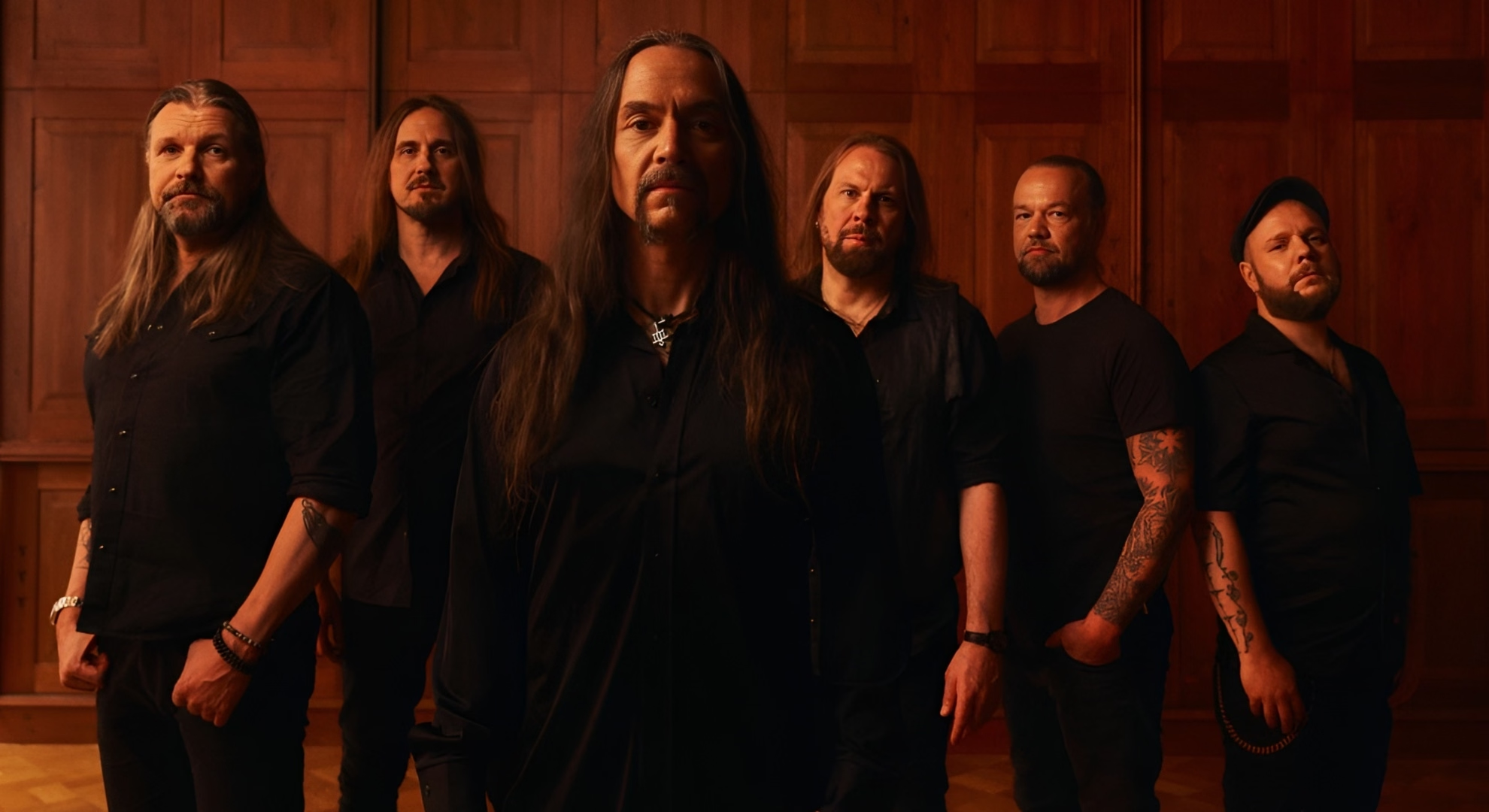
Teratum release their debut EP, ‘Ordnance of Spiritual Warfare,’ on August 21 through the German label Dying Victims Productions. Four tracks and 21 minutes long, the record stands as the first widely available recording from a band assembled in 2024 from the wreckage of another Swedish black-thrash outfit, Beastiality, whose own 13-year run had just come to a close.
Rising From the Ash
Beastiality formed in Gothenburg in 2011, built around a guitarist and a bassist who later relocated to Stockholm in search of a scene their home city could no longer sustain. Their debut EP, ‘Worshippers of Unearthly Perversions,’ took two years longer than planned to reach listeners after the pair fired their original vocalist mid-recording and rebuilt the album’s vocal tracks from scratch; it finally appeared in 2017.
A second EP, ‘Sacrificial Chants,’ followed through the Irish label Invictus Productions, sharpening the band’s approach toward something closer to death metal’s outright aggression without abandoning the genre’s blackened core. 13 years after their founding, Beastiality announced their dissolution in 2024, ending the project with a brief public acknowledgment that the run had reached its close.
Teratum emerged from that closure within the same year. A two-song promotional tape followed in 2025, pressed in a run small enough that few outside Sweden’s own scene encountered it directly. ‘Ordnance of Spiritual Warfare’ now carries two re-recorded versions of those songs alongside two new compositions, giving the new band its first release built for an audience beyond that limited circulation.
A War Older Than the Amps
The record’s title borrows directly from a specific doctrinal lineage rather than a vague sense of menace. Paul’s letter to the Ephesians framed the Christian struggle as one waged against unseen powers rather than human opponents, a formulation that later Christian communities spent centuries elaborating into formal practice.1
By the high medieval period, the Catholic Church had developed increasingly systematic procedures for confronting what it identified as demonic affliction, with exorcism functioning simultaneously as pastoral care and as a public demonstration of ecclesiastical authority over the boundary between the human and the infernal.2
The rite was never merely private; it staged a visible contest whose outcome was meant to reassure an entire community that the unseen war had been won on their behalf.
Extreme metal’s first wave treated this inherited cosmology as raw material rather than doctrine. Bands working out of Britain and Scandinavia in the early eighties reached for exorcism, damnation, and cosmic combat as ready-made symbolic material, repurposing centuries of ecclesiastical vocabulary toward openly adversarial ends.3
Teratum’s four songs continue that project without pretending toward literal belief on either side of the equation: the record does not stage a devotional argument so much as it borrows the shape of one, using the language of spiritual siege to describe a fictive unmaking of the world rather than any doctrinal claim about the world as it stands.
Two Songs Already Aired
Two advance singles give the clearest available evidence of where ‘Ordnance of Spiritual Warfare’ is headed. ‘Leviathan Rise’ surfaced first, paired with an official video built around explicitly occult imagery. ‘Total Void’ followed roughly a month later as an audio-only premiere rather than a video, and stands among the EP’s four songs as the one most clearly organized around the record’s central conceit: lyrics that describe flesh coming unbound, the load-bearing structures of reality giving way, and a mounting derangement that ends in conflagration.
The two songs suggest a band less interested in straightforward blasphemy than in staging collapse itself as the subject. Where Beastiality’s own catalogue leaned toward directly confrontational aggression, these two songs point toward something more theatrical and more explicitly eschatological, closer to a small apocalypse narrated from inside the event than to a simple statement of antagonism.
Extreme metal’s use of exactly this kind of defiled, boundary-violating imagery has long served musicians as a way of dramatizing categories under pressure, staging purity and its collapse as an aesthetic experience rather than a moral instruction.4
Teratum’s two available songs position the record inside that tradition, though the two unheard tracks that complete the EP leave the full shape of the argument still to be tested against tape.
The producer’s identity and the studio where the EP was recorded had not been confirmed through official channels at the time of publication, leaving one part of the record’s production lineage undocumented ahead of release.
Vinyl Before Anything Else
Dying Victims Productions is releasing ‘Ordnance of Spiritual Warfare’ as a physical object first. The regular vinyl edition comes pressed on black wax with an insert, poster, sticker, postcard, and download code; a special gold vinyl pressing adds a patch to that same set.
The compact disc ships in a jewel case with its own sticker and an obi strip, the kind of collector-oriented packaging detail more common to Japanese pressings than European ones. Cover artwork throughout comes from the artist known as Mørkestøl. Digital availability accompanies the release through the label’s own Bandcamp page, secondary to the physical formats the label has built its identity around.
That physical-first approach has not stopped the record’s advance material from circulating well beyond Sweden’s own borders. Within a span of roughly five weeks, both singles found separate homes in the German music press, an Austrian webzine, a Polish black metal blog, and an American web portal built specifically around extreme metal premieres, an unusually wide spread of national outlets for a band without a prior full-length to its name.
That footprint says less about any single scene’s reception of the record than about how thoroughly small, specialist channels of black-thrash distribution now cross borders as a matter of course, carrying a four-song debut EP into several countries’ specialist press within weeks of its first advance material becoming public.
The First Salvo, Not the Last
‘Ordnance of Spiritual Warfare’ functions as a hinge rather than a destination: the closing chapter of one Swedish black-thrash project folded directly into the opening one of another, with barely a demo tape separating the two. The record’s borrowed vocabulary of siege and unseen combat gives Teratum a frame wide enough to hold both the genre’s oldest habits and whatever direction its two still-unheard songs might yet reveal.
Nothing about the record asks to be taken as devotional; its power, if the two available songs are any guide, rests instead in how convincingly a fictional collapse can be staged using language originally built to describe a real one, carried this time by a band assembled from another one’s ashes and already circulating in several countries’ specialist press ahead of the record’s own release date.
When a genre built on borrowed scripture stages its combat one more time, does the vocabulary still carry any of its original weight, or has repetition worn it down to pure aesthetic?
References
- Beilby, James K., and Paul Rhodes Eddy, eds. ‘Understanding Spiritual Warfare: Four Views. Grand Rapids,’ MI: Baker Academic, 2012. ↩︎
- Caciola, Nancy. ‘Discerning Spirits: Divine and Demonic Possession in the Middle Ages.’ Ithaca, NY: Cornell University Press, 2003. ↩︎
- Granholm, Kennet. ‘Sons of Northern Darkness: Heathen Influences in Black Metal and Neofolk Music.’ Numen 58, no. 4 (2011). ↩︎
- Unger, Matthew P. ‘Sound, Symbol, Sociality: The Aesthetic Experience of Extreme Metal Music.’ London: Palgrave Pivot, 2016. ↩︎

Leave a Reply