

In the third part of ‘Thus Spoke Zarathustra,’ Friedrich Nietzsche’s prophet names his oldest enemy: not a god, not a rival, but a demon of inherited weight that keeps a person tethered to convention long after conviction has passed. Nietzsche called this figure the spirit of gravity, and he gave it no body and no voice of its own; it survives only in the habits, laws, and moral certainties a person carries without examining them.
Overcoming that demon required something Nietzsche associated with dance and laughter rather than doctrine, a lightness earned by refusing any single system of value permanently.
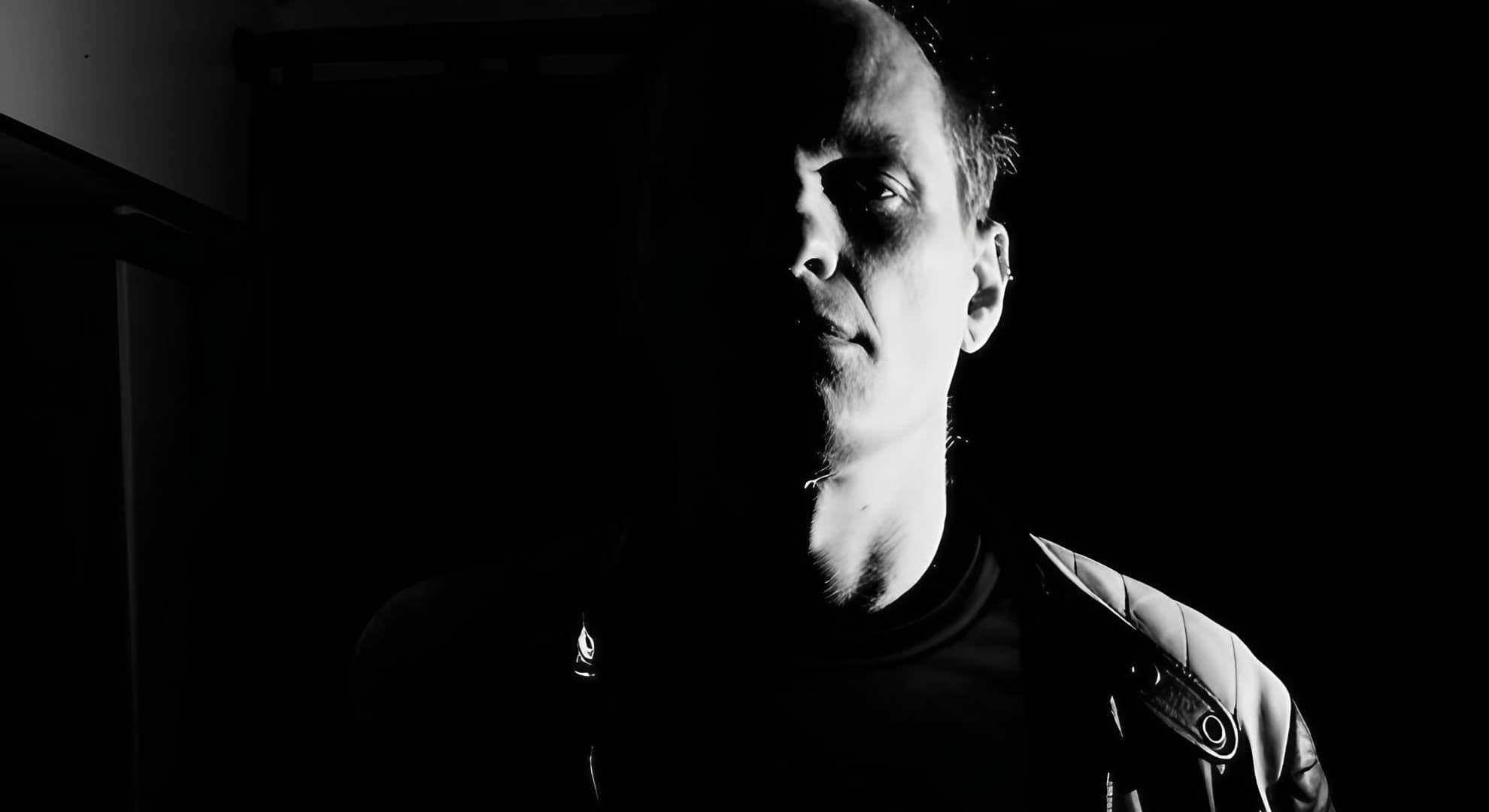
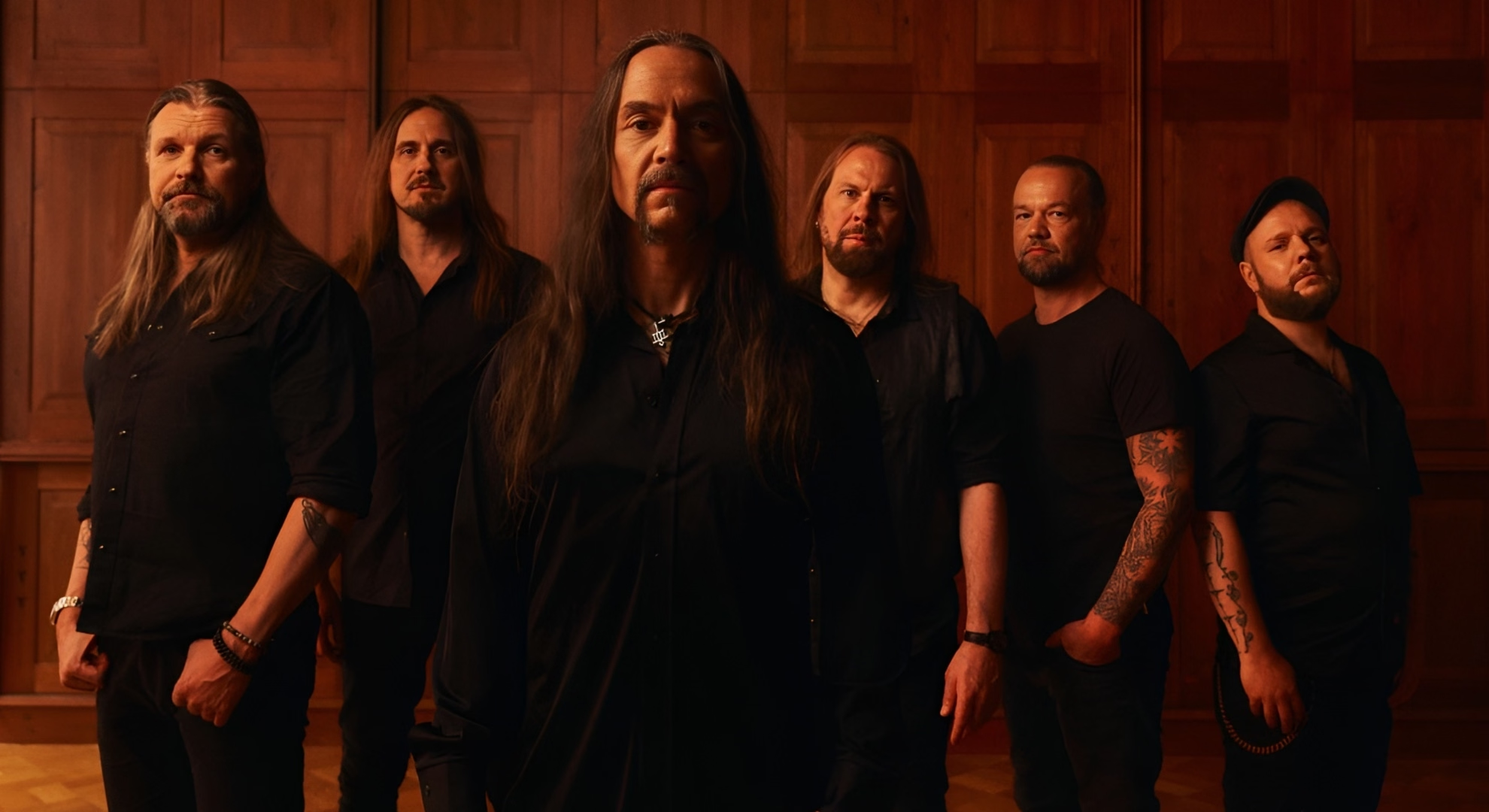
A dissonant black metal record tracked in a rented room in Ho Chi Minh City and mixed three thousand miles away in the hills of Pennsylvania takes that image as its structural premise. Tyler Henthorn’s one-man project Agonanist releases its second album, ‘The Spirit of Gravity,’ on August 28th, 2026, through the Oakland label Transylvanian Recordings, seven tracks split across three separate tuning systems that refuse to resolve into any single inherited framework, a compositional method Henthorn treats as the direct musical equivalent of the refusal Nietzsche’s prophet demanded.
Zoroaster’s Long Shadow
Nietzsche’s prophet borrows his name from a figure whose historicity is itself debated by scholars, situated somewhere between documented Persian religious reform and inherited tradition older than nineteenth-century Europe.
Zarathustra, more commonly known in the West by the Greek rendering Zoroaster, is traditionally credited as the founder of Zoroastrianism, an ancient Persian faith built on a stark moral dualism between the forces of light, embodied in Ahura Mazda, and the forces of darkness, embodied in Angra Mainyu.1
Zoroastrian teaching cast the world as a battlefield between these two poles, one in which every human choice carried consequence in that struggle, an ethical framework that would echo forward into Judaism, Christianity, and Islam.
Nietzsche’s Zarathustra shares almost nothing with that theology beyond the name. Scholarship on the borrowing describes Nietzsche’s choice as a deliberate inversion rather than a homage: by placing his own anti-dualist philosophy in the mouth of history’s most famous embodiment of moral dualism, Nietzsche transforms the historical moralist into what one scholar calls the necessary precursor to the immoralist, using the borrowed authority of an ancient reformer to authorize the destruction of the very system that reformer built.2
The gesture is deliberately preposterous, a chronology inverted so that the figure who divided good from evil becomes the mouthpiece for a philosophy that refuses the division outright.
The album’s title lifts that same demonic figure, the spirit of gravity, directly from the text, and Henthorn’s method mirrors the inversion at the level of pitch rather than doctrine. Where Zoroaster’s dualism offered a fixed and permanent moral order, and Nietzsche’s answer was to dissolve any single permanent framework, Henthorn’s music refuses to settle into any one tuning system long enough for it to calcify into a rule.
The project’s own name carries a second, quieter literary debt: Henthorn has said Agonanist derives from a short story by the Polish writer Stanisław Lem, though he has asked that the specific source stay unexplained in press copy, left instead for the curious to track down on their own, a request this coverage respects.
Instruments Made by Hand
‘The Spirit of Gravity’ picks up a thread Henthorn set down six years ago on Agonanist’s debut, ‘The Cynicism of Solitude,’ also released through Transylvanian Recordings.
That first record took shape while Henthorn lived nomadically between London and Ho Chi Minh City, and its most striking passages came from instruments he made rather than bought: guitars hand-fretted with a jeweler’s saw to accommodate intervals outside the standard twelve-tone grid, and an improvised zither assembled from fencing wire and piano tuning pegs, played with a bow. Field recordings captured in Vietnam threaded through the album, anchoring its abstraction in a specific, audible place.
The move away from twelve equal divisions of the octave, the tuning system nearly all Western popular music shares, situates Henthorn inside a much older and broader tradition than extreme metal alone.
Equal-division tuning systems finer than twelve steps per octave have circulated through Western composition since at least the sixteenth century, long before any electric instrument existed to house them, and the choice to divide the octave into a given number of steps has always been a choice about which harmonic relationships a composer wants available and which the standard grid forecloses.3
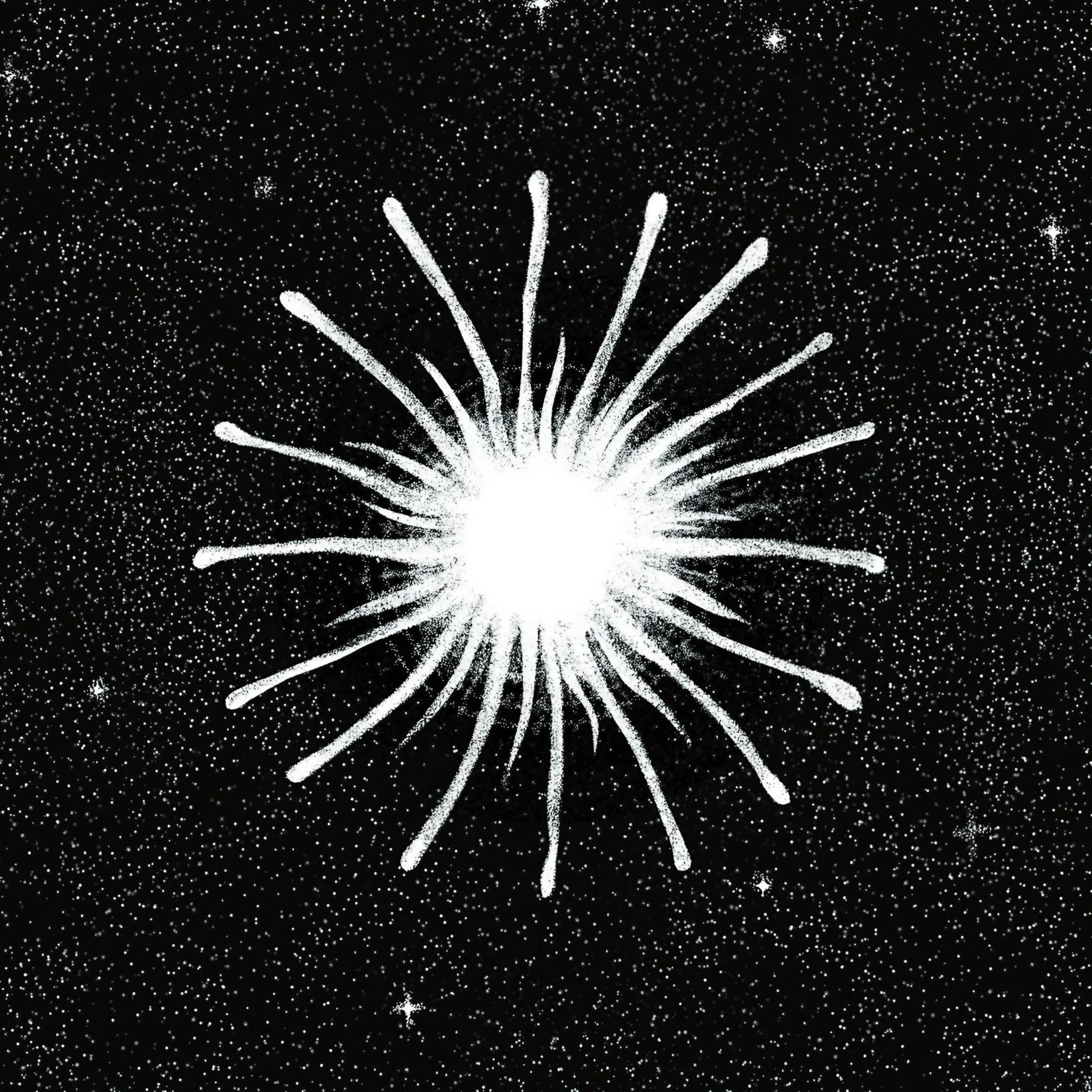
‘The Spirit of Gravity’ commits to that choice more completely than the debut did: side one splits its material between 17 and 12 equal divisions of the octave, and side two commits fully to 22, a structural decision that denies the record a single stable harmonic home across its own runtime.
A Credit Without a Producer
No individual has been credited as producer on ‘The Spirit of Gravity.’ Henthorn tracked the album himself in Ho Chi Minh City, and the release’s official credits name no separate producing role, a self-directed process consistent with how he made the debut.
Mixing and mastering went instead to Colin Marston, the New York-based musician and engineer whose own studio, Menegroth, spent nearly two decades absorbing extreme metal’s most structurally demanding recordings before relocating out of Queens.
Marston’s own credits include mixing his band Krallice’s dense, self-titled album, a session he has described as favoring a pure, controlled sound over the murkier, more corroded production older black metal favored, a documented preference that positions ‘The Spirit of Gravity’ toward clarity rather than concealment, though the finished mix remains unheard in full at the time of publication.
Two additional guests round out the record’s credited personnel: Andrew Lee, known for his work in the death metal band Ripped to Shreds, contributes vocals, and Kevin Paradis, a drummer whose credits include the French bands Benighted and Svart Crown, handles the album’s percussion.
Neither guest has previously appeared on an Agonanist release, a detail that separates ‘The Spirit of Gravity’ from the more solitary process behind the debut even as Henthorn remains the project’s sole constant.
Effacement and the Gateway
Two advance singles offer confirmed, audible evidence of where the album is heading. ‘Effacement,’ released June 18th, 2026, opens at full speed, an unstable, screamed vocal line riding atop a riff that resists settling into a single tonal center; roughly halfway through, Henthorn shifts into brighter, more open guitar textures that pull the track out of its own chaos rather than resolving it conventionally. The tonal instability is the point: with no twelve-tone harmonic center to anchor against, the song’s midpoint turn functions less as release than as a second kind of disorientation.
‘The Gateway,’ issued July 24th, 2026, moves at a different register entirely, favoring an abstracted, hovering quality that Henthorn has described as concerned with “death and infinity.”
The pairing of the two singles argues for a record that will move between velocity and suspension rather than commit to one mode across its full seven tracks, though whether that balance holds across ‘Cry of Cages,’ ‘Silent Absent,’ ‘For Mia,’ ‘Disruption and Decay,’ and ‘Collapse’ remains, at the time of publication, something only the complete album can answer.
Where Dissonance Became the Point
Dissonance has occupied an unusual position inside extreme metal’s own aesthetic history. Where mainstream popular music generally treats a dissonant chord as a fleeting point of tension resolved a beat later, black metal’s harshest recordings elevated dissonance itself into a sustained, load-bearing feature rather than a passing effect, a reversal that scholarship on the genre’s early nineteen-nineties turn traces back to a specific technical accident: bands without access to professional studios recorded on equipment too limited to produce a conventionally clean sound, and what began as a constraint calcified into a deliberate aesthetic once the results proved more unsettling than the polished death metal records they were reacting against.4
Henthorn’s microtonal approach extends that same reversal into pitch itself rather than production quality, treating tonal instability as the compositional center of the record rather than an occasional shock.
Transylvanian Recordings frames ‘The Spirit of Gravity’ for fans of Xasthur, Leviathan, and Wormlust, three acts that share little beyond a specific corner of raw, home-recorded American black metal centered on isolation rather than collective ritual. That comparison places Henthorn inside a domestic lineage even though his own record took shape abroad, in Vietnam, and was mixed on the opposite coast from where it was written.
The audience most likely to seek this record out runs through the same channel: Transylvanian Recordings sells the album directly from its own Bandcamp page rather than through a larger distributor, a model that has historically rewarded people willing to search out a small Oakland label’s catalog rather than encounter it by chance.
The Weight Still to Be Tested
What ‘The Spirit of Gravity’ proves about its own premise, whether a record can genuinely refuse to settle into any single inherited system across a full seven-track runtime, remains a question only the complete album can answer once it is heard in sequence rather than assembled from two advance singles and a set of confirmed credits.
What is already established is the seriousness of the attempt: a project six years in the making, tracked without a formal producer in a self-directed setup in Vietnam, mixed by an engineer whose own catalog treats structural complexity as a feature rather than a flaw, and pressed onto vinyl by a label willing to sell it directly to whoever goes looking.
The record borrows its title from a philosopher who used a Persian prophet’s name to argue against the very moral certainty that prophet founded, and it borrows that argument’s shape more than its content, applying the same refusal to twelve-tone certainty that Nietzsche applied to moral certainty.
For a project premised on the idea that no single tuning, and no single inherited framework, should stand unquestioned, what would it mean for a version of ‘The Spirit of Gravity’ to settle into comfortable listening rather than sustained disorientation, and is that settling something this record is even trying to offer?
References
- Mary Boyce, ‘Zoroastrians: Their Religious Beliefs and Practices,’ 2nd ed. (London: Routledge, 2001), 17–21. ↩︎
- Joel P. Westerdale, ‘Zarathustra’s Preposterous History,’ Nietzsche-Studien 35, no. 1 (2006): 47–69. ↩︎
- Kyle Gann, ‘The Arithmetic of Listening: Tuning Theory and History for the Impractical Musician’ (Urbana: University of Illinois Press, 2019), 174–198. ↩︎
- Ian Reyes, ‘Blacker than Death: Recollecting the ‘Black Turn’ in Metal Aesthetics,’ Journal of Popular Music Studies 25, no. 2 (2013): 240–257. ↩︎
Leave a Reply