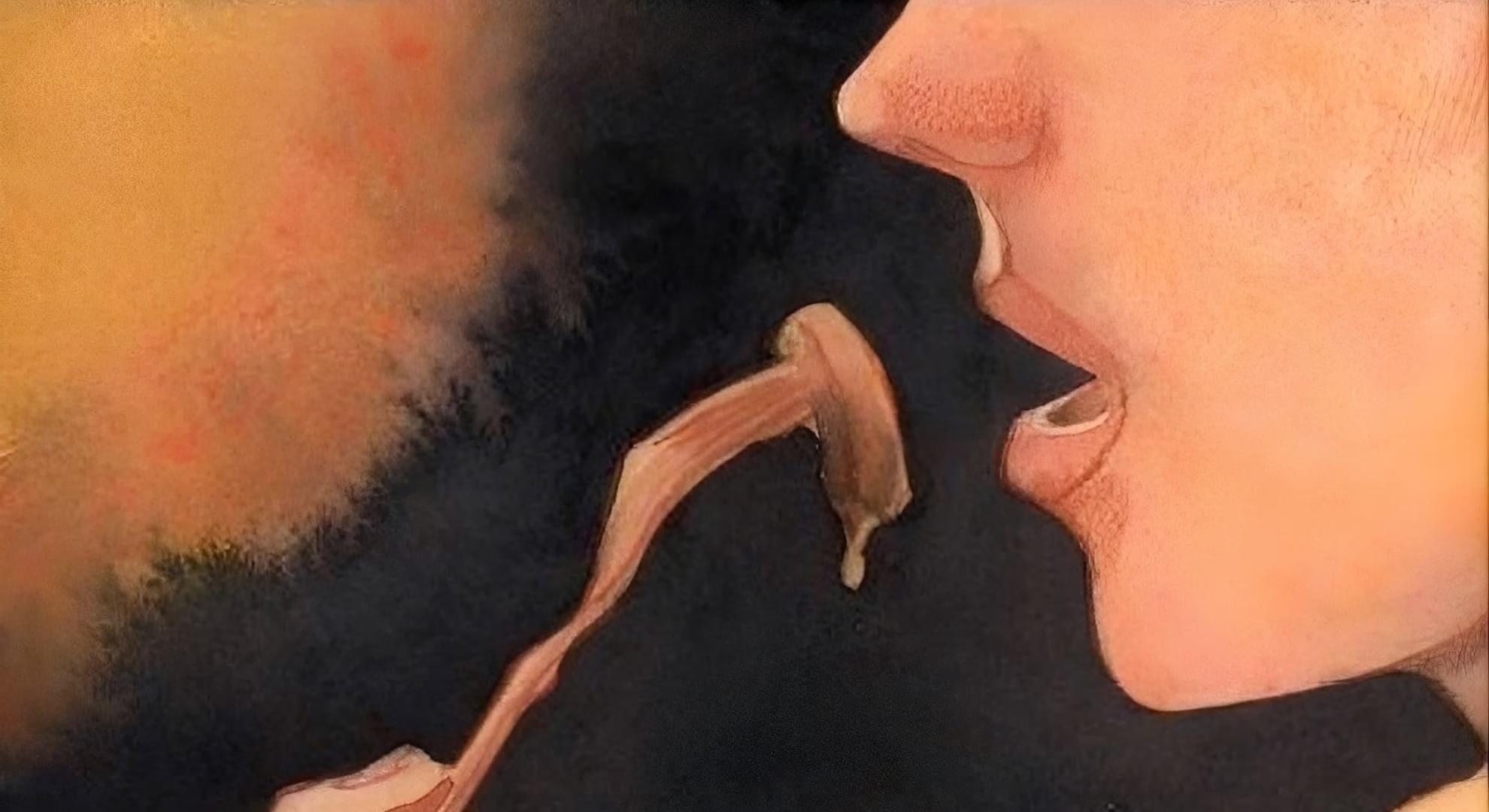


Watercolor has never been comics’ native tongue. The medium demands a discipline of clean separations — line, ink, flat color, edges that let a page read at speed — and watercolor resists exactly that discipline, spreading and pooling on a schedule of its own. Erin Connally’s debut graphic novel commits to that resistance rather than correcting it, and the resulting book arrives as one of the more unusual objects in Image Comics’ current catalog: an original hardcover built less on horror’s customary instruments of shock and reveal than on a slower, more absorptive register of dread.
‘The Cutting Garden,’ written by Darcy Van Poelgeest and painted by Connally, does not announce itself as horror in the way the publisher’s creature-driven or occult-inflected titles do. Its violence is implied rather than staged, and its central image is a bouquet assembled overnight rather than a body.
The argument this feature makes is that the restraint is the point: the book belongs to a Southern Gothic tradition in which dread accumulates through domestic ritual and withheld information, and its watercolor technique is not decoration layered onto that tradition but the mechanism that produces it.
The Creative Team
Van Poelgeest first drew wide attention with ‘Little Bird,’ the dystopian miniseries he co-created with artist Ian Bertram for Image Comics, which won the Eisner Award for Best Limited Series in 2020, which he followed it with ‘Precious Metal,’ a 2024 series set within the same fictional world, before turning to a considerably smaller canvas for his next project.
‘The Cutting Garden’ is Connally’s first published comics work. A watercolor illustrator whose prior practice centered on naturalist painting and sequential narrative outside comics, she takes on interior art, coloring, and cover art duties across the entire book, a concentration of roles that leaves the visual language of the graphic novel accountable to a single hand throughout.
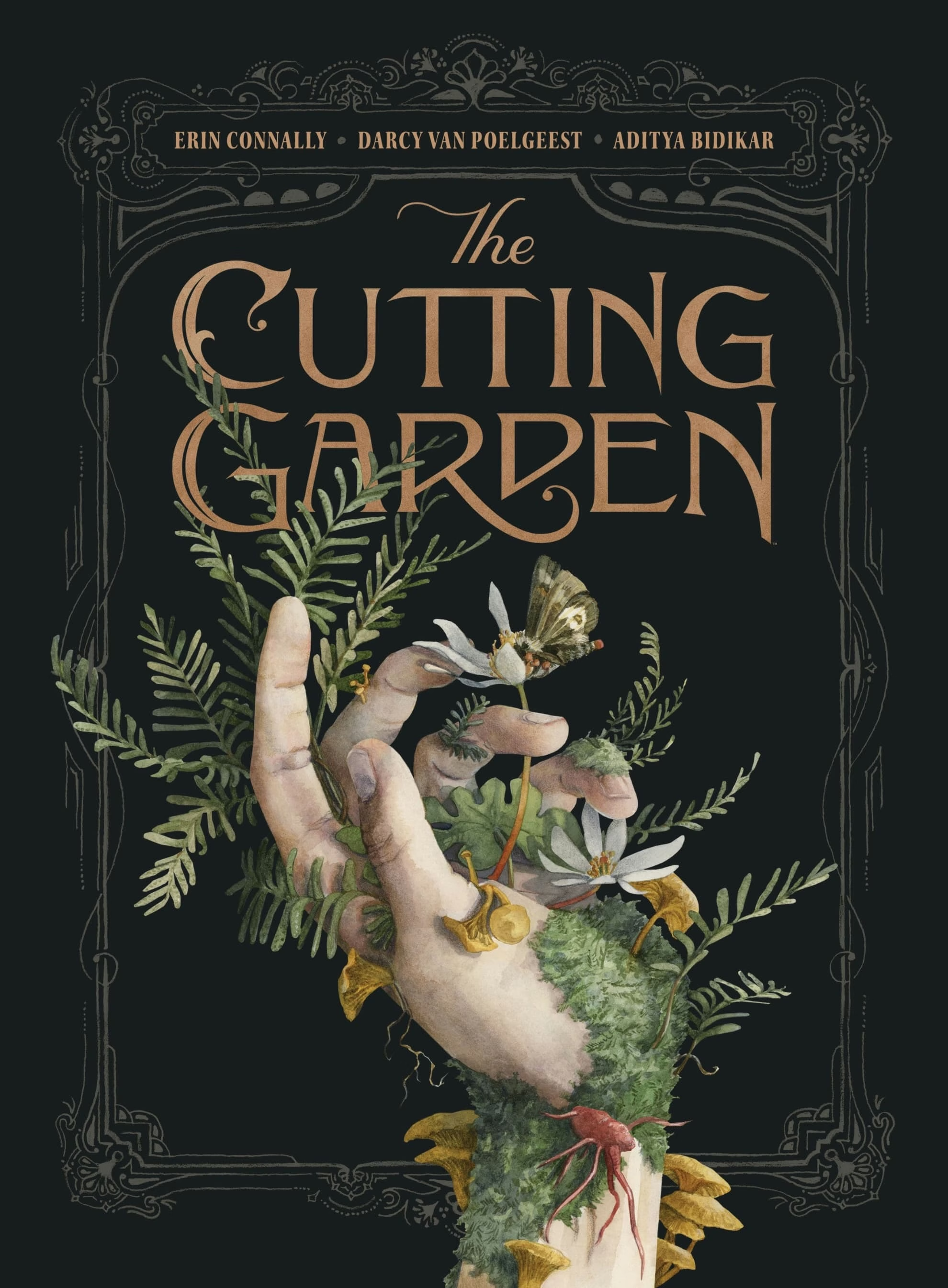
Letters are credited to Aditya Bidikar, and book design to Ben Didier, both confirmed through Van Poelgeest’s own production notes; production oversight has also been credited to Melissa Gifford, Image Comics’ longtime content manager, though her specific editorial title on this release could not be confirmed from official back matter at the time of publication.
Image Comics publishes ‘The Cutting Garden’ as an original hardcover graphic novel of 128 pages, priced at $22.99 USD under ISBN 978-1-5343-3080-1. The book reaches comic shops on September 2nd, 2026, and bookstore retailers including Amazon, Barnes & Noble, Books-A-Million, Indigo, and Waterstones on September 29th, 2026. No imprint applies; the book is published directly under the Image Comics name, with no serialized run preceding the collected edition. It is a standalone work, not an ongoing or limited series.
A Story Paid in Flowers
The book is set on a quiet street in 1930s New Orleans, where a florist agrees to spend a night assembling a funeral arrangement for a peculiar customer: an eleven-year-old girl named Adeil, who pays not in currency but in fragments of her own story. Each flower added to the bouquet earns the florist another piece of that story — a disillusioned jazz singer, a decaying family home, a life lived at the margins of a world that has already failed her once.
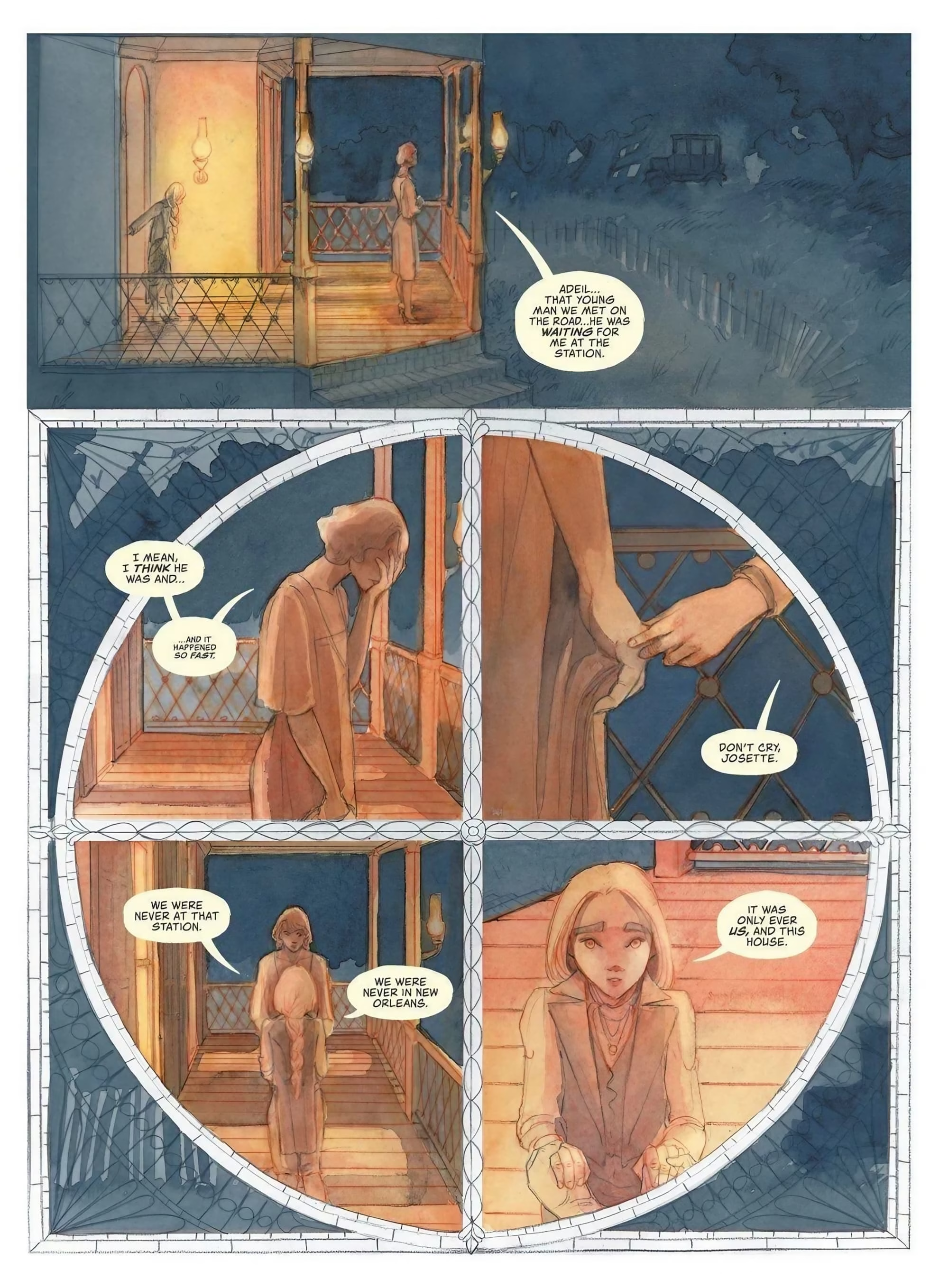
As the arrangement nears completion and dawn approaches, the florist is left to reconcile the accumulated fragments and determine what Adeil’s account has actually been describing, and where the girl herself belongs within it.
Image Comics has described the finished book as a story about mothers and daughters, and about what a person becomes in the absence of either. The horror the book traffics in, then, is not sourced from a monster held in reserve for a final act. It is sourced from the slow recognition that a story told in pieces, across a single night, has been reorganizing the listener’s understanding of who is telling it.
The Grammar of Watercolor Dread
Connally has described her intent for the book’s visual approach in explicitly regional terms, noting that capturing the terrain and light that shaped her own childhood in the American South was central to the project, and that she wanted the finished pages to function as what she called “a visual feast” built from beauty and decay held in the same frame.
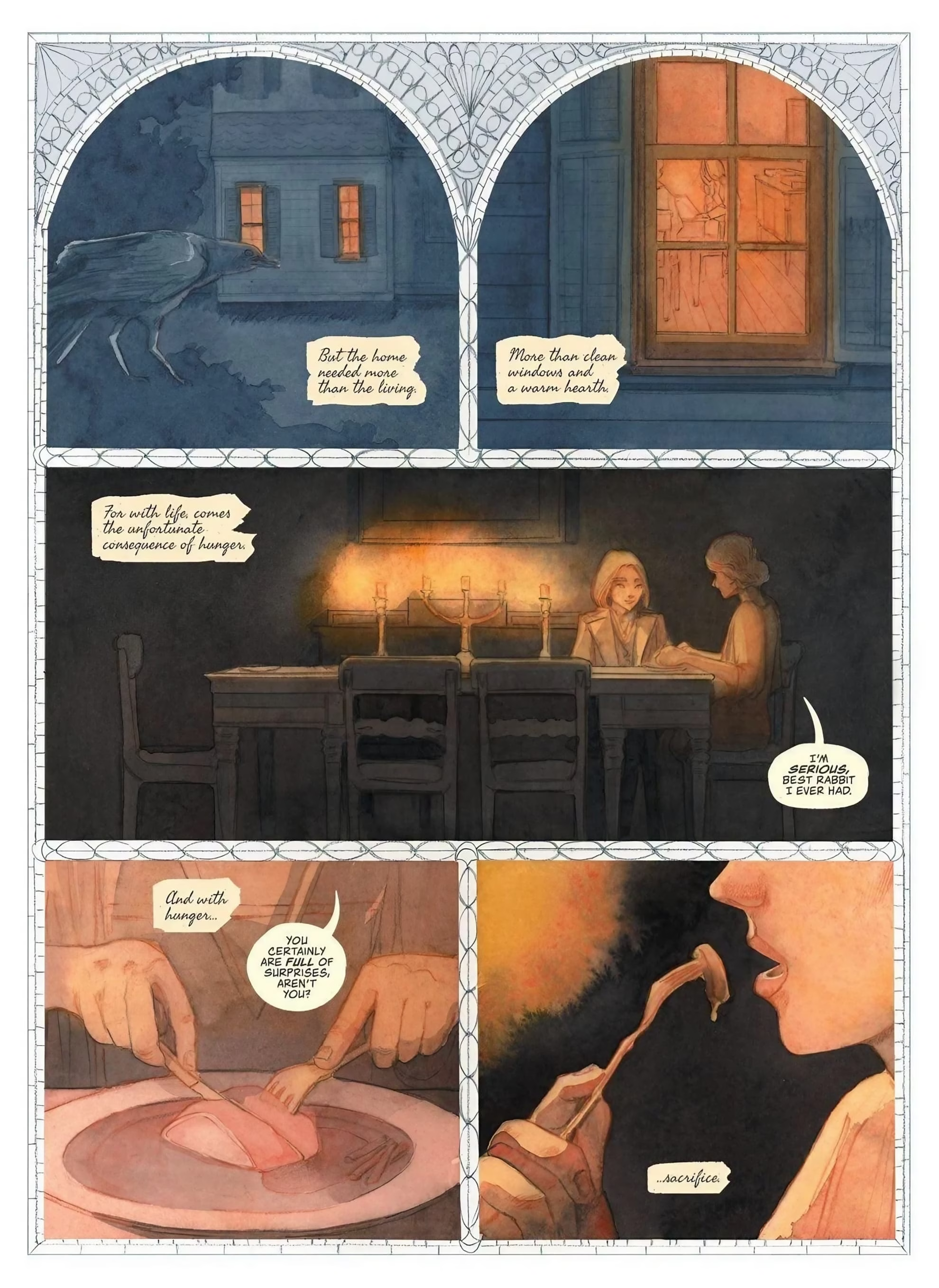
That combination is legible in the format itself. A hand-painted, single-artist watercolor treatment across an entire 128-page hardcover is a production choice most comics publishers reserve for shorter work, given the time a fully painted page demands relative to a line-and-color workflow.
Image Comics committing a full-length original graphic novel to that method signals confidence in watercolor’s ability to sustain tension across a night-length narrative rather than a single sequence.
Where inked horror comics typically build dread through panel-to-panel escalation and hard value contrast, a watercolor page works by bleeding those same boundaries — a technique that turns the reader’s usual comics literacy, the trained habit of reading discrete panels as discrete moments, into a source of unease when the medium refuses to hold a clean edge.
The dilapidated family home Adeil describes, and the story’s period New Orleans setting more broadly, both benefit from a medium built around gradual saturation rather than sharp definition.
A Gothic Widening at Image
Image Comics has built a substantial share of its horror catalog on creature-driven and occult-inflected serials, from ongoing runs to limited series with clearly demarcated horror iconography. ‘The Cutting Garden’ sits apart from that catalog by declining most of that iconography outright.
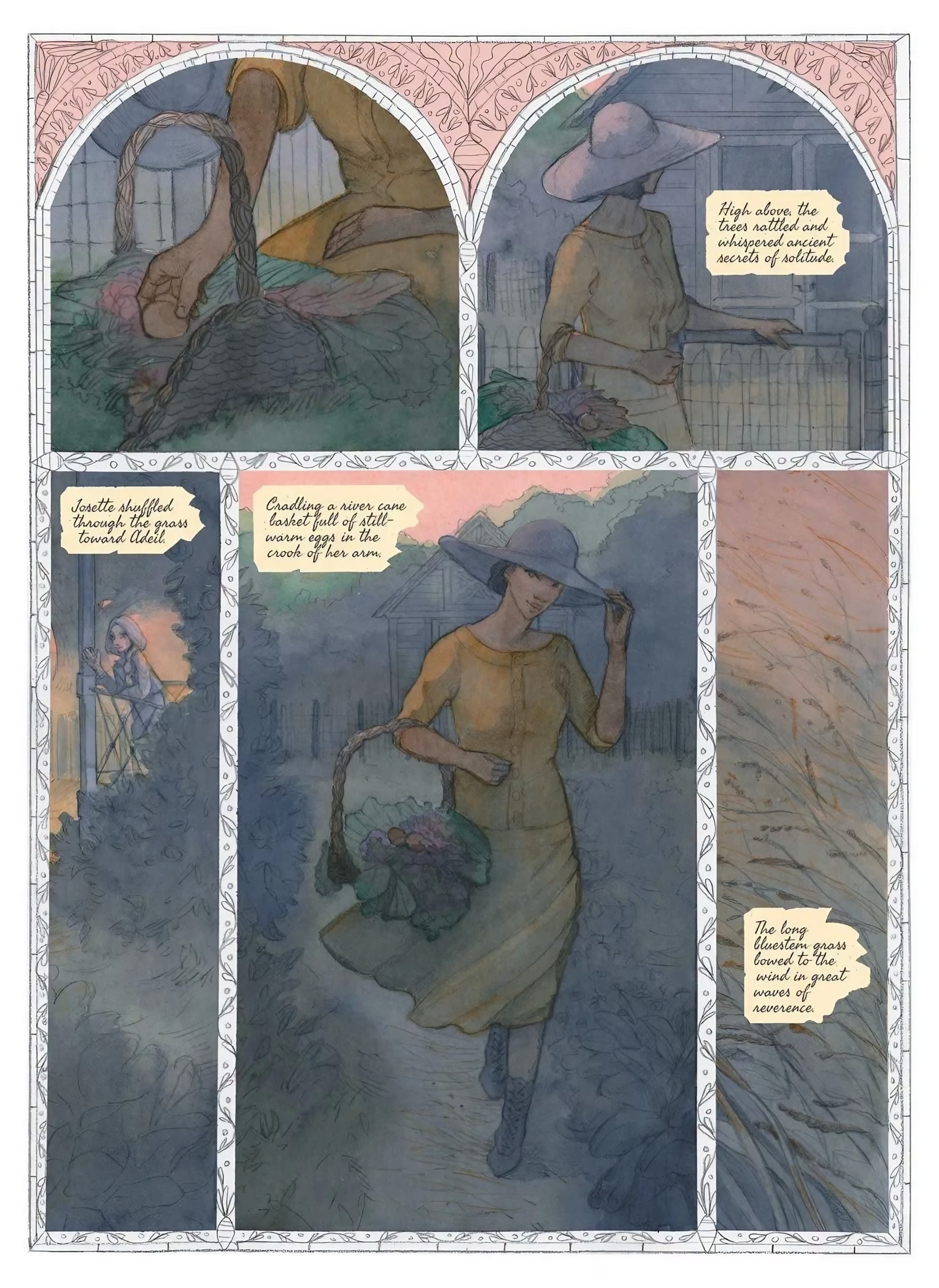
Its horror lineage runs closer to American Southern Gothic fiction, where the genre’s charge comes from inherited guilt, domestic decay, and the withholding of a family’s full history, than to the creature-feature or slasher registers more commonly associated with the direct market.
Van Poelgeest’s own prior work, particularly the theocratic dystopia of ‘Little Bird,’ operated at a far larger political and geographic scale than the single room and single night that contain ‘The Cutting Garden.’ The contraction in scale reads as a deliberate formal choice rather than a diminishment: intimacy, in this book, does the work that scope did in his earlier series.
What the Bouquet Withholds
‘The Cutting Garden’ asks a reader to accept a horror comic built almost entirely on implication, patience, and a technique — full watercolor across a novel-length page count — that comics publishing rarely commits to at this scale. The bet the book makes is that dread assembled slowly, one flower and one confession at a time, can carry as much weight by morning as a page built for a jump scare carries in an instant.
The payoff rests on how a reader weighs revelation against accumulation. The florist does not learn Adeil’s full story through a single confrontation; she learns it the way the book’s own watercolor bleeds across a page, gradually and without a hard edge, until the shape of what she has been told is finally visible in the dawn light the story has been building toward from its first page.
Now that the bouquet is finished and dawn has arrived in the story, what does the florist actually know about Adeil that she did not know the night before?

Leave a Reply